
Translated material
"I am a secret robocop"
On December 2, in Moscow, at the Kashirskaya metro station, an exhibition of the Chemistry charitable project was opening, but we broke up, ”the photographer Olga Pavlova. The Myphototheapy.ru project has been created to support women with cancer diagnoses, to remove an incurable terrible disease from cancer. One of the project participants is a clinical and medical psychologist, candidate of psychological sciences, expert on intuitive nutrition Svetlana Bronnikova. This is what she told Olga about her experience in treating breast cancer
- This is a very long story. I was made a diagnosis suddenly, but I had a long time ago. When it was ... in 2015, in the summer. My family and I were on vacation, and somehow, putting on a swimsuit, I felt for the seal in my chest. Of course, I did not like it. In passing, I told my husband: "You know, something is wrong here." He replied: "Well, go to the doctor." I seemed to agree, and then I thought: yes, well ... in my family, neither from my mother, nor from my father, not a single woman was sick of breast cancer. I have no heredity in this area at all. And there are a lot of things. And these are probably my hypochondriacal fantasies. And in general there is no time.
Everything was deposited for another year. During this year, I began to notice that the chest with a seal hurts. That periodically I can’t touch her - it hurts me so much. And this, oddly enough, reassured me even more.
- Because "cancer does not hurt"?
- Certainly! Because cancer does not hurt! Everything is fine, it is some kind of fibrosis, it is age-related. I fed two children with my chest, you never know what. But then it began to hurt more and more. I thought that I still had to find out what the problem was.
We planned a vacation with the family again, it was July again. And when I bought tickets, I messed up the dates. I forgot that on the day when we had to fly to Greece, I have a speech at a conference in Amsterdam. I could not be there. Therefore, I spent my family on vacation, and for two days I stayed at home to speak at the conference. And since I suddenly had two completely free days (any mother will understand!), I decided to run to the doctor. She jumped to our family doctor, said: “I have some kind of bump in my chest, she sometimes bothers me ... But, probably, this is nonsense.” It was ashamed to me that I was taking away time from a busy person, distracting him with all sorts of stupid things ...
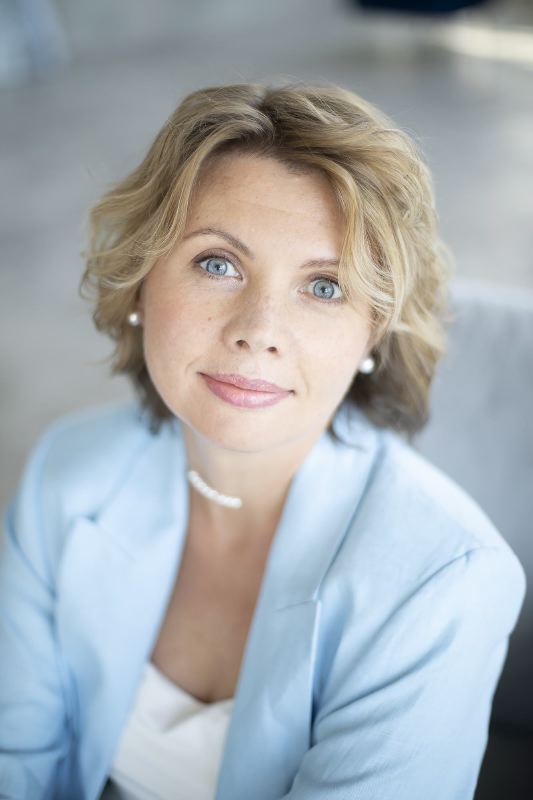 Svetlana Bronnikovafoto: Olga Pavlova
The doctor examined me and said: "You must go to the hospital." I replied that they say, I would go tomorrow. He said: "No, now." He called the hospital, agreed to make me a biopsy.
It turned out everything very “non -emotional”, as it is fashionable to say now. I was completely alone. The family is on vacation. My husband did not even know that I was at the doctor ... I was alone with all this - fear, uncertainty, faces of doctors who did not express anything at all. Just on the day when I ran to the doctor, the employees were waiting for me for a meeting. I thought that I would jump on the road and go out after 15 minutes, back and forth. But instead, I went to the ambulance to the hospital.
Then there was a biopsy. I was immediately told that, judging by all the signs, this is breast cancer. But you need to wait until the results come. And I need to leave, I have tickets ... In the Netherlands, as it turned out, the biopsy cannot be made urgently. You need to wait for two or three-four to five days-no one knows.
I called my husband. She said that I will have to linger. I have a very unpleasant diagnosis. He was about to return. I said: “What are you? Do not think! We have children, vacation, they must relax at sea! " It seems to me that my husband still cannot forgive that I have not allowed him to return then. He shouted to me on the phone: “I must be with you! What are you doing? Why?" And I thought that everything was suddenly redrawn, to lose the money that we spent on renting housing, on tickets, scare to the death of children ... And if it turns out that this is still not it?
For five days I waited for the results. We changed tickets several times. I lived one house and tried to somehow calculate the options, to understand what I would do next ... When the day X came, I came to the hospital, my husband got in touch on the phone, I was diagnosed.
- And what was it?
- It was a breast cancer of the second degree. The tumor was large, and the doctors, of course, said that the best solution was to immediately remove everything. I asked how much time I have to digest all this. Because I have a family, children, my vacation is planned ... "How much is your vacation?" The doctor asked. - "Three weeks." - “Go, nothing will happen to you in three weeks. This is not such an aggressive tumor. Most likely, it will respond well to conservative methods of therapy. For a while we have. Go. "
And I flew on vacation. It was the most strange vacation in my life. It seems that I could not realize what happened for a very long time. You do not know what you have to do. You don't even know. You heard some stories, stories of people. Someone in your family or next to you may be sick. But how it is from the inside - you do not know.
I could not believe that my body betrayed meUntil that moment I was a very healthy person. Of course, I had some difficulties, I gave birth to children hard, and once I became very and suddenly ill with hepatitis, jaundice-so that I almost died. This was perhaps the only catastrophic event regarding health.
I very poorly remember this vacation, in fact. I only remember that I ran along the sea in the evening and thought that I would have something absolutely incomprehensible and somehow I would have to cope with it.
- Wasn't I afraid to die?
- No. Of course, I thought about death. But rather in terms: how will I leave children? How to die? Are you foolish, or what? You have two children! It was not an option to die. And in general, it seems to me that it is not scary to die. Scared of inoperability, disability. Most of all I was afraid to lose myself. Although this is exactly what happened in the end ... I think any woman who passes through breast cancer loses herself. And then he finds it. But already completely different. This was then the most frightening.
“You returned from vacation, and what happened next?”
- While I was on vacation, the hospital at my request sent glass for the second opinion to Israel. They confirmed the diagnosis and gave the same recommendation: to operate immediately. I asked what other options I have. I really didn't want to do the operation. I always had a small chest. Such I was disfigured - a miniature in a family of lush women. And the doctors all the time told me: “You would have more breasts ... Then we could keep it ... And with your size it is impossible.” This is the only situation in my life when I regretted that I have a small chest. Because, in fact, it is very convenient: playing sports, choosing clothes, linen. But it turned out that the large breast has its advantages ...
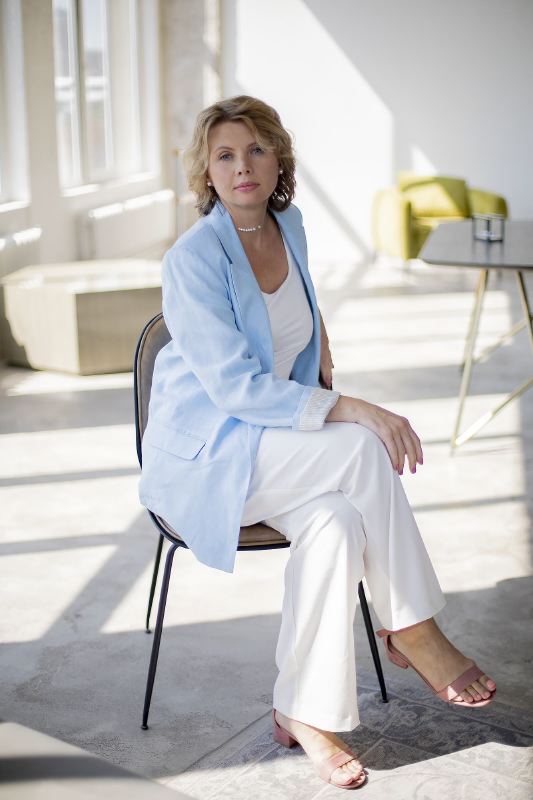 Svetlana Bronnikovafoto: Olga Pavlova
The loss of part of my own body scared me. I thought a lot about it later. Often women who have passed through breast cancer admit that they are experiencing a crisis of identity, femininity, that they lose part of their sexual attractiveness. I had nothing like that. My experiences were not about the fact that I would lose femininity, but about the fact that I would lose functionality.
And with the loss of functionality, it turned out to be the most difficult thing for me. Therefore, I began to bargain. I have passed all the stages of acceptance as expected.
- So the operation eventually happened?
- Yes, happened, but much later. I persuaded doctors to try other treatment protocols. I must say that in the Netherlands, oncologists use a different approach to patients compared to what I see in Russia. There, doctors never insist or persuade. They cite arguments associated with research and statistics, show alternatives, but the solution is always behind you. And this, oddly enough, gives support inside: I can choose!
“But this means that you take responsibility for your life!” In Russia, people often want a doctor to decide everything for them.
- Of course. But I just wanted to make a decision myself. The doctors with whom I spoke later told me that patients are divided into two categories: those who want to give all the decisions to the doctor, and then treatment goes according to the most reasonable, win -win protocol for this situation, and those who want to decide for themselves.
I asked: "What are I still options?"“Well, in principle,” they told me, “we can try not with surgery, but with chemotherapy and hormonal therapy.” And I decided that I had to try. Therefore, the diagnosis was made to me in 2017, and I operated only in 2019.
Looking back, I think it was the right decision. If I went to the operation right away, I would have thought all my life later: “What if ... what if it was possible ...” there was some probability that it would be possible to reduce the size of the tumor medication and after making an organ -preserving operation.
- This plan did not work?
-Everyone understood that the probability was small ... For two years, we tested several protocols in which I felt differently, the tumor behaved differently. We learned to temporarily live together. Six or eight months later, on one of the protocols, the tumor suddenly decreased radically. Suddenly, on an intermediate MRI, the doctor says: “And you know, your tumor is only 32 millimeters across.” This is almost half less than what happened! Unfortunately, the effect lasted only a few months, despite the fact that I religiously followed the protocol. In oncology, it often happens: improvements occur, but they are short and reversible.
In the end, the only option that was left to try is to connect anti -hormonal therapy. It turned out to be the most difficult for me. When they made me the first injection, I can’t even say that I woke up with another person. I just could not fall asleep. The first night I did not sleep at all.
And then I found all the side effects that are indicated in the instructions for the drugFirst, those that were on the list are most common. Then those that are on the list are less common. And then - very rare. And when we reached very rare, my doctor said: “You are so tormented, maybe we will stop? Well, enough already. "
At such a moment, I really want to "jump off". But then it turns out that I did not try all the options. And I said: "Let me tolerate again."
- How much did you last?
- I continued this therapy for nine months. Every month she said to herself: "I will hold out another cycle, and there I will solve." The funny thing is that it worked: six months later, the tumor began to demonstrate negative dynamics. But again I was a little lucky. Some types of tumors, when they decrease under the influence of treatment, are compressed, while others crumble. I had the second option: the tumor began to crumble. And although this reduced its total area, did not affect the type of operation in any way - the chest would still have to be amputated.
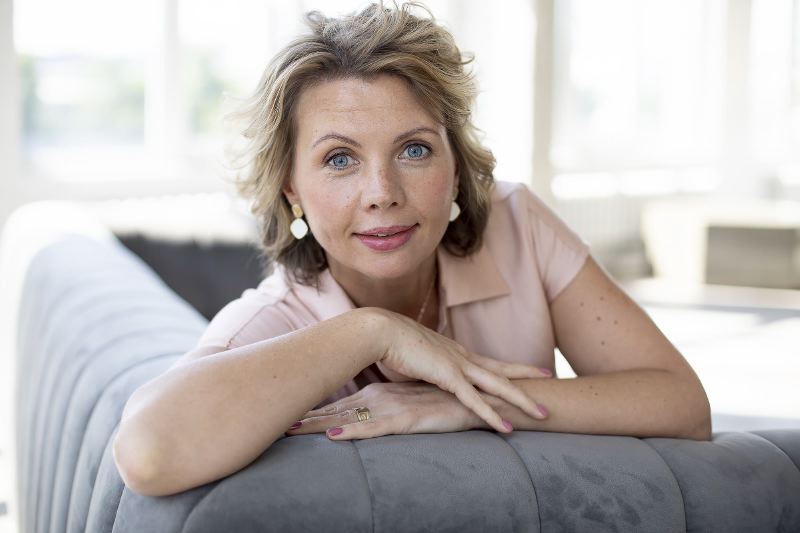 Svetlana Bronnikovafoto: Olga Pavlova
And then the next summer came, and my oncologist said: “It seems to me that you need to make a decision. In the framework of conservative treatment, we tried everything we could, and now it is completely clear that we will not get the result that we counted on. You need to make a decision: either you will be operated on, or you will not be treated at all, because there is nothing more. ” And I said: "Okay." And again she went on vacation.
On the eve of the operation, I went to London to my very close friend. We had a great time. She got tickets to the theater. And now Facebook reminds me annually how in 2019 in September I went to a wonderful performance. So, two days later there was an operation.
- You woke up after the operation - and what did you feel?
- I woke up and said: "Take me to my husband." And the nurses laughed. Then they brought me to the ward, unloaded to the bed, and I began to learn to live with it.
- Didn't you do the reconstruction?
- Then - no. Much later.
- So you were without a chest?
- Yes, I was without one chest for quite some time. A few days after the operation, I was already sent home. In Holland, this is fast. I returned with a drainage pipe. At that moment, I did not think about my chest at all. There were urgent tasks: there is a tube, it must be cleaned; There are medicines, they must be taken in time; There are injections, they must be done.
I then resumed the working Instagram account, and three days later my husband and I went to “shoot storiz”. I have never done this before. And so I say something with a drainage pipe on a camera about food behavior. It helped to be distracted.
- How did you make a decision on reconstruction?
- Not easy. Firstly, this is another surgical intervention, and possibly not one. Secondly, this is a prosthesis. In the end, the idea of functionality prompted me to make a reconstruction.
I opened that it is very uncomfortable for a woman without a breastThat the world is not designed for women without a breast, although there are a lot of them. Nevertheless, when I made a reconstruction, it turned out that it was even more inconvenient. I got used to my new body very, very long. I was joking that now I am a woman-brobocop.
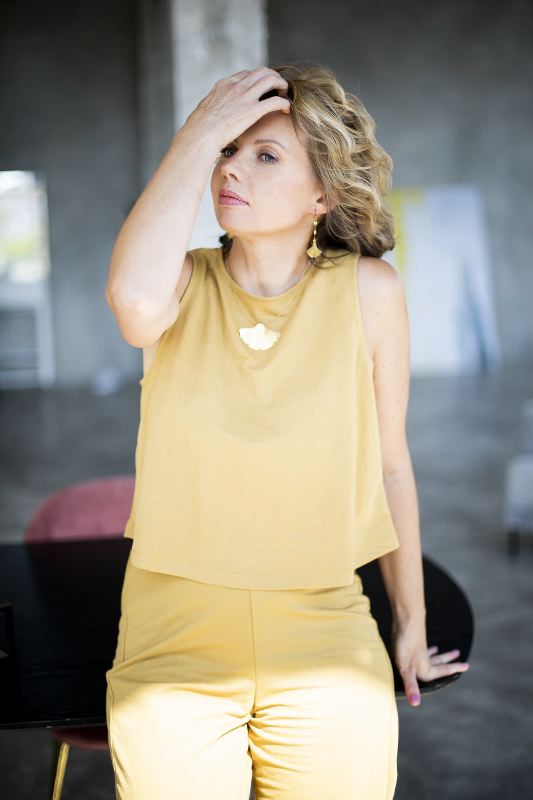 Svetlana Bronnikovafoto: Olga Pavlova
You know, a terrible tragedy with Margarita Gracheva occurred several years ago in Russia. Her husband, out of jealousy, chopped off his hands, and instead of one hand she now has a prosthesis. Margarita is an incredibly strong woman, I am subscribed to her on social networks. But all the time when I read her records, I can’t help but think that the “limited possibilities” of Margarita are visible to everyone. And our “limited possibilities” are not visible to anyone. And you will think about ten times another ten times to tell you at all that you have no chest. Therefore, you are not just a robocop - you are a secret robocop! All the time you decide who to inform about your features and “special needs”, and who is not.
“Have you ever regretted that you had an operation to restore my chest?”
- I can’t say that I regretted reconstruction. This is not the right word. But the reconstruction did not radically improve my quality of life. And I understand well women who choose this not.
- What now? Remission?
- Now - yes. In the near future, the following control awaits me. Again, I did one non-traditional thing: I completely abandoned anti-city therapy after surgery. According to the protocol, it had to be continued for five years. I weighed everything and realized that my quality of life on antihormonal therapy is generally called neither quality nor life. This is some literally dying condition. I can’t move, I can’t communicate with people, I can’t work normally. Why do I need it? I’d better live as much as I can, but qualitatively than I will suffer for many years. Therefore, now I practically do not take any drugs and are waiting for the following control, which will say whether my remission continues or not.
- You told the medical history. Thank you for your frankness. Now tell me why you decided to give this interview. Why are you participating in the project “Chemistry was, but we broke up”?
- It becomes very scary to everyone with the word "cancer". Even with a hint of this word. We are terribly afraid to talk about it and turn away all the time. All the time we pretend that this is not. And if this happens-with you, your loved ones, in your family, with one of the famous people-well, UPS, you are unlucky. We do not have a language for talking about cancer and there is no system of support for people who have encountered this potentially fatal diagnosis. We often put these people on a pedestal: "She defeated cancer!" You can’t imagine how I am not-west this phrase! Because very often nothing depends on you. You can do everything right, follow all the advice of doctors, try all drugs and protocols - and still lose. I do not want to say that cancer is invincible or that you need to give up. I'm talking about the fact that we use unfit terms. And in the end we tell each other a lie! No need to erect curing the pedestal. No need to turn away from the sick. Cancer is very severe, but just a disease. The same as any other chronic disease that greatly changes the quality of your life.
- Why is it important to talk about cancer publicly?
- I have not talked about my diagnosis for a very long time at all, even close friends, not to mention colleagues from a professional community, clients, readers ...
I was very scared that they would condemn me for getting sickThat they will see me weak and vulnerable. What I was! I work a lot with people who have a second type of diabetes. They are often accused of the fact that the disease is the result of their lifestyle, especially if they are complete people. This is absolute untruth, but they carry this nog. And the women who fell ill with cancer probably did something in life that here-in response, flew in. Well, not just the same with you, right? Probably deserved, huh? I really want this to be less. I want people to understand: cancer is a lottery and this ticket can fall out to anyone.
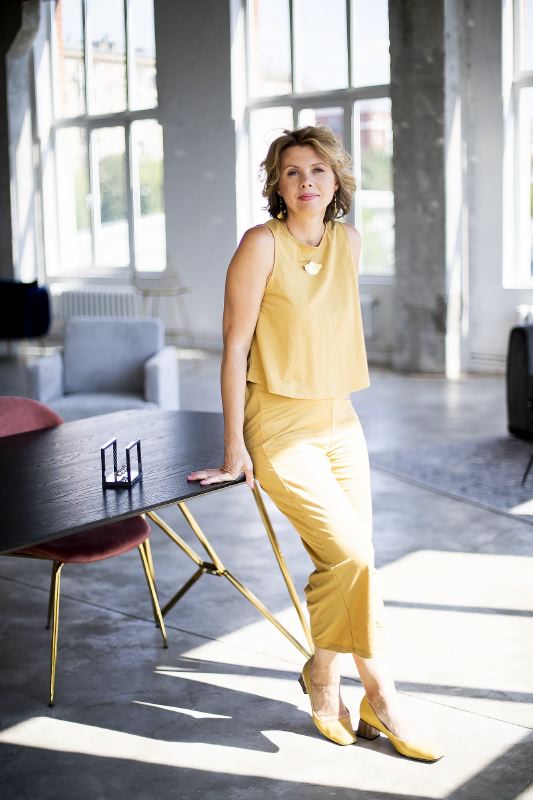 Svetlana Bronnikovafoto: Olga Pavlova
When you speak publicly, there is less lies and less fear. Less myths. Less desire to hide in the house and do not know anything about it. People tend to think that if you do not know anything, it will not touch you. Or if you behave well, then it will not touch you. People literally shy away from cancer patients.
“Have you come across this behavior?”
- multiple. It all started with my friends. I suddenly found that, having learned about the diagnosis, some began to avoid me. People just don’t know how to talk to you now. I talked a lot with other women - associates on the diagnosis, and there was not a single one who would not confirm this. Кто-то из прежнего окружения исчезает из твоей жизни совсем. Кто-то откатывается на существенную дистанцию, как будто ты стала испорченной.
Другая крайность — делать вид, что с тобой вообще ничего не случилось. There was such an episode. У меня есть знакомые в Нидерландах, тоже переехали туда из Москвы. Во время очередной химии я не очень хорошо себя чувствовала, мне недавно поменяли препарат, и они, в общем, знали об этом. Я со всем букетом побочек полетела в командировку в Москву. Сижу в офисе, работаю, и пишет мне друг: «А вот пока ты в Москве, не могла бы сделать для меня это и еще то, сюда позвонить, вот это отвезти?» Это был единственный раз, когда я взорвалась. Я сказала: «Слушай, вообще-то я на химии, вообще-то у меня рак. Ты помнишь об этом?»
Люди либо избегают тебя, либо пытаются делать вид, что ничего не произошло. И то и другое неправильно- And how is it right?
— Я думаю, правильно для начала признать, что если ты не онкопациент, то ты не знаешь как. There is nothing shameful in this. Ты там не был, ты этого не чувствуешь, этого нет в спектре твоих переживаний. Поэтому лучшее, что ты можешь сделать, — прямо спросить. Спросить меня, как меня поддержать. Спроси: «Что я могу для тебя сделать?» Или не спрашивай, а просто дай знать: «Я здесь. Позови меня, если что-то нужно». В моем окружении было очень мало таких людей. Но они, безусловно, были, и я каждому глубоко благодарна.
Мне кажется, если мы начнем много и массово говорить, что мы не знаем, как поддерживать онкопациентов, как поддерживать их родителей, партнеров, тогда-то мы и начнем отвечать на вопрос, как их поддерживать.
Рак — это часть твоего тела, которая тебя атакует. В этом смысле он гораздо страшнее, чем абьюзивный партнер, потому что с партнером можно расстаться. А рак можно только вытравливать из себя. Ты убиваешь его всеми доступными методами, и эти методы одновременно убивают тебя. Мне кажется, до сих пор мы толком не думали даже об этом: встречаясь с раком, ты расстаешься с частью себя, которая обратилась против тебя и пытается тебя убить. Но рак — это не война, и ремиссия — не победа.
Когда ты узнаешь о диагнозе, ты деревенеешь, у тебя отрастает пара «железных яиц», и ты такая: «Ща мы со всем справимся». Но ты не можешь в этом состоянии жить весь период лечения. Мало у кого он стремительный. В основном лечение длится несколько лет, иногда много лет. Ты не можешь годами находиться в состоянии непрерывной стрессовой мобилизации. Важно начать проживать и выражать эмоции. Горевать о том, что с тобой случилось, что твое тело тебя предало, что число рисков в твоей жизни увеличилось, что ты плохо себя чувствуешь, постарела, подурнела, что у тебя больше, возможно, никогда не будет детей и так далее. Все это нужно отгоревать и оплакать. Я смогла это сделать только через два года, когда поняла, что если не начну об этом думать и это проживать, то просто погибну.
Мне очень помог мой психотерапевт. В самом начале лечения он сказал: «Мы не знаем ни что тебе предстоит, ни как долго это продлится. Единственное, что мы знаем наверняка, — тебе предстоит страдание». С этим напутствием я не пошла на войну. Я пошла переживать страдание. Как ни странно, в этой фразе для меня оказалось очень много надежды. Потому что всякое страдание рано или поздно заканчивается.
У меня есть близкий друг Женя, который очень поддерживал меня на протяжении всего период моего лечения. Однажды я позвонила, чтобы поздравить его с Новым годом. Мне было не очень хорошо, опухоль угрожающе росла, я не чувствовала себя готовой принять решение об операции. Я помню, как позвонила и сказала: «Жень, с Новым годом. Я со странным ощущением начинаю этот год, потому что все вот так и вот так». И он ответил: «Я не знаю, что будет дальше, но что-то обязательно изменится. Просто потому, что что-то всегда меняется». С этой мыслью я вошла в 2019 год, с этой мыслью я решилась на операцию, с этой мыслью вышла в ремиссию. И каждый раз, когда меня по-прежнему накрывает, я вспоминаю эти его слова. Они мне очень помогли.
Ни одно страдание не бывает бесконечным. Ни одно лечение не бывает бесконечнымНаш страх в том, что мы не можем спрогнозировать конец. Наш выход в том, что конец не надо прогнозировать — к нему нужно просто прийти.
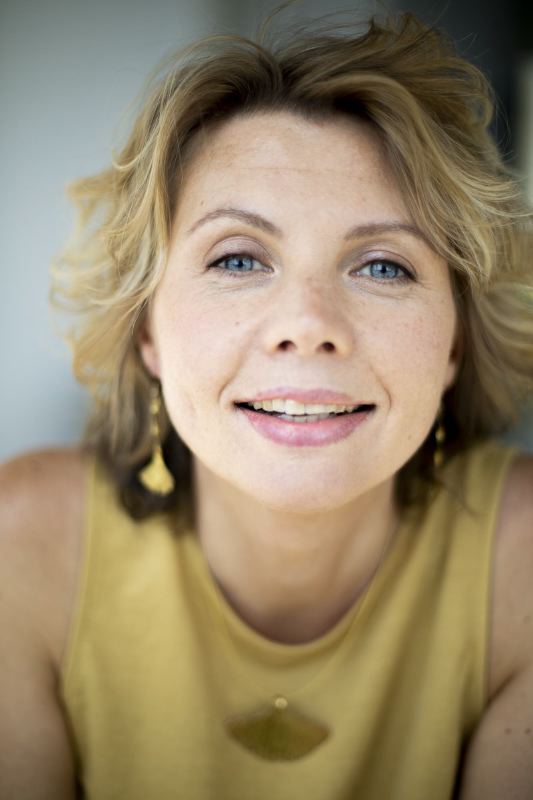 Светлана БронниковаФото: Ольга Павлова
Рак нельзя победить, но можно дойти до ремиссии. Тебе будет очень трудно, но главное — продолжать идти. Когда кажется, что ты совсем не можешь идти, вероятно, выход совсем близко.
Рак — не страшная болезнь. Рак — тяжелая болезнь. These are different things. Тебе будет тяжело, потому что это много неприятных физических изменений, много эмоциональных изменений, которые надо принять. Но когда это закончится, ты станешь другим человеком. It is difficult. Потому что тебе надо будет заново с собой знакомиться. Но это интересно.
Рак дает освобождение. Он дает свободу выбирать и брать ответственность за свою жизнь. Делать то, что всегда хотелось, но не хватало времени или мужества. Ты потеряешь какие-то возможности, но обретешь другие взамен. Это будет твоя суперсила.