
Translated material
Who has more cartridges
How Jewish and Arab terrorists motivate each other
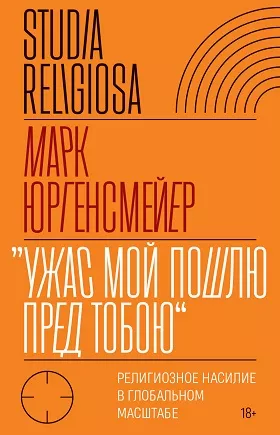
In the UFO, a Russian translation of the book of Jurgensmeier’s book “My Horror will send before you” was released in the “UFO”. We publish an excerpt, which tells about the terrorist attack, committed by Barukh Goldstein in the cave of the patriarchs, and his consequences for Jews and Arabs.Mark JurgenMaire. “I will send my horror before you”: religious violence on a global scale. M.: New Literary Review, 2022. Translation from English Alexei Zygmont . Content
 Quite like his ally, Joel Lerner, Barukh Goldstein believed that the Jewish people in Israel are oppressed on his own land. However, in this case, the intensifying presence of the Arabs on the western shore was not a distant threat: living there himself, Goldstein watched the “arrogance” of the Arabs, who dared to think that they had at least the slightest right on this land.
With growing rabies, Goldstein watched how the attacks on his brothers from Kiryat-Arb-a settlement created primarily for the practitioners of the Jews, who wished to live near the ancient Hebest, known to Muslim-Arabs under his Palestinian name El Khalil. Being a doctor and having been educated in the United States, Goldstein enjoyed considerable authority among settlers and was elected to the city council. Military officers notified him if they attacked a Jew somewhere nearby, and he, in turn, maintained contact with the authorities and kept them in the course if some problems arose in the settlement. He complained that the cars of the Jews were thrown stones on the main highway to Jerusalem, which had already entailed the death of several people. At night, he could hear the noise of the loudspeaker in the mosque, located directly opposite the fence of the settlement, and once caught how someone shouts terrible words- itbah al-yahud! ( "Cut the Jews!).
On February 24, 1994, on the night of Purim-a holiday in honor of the salvation of Jews from complete extermination by cruel oppressors-Goldstein appeared in the sanctuary of the patriarchs cave in Hebron/El-Khalil. The sanctuary is located above the Makhpel cave, where more than three thousand years ago, it seemed like Abraham, Sarra, Isaac and other biblical characters revered in all three Abrahamic religions - Judaism, Christianity and Islam. The shrine itself is a massive, similar to the fort, a stone structure; It houses prayer halls for the Jews and Muslims, and in the 7th century the Ibrahim mosque was built in this place (as Arably called Abraham). Goldstein came to the Jewish side, where the believers were going to listen to Megilat Esther, that is, the eastern book, traditional reading on the eve of Purima. However, his thoughts were interrupted by frantic cries that were heard from the outside-and again in the crowd of Arab youth there was a wild call: itbah al-yahud! Goldstein turned around and saw that this chaos was fully ignoring the armed guards exposed by the Israeli government. They did not even move. The doctor was furious: what was happening seemed to him a cruel mockery of Judaism and the Jewish people.
It was already too much. The next morning, in Purim, he returned to the sanctuary before dawn, this time entering the Muslim part of the building, where the Muslims early rising began their morning prayers. Goldstein took out the Galil machine hidden under his clothes and began to randomly shoot men and boys in a crowd who knelt on prayer rugs. Having made 111 shots, he managed to kill thirty people and injure many, until he was finally crushed and clogged to death in the crowd.
In irony, a few minutes later, when the first reports of shooting in the mosque reached Israeli officers, they tried to contact Goldstein in order to warn him about the troubles, as always did this in case of any troubles involving Jewish settlers. Having sent him a whole pile of messages to the pager, they waited in vain for an answer.
A few months after this monstrous incident, I visited a well-groomed burial near Goldstein’s home in Kiryat-Arb. It was located on Kahan Square - this is in honor of the late radical Jewish leader Meir Kahan, one of the mentors of Goldstein. I talked with one of the sales of guards named Yohai Ron, who voluntarily carried there, a thin young man in blue jeans, a white T -shirt, embroidered with a bail and a machine gun in her hands.
“Dr. Goldstein did the right thing,” he said. At his funeral, more than a thousand out of six thousand inhabitants of the settlement appeared to be honored, although it was pouring rain. Soon his grave turned into a real shrine: a vertically standing granite grave stone was surrounded by a concrete platform with lanterns around the circle. Yohai Ron was one of several volunteers who were on duty at this place and explained its significance to outsiders.
After the murder of Rabin , the Prime Minister of Israel, the Nobel Laureate of the World, Yitzhak Rabin, was shot dead on November 4, 1995 by the ultra-right activist Igal Amir , when public opinion turned against zealots like Goldstein, the Israeli government tried to prohibit the installation of the sanctuary at the place of his burial, announcing the construction The murderers are illegal. Joel Lerner Sorotovyshchi protested against such a law, saying that in this case he should be applied to the grave of Yitzhak Rabin in the same way as Goldstein, since he is responsible for the death of Jews during the incident with Altalen in 1948, shortly after the founding of Israel. Lerner and his associates volunteered to carry a shift on Mount Herzl opposite the grave of Rabin, and although they were not allowed to make direct references to the late leader, for campaign purposes they used the inventively selected quote from Scripture - “not to kill”.
When I visited Goldstein's burial place, it was still very popular with Jewish “right”. Like Joel Lerner, Johai Ron considered him a patriot and explained that, although the community would lack such a leader, the news of Goldstein’s act caused a “good feeling” in him. The only thing Ron regretted was that Goldstein’s death did not have any strategic consequences and did not drive the Arabs from Hebron/El Khalil. We said, and they continued to go to the cave of the patriarchs and every day flicked into the mosque of Ibrahim to make a morning prayer. Ron felt that he and all other Jews “are with the Arabs at war” and that there would be no peace until all the biblical lands are “delivered” until the Jews settled on them and the Arabs would leave.
Yohai Ron was a native Israeli. He was born in the mid-1960s in a small town near the Galilee Sea in the northern part of the country. Hearing that the messianic Zionists built a new Jewish settlement in the city of Hebron on the West Bank, Ron eagerly joined this "great spiritual adventure." In 1979, a handful of Jews with children from Kiryat-Arb penetrated through the window into an abandoned hospital and occupied it, illegally building a settlement called Beit Khadassa there. Ron enthusiastically joined this radical enterprise, and soon the settlement grew to more than 50 families with a total number of 450 Jews, dug like an armed fort in the heart of the city with a population of more than a hundred thousand Muslim Arabs.
Almost all the inhabitants of Beit Khadass had a religious and political goal: to say that Hebron/El Khalil remains a Jewish city too. This is true against the settlers from Kiryat-Arb and thousands of other Jews who have settled on the west coast from the Gush Emuni movement and the Kach party, which was once headed by Meir Kahana. True, not all Jewish settlers who occupied the territories on the west coast, Golan heights or in the gas sector, did this from purely religious reasons; Many simply tried to find where they would live relatively cheaper. Among these recent there were many immigrants from Russia who fled to Israel due to anti-religious persecution and in search of a better life.
Such an immigrant was the wife of Ron - a beautiful fair -haired woman who left the then former Soviet Union a few years ago. While we were talking at Goldstein’s grave, she came with a crowd of newly made Russian immigrants, which she accompanied like a tourist guide. She showed them the sanctuary as if it were an incredibly important place, and in inspired Russian tried to convey to them the religious meaning of his act. As Ron said, she also explained why it is so important to hold and protect Jewish checkpoints on the west coast, how inextricably interconnected Judaism and Earth and how the liberation of the Earth will lead to spiritual liberation.
Yohai Ron himself completely agreed with her. According to him, the biblical lands, especially ancient settlements and cities on the western coast, the Lord God himself obliged the Jews to settle here. He also said that once he saw the Arabs traded drugs in the back of the Beit Khadass, which served as an example of how Muslims desecrate this land. The even more urgent mission of Johai Ron and other settlers made a peaceful process, the creation of Palestinian autonomy and Arab police. When Rivka Koribib, another resident of Hevron, first saw Palestinian police officers, she felt a deep sense of “humiliation”, for they, as she put it, “there was no place here.”
Although this statement may seem racist, it and other practicing religious settlers say that they are not “against the Arabs”, but “for the Jews” and simply want to protect faith. The same Johai Ron, for example, justified the act of Dr. Goldstein, that is, the murder of innocent civilian Muslims, kneeling in prayer, is that "for us all Arabs living here is a threat." And further, developing his thought, he explained that Arabs are dangerous, for "threaten the very existence of the Jewish community on the west coast."
However, even if they justify Barukha Goldstein, exposing him in their kind as a Jewish patriot who defended the rights of his community, it is difficult for them to argue that his actions, like the actions of other militant Jewish activists, provoke response violence from Muslims who imitate and avenging them. The leaders of Hamas, in turn, substantiated the attacks by the suicide bombers on Israeli civilians with precisely the precedent of Goldstein, who began to fall through the innocent Muslims in the sanctuary of the patriarchs in Hebron. Violence always finds a way to draw. Perhaps the best confirmation of this is the hatred that Meir Kahan extended and which ultimately led to his own death and provoked Muslim terrorists, who, like the Kahan himself, considered themselves as advocates of faith.
The remarkable “feint” of history: the murder of Kahan in the very center of Manhattan on November 5, 1990 was associated with another terrorist attack by Muslims less than three years later-an attack on the World Trade Center in 1993. Kahan then returned to his native New York to raise more funds and financial support for his radical movement “Kach”. As soon as he went to the New York Marriott hotel on the corner of the 49th and Lexington Avenue, a yellow taxi wrapped the building-the performer of the planned murder was preparing to run on it. One of the driver’s comrades, El Said Nussar, a thirty-four-year-old immigrant from Egypt, was already at the hotel and patiently waited for Kahan to speak. The flame rabbi welcomed the crowd - about a hundred orthodox Jews, for the most part from Brooklyn - and gave out several foggy phrases that it was necessary to create a “Zionist organization for urgent evacuation”, which would transport Jews from the United States to Israel, thereby saving them from the inevitable collapse of the American economy and, as Khana predicted, another persecution of the next persecution of the next persecution of the next persecution of Jews.
After his performance, Nussar joined the crowd of fans, who had rushed around Rabbi, putting on a black bile on such an occasion. In some meter from Kakhan, he suddenly grabbed a gun, inflicted a deadly wound to him in his neck and hastily ran out into the street in search of a taxi on which he planned to hide. Having noticed one of the yellow taxi, he jumped into it, but was mistaken: instead of the accomplice of Nussar, a Latin American from Bronx was behind the wheel. Soon the car got stuck in traffic. Jumping out of the taxi, Nussar ran, and he was detained by the postal police officer who heard the cries of the crowd, saw a fugitive and joined the pursuit.
This event made a real shock in New York and was a turning point in the history of as many as three groups. In particular, it resulted in a crisis for the murderer’s accomplices, who will later participate in the Bluts of the VTC - at least partially to get the influence necessary for trading for the release of Nussar from prison. On the Jewish side, the death of Kahan radically transformed his movement: the thirst for revenge on his supporters, coupled with the anti -Arab ideology of Kahans himself, moved his student Goldstein to attack Muslims, who prayed in the cave of the patriarchs in Hebron. Indirectly, this murder also influenced the Palestinian hamas: after Goldstein and attacks by other Jewish activists, he expanded military operations on peaceful Jewish civilian civilians - since Goldstein shot peaceful Arabs. In the 1990s, this led to a whole series of attacks by suicide bombers in Jerusalem and Tel Aviv. One of these terrorist attacks of “living bombs” in the Jerusalem market of July 31, 1997, explosions in public places in New York were to follow, but they did not follow, since the conspiracy was disclosed by the FBI and the local police. A similar explosion was also planned by the Islamic group in Brooklyn, allegedly related to the organizers of the attack on the WTC - and the circle of interaction between three militant groups was closed.
An accomplice of Nussar, who was supposed to catch him on a yellow taxi, was called Mahmoud Abuhalim, and in the attack on the World Trade Center in 1993 he will play a role that he is to call paradigmatic: this is how militant jihadists participate in politics. As it became clear from his words, this alleged complicity in the murder of Kahan and the attack on the WTC was due not only to the hatred that the Jewish extremism of Kahan extended, and the global American power embodied in the form of VTC, but also the ideal of the future Islamic society - as he hoped, more powerful and stable than these competing from the Political Order, be it. military-Jewish or aggressive-searlar. In a curious way, the ideal of the religious society of Abhalim was amazingly similar to a picture of the Jewish future, which was dreamed of Meir Kakhan, Meir Ettinger, Joel Lerner and Barukh Goldstein. However, as a result, as it became evident from the murder of Kahan, due to their maximum xenophobia, these ideals became incompatible.