
Translated material
Arrived
The United States and the European Union adopted a new package of sanctions against the Belarusian regime. The list even has a helicopter on which Lukashenko circled over demonstrators
The European Union and the United States simultaneously approved new packages of sanctions against the Belarusian regime. The content is somewhat different, so it is rather not synchronous actions, but a simple coincidence in time. Without an American sanctions package, the European would look rather pale, but a “double blow” may well create more serious problems for Lukashenko and the Belarusian economy.
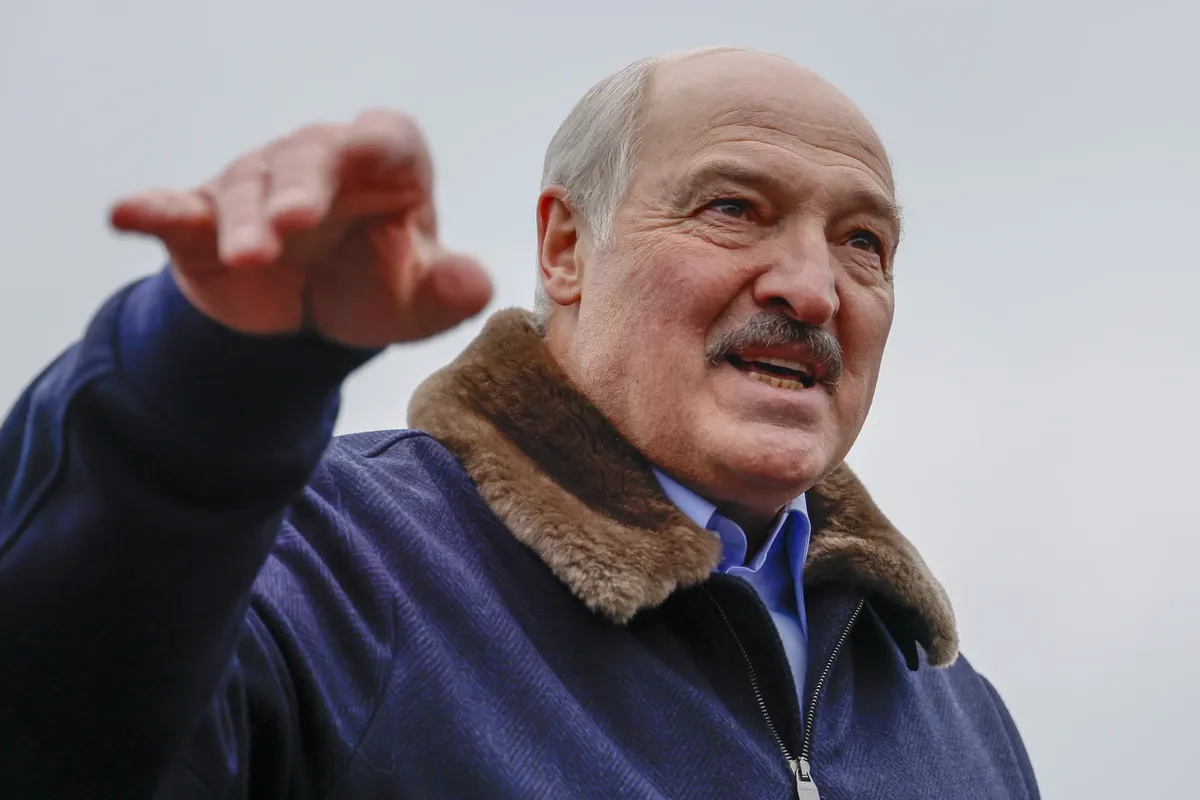
The fifth package of EU sanctions included 17 people and 11 companies.
Personal sanctions will affect mainly
Higher officials of the State Border Committee of Belarus, due to the creation of the migration crisis at the border (on the list-the chairman of the Code of Civil Procedure Anatoly Lappo, the head of the separate service of active events of the Code of Civil Procedure of Igor Kryuchkov, the heads of the Grodno and Brest border groups, the Lida and Smorgon border detachments),
judges,
heads of the Department of Financial Investigations.
Among legal entities -
Belavia Airlines,
Syrian Cham Wings Airlines,
Turkish visa center VIP GRUB.
Travel companies
"Central Course",
Oscar Tour.
hotels
"Minsk",
"Planet".
In addition - enterprises:
"Grodno nitrogen",
"Belshina",
Belarusneft,
"Grodno Khimvolokno."
In general, the current package of European sanctions is more likely to migrants near the Polish border than to repression against Belarusians.
Of course, getting into the list of large industrial enterprises like Belshina and Grodno Nitrogen looks impressive. But in the fourth package there were such industrial giants as MAZ and BelAZ, in the third - the Minsk Wheel Power Plant and the largest weapon exporter "Beltektekhport". In June, sectoral sanctions were introduced that limiting the trade in potassium fertilizers, oil products, and goods for the production of tobacco products.
But the numbers refute the effectiveness of these sanctions. According to Belstat, export from Belarus for the first three quarters of 2021 amounted to $ 34 billion. This is 32 percent more than in the same period 2020, the bloodless, year. Moreover, if export to Russia grew by 22 percent, to $ 11.6 billion, then to the European Union countries - 96 percent, that is, twice. As for oil products, their main buyer is Ukraine. Sanctions regarding the potassium industry have not affected existing contracts, and this is natural: European countries protect their business. If it is beneficial for their companies to buy fertilizers from Belarus - a paragraph that will allow you to bypass sanctions. Here loopholes are looking for both sides, not only the Belarusian regime.
US sanctions only partially duplicate European ones. America imposed sanctions not only against companies and officials, but also against two aircraft and helicopter.
Airplanes are IL-76TDs belonging to Transaviasport. This is a carrier-carrier company whose Ils brought in tons weapons and ammunition from Beltech Export to the zones of military conflicts.
The helicopter belongs to Slavicli and, although Mikhail Gutseriev managed to transfer control of the company to his brother in the hope of deducing the company from sanctions, the US Treasury is no longer too interesting. The press release of the Ministry of Finance says that it is this helicopter painted in the colors of the state flag that Lukashenko uses for flights between his suburban residence and Minsk.
Apparently, it was in this helicopter that he squeezed in the hands of “kalashniks”, flying over Minsk with his son Nikolai in August last year.
In the same helicopter, he flew after the election to the wheel of wheeled tractors, where the workers shouted to him “an officer, shot himself!”. So the helicopter belonging formally to the “Slavic” was, in essence, the gift of the generous Uncle Misha.
Of course, sanctions against a helicopter are rather symbolic. Unlike cargo Ilov, helicopters do not fly long distances and on the way from the blackbirds to Minsk (and at least to Moscow) do not fly to Paris for refueling. Making it on the list with some details - “This is the one on which ...” - to a greater extent means that the Americans are conducting their own investigation of the origin and movement of Lukashenko’s assets. And they deliver the most sensitive blow to the main escort sphere - potassium fertilizers.
The United States give its citizens and companies 120 days to terminate all relations with the Belarusian potassium company. Sanctions against BKK will begin to operate on April 8. And, unlike the similar European sanctions accepted in June, full holes in the fence, the Americans are clear:
Belarusian potassium fertilizers are forbidden to purchase not only from BKK, but also from traders.
Previously, sanctions could be easily circumvented by concluding a contract for the supply of fertilizers not with the BKK itself, but with an independent trader under sanctions. And everyone is good: the sanctions are respected, and fertilizers go to Europe, and Belarusian exports are growing. But sanctions, in principle, are not imposed so that everyone around is good. Otherwise, it would be easier to just exchange New Year's telegrams and go home.