
Translated material
Discharge 2.0
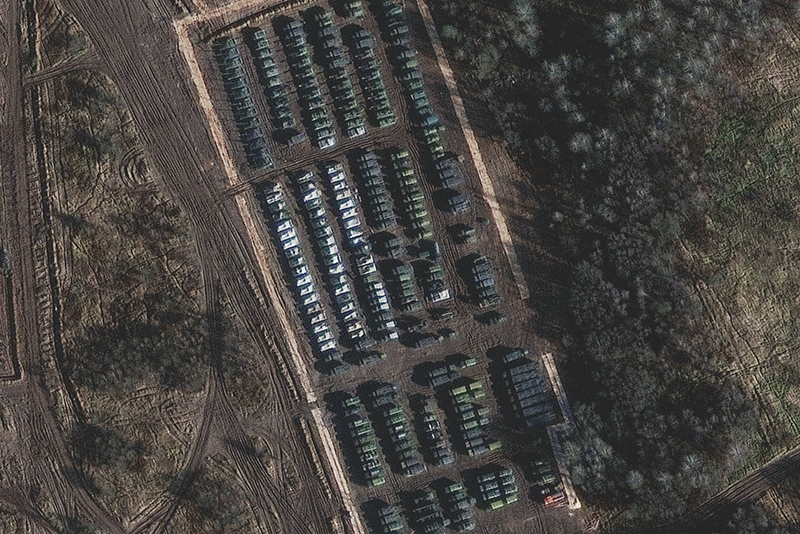
Speaking on November 18 at the expanded collegium of the Russian Ministry of Foreign Affairs, Vladimir Putin outlined the contours of the new foreign policy strategy of Russia in relation to the West, which de facto has already been implemented since the beginning of 2021 after the Biden administration came to power in the United States. By November, the strategy demonstrated certain effectiveness: intermediate tasks as a whole are implemented, although the main specific result - the neutralization of Ukraine and ensuring the interests of the security of the Russian Federation in Europe - remains the subject of aspirations and will probably be achieved using various tools in 2022–2023 .
The new strategy can be conditionally called “discharge without perestroika” or “discharge 2.0”. Dmitry Train calls this “gear switching” in foreign policy.
Like the discharge of the late 60s and early 70s and the “new foreign policy thinking” of the late 80s , the current strategy of the Russian Federation aims to stabilize confrontation with the West at an acceptable level of geopolitical risks in order to improve external conditions for socio-economic development, for digital modernization and, in the long term, sustainable transit of power. Another goal is to consolidate the geopolitical status of Russia as a center of force equal to the United States and the EU, without the participation of which it is impossible to solve a single serious world problem.
However, unlike previous attempts to build equal relations with the West, “discharge 2.0” categorically rejects the outcome of foreign policy cooperation into Russia's domestic policy. It is designed to prevent the creation of tools for entering the West into the Russian political and information space, the formation of groups of influential Russian stakeholders using cooperation with the West to promote the Western model of a social structure in the Russian Federation.
The key disadvantage and error of discharge of the 70s is now considered the consent of Moscow to include the humanitarian basket in the 1975 Helsinsky agreements , which opened the West to enter the domestic political space of the USSR through the promotion of human rights and freedoms.
For the same reason, the experience of “discharge of the time of perestroika” and “dashing 90s” is fundamentally rejected, when the transition to foreign policy cooperation with the West has become one of the most important instruments of internal reorganization of the country with poorly thought-out consequences, and the “geopolitical convergence and unity with the West” itself was provided, as it is now considered unacceptable and meaningless concessions (for example, today is popular today. The point of view that when deciding on the unification of Germany, the USSR could and should have agreed to preserve its military presence in the territory of the former GDR, which allegedly made the subsequent expansion of NATO). Other key disadvantages of this period are considered to be the adoption of redundant obligations on the global agenda in the framework of “new political thinking” to the detriment of the national interests of Russia, as well as hopes for convergence with the West and obtaining status worthy of the Russian Federation, on the basis of “universal values”, which are believed to be undermined by Russian statehood.
In the Strategy of “Discharge 2.0”, Moscow is ready to interact with the West only in a narrow circle of safety problems and economic cooperation (where the climatic problems can be attributed) based on the “balance of interests”, but is determined to completely block the attempts of the West to discuss the Russian internal agenda and even more to the advice and wishes for the arrangement of political life on the basis of Western standards of rights and human freedoms. These topics no longer exist in the dialogue of the Russian Federation with the West. Hence the refusal to instruct relations with Western geopolitical associations and institutions, where Russia was “alone against all” (a breakdown of relations with NATO, de facto freezing political relations with the EU while maintaining a technical dialogue in trade, healthcare and climate) and the transition to work only with “key players” (USA, France, Germany).
In “Discharge 2.0”, all the possibilities of cooperation by the Russian Federation are rigidly interconnected and are due to equivalent to the West on the most significant topics for the Russian Federation. Hence the surprise of the “Western partners” by the “climate of the climate dialogue” by the Russian Federation - you want to deal with methane emissions, lift sanctions from Gazprom for investment in appropriate technologies. There can no longer be interaction only where it is interesting mainly to the West, and Russian preferences and concern are ignored, as, for example, it was during the period of “rebooting” with the Barack Obama administration, when the United States received our support for Iran and Libya, but refused to cooperate the pro (missile defense. - Ed. ).
“Discharge 2.0” proceeds from a fundamentally different layout of forces than in the 70s and 80s , when the Soviet leadership was primarily interested in a decrease in confrontation due to economic weakness and social stress in the country. Today, as it is seen from Moscow, the West, which is in a state of crisis and decline, increases internal conflicts, while Russia is consolidated, has impressive reserves (gold and foreign exchange reserves exceeded $ 620 billion), and its sharp foreign and military policy are able to “create and maintain a certain tension ” from the Western countries is interested. An important factor is the switching of the US attention to the geopolitical confrontation with China, and within this framework, as an impression is formed, the Americans are ready to pay a certain price by discharge and predictability in relations with the Russian Federation.
Today, from the perspective of the strong, Russia imposes its reading of “discharge 2.0”, which involves concessions only from the West. From the Russian side, no concessions are even implied. The leading foreign policy experts of France, for example, are shocked by the fact that two years after the summit in Breanson and the Macron proclaim of “strategic dialogue with Russia”, Moscow did not meet Paris on any significant issue, despite the identified opportunities for compromises, and even pursues the France’s hostile interests in Africa. But this is just not surprising.
The maximum inconsistency of Moscow is not only the negotiation tactics of “requesting positions”, but the conceptual basis of the policy of “Russian exclusivity”. “Our strategy is always right,” Sergei Lavrov cast in granite at the last assembly of swap (advice on foreign and defense policy. - Ed. ). To concede means to admit that there was wrong in something, and this is weakness. The legend of publicity concessions and the internal fermentation arising around this lead to destabilization. Therefore, Russia is an impeccable power that is always right.
Finally, the “discharge 2.0” strategy is a strategy for coercive West to compromises through the creation of “stress points” in regions sensitive to the West. Moscow came to understand the effectiveness of the principle formulated for NATO at the end of the 90s “either go beyond the region or get out of business” ( “Go Out of Area, or Out of Business” ). It is possible to attract the attention of the West and it is profitable to influence its policy in relation to the Russian Federation only by actions in regions where the West has significant interests. It follows that the path to the recognition of the West of the interests of Russia does not lie through the consolidation of “its region” - the post -Soviet space (with the exception of Ukraine and Belarus), where Russia is already a dominant power of the West is secondary (Karabakh) - and through the “attack on the corns” where the West is painful and important - in the Middle East, in Africa, in Africa, in Africa, in Africa, in Africa, in Africa, in Afric Chad, Tsar, Mali), in the Balkans (Bosnia and Herzegovina, Kosovo).
Launching in Mali “Hedgehog in the African Macron shorts”, Moscow expects Paris to be more attentive to Russian interests in Ukraine (so far it turns out not very ). Or, encouraging the separatism of the leader of the Bosnian Serbs, Dodik, threatening to destroy the post-Daith institutes of Bosnia and Herzegovina, which will probably lead to the renewal of the Civil War, Russia shows the EU and NATO the prospect of the destabilizing crisis in the "soft underbuilding" of Europe, which will not be weaker than the conflict in the Donbass. Conducting regular Russian-Chinese military-air exercises (strategic bombers) and naval patrols around the Japanese islands, Moscow pushes Tokyo to adjust its geopolitical orientation on the United States and to conclude a peace treaty on Russian conditions.
In relation to the Biden administration, at the beginning of this year, Moscow has followed the path of creating a “new Caribbean crisis” near the borders of Ukraine, having conducted large -scale military exercises with an indicative transfer of troops from the central and eastern regions of the Russian Federation and promising to cease the existence of a modern Ukrainian state in the event of the attack of the Armed Forces of Ukraine in the Donbass.
This not only attracted the attention of Washington and defrosted the contacts between the highest military ( Gerasimov/Milli ), but also prompted President Bayden to offer Putin a summit in Geneva. “Geneva’s spirit” launched transit to “respectfully hostile relations” of Russia and the United States, creating regular dialogue channels for strategic stability and cybersecurity, where there is a professional discussion , albeit without quick results .
Contacts at a high level intensified, including the visit to Moscow, deputy secretary Victoria Nulans and the director of the CIA Bill Burns in October and November (unprecedented, the Burns’s direct telephone conversation with Putin), as well as the Deputy Prime Minister of the Russian Federation Overchuk to Washington. The instructive of the dialogue channels within various joint commissions did not occur, and this corresponds to the concept of “discharge 2.0”, in which the structures of American influence on internal Russian layouts should not arise (as it was during the time of Mount Blanemyrdin and Medvedev - Obama). The Russian-American dialogue today in the reliable hands of the Council of People's Commissars-Nikolai Patrushev and Jake Sullivan.
“The Spirit of Geneva” has not yet led to the thaw, but “to the slush” in relations (there are no progress on normalizing the activities of diplomatic missions). There was no de -escalation on the main question for the Russian Federation - Ukraine. Moscow was incorrectly considered Biden’s signals in Geneva and in negotiations with Nuland in Moscow as evidence of Washington’s readiness to put on Kyiv in favor of the implementation of the Minsk agreements (as they are recorded). After the visit of the CIA Director, who passed, according to the CBS television company, “in high colors”, it became clear that the Russian arguments in Ukraine and Donbass would not find any understanding in Washington and Washington would not “push Kiev on full Minsk”.
Applications of the US Minister of Defense Lloyd Austin during a visit to Kiev in October on Russia's responsibility for the conflict in the Donbass and on the readiness of the United States to provide Ukraine to military assistance, as well as the call of Laura Cooper, which is responsible for Ukraine in the Pentagon, so that the NATO countries take off all the restrictions on the supply of weapons to Ukraine, the supply of modern American ammunition and the incessant flights of American reconnaissance aviation in The airspace of Ukraine along the Russian borders convinced Moscow in reality the prospects for the transformation of Ukraine into an “unsinkable NATO aircraft carrier” even without formal membership in the alliance.
Even before the summit with Biden in an interview with the Russia 1 channel, then in the article “On the Historical Unity of Russians and Ukrainians” and in the speech at the meeting of the Valdai club in October this year, Vladimir Putin noticeably moved the Russian “Red Lines” in Ukraine - now this is not only Ukraine’s entry into NATO, but also the emergence of NATO infrastructure in Ukraine without a formal membership in it (“Not Ukraine in Ukraine. NATO, and NATO in Ukraine ”, as analysts by the Carnegie Foundation Eugene Rumer and Andrew Weiss). In recent days, the US military and intelligence assistance has been added to the “red lines” to Ukraine .
It is obvious that the further extension of Western military assistance to Ukraine in combination with a dead end in the implementation of the Minsk agreements and the transformation of the Norman four into 3+1 (Berlin and Paris de facto took the side of Kiev, insisting that Russia is a side of the conflict), as well as the actions of the Zelensky administration to dismantle the infrastructure of Russian political and media influence within the country, set the trajectory, strategically, strategically Lossed for Moscow: in this case, Kyiv still goes to the western orbit of security in the near future, Russian military superiority over Ukraine as the only tool for influence on Kyiv’s policy is gradually leveled, and the Minsk agreements, the implementation of which would previously allow Moscow to achieve its strategic goals in Ukraine by non -persons, hang in the air.
Under these conditions, the “discharge 2.0” strategy required the creation of additional stress for Washington and the allies, attracting attention to the concern of Russia, which was made by deploying Russian troops in the western and southwestern directions in the configuration, which, according to Western estimates , quickly take power actions on several threatened vectors (where and where and where and where it is specifically expanded here, you can look here. , here and here ).
The United States saw in this prospect of repetition of the events of 2014 and began to inform the NATO allies about the possible Russian military invasion of Ukraine in the next two to three months, recognizing that they have no complete confidence in the Kremlin.
Russia may have political goals in Ukraine, which are theoretically achieved by the limited use of military force if other means are not triggered (for example, to impose on Kiev new conditions of peaceful settlement in the Donbass and the obligations of neutrality, as Finland and Austria were imposed after the war). The question is the price, as well as in the exact forecast: will this price increase even more in the future, if nothing is done now. The United States, holding consultations with allies and Kiev , want to indicate in advance that this price will be unacceptably high , and thereby restrain Moscow. There is already a corresponding bill on "sanctions from hell in case of invasion." However, in Ukraine, the “price” for Russia does not come down to economic costs, but includes a military-strategic and emotional-historical component.
If we proceed from the Strategy of “Discharge 2.0”, the real goal of the Russian Federation today is rather the stimulation of Washington on a “hard conversation” with Kiev in favor of the implementation of the Minsk agreements. The list of wishes of Moscow is well set out in this article by the analyst Rand Samuel Cherep. True, now only by the implementation of the Minsk agreements it is no longer limited and formulated by Putin deliberately blurred (“long -term security guarantees”).
Perhaps the Kremlin calculates , using the threat of war in Europe, to impose a final refusal to further expand NATO (cancel, for example, a statement by the Bucharest summit that “Ukraine and Georgia will be in NATO”), and at the same time the parameters of the new security system in Europe , which would include Russia's veto on any European security issue (apparently a modernized version of what was already offered by president Medvedev in 2008-2009 ). At least this will become the theme of the virtual summit of Putin and Biden in December or a personal meeting in early 2022. Bidden himself does not exclude negotiations, so such tactics still work without fail ...
The President at the Board of the Ministry of Foreign Affairs of the Russian Federation says that there was no alternative to the Minsk agreements and the White House has already welcomed this. But at the same time, Sergey Lavrov ( publishing his correspondence with colleagues from France and Germany) practically closed the prospect of new negotiations between the Norman four at the level of the Foreign Ministers and, especially the presidents, until Kiev and his partners begin to fully fulfill the Minsk agreements. Perhaps this is a signal that Putin wants to resolve this issue with Biden, and not with Merkel and Macron.
The war with Ukraine somehow does not go well with the coordination of the agenda of Russian-American summits, unless this is a repetition of negotiations in Minsk in February 2015 . But “muscle movements” allow you to raise bets in negotiations and focus the partner's attention. Partially the White House is already hearing Russian concern, for example, in terms of military exercises near Russian borders.
But what if Biden does not justify hopes regarding the push of Zelensky to fulfill the Minsk agreements and stop the expansion of NATO (he is not one)? And what if Baiden refuses to give guarantees not to provide Ukraine with US military assistance, because Congress can force it to this by adopting the relevant law and overcoming the veto?
Проблема в том, что, если Вашингтон и Киев считают, что Москва сегодня блефует (а похоже, они так считают , то Кремлю придется как-то действовать . Ведь угроза применения силы против Украины не может быть бесконечно убедительной (и эффективной для достижения политических целей) без того, чтобы сила не применялась, когда ее простая демонстрация не производит желаемого эффекта. Как известно, «великие державы не блефуют».
Тогда «Разрядка 2.0» сменится «Перегрузкой 2.0».