
Translated material
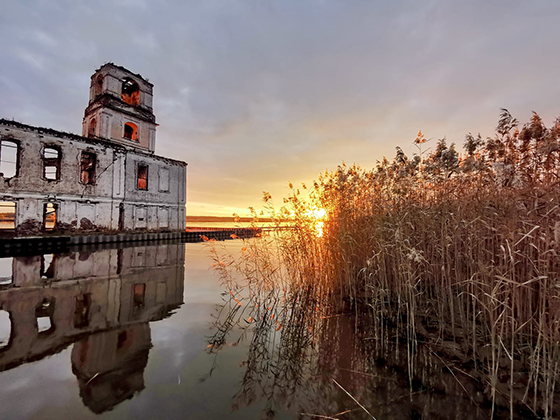
Colosseum in the middle of water
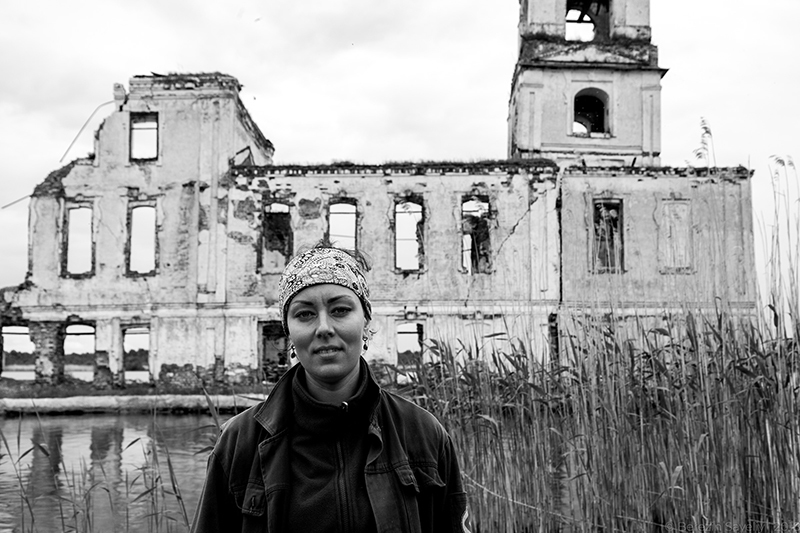
The Krokhino Foundation has been involved in the preservation of the ruins of the Church of the Nativity of Christ for 12 years in the village of Krokhino, flooded in the middle of the last century and preserving the history of these places (Vologda region, Belozerey). The director and founder of the Anor Tukaeva fund told the section She IS an Expert , with which stereotypes and discrimination, she encountered the funds of the fund, why it is necessary to maintain ruins and build a monument to the flooded territories - and how the work of the fund with an intangible inheritance of these places is built and with creative projects created on the basis of findings, which helps, which helps rethink the difficult memory of the twentieth century.
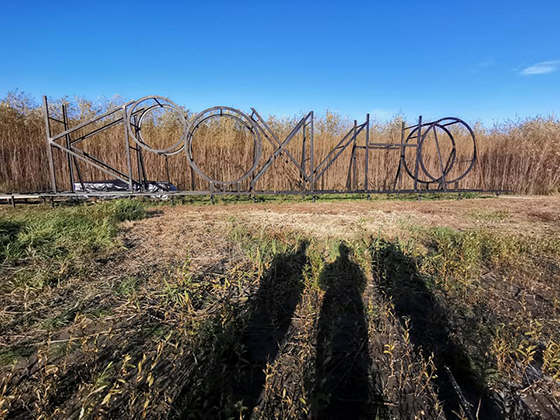
- Today, Krokhino is a well -known attraction in the Russian North and one of the oldest volunteer projects to preserve cultural heritage in Russia. Thanks to the activities of the Krokhino Foundation, the ruins of the Temple-Mayak in the middle of the Shaksna River are on the artificial island created around it, where more than 900 tons of sand are covered, and each grain of sand is someone's donation. The temple is reliably protected from ice drift - with a pier and ice cutters. The adjacent territory is landscaped: wooden paths connect houses for volunteers and restorers with architectural installation with the name of an old village. This is what Krokhino looks like in 2021, and how did it all begin?
- The history of the Church of the Nativity of Christ as a building began in 1788, when it was built in the old village of Krokhino. Previously, even more ancient temples stood in the same place: the first mention of the village dates back to the 15th century. I think that Krokhino would exist now, its location in the source of the river from the White Lake, but in 1964, it was destroyed and flooded when filling the Shaksninsky reservoir was so convenient and safe. Slotting of settlements is a common phenomenon in the XX century. The villages like Krokhino, in one Vologda region, are several dozen, and in Central Russia and Siberia there will be more than a thousand. The only thing that distinguishes Krokhino from the rest of the destroyed settlements is that the temple has been preserved here. He was not demolished or blew up, because they placed a lighthouse of flooding zone in it.
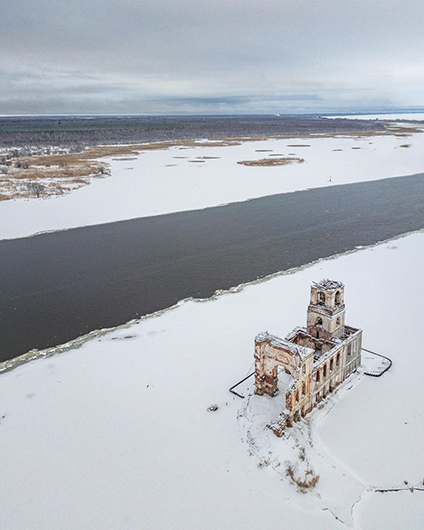 © kosmaj project
My acquaintance with Krokhin occurred in 2008. I was only 23 years old then, I saw a documentary about flooded youga, began to study the history of flooded territories and finally stumbled upon a photograph of the Krokhinan ruin standing in the middle of the river. I was then struck that it was a widespread phenomenon as the construction of reservoirs and hydroelectric power plants, which entailed the large -scale flooding of historical territories, was not described in textbooks. They do not talk about this, do not remember, although many witnesses are still alive.
The first trip to Krokhino was a logical continuation of this study. I was interested to see what was preserved in the flood zone. In my first route, I included the Tver and Yaroslavl regions, including Kalyazin. And the second route was built around and for Krokhino. At that time, I already knew that this was the last flooded temple preserved on the territory of modern Russia.
In addition to general positive emotions from traveling, hundreds of photographs and new species, this meeting became for me an impetus for important internal changes. The fact that it remained from the temple, I saw not just one memorial object, which is at risk of disappearance, but a large story related to the theme of heritage in our country. It is difficult to find a more eloquent object that clearly tells about the events of the twentieth century, the attitude of society to history and memory, about the period of timelessness, which often continues to this day. It is hard to even imagine that people have passed for decades on ships past the destructive temple and simply averted their eyes. Perhaps they regretted the former beauty, but no one tried to do something to preserve it.
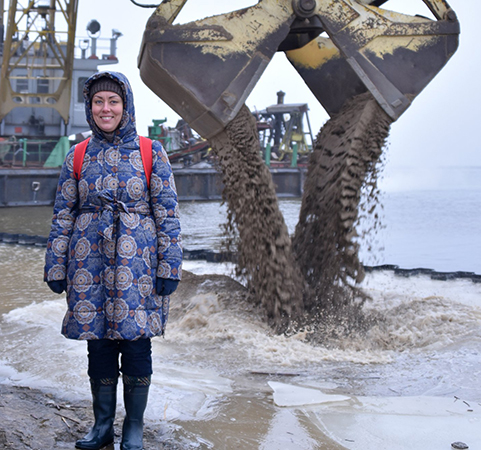 © from the archive of anor Tukaeva pouring sand
- The fund appeared in 2010. Then charity in Russia was still in the rudiment itself, even now the usual areas of assistance to children and animals were treated with great skepticism. And the preservation of cultural heritage is something completely outlandish. Wasn't you scared?
-It was not terrible-largely because of a relatively young age, when it is difficult to calculate the consequences and the "sea on the knee." But with difficulties I ran into immediately. Firstly , in my mind I did not have a person or team that could direct and patronize the fund organizationally and intellectually, and secondly, there was no understanding of what means it would exist. As a result, in the first year of work, the fund came the only donation of 500 rubles. And in subsequent years, the situation did not change as fast as we would like.
There were other difficulties associated with the project itself in Krokhin. For more than a year it took to collect expert estimates of architects, restorers and hydrogeologists on how to work with such a non -standard object as a two -hundred -year building standing in the middle of the river and destroying from ice drift and waves. I consulted with a variety of specialists, including those who were engaged in the Kalyazin bell tower. She wrote letters and requests to all organizations related to the preservation of cultural heritage, to the administration of the President of the Russian Federation, the ministry and departments of culture ... to understand where and how to move on.
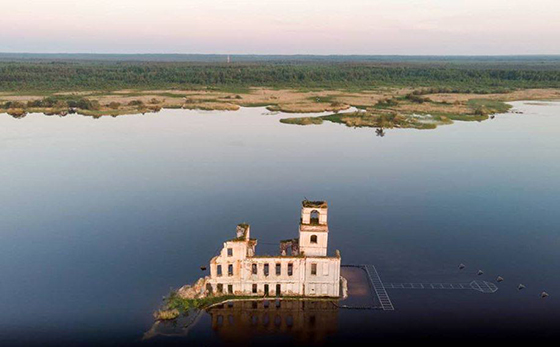 © from the archive of anor Tukaeva
- And what response was?
- Basically, these were formal answers that made it clear that no one would deal with this temple. It stands in the middle of the swamps, the nearest city of 18 km, is not a monument of architecture, against the background of thousands of other destroying historical buildings in Russia, nothing is particularly distinguished. But this did not stop me, rather - on the contrary.
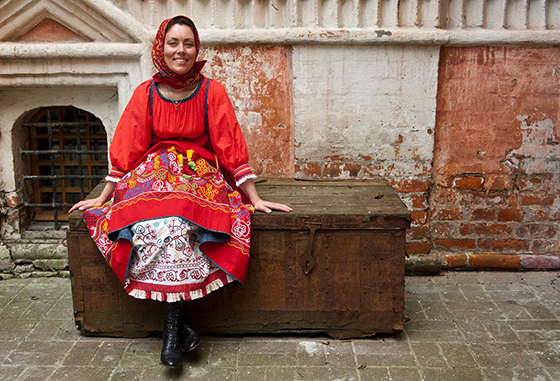
Then I went to individuals - asked for advice and help. The reaction of people was most often indifferent, sometimes negative. They told me: “Girl, this is youthful maximalism, it will soon pass” or “It is inappropriate, you should not try.” I think the image of a young girl often worked against me.
 © from the archive of anor Tukaeva
I remember how I turned to the local newspaper with a request to publish an article about the history of the Church of the Nativity of Christ. The editorial office thought for a week, and then the deputy editor replied: “My girl, we will not publish this article, no one needs this temple” ...
But there were two people whom I remember with great warmth. Then they were the only ones who supported me. This is Igor Klimentievich Rusakomsky - a famous architect, restorer, teacher, who was engaged in the restoration of the Moscow Church of the Transfiguration of the Lord in Preobrazhensky for 25 years. And Vladimir Ivanovich Doluzhnikov - an outstanding art critic, architecture, art historian. Both of them said something like this: "Baby, do, do not leave." And I did not throw it.
- It turns out that you were faced with Aijism. Have you come across gender discrimination? Still, the work to preserve the old building is mainly construction work, which means the harsh world of the Russian regional patriarchy?
- On the one hand, yes. Say, workers, whom we sometimes hire in the nearby settlements, are not ready to perceive the young woman as a boss. It is simply impossible to argue with them about building issues, they will still do as they know better. It became clear that the productive process of work is built when there is a male mediator between me and the workers. True, this rule has nothing to do with volunteer expeditions, but completely different people take part in them and there are no such problems in the warehouse.
 © Irina Butyrina
In another way, the dialogue develops with officials or local leaders. Perhaps, as a woman, it is easier for me to ask for a strange one . And charity in the field of heritage is still strange and unusual. Moreover, in the province, especially when it comes to a flooded temple: you will need a water lifting crane, then a barge for transporting goods. I can’t imagine a man as a petitioner - he would most likely be frozen, called a lazy person and a loafer.
Of course, now, when the project has existed for 12 years, many local officials and managers know me. If earlier, the solution of some legal issues took more than eight years, now only two to three years (bitter grin) . For many, this sounds unrealistic, but any issues related to property and land relations are resolved for a very long time.
- What other stereotypes did you come across?
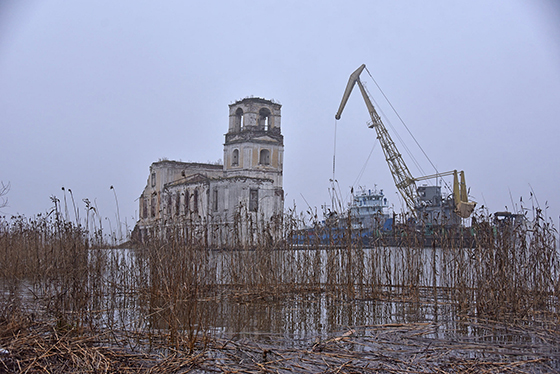
- Several stereotypes that we have to work with is still associated with the perception of the ruins. The fact is that the purpose of the Krokhinsky project is precisely the conservation of the temple, and not its restoration. Meanwhile, the culture of preservation of memorial objects is common only in relation to objects destroyed during the Great Patriotic War. In all other cases, conservation is considered an intermediate step towards future restoration, and not the final result of work. But in the case of Krokhino, we literally retain the ruins.
To preserve the historical landscape of the country, this is very important. Saved and ennobled ruins acquire a new function, they can become points of attraction with which the development of nearby territories will begin. Russia is literally strewn with such objects: dilapidated temples, factories, mansions. To restore them all is an overwhelming task, but to preserve, to preserve, to put in order the nearby territory is quite possible.
 © from the archive of anor Tukaeva
Such places as Krokhino are, first of all, about an honest story and an honest legacy that we got in the form in which it is. Drowned, with a collapsed dome and garbage in the altar, with decades of silence and indifference. It is in such a ruined state that the temple carries much more valuable information and meanings than the “gingerbread house” on the water, if the temple was recreated to the state of golden domes. This Colosseum in the middle of the water provokes many questions in people about what happened here, and what consequences had. A whole pile of questions, the answers to which will give a person an exhaustive understanding of events and family stories in the 20th century.
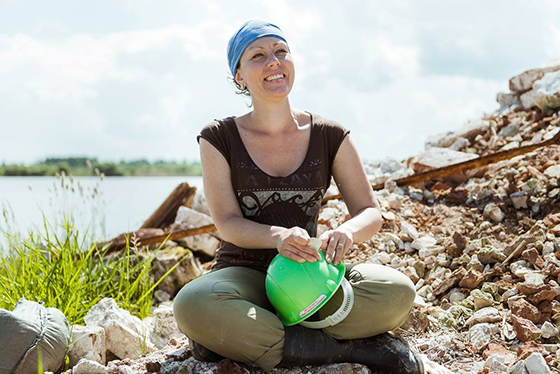
At the same time, the stereotype that the temple needs to be restored in order to fulfill its main function is also very stable. Sometimes it is difficult for us to all reconcile with the fact that in individual rural temples there will no longer be regular services due to the fact that there are no people in the district who could make his parish. But, in my opinion, this does not mean that you need to doom the monument to the right death. Its memorial value is no lower! Often, on a rural temple alone, as on a rod, the whole local memory and an intangible story are held. There will be no material object - the intangible heritage of this place will also be scattered.
 © from the archive of anor Tukaeva
- Krokhino, of course, is one example of a conservation culture in Russia. But the Fund also created a number of creative projects - starting with the Museum of unsuitable stories, where you collect the memoirs of former residents of the village, including about the way of their life, and continue more specific - documentary film “Overflow Stories of the White Lake”, and the creation based on archival data of fairy tales about the life of the village. When were creative projects integrated into emergency work to save the building?
- I cannot separate these directions at all. It is impossible to engage in a material object and not take into account its historical context. Therefore, the creative component appeared in the work of the fund almost immediately. We began the first volunteer expeditions in August 2011, and in November of the same year we recorded the first interview with a migrant from the village of Krokhino.
Now I understand what a lot of luck it is, that we managed to record a number of interviews with those who well remembered life in Krokhino, whom flooding found in adulthood. At the time of recording the interview, all interlocutors were already in 90 years ... In our archive, there are only seven audio recordings with people who lived in Krokhin for more than 15–20 years . Significantly more memories of those who left Krokhino in early childhood, and those who remembered life before flooding from the words of their parents. All this is incredibly valuable and reminds me of a kaleidoscope that allows me to create a holistic picture of the place from fragments of different memories.
Thanks to the former residents and their descendants, we gathered rare photographs of the village and its inhabitants and eventually reached the topic of difficult memory related to flooding and relocation. By 2018, we had an impressive archive of memoirs, documentary evidence and artifacts, which first resulted in the creation of the documentary “unstable stories of the White Lake” , which included interviews and live voices of immigrants, and then in the collection of “Tales of Krokhinsky Bollets”.
 © from the archive of anor Tukaeva work on installing art installation
In these creative projects, we retain fragments of the history of human destinies and family memory. The very story of a person is very fragile, it exists, while he is alive or those who know him well and remember him. If children or grandchildren did not want to fix such memories and facts, then the memory goes without a trace. You can flip out family photo albums, but if the photos are not signed, - These are just pictures, and if signed, then the story. This is generally the essence of any work with historical memory and family stories: to have time to record, give this form, systematize. But to have time to record is the most important stage, otherwise the rest will simply not be given.
It so happened that our fund - One of the few who studies the history of flooding in such detail is not only in the territory of Belozer, but in other regions. A couple of years ago, when we decided to collect information on other flooded territories and make a complete list of lost settlements, we wrote more than 60 requests to the local history museums of 35 Russian regions, one way or another related to flooding. We were answered a little less than half of them. Someone wrote that there is no such information, someone provided fragmentary archival data. And only a few really collect and store this story, for example, in the Museum of the Moluga Territory. So we found out that so far no one has made attempts to collect, preserve and convey the history of flooding in Russia. And even to make a list of all flooded cities and villages is not such a simple task as it might seem at first glance.
- What projects the fund is currently working on?
-In addition to the permanent work related to the preservation of the building of the Temple-Mayak and the Proceedings of the Media, where we talk about the basic initiatives in the field of heritage, we try to find new formats and approaches to talk about fragile-intangible. On the one hand, this is a very laborious format, but on the other hand, it enriches our activities with new meanings and finds a good response.
A few years ago, we ensured that the name of the village of Krokhino reappears on the cadastral maps of Russia. And this summer, an architectural installation with the name of the village was built - in fact, returned the name to him.
And more recently, we found field diaries recorded in Krokhin in the 1910s . The texts of wedding songs that existed here in the second half of the 19th century were recorded there. This is incredible luck. And we have another creative task - to revive the sound of these songs, update them and, possibly, recreate the wedding rite of a flooded village. So we can return his voice to this place.
 © from the archive of anor Tukaeva calendar "Tales of Krokhinsky Swamps"
- Krokhin, of course, was lucky to meet you in 2008. Anor, you communicate a lot with activists in the field of conservation of cultural heritage, you perform on thematic forums. Can you say who is more initiative in this area: men or women?
- In 2018, in the framework of the project “Proceedings. Media”, we conducted a detailed study of the lower initiatives in the field of preserving the cultural heritage. By the way, this is the only study in this area - such projects, unfortunately, are in the information vacuum. This study is still referred to now, since the experience of private initiatives has not been analyzed before or after.
We then compiled a portrait of initiators and active participants in such projects: among activists of leadership leaders to save heritage , 61% are women , while project leaders are often men. Many noted that they lack not only financial and administrative, but also public support. More than 80% rely on their own resources, which in the long term leads to burnout and fatigue.
My hopes in this area are due to the fact that we, as a society, will learn how to appreciate our history and memory, which means that we will more actively support projects related to the preservation of heritage. In the end, it is they who will help us not to lose meaning and balance in the constantly growing rhythm of life, information noise and depersonalization of our cities. They will help to reconcile with history and accept an honest legacy.

We make this section together with the She IS an Expert project-the first database of women experts in Russia. The purpose of the project is to make the opinions of women who produce knowledge and are ready to share experience in the public space.
Look for an expert here for your events.
Register and become experts.