
Translated material
Strongly knowledgeable
That Michelle Foucault would say about the logic of current repressions
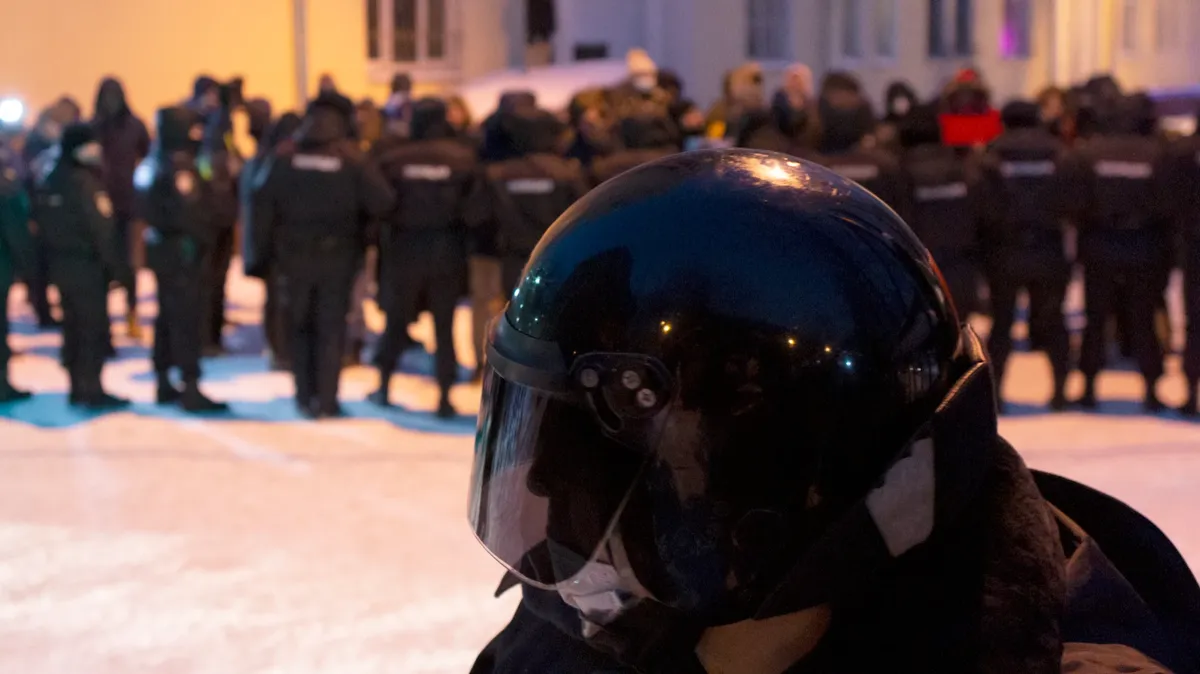
One of the founders of the now destroyed Memorial (we are forced to report that the Ministry of Justice considers the organization a “foreign agent”), the Soviet dissident Arseny Roginsky shortly before death in 2017 gave an interview where he did not glory to God in the country. And to the last question: "What to do?" An experienced prisoner answered briefly: "We must take a position."
To take a position, not only his own firmness is needed, which, along with mild charm, he had highly possessed, also needs support points, that is, environmental hardness. Meanwhile, the power creates a fluid for those who disagree today: laws are changing on the occasion, losing the nature of the norms, and the bodies of criminal, administrative, and now the civil law repression is not adhere to the framework of the law.
As Hannah Arendt wrote in one of the essays, “if we can’t do anything, we can at least understand”, and this relieves us of a feeling of madness. However, does the logic of his own actions understand the authorities? At a short distance, yes, but at the level of instinct: here something living is moving-it means that just in case you need to hit here. And at the distance of a longer power is in the same state of inadequacy, which, consciously or intuitively, it seeks to immerse society. This is we, in order to take a position, must explain to myself and her logic of power, which she herself is not able to articulate.
As an argument justifying violence, the authorities refer to the protection of the sovereignty, which it defends against enemies in space, and traditions requiring time protection. Thus, she allegedly protects our identity, but the same authorities demonstrate its necessity and strengthens its own legitimacy. However, legitimacy exists in the symbolic space (and time), and violence is used in the space and time of real. If we keep in mind this difference
It remains incomprehensible what other effect (primarily economic), in addition to strengthening the authorities, produce executions of “enemies”.
The same focus made power in the USSR, but it was easier to “take a position” disagree: the space of prohibitions was outlined much more clearly, and time included the promises of a bright future, which still did not come, and this created an argument that was understandable to everyone. The current “traditions” are turned into a past, which can be argued endlessly, and the prohibitions form a minefield, the map of which is not understood in advance and the “security forces” themselves. Merciful interest is also mixed with violence: the end justifies the means, and the war - corruption. There is nothing firm: the authorities use the methods of postmodernism, and it doesn’t matter whether “sovereign people” understand this or act on a hunch.
Let's turn to the instruments that are so popular among the Russian authorities today, but we use them not to create alternative reality, but to understand it. In the 60s of the last century, when everything was still simple and clear here, Michelle Foucault consistently developed the concepts of “epistemic” and “dispositive”, and in the course of the conclusion that power and knowledge (not necessarily true) is essentially the same thing. An epistemic is a structure that determines what a person should and can know in each era and in each particular country, and dispositives are the same, but with a much more stringent use of violence.
The optics of the dispositive allows you to otherwise see the amendments to the Constitution and the innovations that followed them: the most important of them are by no means connected with the state structure, but with the marking of the place and time - the crowding of a certain “knowledge” and the protection of its boundaries. “The ancestors who gave us ideals and faith in God” is “knowledge”, albeit mythological. And the “diminution of the meaning of the feat of the people in the protection of the Fatherland” is the boundary of permissible knowledge, the exit for which threatens with a fine, or even article 354.1 of the Criminal Code of the Russian Federation for “humiliation of honor and dignity of the veteran of the Great Patriotic War”.
The authorities determine who can know what - the amendments to the Law “On Education” are directly aimed at this, but in fact about enlightenment: only the authorities can now appoint “knowledgeable”, and all knowledge received and even more extended bypassing the order established by it is outlawed.
The dispositives covers not only direct bans on knowledge, as was recently done when classifying any expenses of the Russian Guard as closed budget items, but also more general establishments: for example, the creation of an interdepartmental commission on historical education, where the president included representatives of the Prosecutor General, the Ministry of Internal Affairs, the SVR, the UK, the Ministry of Defense, the Ministry of Defense and the Security Council. The right to publish prohibitions is delegated to the level of this obscure “commission”, and those gaps in the knowledge that are formed as a result will be filled with the fact that Marshall Mlyuen called vertical media, that is, monuments, as well as new textbooks, on which, by the way, someone will work very well (this may be the main criminal case against the rector of Shanka Sergey Zuev).
The boundaries of knowledge are established both by law and at the level of law enforcement practice of courts and executive bodies. These are prohibitions on public actions - the rules for their holding are complicated, the practice of refusals without any rules is honed, and judicial punishment is tightened to their participants. At the same time, the so -called right loses the quality of general norms and acquires the nature of orders and vice versa - court decisions on individual cases and prohibitive acts of administrations acquire the nature of the quasinorm, “disciplinary practitioners”, as Foucault calls them, emphasizing that power is not so much a privilege as strategy, mechanisms and technology.
Generous punishments in the form of deprivation and restriction of freedom are so clearly related to space and time that we do not comment on them. “Expertise” deserves special attention, which is carried out (when it is necessary and when it is not necessary) in criminal and other court cases and in most cases replaces the court decision on the merits.
The investigator - the “security forces” arbitrarily selects “knowledgeable”, he also forms a “technical task”, which is understandable “experts”.
The same procedure for choosing “knowledgeables” is valid, however, when drawing up notes and justifications for making the most important government decisions in the field of politics, economics and jurisprudence: those who express the necessary and non -hazardous for officials who prepare a decision and evaluation are selected to the author’s groups. Real and large specialists in the humanitarian sphere are not in demand in practice.
Forbidden to compare the regime in the USSR and Germany of the 1930s, the authorities itself treated space and time much more freely. In search of supports for legitimacy, she pushes the frame of modernity over and over again, dragging into it from the past of Dzerzhinsky, whose monument from time to time is proposed to be returned to Lubyanka, then Malyuta Skuratov, who, it turns out, choked Filaret only “one of the versions”, then simply “ancestors” unknown by tenderly, but precisely saved Russia from its enemies from the west. What is missing in this frame (possibly, taking into account the sad experience of the USSR), is the future.
The attempt of the Prosecutor General’s Office to eliminate the “memorial” at first glance seems quite crazy if you take into account the consequences not only within the country. But the logic of the disposit, which acquires an increasing reverse influence on power, is strictly dictated to it such a solution, since the “memorial” cannot exist in the same dispositive with the Medinsky Commission, monuments to Ivan the Terrible and Stalin, which grow in the country, like mushrooms after rain.
The concept of sovereignty allows you to prescribe those who know on their territory, and the authorities equate the “calls to the alienation of the territory of the Russian Federation” to extremism. Today, such calls can only sound from a crazy house, and fear of them also seems paranoid, but, firstly, in the modern world the “territory” goes from under the feet, and subjects scatter from it with the help of the Internet, and secondly, who knows what will happen tomorrow.
In this “tomorrow”, which is still implied, the axis of time appears. In "sovereignty" time is not as obvious as space, but always present.
So, the zeroing of the president’s terms is a redistribution in his favor of the time, taken away from those who, otherwise, had more chances to choose someone more modern in his place.
According to Karl von Clausewitz, who defends more dangerous: the second wants to defeat and establish the world, and the defender does not need such a world. The ideal for the dug in time of the authorities is the “panopticon” - this word Foucault borrowed from the drawings of the prison of Jeremiah Bentam, where the guard could constantly see all the prisoners, herself remaining invisible. Panopticism as “disciplinary practitioners” gained in the latest technologies such tools that the authorities could not even dream of. But they also allow the “supervised” to slip away from its sovereignty into another space. Thus, an attempt by the authorities to take control of educational activities will only lead to the fact that the seekers of modern knowledge emigrate to the English -speaking Internet without leaving home.
Returning to the story with the Memorial, it is an attempt to correct in Russian history for about 30 years, but in the modern world this is much more difficult than before. The archives (knowledge) collected by bit are digitized and stored "in the clouds."
The liquidation of the “memorial” can slow down the time, or maybe, on the contrary, to speed up it, attracting the attention of those who were not very interested in its themes before.
Establishing unnecessarily strict boundaries of knowledge, the government deprives the opportunity to accumulate it primarily of its own. For her officials, the border of knowledge is much less permeable than for those who prefer to exist separately from it. The authorities have exhausted the possibilities to make meanings, it is dangerous both for it as a whole and from the point of view of the career of its individual representatives. Their temporary horizon is described by the phrase, which in 1757 consoled the Louis XV Louis XV, the favorite of the Marquis de Pompadur: "After at least the flood." The inability to produce new meanings and makes up the reason that the government produces more and more violence.
Even their own structures of the authorities live in different times. The execution of the old satellite by the Ministry of Defense was apparently a surprise for Roscosmos, not to mention the Foreign Ministry, which, with all the archaic rhetoric of Maria Zakharova, cannot afford to remain in the era of the Cold War of the 1970s. What can we say about generations: 20-year-olds who are looking for knowledge have a greater margin than 60-year-olds who want to limit them in this.
What position should we take, understanding the logic of power?
In physical space and time against the "astronauts" of the Russian Guard, seekers have no chance. In the symbolic space, taking into account time, on the contrary, the existing government has no chance.
The future, remaining open and unpredictable, is determined here, and not "on the barricades." We should do what we do: to remain thinking people without buying for handouts and not substituting beyond measure under meaningless and convulsive repressions.