
Translated material
The return of Arsenyev
In Vladivostok, the first complete collected works of the famous researcher of the Far East were published
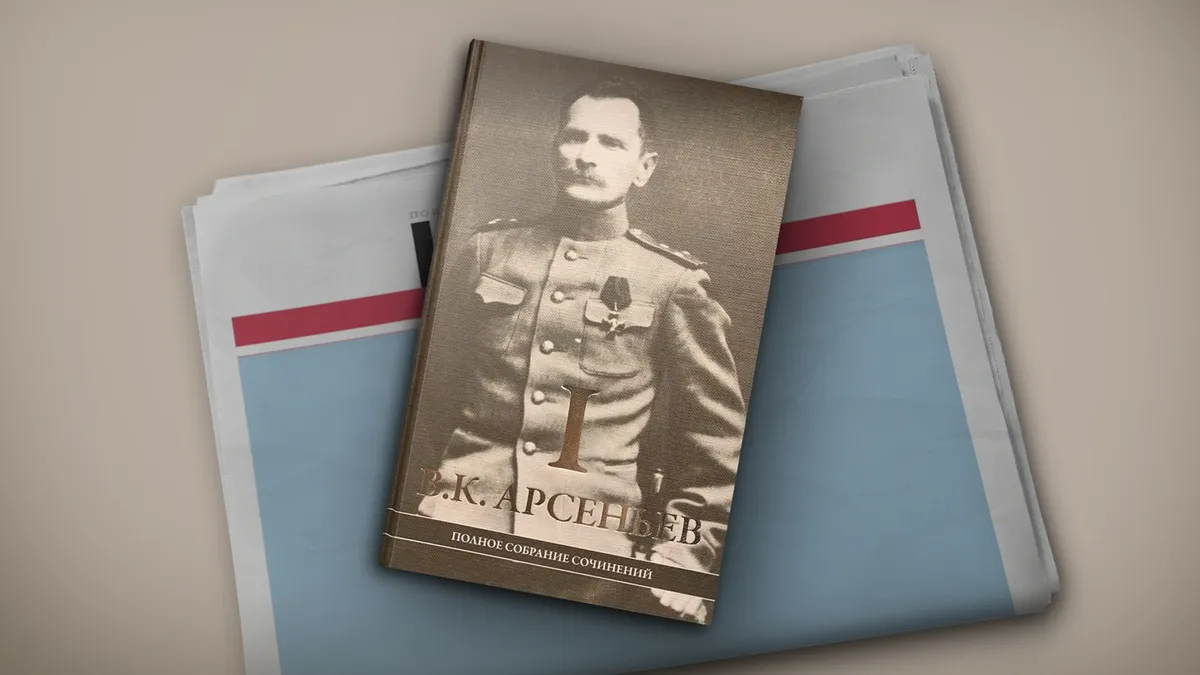
Until the 150th anniversary of the traveler, scientist, writer Vladimir Arsenyev (1872–1930) has been less than a year. There is another round date: 100 years ago, in 1921, his first book addressed to the wide reader was published in Vladivostok - “In the Ussuri Territory”. Exactly a century later, here, in Vladivostok, the first complete collected works of Arsenyev, whose legacy is great, varied and still poorly studied, saw the light. The Pacific publishing house "Rubezh" - its leader Alexander Kolesov and the responsible editor of the publication, the researcher of Arsenyev’s creativity Nikita Vorobyov, carried out truly titanic work. Plus dozens of people who helped them one way or another.
Not to say that Arsenyev’s name is forgotten. They were admired by Gorky, Prishvin, Nansen, Kurosava filmed him. In the Far East, Arsenyev is surrounded by a real cult. Nevertheless, they know him much less than he deserves. Despite the far from local value, Arsenyev is placed in the Procrustean niche of the regional local historian. Underdrawn, undergoing, underestimated.
Who is Arsenyev and why do we need him today?
He is not a pioneer: a number of officers and scientists passed the taiga paths of Amur and Ussuri earlier. Arseniev took up all the sciences at once, but in no area received a degree. He clarified the cards-but what kind of we are from this if in every mobile phone-GPS? Read the texts of Arsenyev, replete with science descriptions and clusters of the terms, is a difficult matter ...
Nevertheless, he is convinced: Arseniev is relevant, important, needed, interesting. And it is for us today.
Self -taught, a graduate of the Infantry School, he did as much in ethnography and archeology as much as it is possible for a whole academic institute; He became a scientist of truly Lomonosov type and coverage.
Arsenyev is one of the first Russian ecologists.
He raised questions about the protection of nature, the “hunting law”, the construction of reserves when it was far from fashion. The ecologist in it was inseparable from the statesman and officer: he expelled Chinese "predators and poachers", and during the intervention opposed the lease of the Commander Islands to the Japanese.
This is an extraordinary, original writer. The uniqueness of his books is in the synthesis of a document, graceful literature and personal experience. Overcoming the document, Arseniev rose to the heights of artistic philosophical prose. He prescribed the Far Eastern outskirts of the country in literature, continuing the increment of the South of the Far East to Russia, which was begun by the military and diplomats of the 19th century, because only the land that revived in the word becomes truly mastered.
Arseniev created the image of the “Gold” (Nanai) Dersu Uzala - “Primitive Communist”, who lives in harmony with himself and the world, who does not accept technological progress in the absence of moral. Yes, and Vladimir Klavdievich himself, who compared the taiga with the temple, criticized his modern civilization, in which you can see the parallels with Spengler, which then worked on the "sunset of Europe".
Ethics, philosophy, ecology - these are the deep layers of Arsenyev’s prose, which make the legacy of Vladimir Klavdievich modern and necessary. The type of personality itself is also important: a passionarium, an intellectual, a ascetic, a real intellectual.
Arsenyev’s life is an important example of how a person is realized by not conquering, but to leave the capital.
There are no numbers of circulations “in the Ussuri Territory” and “Dersu Little”. But the collected works of Arsenyev came out only one-in the late 1940s in the Primzdat, and it was far from complete.
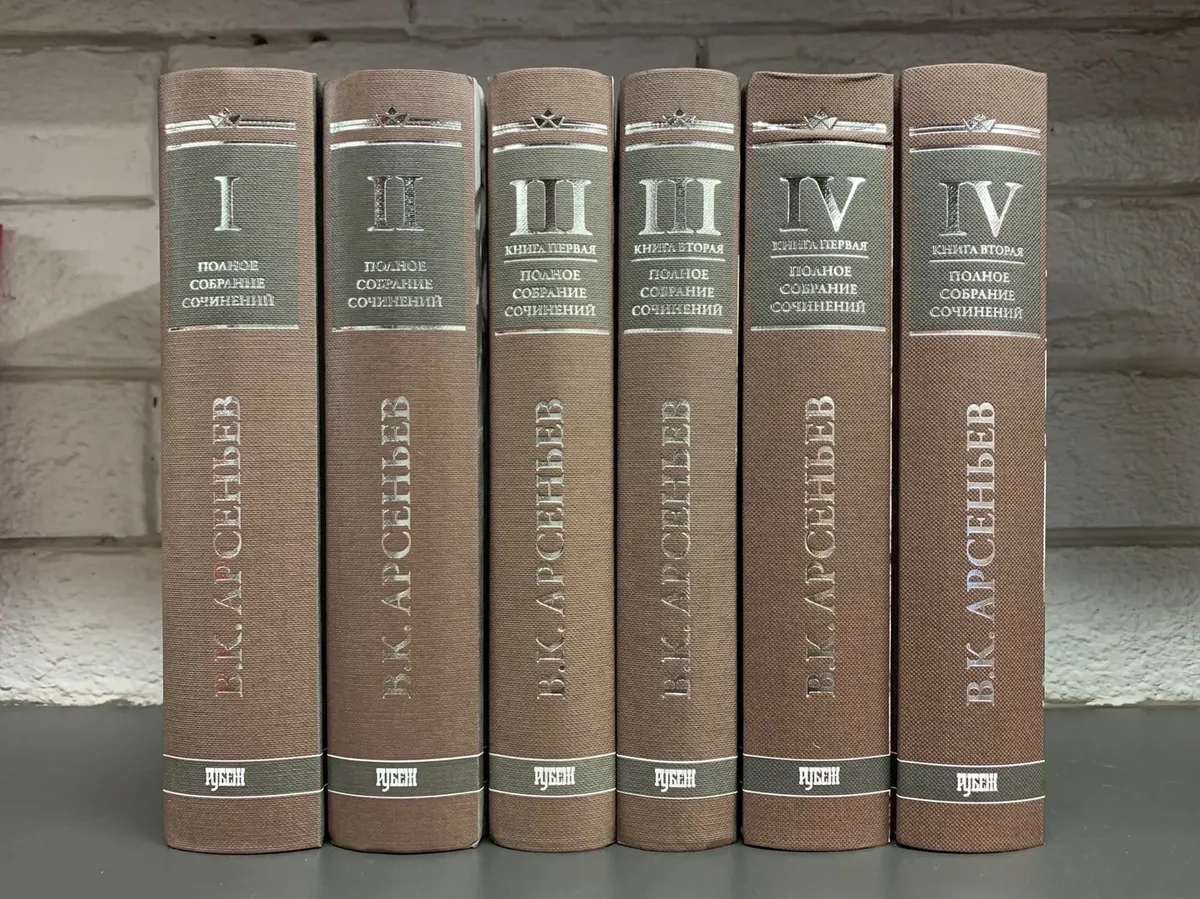
"Rubezh" has long been working on the publication of Arsenyev’s works, in 2007-2012. Even the first three volumes came out, but then it became clear: it is better to start over again and release everything again, fixing and complementing. And now four volumes have already been published. Moreover, it is physically six full -fledged books, since the third and fourth volumes are published in two books each.
The basis of the first volume is “in the Ussuri Territory” and “Dersu Uzala” - about the campaigns of 1902, 1906 and 1907. With interesting applications and comments. The second volume includes works telling about the expeditions of 1908–1910. (“Jubilee”, the longest and most complex, in which Arsenyev’s detachment nearly died of hunger) and 1927: “Life and Adventures in the Taiga”, “In the mountains of Sikhote-Alin” (first released), “Through the taiga”. From the third volume, Arsenyev begins almost unknown. It was compiled by the texts of the pre -revolutionary period, which were not originally intended for a wide reader, but of undoubted interest: reports, reports regarding military geography, history, ethnography, archeology - in the range from the “Chinese in the Ussuri Territory” to the “eternal memo for the will of Arsenyev” (there are also such words: “Work or die - this is a repeat. Nature, if you stop working, will die mentally, morally and physically ”). Finally, the fourth volume includes the works of Arsenyev of the Soviet period: the description of the Commander Islands, essays on the Udegeas, autobiographical notes, analytical materials for the distance, a secret report to the Distance CPSU (b) and even explanatory for the OGPU, written about denunciations of Arsenyev, but de facto representing an interesting and unexpectedly topical journalism.
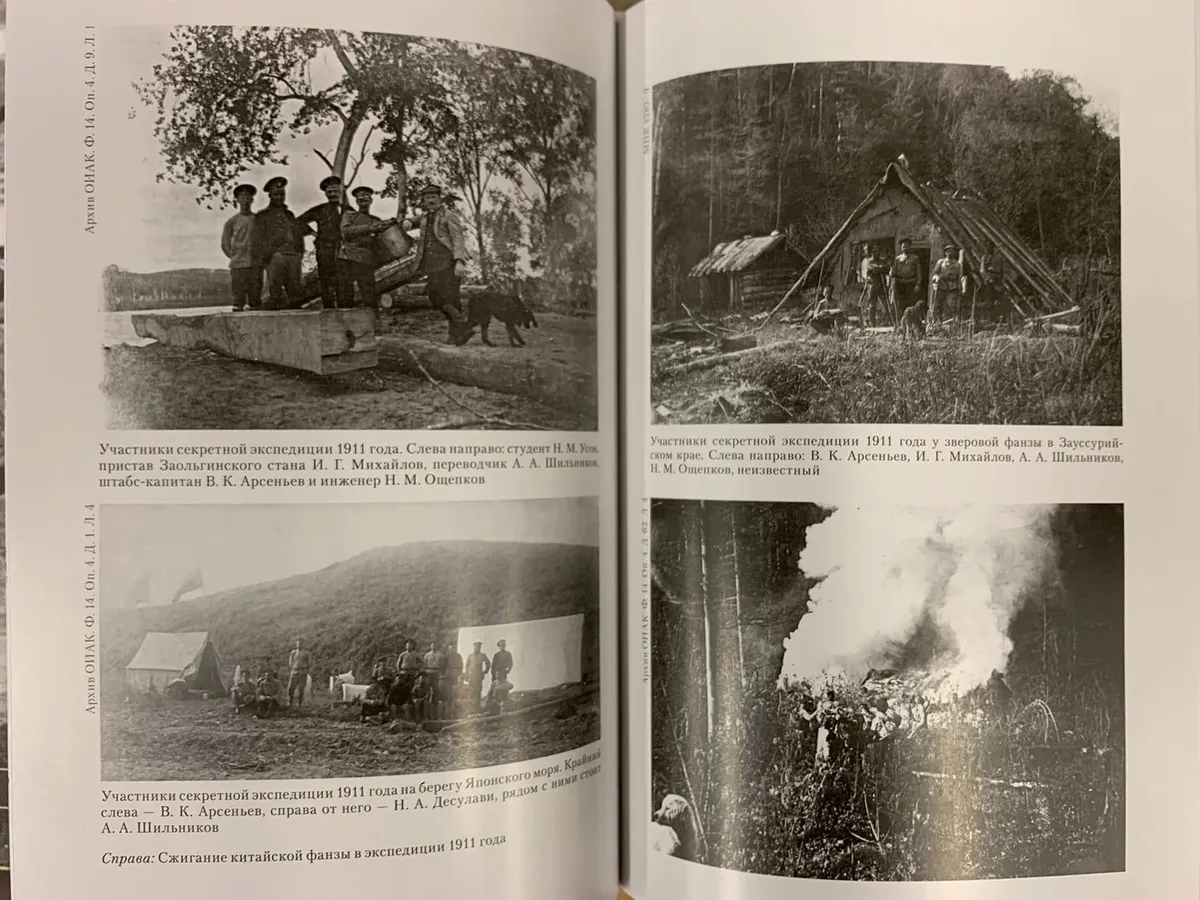
For the first time, a number of texts of Arseniev were introduced into circulation, and errors and typos were eliminated in the already known. Detailed comments allow you to deeperly understand the time, place and personality of the author (sometimes a number of myths associated with the name of Arsenyev are revealed in them: where and when did he first met Dersu? Did he participate in the suppression of the their eupaean? Was wounded in the taiga Hunhuzam? What had relations with American interventionists?). The photographic photographs that are equipped with each volume are unique - many pictures are published for the first time, asks a separate photo album dedicated to the life and travel of Arsenyev. There are not enough letters and diaries in the collection; Work on their search, decoding and attributes is carried out, so there are new volumes and discoveries ahead. But already now an iceberg named Arsenyev seemed out of the water as he had never appeared before. Moreover, all this grandiose work was carried out not by a large metropolitan, but a small regional publishing house - an exception to the rules in our Moscow -Consentric country.
- Arsenyev’s legacy is underestimated. This is not a regional, but a global scale, ”is convinced by the publisher of Kolesov, who introduced the Arsenyev meeting at the Non/Fiction Intellectual Literature Fair.