
Translated material
Vasily Barkhatov put "Faust" in Perm
We discussed with the director why he returned to Russia after eight years and that he infuriates him in the opera
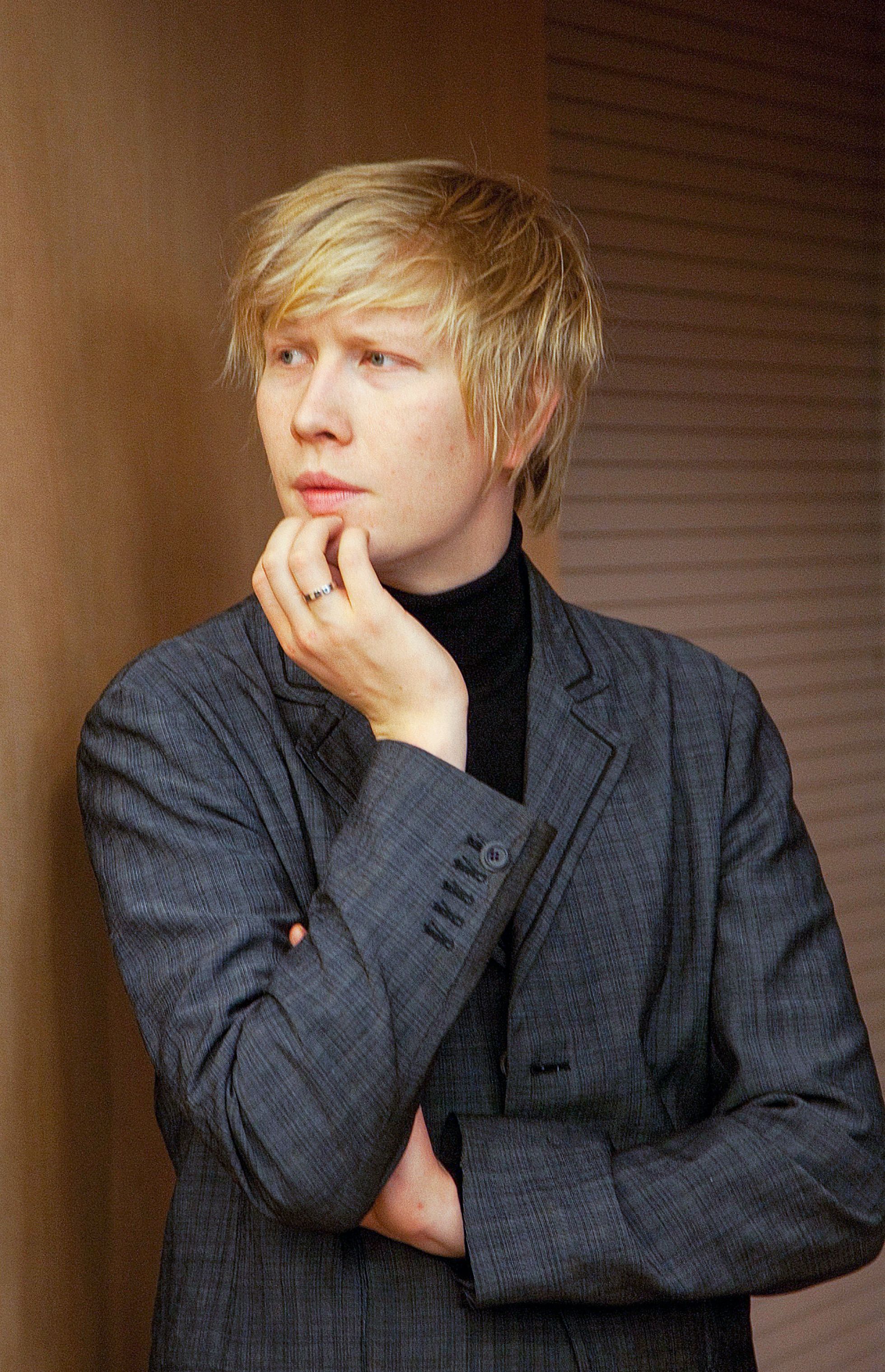
On December 18, the premiere of Faust Charles Guno will be held on the stage of the Perm opera in the production of director Vasily Barkhatov. The theater career of Barkhatov began with a bright start in the Mariinsky Theater - he released his first performance with Valery Gergiev at 22 years old. After several works in Mariinka, Barkhatov moved to Europe - his opera performances were in Switzerland, Germany, Austria, but not in Russia. Faust became the first performance staged in Russia after a long pause. At the request of Medusa, the music journalist Polina Dorozhkova talked with Margatov about why you can not love Faust - and what could annoy in the opera director’s opera.
- 8 years have passed since your last performance in Russia - both the political situation and cultural policy have changed here. And now you get an invitation to Perm. What did you feel? Excitement or alertness?
- There is always alertness. In a number of things, in Russia, a mess is more characteristic of us, although in European theaters there are minuses. I was afraid of our famous domestic production sludge - I was a little weaned. The second performance that I released in Europe was Khovanshchina in the Basel Theater - at that moment I first realized that if the performance fails, then only through my fault. Everything works so clearly that if the setting is destined to be unsuccessful, then only because of my idea. There is no one to blame. If something goes wrong, you can’t justify yourself in front of you-everything is perfect here, except, perhaps, your very performance.
Returning [to Russia], I understood that I would face some relaxation. This year, my work in Russia began not with the theater, but with the cinema - and with some surprise I found how many random people work there. Going to Perm to rehearse, I internally grouped - and was surprised that in vain. If everything were bad, I would not say about it, but in this case it was really pleasantly surprised at how things are in the Perm Opera.
-In Perm, still for many years, avant-garde projects took place-from Isaacan and ending with Cuentsis . A slightly different situation in the Moscow “New Opera”-the theater, where the top manager has recently been completely updated. There you also prepare the premiere.
- “Dead City” [Erich Wolfgang] Corngold is the work “Unverified” for Russia, although in the world it goes quite widely. In fact, Corngold and his status “Composer of the 20th century” can only be scared. [If we distract from this status] his music is very cinematic-low-income. No special extensions and a special love of music of the 20th century are not needed to listen to it.
In the opera [Dead City], a musical language that he used in the cinema is very felt. For example, in the soundtrack to the "Adventures of Robin Hood" Michael Curtis, for which he received an Oscar. With some [composer] Moses Weinberg, for example, a little differently-you listen to the songs of Winnie the Pooh, and then the opera is an idiot, and you understand that he, of course, talentedly wrote songs for children, but his real language is only in academic music.
-“Faust” in a sense can be frightened more strongly-let this music sound more conventional, it is not easy to perceive it on this scale.
“I refused to put“ Faust ”many times, because I had no key for this work.” It seemed to me that this story could not be told from the point of view of people. At the same time, I always avoid any devils and other opera evil spirits there, since I am not very aware of how they look, I have never met them yet. I put it about what I imagine at least about myself.
Guno's musical language always seemed too beautiful to Geta’s text - and this excessive illustrative romance, and the secularity of history always pushed me away. But in the end, it was precisely what was most infuriated by this opera, and it became what opened the path to reading.
- If Faust has repelled you for so long, will it be pushed away by those who will come to the opera theater for the first time?
- It seems to me that the music itself cannot push away - it can push away how they treat it in the theater. Most of all people infuriate when they do not understand anything in what is happening - and on the opera stage including. It is clear that the viewer himself can be lazy to delve into what he saw. It is clear that sometimes it is difficult to read some cultural codes. But ultimately, it is not so important in the modern theater whether the opera heroes are dressed in modern costumes or in ancient crinolines - it is important that every second of action, you understand why they behave this way and not otherwise.
Of course, I had certain doubts whether this performance should be done in Russia, because Faust is a very acting story. Action in the same closed room, with the same people who live a certain process. There are no strong visual effects so that people have caught their breath - the performance is actually built on the old laws of the Russian psychological theater, laid on French romantic music.
- What hint can you give to the audience?
- In order to easily and deeply perceive this performance, you need to be attentive to the text - the stage, and literary, and musical. In this production, a little more than in others, you need to know what the heroes are talking about at one time or another of the action.
The actors who learned Faust for the first time were much easier than those who already sang it. It was difficult to rebuild - the phrase that they sang all their lives, addressing it to one character, in our production is divided into four, and sometimes more addressees. Or some specific intonation can completely change both the dramatic structure and the development of the character himself. I already put Faust in Germany, I know that the performance was well accepted - it seems to me that the new version created specifically for the Perm opera may work.
-Did you have to somehow redraw the German version of Faust under the Russian context? And is it necessary to do this in your performances at all?
- Specifically, this performance - no, it seemed to me that this story is universal, understandable and freely converted. But sometimes it is necessary to take into account the local context.
In the same Khovanschina in Basel, we had a wagon on the stage, in which Sagittarius folded corpses. Such a wooden warmth. And when we arrived in Switzerland to take a layout, the first reaction was unequivocal: such a car with corpses - means the Holocaust. And for a long time we were looking for the desired design of the car-until we found a completely abstract look of a blue metal-refractor car, which is not able to cause a European association with the Holocaust.
Or, for example, you want to make a performance, the action of which will unfold on the set, and in the very first stage, you break the painted plate about the tripod of the camera. But in Europe, filmmakers simply do not have this tradition, foreigners simply won’t understand why they beat dishes on the stage. In general, I often notice how such difficulties of translation arise in the theater - often in the literal sense of the word. As in the Lady Macbeth of the Mtsensk district, David Pauntney, when Sergey is found with Katerina - at Shostakovich he pronounces the phrase "Here you are, grandmother, and Yuryev day." Why translate it literally - “There You have it, Granny, the yuryʼs day?” - It will be Beliberd. Therefore, Poundtney has a beautiful replica “We are in the deep shit now”.
In my Faust there is nothing local European, something that could not be counted in Russia-the performance of the performance begins in the restaurant hall, where high society has gathered, and today it looks approximately the same in Russia, that in the West.
- With which scores did you still have such difficulties, except for "Faust?"
- With the "longing" that I did in Hanover. For similar reasons as with Faust. I was not at all satisfied with the lyrical line, which is traditionally customary to give out as the main one. And I had a completely amazing and turning point with this production. The audience was ready for everything, but did not want to accept that “longing” was the story of Scarpia . For everyone, this is a caricature villain who wants to be snaped on longing under the pretext of blackmail her lover.
And then I suddenly tell why and why Scarpia became such a shit. And amazing - there was nothing radical there, but I was a bukan with terrible force. Because how so? Puccini wrote such a beautiful melodrama about the artist and opera singer, who should connect in heaven. The audience understood the story that I want to tell - but tightly refused to accept it.
-Are there any things that you could afford many years ago, but now you won’t do it?
- It is clear that from the point of view of artistic self -control, I change. I look at most of my performances that I did at the age of 20, I look like a girl at my makeup at 16 - “Oh Lord, seriously, could I make up?” Now I understand that it is necessary to remove the fussiness from the performances, which was characteristic of me in my youth. It seems to me that in all my early performances every second mise -en -scene needed to just be thrown away - and it would have become much better.
- What do you like more - to invent new stories over old works or create a story from scratch with the composer?
- I will rather support the approach of directors who work closer with a finished party. Why I don't know. In principle, it is always more convenient and calmer for me when they gave me ready -made work - and now this is mine, then I should not coordinate it with anyone. When there are many co -authors, everyone needs to discuss everything. And then we sat with the party and all “decided”.
- Do you become more democratic or authoritarian over time?
- It seems to me more democratic. Although no. My authoritarianism is an island of stability. I need people to do exactly as I need plastic, psychologically.
All cool singers understand that even in such a strict scheme there is still a place to tell something in their own way. You build a tough scheme for a person, and then he begins to exist in it and grow into some details that work on the character created by the director. In the cinema and in the theater, I come across the fact that they ask me - "Where will I play?" I answer - “Well, I don't know. Somewhere. " It seems to me that the actor himself is much easier when they are led.
And when there is no pronounced directing, a person begins to repeat himself. It is clear that it is for this that they “buy” a certain singer or actor, but these repetitions are bored. The meter and stricter the directing and the drawing in which the actor is driven, the more interesting and profitable to everyone. When you make a cast, you certainly choose people for their finished qualities, suitable for characters. We use something ready, but we turn it a little in a new way.
- Do you have a desire to make your theater relevant through a political or social statement?
- No, there is no such desire. I really like the directors, starting from the circuit of the Kirill Serebrennikov, who are engaged in the political theater, incredibly cool. I myself do not know how.
But sometimes it is impossible to ignore the modern social context - in the next season I put the "sorceress" . According to the plot, Pop Mamyrov and Prince Kurlyatev - the Church and the police - decide that in Nizhny Novgorod you can do, and that is impossible. And you can put them at least in the costumes of Egyptian pharaohs, but the first thing that comes to mind is Eklmn, Tchaikovsky wrote at the end of the 19th century that I was happening outside the window in the 21st century.
I never strive to specifically focus the statement, but there are some things that are simply impossible to get around-and if you deliberately avoid this, you will look even more strange. But I repeat once again: the manifesto is not my genre.
- What infuriates you in the opera?
- When the opportunity to lift the entire load seriously, people enlighten situations in advance and put all the heroes with idiots. When human passions are immediately belittled to zero, so that later it is not necessary to keep the necessary tragedy. When a person is embarrassed and cannot say something seriously, he begins to scream in order to protect himself.
I do not like hack - I mean not the quality of work, but the attitude. It is always clear when the director comes to the opera and is not tormented by what he does. "Listen, this is just an opera." When I hear this, I do not enter into any debate - why should I protect obvious things? But internally, I disconnect from this person. It happens in a different way: the performance can be terrible, ridiculous, where the ends are not converged-but I see that this was a certain process and the flour was real. And I have much more respect for such products.
- What would you still dream of putting?
- “Idiot” by Weinberg, “Lady Macbeth of Mtsensk district” by Shostakovich and “Bohemia” Puccini.
- Do you still want to work in Mariinsky or Bolshoi Theaters?
- This is a provocation. (Smiles.)
Polina Dorozkova talked