
Translated material
Lukashenko with a grenade
Whether the dictator will receive nuclear weapons
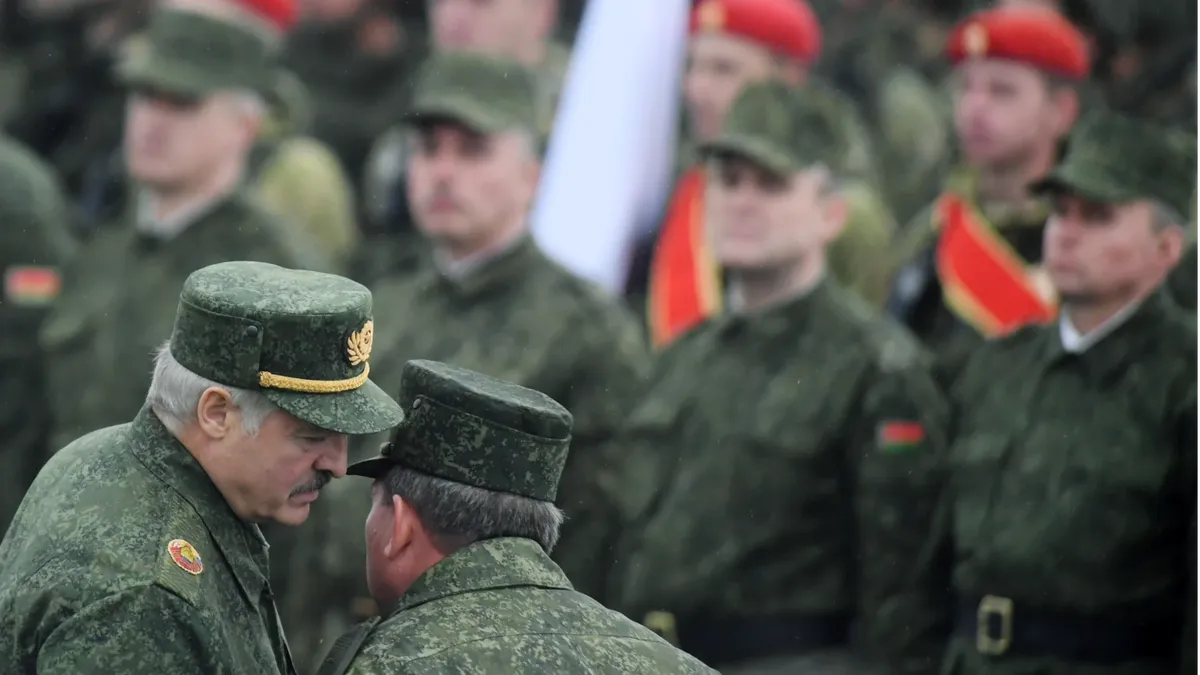
At the end of last month, Alexander Lukashenko in an interview with Dmitry Kiselev announced that he was ready to “return nuclear weapons to Belarus” for a joint confrontation of the West and NATO. Once the Belarusian military district was the most powerful in the USSR, and there was a lot of nuclear weapons there: both non-strategic (tactical), and soil mobile intercontinental ballistic missiles (ICBRs). There were objects of the 12th Main Directorate of the Ministry of Defense (responsible for nuclear weapons), where they stored and conducted maintenance of combat units. Lukashenko boasted of Kiselev: “We are ready. I, as a zealous owner, did not destroy anything. All sheds stand still. " Obviously, we are talking about the “objects with” the 12th main and other nuclear infrastructure.
Sergey Lavrov quickly responded from Moscow, who called Lukashenko nuclear statement “a very serious warning for the West, which pursues a reckless policy” in the Federation Council. Sergei Ryabkov (deputy Lavrov) said: “We heard the signal of President Lukashenko. We took him note. ” But no specific counter proposals from the Ministry of Defense and the General Staff of the Russian Federation followed. More than a crescent, and without waiting for an answer, the head of the Belarusian Foreign Ministry Vladimir Makei in an interview with RT Arabic recalled: “We are considering the possibility of placing nuclear weapons as a response to NATO actions.”
It is noteworthy that Belarusian nuclear requests are transferred to Moscow publicly, through Russian State.
Lukashenko has repeatedly publicly lamented that in the nineties he was forced to agree to convey to Russia the entire nuclear Soviet heritage under joint American-Russian pressure, and called it a “fierce mistake”. Already in 1992, even before Lukashenko came to power, Minsk voluntarily joined the agreement on the non-proliferation of nuclear weapons (day) as a non-nuclear power. In December 1994, during the OSCE Budapest Conference (already under Lukashenko), Belarus received a guarantee of security guarantees from the Russian Federation, Great Britain and the USA (Budapest memorandum) in exchange for the abandonment of nuclear weapons along with Ukraine and Kazakhstan. Lukashenko resisted to the last and with the withdrawal of the Topol ICBR pulled until 1996, when Ukraine and Kazakhstan had already managed to get out. However, he was in the end to obey the threat of total external isolation.
Of course, Lukashenko had neither specialists, nor technical and financial capabilities to maintain modern nuclear weapons and delivery products in a combat regulation.
But possession itself already creates possibilities for blackmail.
Today, in the conditions of international isolation and growing Western sanctions (after the elections in August 20 and the incident with the Ryanair aircraft in May 21), Minsk threatens the West that the conflict can lead to a nuclear war in Europe, but it sounds not serious, since there is no nuclear weapon or means of its delivery in Belarus.
It is clear why Lukashenko wants to regain at least some nuclear potential, but why is this to the Russian General Staff? Today, military leaders serve today, who were not children in the nineties and remember well what efforts it was worth it to scratch the Soviet nuclear weapons from the former union republics, especially from Ukraine and Belarus.
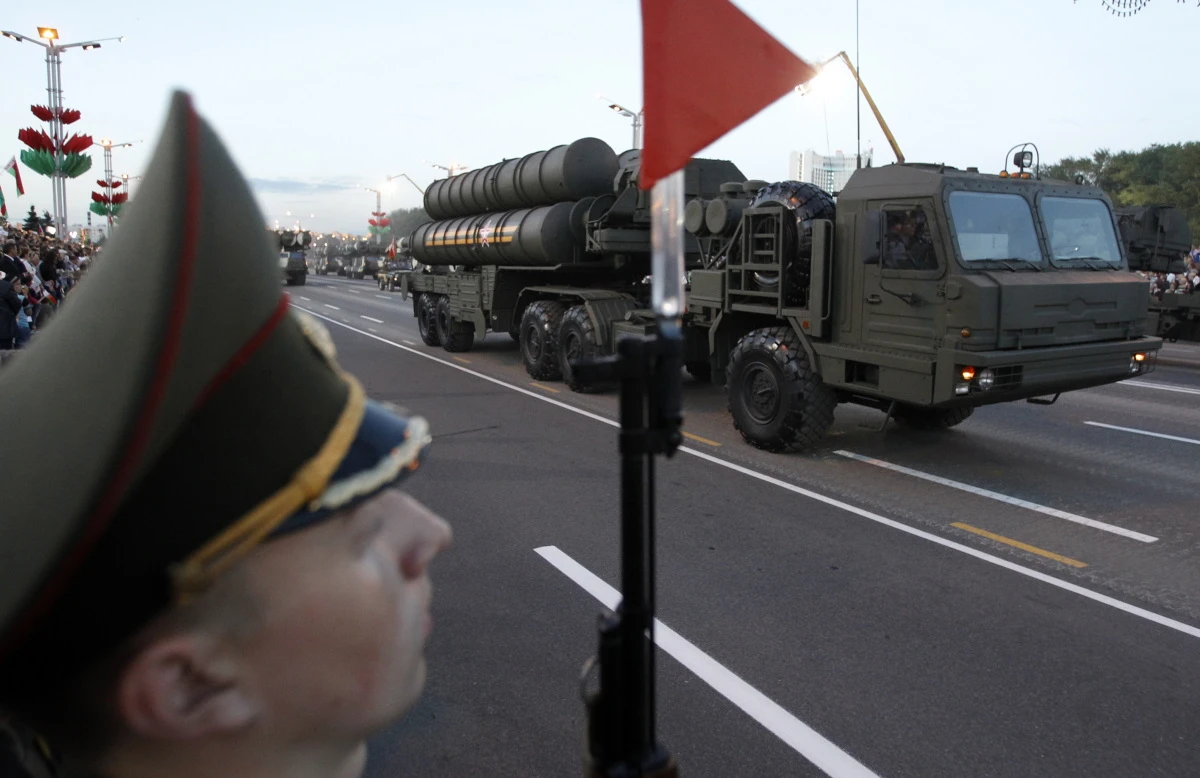
Russia has the Kaliningrad region located northwest of Belarus, where there are already sea, air and ground (Iskander-M and Iskander-K) carriers of non-strategic (tactical) nuclear weapons and existing objects of the 12th main administration. That is
In the Kaliningrad region there is everything that is not in Belarus today, and under full Russian control.
The goals that can potentially be covered from Belarus are covered from Kaliningrad even better. The placement of nuclear weapons in Belarus in Lukashenko does not give almost any military-technical advantages, but it creates many very serious problems.
At the Pentagon in Europe at the bases in Germany, Italy, Belgium, Holland and Turkey, approximately 150 nuclear bombs were placed for joint use with these countries. This is a weapon of the so -called “double key”, for the use of which a single -moping permitting directive from Washington and from each of the listed European countries is needed, since it is their combat aircraft, and not American, should dump these bombs in the event of a pan -European war. It is clear that these American-European bombs are more likely symbolic-political and real military-technical meaning in it. It is also clear that
Lukashenko, if his nuclear request is satisfied with Moscow, will require himself no less on his territory than a “double key”, that is, joint management.
It turns out that at your own expense it is necessary to introduce their delivery and combat nuclear blocks into Belarus, to support them at his own expense in the combat state, and Lukashenko will have the right to veto its use. Moreover, you can easily introduce a weapon into Belarus (Lukashenko calls), but it will not work out so simply: they will not be released. Or they may demand to pay exorbitant compensation.
That is why the Russian military adheres to the principle of non -replacement of nuclear weapons in other people's jurisdictions. Russian Tu-160 and Tu-22M3 bombers patrol the sky over Belarus from time to time, but are not based there, since there is also little military-technical meaning. Of course, if someday in the future there is a real union state-the unification of Russia and Belarus-with unified armed forces, where one-man will be unity of residents without any veto, if the Russian army divisions are placed on a permanent basis, which guarantee the reliable preservation of nuclear weapons, then in this case this jurisdiction will not be a stranger and there will be no questions. But this is if it happens, it is probably already without Lukashenko.