
Translated material
Back to democratic centralism
The 200-page bill of Klishas and Krasheninnikov recreates Soviet power
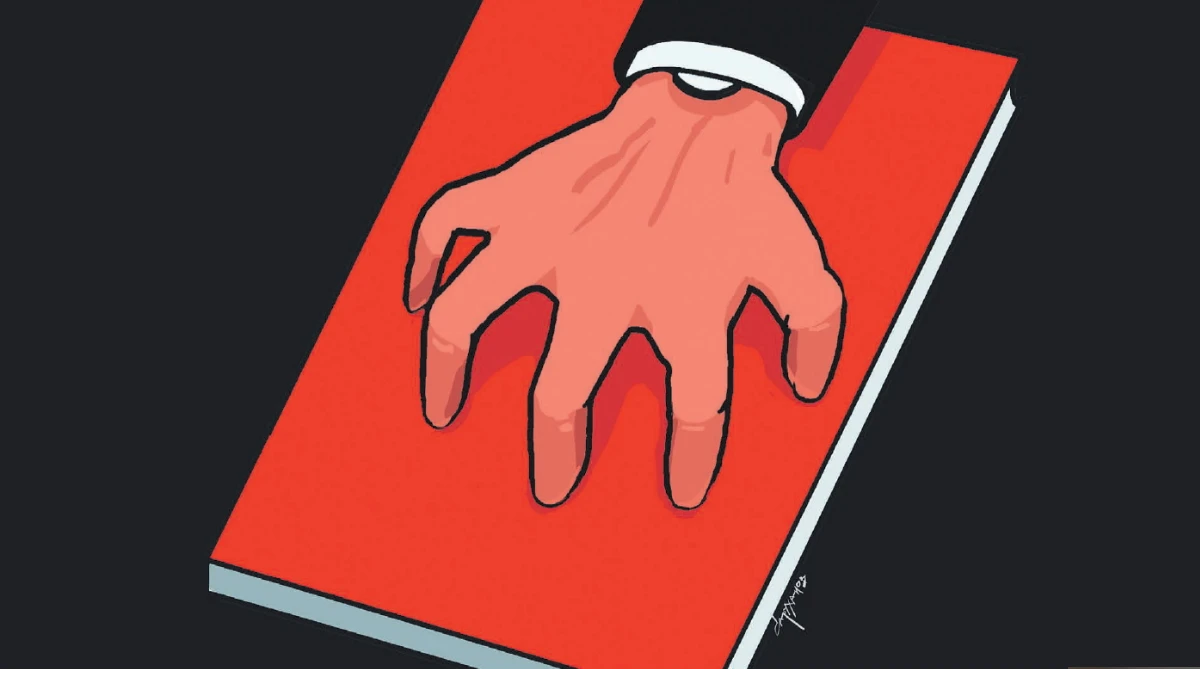
Exactly on the day when public attention was almost completely focused on the Duma vote under the Law on QR codes, the inseparable duet of lawmakers-Senator Andrei Klishas and State Duma deputy Pavel Krasheninnikov-introduced the draft law "On the general principles of organizing local self-government in a single system of public power."
More than a 200-page project-complete with the law that has just been adopted by the law of the organization of power in the regions-completes the process of turning into a fiction of one of the foundations of the constitutional system of Russia, namely the federal nature of the state. In fact, the federation is replaced by the “vertical” of the Soviet type, where power is built from above to bottom according to the principle of dependence and subordination of the “lower” links “higher”. And the main source of power - contrary to article 3 of the Constitution of the Russian Federation - is not a people at all, but the president.
A year ago, when amendments to the Constitution were adopted, almost all (including me) criticized them primarily for the notorious “zeroing”. For the next strengthening of the President’s power and diminishing the independence of the court, for the declarativeness of social promises and the meaninglessness of the sovereign demagogy.
Against this background, the norm about the “unified system of public power”, inscribed in the 80th and 132nd articles of the Constitution, but not seen in the basics of the constitutional system, remained almost without attention.
Meanwhile, it is precisely this norm that is now relying, nullifying the remnants of Russian federalism.
Since 2000 - from the coming to power of Vladimir Putin - federalism in Russia has been systematically limited.
First, they introduced the “federal districts”, which were not prescribed in the Constitution, putting the governors of the governors of governors, then they were canceled by direct elections of the governors, then they were returned-but with the right of the president to dismiss the governors for “loss of trust” and with discriminatory “municipal filter” for opposition, and then gave the president the right to dissolve regional parliaments, and governors and governors. - The right to remove mayors. They also adopted a huge number of laws allegedly on the "joint management" of the federal center and regions, which almost deprived the regions of the freedom of adoption of most decisions.
Now it was decided to bring everything almost to the logical point beyond which the federal state turns into unitary.
The first step - the Law of Klishas - Krasheninnikov about the authorities in the regions - subordinated not only the governors, but also the regional parliaments to the president .
The second step - the law of the same authors on local self -government (MSU) - subordinates local self -government to the president and regional authorities , while simultaneously reducing the number of places where citizens are given the right to choose local authorities.
Mentioned by the law for five years
It is prescribed to eliminate the lower level of the MSU (now there are two of them) - about 18 thousand municipalities in villages, small cities and urban -type villages that had independence, with their budgets,
With the elections of deputies and the appointment of a local administration. By 2028, they will be part of the "city" or "municipal" districts. The current intracity municipalities are preserved in the territories of cities of federal significance - Moscow and St. Petersburg.
The head of the municipal or urban district can be elected directly by citizens, or may be elected by deputies. Including he can be elected by deputies of the municipal council at the proposal of the governor. Which, according to the authors of the project, "ensures the possibility of participation of state authorities in the formation of local government bodies stipulated by the Constitution of the Russian Federation."
The head of the municipality (mayor) can lead either the municipal council or the local administration. If he is elected deputies at the suggestion of the governor, he automatically becomes the head of the local administration.
What method of electing the chapter will be selected is established by the law of the corresponding region. But, given the serious dependence of the vast majority of regional parliaments on the executive branch, there is almost no doubt which way will go:
Of course, the mayors will choose at the suggestion of the governor. From among the obviously loyal.
And in case the “governor mayor” suddenly gets naked, a mechanism for removing his resignation “for a systematic unattaining indicators of the effectiveness of local government bodies” was invented.
The governor will install these indicators, and the regional authorities will decide how much money the municipality will have.
And they will take care of how this happens over the years, so that the municipality’s own income is not enough and the mayor stands in front of them with an outstretched hand, begging subsidies and subsidies.
At the same time, the mayor will be responsible for “achieving indicators”, and he should at least not please the governor in something-what is called, come on, goodbye.
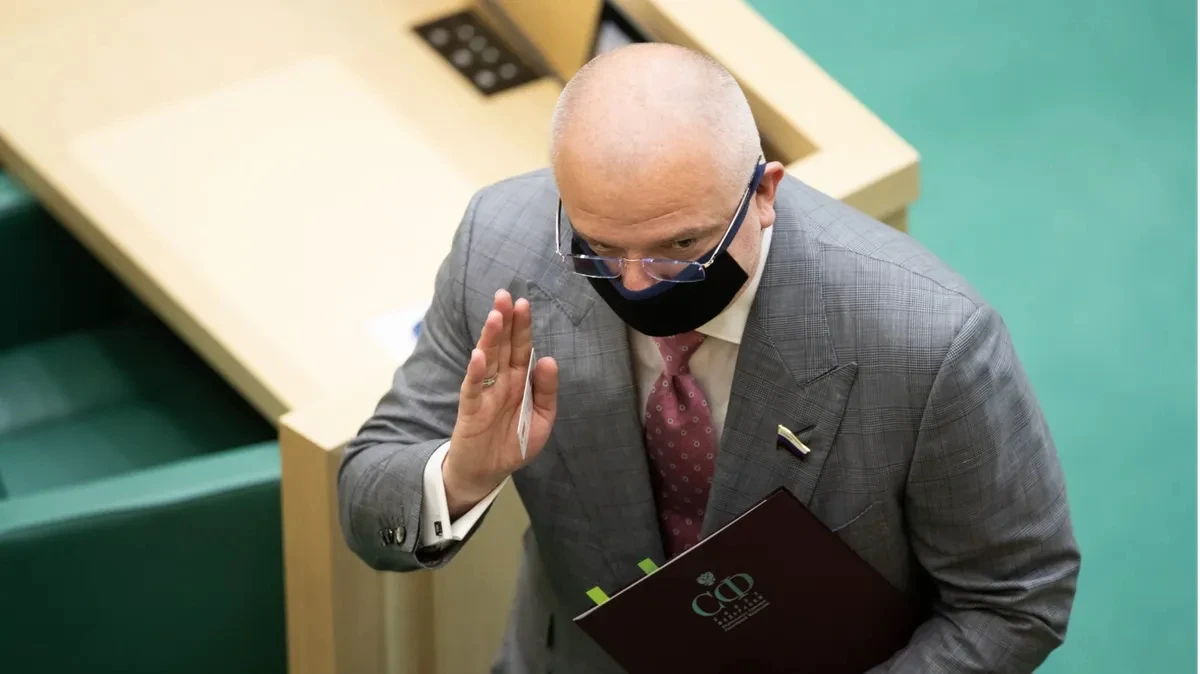
The governor may be declared the head of the municipality or the head of the local administration “Warning” or “Persons” as a technique or a cleaning lady. For "improper performance or failure to fulfill duties." And if they did not “correct” for a month - to dismiss. It is clear that this ensures unquestioning obedience.
All this is called the authors of the project with the words “the responsibility of the heads of municipalities and the heads of local administrations to the highest official of the constituent entity of the Russian Federation is amplified. But why on earth should this responsibility even be if, under the Constitution (recall its article 12, and this, for a minute, the basics of the constitutional system) are not included in the system of state authorities? But, as a gingerbread, the “Governor's mayor” receives the right to the “state position of a constituent entity of the Russian Federation”. With all the bonuses that are relied on to her.
What do we get at the exit? Absolute subordination and dependence of the heads of municipalities on governors.
And not from citizens, as it should. Whose interests - citizens or president - will be priority in this situation for mayors, as they say, guess three times. At the same time, citizens have practically no way to remove the mayor who had fallen to work, but the governor can easily get rid of even a well -working but unwanted mayor. Especially if this mayor was elected by citizens contrary to the will of the governor (as at one time Galina Shirshina from Yabloko in Petrozavodsk or Evgeny Roizman in Yekaterinburg).
It is not difficult to see that this scheme of relationships completely copies the relationship between the governors and the president itself (except that the president may not dismiss the governors for “lack of performance indicators”, but for “loss of trust”): the same complete subordination and dependence.
Naturally, no truly federal state is built on such principles and cannot be built.
In no federal state, its head is not entitled to declare reprimands to the heads of regions, and all the more and more have the right to declare “warnings” to regional parliaments or dissolve them. In turn, the heads of regions can neither declare “reprimands” or dismiss mayors.
However, this is exactly what is postulated in Krasheninnikov’s laws: the concept of “interaction” of state authorities and MSU smoothly turns into the subordination of the “lower” “higher”. Based on the extremely wide interpretation of the concept of “public power”, introduced, as already mentioned, in amendments to the constitution, but completely absent in the basics of the constitutional system.
Moreover: the establishment in the Constitution that the state authorities and the MSU are included in the “unified system of public power” does not mean at all that a unitary vertical can be built inside this “single system”.
But it is she who de facto is built according to the "laws of Klishas-Krasheninnikov."
This vertical is an almost complete repetition of the one that existed in Soviet times,
With their “democratic centralism”, when not powers were transferred from above, but the teams demanding to report on execution, and when there were no real independence among the regional authorities (in the republics, regions, edges, cities and regions).
What is called, they wanted to “back to the USSR”? Get and sign.
Here are just a centralized and de facto unitary state-an extremely ineffective tool for managing a huge country.
And no “digitalization” that they dream of in the Kremlin - with the possibility of the state to track almost any information about any citizen, including his spending and moving - will not help to make this system effective.
For effectiveness, we need, firstly, decentralization and redistribution of powers and resources-because it is impossible to monitor everything that comes from the Kremlin. And secondly, feedback mechanisms, without which management cannot be effective: honest elections and free media.
Not wanting to introduce either one or the other, they build a vertical. With the pyramid of power "President - Governors - mayors."