
Translated material
"As a result of even a small war, we will fall into deep poverty." Economist Igor Lipsitz - about Putin's "Stagnation", nostalgia for Brezhnev and the prospects of the Russian economy
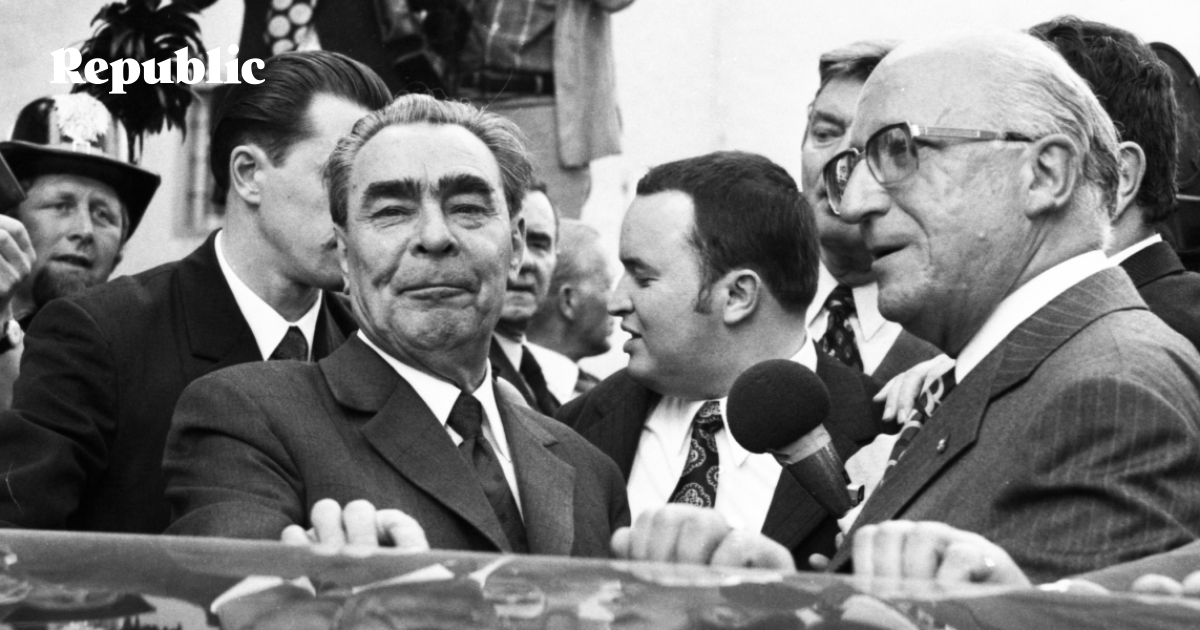
On December 19, the 115th anniversary of the birth of Leonid Brezhnev turned away. The period of his reign today has become a certain “golden age” for philistine mythology. According to the study of the Levada Center (entered into the register of foreign agents), Russians relate to the Soviet regime of the late 1970s and early 1980s better than the current leadership of Russia. 29% of respondents believe that the Soviet government in that era was close to the people, 25% call it strong, 22% - fair. Also, according to the survey, Leonid Brezhnev is one of the ten most outstanding people in history, and his popularity is growing: 10% this year against 8% in 2017.
It is amazing that even those who were born after 1990 want to return to that “paradise” about how good it was to live under Brezhnev, people who have not yet been 30 years old, tell on their pages in social networks. It turns out that the Russians are nostalgic for the Brezhnev stagnation, living in another stagnation - Putinsky. Republic talked about this phenomenon with the professor of the Higher School of Economics, Doctor of Economic Sciences Igor Lipsitsa. However, the anniversary of Brezhnev and Nostalgia for his time is only the starting point of this conversation.
"This is harmful nostalgia - through it you can" sell "the population justification of any actions of the state"
- How do you explain nostalgia for Brezhnev times? How does this affect the current political and economic situation?
- People are strongly dependent on words. Words determine their feelings and understanding of the world. We often underestimate this. And in the Soviet period there were many beautiful, albeit empty in content, even false slogans. But they responded well to the dreams of people, deeply sank into the soul. For example, “Soviet power is power for the people”, “everything for a person of labor”, “we are all equal”, “we are Soviet people”. And today, those who are older, remember this, and sometimes fantasize on the basis of memories. And who is younger - they just look at the archival Soviet posters and fascinated by them. But both it seems that since it was written on posters, it means that it was in the Soviet Union. Look, what a beauty: housing was given for free - there was no mortgage. Medicine and education - everything is free, this is life!
Although in fact there was no equality, there was a tough hierarchical system and a huge system of benefits for the authorities. And only during the time of Yeltsin, when he became the first secretary of the Moscow city committee, did the struggle began with closed systems for the distribution of goods in the nomenclature. And so it was almost impossible to get housing in the Soviet Union. Even buy for money. It was possible to get housing if you worked at a large factory. And then - not immediately, but after a long line. Many lived all their lives and were left without housing. Even cooperative housing - for your own money! - It was not for everyone to buy, but only to those who had less than five square meters of living space on a person in the family.
But people believe in the old false slogans. Hence the dreams to return to a certain “golden age”, where everyone is equal and good. However, we know that it was a rather cynical, ideologized system built on mistakes and lies - it was not easy for an ordinary person to live there and a burden. It was all safely forgotten, but the posters were really painted beautifully and inspiring, they had happy and satisfied faces. They affect the consciousness of citizens and this time. And the songs were beautiful ...
But this is not just an innocent nostalgia for the next aging generation. All generations are nostalgic in their youth. However, in our case, it is harmful nostalgia. Distributive for the future of Russia and its youth. Through such nostalgia for the false image of the past, it is possible to “sell” the population with an excuse for any actions of the state in relation to society.
-What, in your opinion, is the reason that the Soviet economy was in a state of stagnation by the beginning of the 80s? Yes, such that the next Secretary General Yuri Andropov needed to pursue a policy of acceleration and intensification, which, of course, failed? Is this a consequence of ideological dogmatism, incompetence of the management apparatus, something else?
- For the economy to move forward, you need motives. Then the question arises: why do people try to work more and better? There are three motives: fear, enthusiasm and personal benefit. There were two motives in the USSR: fear and enthusiasm. In the Stalin system, people worked because of fear. As a result, a lot of people were shot and planted. When I was a student, and this is the 60s, then my father, an employee of the USSR State Planning Commission, showed the data that the system of the Ministry of Internal Affairs and then, in terms of production of products, was the largest in the country. That is, back in the 60s there were so many prisoners that there was more production in prison areas than in any other industrial Ministry of the USSR.
After the death of Stalin, the system of fear gradually began, fortunately, to collapse - people ceased to be afraid. There was still enthusiasm - some really believed that they were building a new perfect society. The last surge in enthusiasm is the development of virgin lands. To some extent, it still worked on the BAM. And then this enthusiasm disappeared, because it became clear to many that, by and large, nothing changes.
There was a situation that fear died, enthusiasm went out, but personal benefit did not appear. Salaries were low, private business is prohibited as a criminal offense. Most good goods are scarce, and having earned a lot, you still can’t buy them. So, it makes no sense to work hard and qualitatively at all.
In the Soviet Union there was a phrase that described its economy well from the point of view of simple hard workers: “You pretend that you pay. We pretend that we are working. ” As a result, it turned out that we have formed an economy in which people had no interest in good, efficiently and productively working. Yes, fortunately, there was still some part of the workers who tried to work well because they respect themselves and their profession. But all this was burdened with a shortage, a low salary and ghostly hopes someday get a small apartment and a garden plot of 3-6 acres of land on a reclaimed career-if you sit quietly and not argue with the authorities.
It turns out that the ideology, which was the basis of the Soviet system, eventually destroyed, burned out the economic foundations of growth, and the country ceased to develop.
Subscribe to read the whole
Make a subscription Redefine.media to read Republic
Subscribe [you can pay for a Russian or foreign card. The subscription is extended automatically. You can unsubscribe at any time.]
Where are the money subscribers going