Date
Author
Наталья Хорохорина

Preserved copy
Translated material
Why are women not talking about infertility
According to world statistics, at least 10 %, at a maximum of 20 % of the Earth's residents suffer from infertility. The problem is serious, but it is not customary to talk about it out loud even among very close people. We tell the stories of two women - Muscovites Ani and Kiev Katya, who at different ages learned that they could not have children. Each in their own way copes with this, and both did not discuss it with their husbands. Anya removed the ovaries, Katya had two miscarriages. Anya hoped for a miracle, Katya did not hope for anything. Anya would like to believe in medicine, Katya thinks about taking the adopted child.
Every fifth woman on the planet can be barren. According to WHO, the frequency of infertility of 15 % and above is a factor that negatively affects the demographic situation in the world. Since 2016, artificial fertilization can be made in Russia under the compulsory medical insurance policy. Obviously, this problem is very serious, but it is not customary to talk about it.
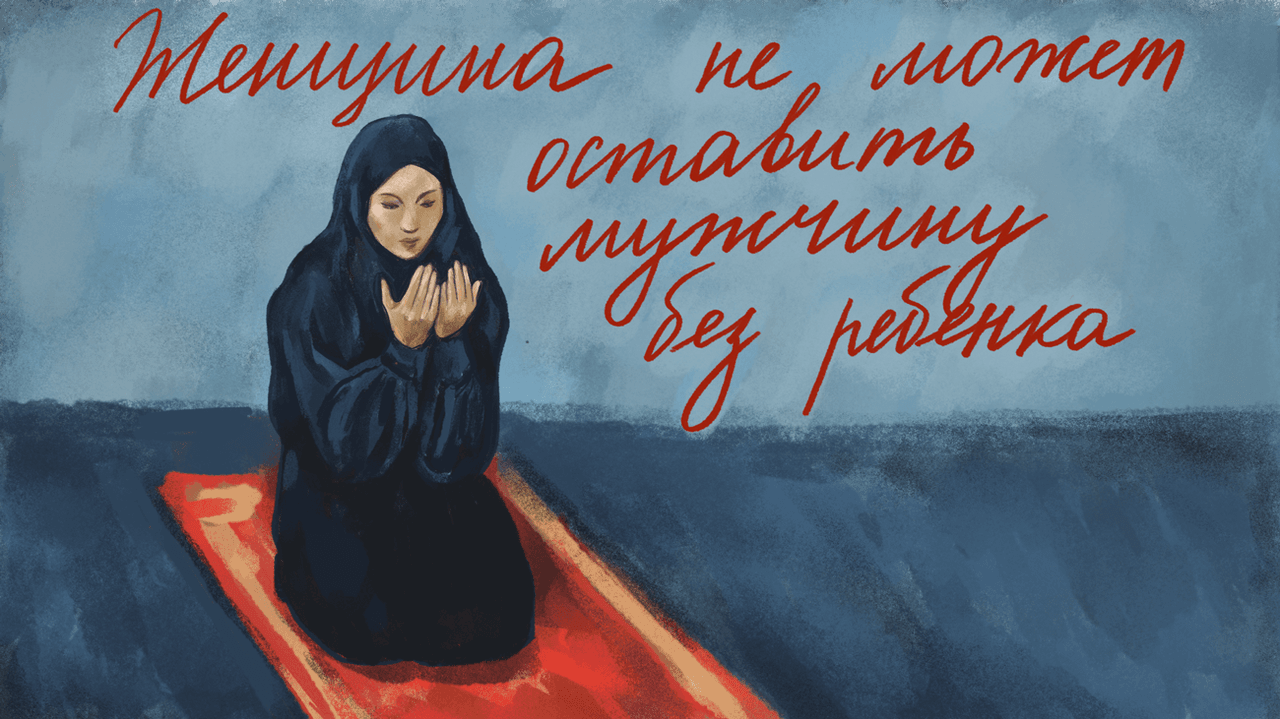
“Make a lot and multiply,” is written in the Bible, but what if you cannot have children? Do you not fulfill the covenants of God? Husband will leave you? Will family turn out? In the Middle Ages, if someone decided that a woman was barren, she was sent to a monastery or burned at a stake. In our humane time, a woman who is not destined to become a mother feels safe.
But why is it still customary to hide infertility even from the closest?
Ovaries that had to be removed in time
Anya closed in the bathroom, sat on the floor, lit a thin cigarette, opened the Zoom window and began her story. She looks about thirty years old - she does not want to call the exact age. Beautiful chaos on the head, the dark gray sweatshirt of Monochrome and the low velvet voice, with which she begins to tell her story: “At adolescence, when all my girlfriends began to meal, they still did not advance. At some point, my mother and I began to walk around the doctors. They said that I simply did not develop ovaries and I need to take hormones. I began to drink them - and menstruation appeared, but went irregularly. At nineteen, I learned that I have a rare syndrome - adrenogenital, which is found in one of five thousand newborn. This means that in my mother’s stomach in the second or third month, when the gender of the child is formed, my ovaries rose to where they should be, but they did not develop into female, that is, in fact, these are eggs in the ovarian site. The doctor then said that they need to be removed, and at first I got into all this. And then I thought that medicine could jump over time - and I could be cured. ”
When Anya ran away from the hospital from an unconvincing doctor, the wife of Sergei Zhukov, the soloist of the “Hands Up!” Group, gave birth to. Perhaps one of the numerous reporters and journalists who at that moment stood at the entrance to the hospital, in the archives a photo of the running nineteen-year-old Ani was preserved. Later, she learned that the ovaries were important to remove then to avoid severe complications - in most cases, adrenogenital syndrome goes into severe oncology. But Anya did not know about all this and did not want to know: the life around for a teenager, and then a young girl was brighter and more interesting than doctors and their diagnoses.
Katya-1Unplanned marriage with Greek living with parents
After school, Katya entered the technical school and began working as a waitress in one of the Kyiv restaurants. At nineteen, she thought it would be great to work near the sea, and began with a search for work in Odessa, and as a result she got a job on a Greek cruise airliner. During her third cruise, Katya met her future husband, Greek.
“You have been working on a passenger ship for six months and do not leave it, the work is hard,” she says. “He worked as a steward-captain, which means that he had access to all the dishes that are available to senior officers, and he gained me through his stomach,” Katya laughs. - He arranged romantic evenings with music and treats. I looked very persistently, but I immediately warned him that I was not going to build relations with a foreigner, as I did not want to leave my mother. He offered to be friends, and after a month and a half we decided to get married. ”
About a year after the end of the contract on the ship and the execution of all the necessary documents, Katya moved to her husband in Athens. He lived with his parents, and Katya did not immediately ask Katya’s relationship. “I was a young, almost a child, did not understand how relations were being built, and behaved like she was used to at home: stamped her leg, hit her pen - and everyone listens. And here I found a braid on a stone, and it was so hard that at some point I left home to Kyiv. Everything went to parting. But I decided to give a second chance to our family and returned. For a while, everything seemed to go normally, and then the crisis came again-and so we had a long time. ”
She and her husband never discussed the issue of children and thought about it only when they realized that Katya was pregnant. According to her, it was a completely inopportune moment: they still lived with their husband’s relatives and could not solve their internal problems. But the first pregnancy ended very early, and they had not yet managed to feel like future parents.
Ovaries who removed too late
When the menstruation disappeared, Anya again began to walk around the doctors. Everything was to no avail until she returned to the hormones - and this time she received them for three consecutive years. Once the attending physician carefully informed her that she would not work out naturally and she would need a donor egg. At twenty -one, Anya met a guy, and at twenty -five she married him. He said that he wanted children, told how he would like to educate them, reasoned what sex they could be, but Anya most often tried to leave such topics. She never discussed her health problems with him, because, in her opinion, it is never clear how much a man is ready to hear it. In the near future, they did not plan the children, and Anya did not tell him about her diagnosis, especially since she did not pay special attention to the doctor.
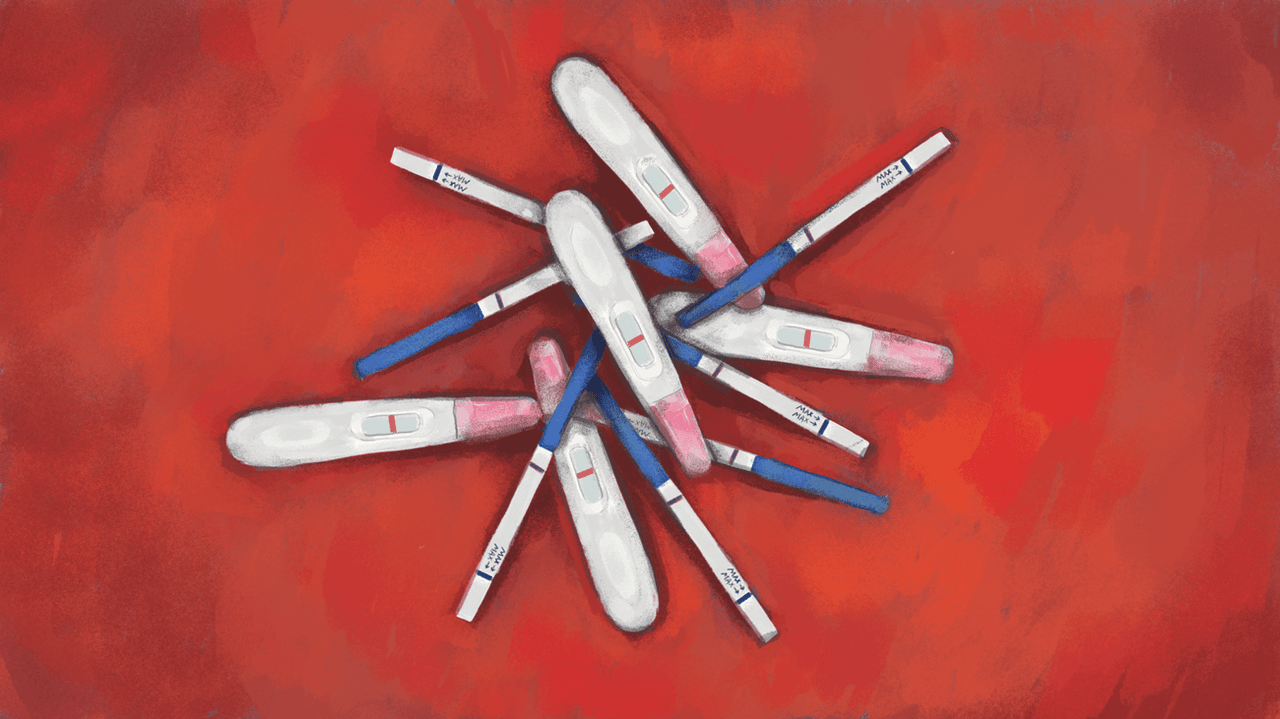
Once Anya decided to go to the gynecologist of her pregnant friend, who talked a lot about his professionalism and fame. Anya was twenty-nine, she handed over all the necessary tests-and found out that due to the ovarian failed at an early age, she developed cancer. She was assigned an operation - they said that the ovaries should be released from the tumors formed on them. At first they were going to remove both ovaries, but then they decided to try to save at least one.
“When you go to the operation, you must indicate in writing to whom you trust to make decisions for you while you are unconscious. I was loaded into anesthesia, and after the operation, when I opened my eyes, a sobbing mother sat next to it. I asked: "Did you remove everything?" She said that yes, because the tumor completely captured the ovaries and had to cut both. Well, then another story began-it was necessary to treat oncology, because a large tumor developed due to hormonal therapy. ”
At the same time, the marriage of Ani burst at the seams, and after one of the chemotherapies, he and her husband decided to part. The fact that she has no ovaries and will never be children, Anya decided not to tell him, and he still does not know about it.
Katya-2The second unplanned pregnancy and the second miscarriage
Closer to thirty, Katya and her husband learned to solve the conflicts and quarrels in their family ceased to be so sharp and emotional. By that time, her husband was no longer alive and they lived with his father: “I don’t think that we would live together if she were still alive, but at least we would definitely have established relations. With age, you understand things that you did not understand before, because at twenty years we were both still inexperienced. ”
During the second pregnancy, Katya and her husband finally lived together. “We already had good salaries, I quit the ship and found myself a job on land, since it would be impossible to work as a pregnant woman on a liner: those few months in the cruise were hard without pregnancy. We could already plan this pregnancy, but it also turned out to be sudden. And just as suddenly interrupted. I think the reason was in psychology: I was so afraid that again there would be a miscarriage, that I even had panic attacks. Doctors do not confirm my version, but there is such an opinion, although it has not been proven. ”
Five years later, at the age of thirty-five, Katya swept a panic: you need to solve something and do something-there are no children, but there are two miscarriages. Katya tried to find out the stories of different women with similar problems and ways to solve them. “My friend, in order to get pregnant and give birth to a child, drank nine tablets for nine months in a row, planted a liver, and the child died at birth. I heard stories about women who are injected with different drugs, plant health - it does not come out of this. Over time, I realized that I was not ready to put my whole life to just give birth to a child. I once asked my husband: “Well, do you think we will plan something in this direction?” He said that life is now unpredictable and maybe we should not do this at all. We realized that we are satisfied with the life that we have. ” Katin's husband believes that children need more security than the one that they can offer, and it is easier for him to abandon the idea of children than to work in three jobs in order to afford everything you need.
“There are, of course, the thought that in sixty to seventy years I will regret our decision. But this is about the notorious fear “who will bring a glass of water”. But five children are not a guarantee that there will be someone to bring a glass of water. Of course, I think about how to provide my old age when I become weak. And yet I don’t know how to solve this issue ... We have many unmarried and unmarried friends, and they do not have such a panic about this. In Europe, women give birth when they are confident in the future. A woman here is more valuable than a child, although children are loved here. But they will not sacrifice her, just to reproduce offspring. In Europe in the center, there is a person, what is important for its well -being, and not for the vague concept of “society”.
In English, there is such a thing as Collataral Damage. For example, when ordinary people die during the war, they say that these are related losses. Here is the same in the countries of the former Soviet Union. It doesn’t matter that people are unhappy that women marry alcoholics ... The main thing is that we are all together - a great country that launched Gagarin into space, that’s important, ”complains Katya.
A former husband who never found out that she could not give birth to him
When Anya at the age of nineteen first heard that she could not have children, she decided: in a few years medicine will be completely different and will be able to help her. Now she refers to her youthful maximalism, blames for all doctors who did not explain to her all the seriousness of the problem, did not warn about the possible consequences.
“My mother, of course, is psychologically difficult, because she feels her share of guilt that we did not stop all this in time and reached oncology. I do not dump, of course, the responsibility of it, because this is my decision and “my body is my business”, but when you are nineteen and you don’t have a lot of brains, then, probably, it is necessary that someone else is with the brains. Perhaps if she showed a little more attention to this problem and would go to the doctors with me, she would have recognized everything, then most likely we would have come to the fact that the ovaries need to be removed in time.
But my mother then built her personal life. As a child, her parents abandoned her, and at eighteen, she got married. And, apparently, when I grew up, she exhaled: now you can do yourself. She left my father and began to live in another place. And I, having already matured and missing the time, began to deal with my problem myself and finally found out the exact diagnosis ... I think she feels her guilt because of this. Well, dad tries not to think about such things: he, in principle, tries to think less. I haven’t talked about this about it and I don’t want to. ”
About the fact that Ani will not have children, only the mother and the couple of her friends know, which Anya, by the way, never immersed her in the details of her history: she told them that she could not have children, only after the operation, and one of them said: “Well, fuck!”, And the second cried.
Anya has not lived with her husband for three years, but he cannot completely part with him: “I seem to have let him go, but he himself does not leave my life. You know, this is like love. Such unconditional love. When you are not together with a person, but at the same time you still love him - well, how mothers love their children. Whatever they do and no matter what assholes are, but they love - that’s all. And here is the same case, only instead of a son - a husband. But for some reason I love him with such an unconditional love. I even went to a psychologist to understand the problem: I came with one problem, and in six months I found out that I am the most unhappy person in the world and I have one hundred and one problem. Well, I stopped walking. But, probably, once it should let go, after all, he is not my child and I do not have to love him all my life. ”
Today, the husband of Ani knows only about oncology, because of which you cannot get pregnant; They rarely see and do not discuss this issue in detail. Only once did she mentioned casually that she was waiting for surrogate motherhood: “But I did not say that the egg would also be not mine, only sperm would be from a loved one, well, at least so. Perhaps someday, on the deathbed, when my husband will die, I will tell him-I will finish, as they say,-Anya laughs. - But until that moment - no. A man does not have to know this at all - this is not their business. Although most men are so arranged that they need to be confident: their woman is full. And if not, they may have their own psychological problems. And the gynecologist told me that all the women who admitted to their men that the egg was alien-divorced. But in fact - what's the difference to them? It will still be a man of a man: sperm him - it means that he is a father. And it doesn’t matter whose egg was. ”
“Well, we didn’t reach the topic of adopted children,” Anna continues after a pause. - Such a topic can be discussed when you have a man with whom you are going to build a family. And I can’t imagine how to raise children with the person I love. ”
Katya-3Adoption that requires planning and preparation
Katya's mother was worried that her daughter had no children, and perceived it very emotionally. “Of course, she wanted to walk with the stroller: when her daughter is thirty years old, you wait for this, especially when all friends already have grandchildren around.” They talked a lot with their mother on this topic and thought that if Katya’s husband was ready, they would adopt someone, since Katya had such a desire since childhood.
“Mom said:“ And I, it turns out, will not nurse? I will not become a grandmother? ” I encouraged her: maybe the time will come, my husband will be ready - and we will adopt. At some point, when my cousin gave birth, the desire to realize as a grandmother of my children for my mother has lost its relevance. ” The fact is that the sisters of Katya’s mother, when her daughter, Kuzina Katya gave birth, was no longer alive, and therefore Katina’s mother completely replaced her native grandmother’s niece.
Katya did not know and was never interested in what her father thinks about her infertility - she never talked to him about it, but suggests that he sees: Katya is happy - and this is enough for him. He has no desire to become a grandfather, since, according to Katya, men have everything a little differently. Katya never tried to discuss her problem with her husband in detail and, moreover, did not raise the topic of adoption with him. According to her, it will be unacceptable for him: "He decided not to give birth to his children, and here-to take a completely alien child into his family and take responsibility for him."
Katya says that he is free from most stereotypes associated with adopted children, but he understands: to take a child, you need to prepare very well for this. Katya consists in groups on social networks, where adoption is being discussed, and, according to her observations, people who intend to adopt the child are very competent in all aspects of this process, understand not only the features of the psychology of children from the orphanage, but also the information in legislation and other “technical” nuances. Katya communicates with families who adopted children, and says that these people are quite happy. She believes: if a married woman wants, but cannot have children, and her husband will support her anyway, they should do the adoption.
“But for my husband in this matter, the financial condition is very important. Maybe if it improves, I can raise this issue. Now I am forty years old, and in order to finally understand whether we are ready to adopt for us ahead of five years. Until I make so far so far. ”
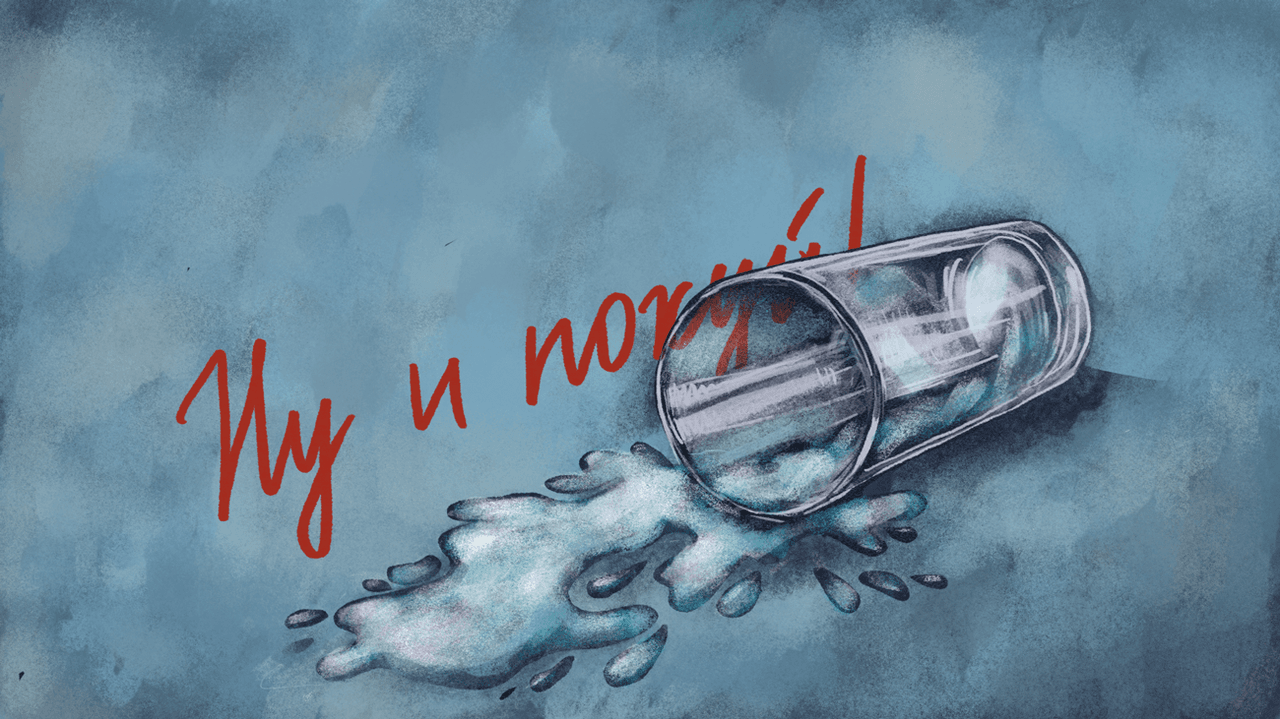
There will be no miracle
Anya regrets that then, at nineteen, she did not meet a responsible doctor who would advise her to hope for the rapid development of medicine, spoke about the consequences that are waiting for her if the ovaries did not remove her, explained that they formed so when she was still in the womb, and it is impossible to cure this. «Вот бывает, детки рождаются без руки, и сделать тут ничего нельзя. Наверное, можно изготовить кибер-руку или ещё что-то придумать, но полноценной руки у человека никогда не будет. Так же и у меня», — вздыхает Аня. Ей непонятно, почему и врач, к которому она тогда обратилась, и другие специалисты после него ничего подобного ей не говорили, а продолжали прописывать гормоны, которые стимулировали впоследствии развитие онкологии.
«Первый раз я услышала про своё бесплодие, когда у меня был период юношеского максимализма. Ну и в принципе я всегда была оптимистично настроена и верила в лучшее — думала: ну, как-нибудь заведу. А когда в двадцать шесть мне сказали, что я смогу иметь детей только с донорской яйцеклеткой, я спросила у врача: „Неужели нет места чуду?“ И мой врач сказала: „За мою сорокалетнюю практику оно случалось трижды — когда, вопреки всем законам и медицине, женщины беременели“. И я тогда подумала: ну, ловите в таком случае четвёртый! — тоскливо улыбается Аня. — Потом уже другой врач подробно объяснил мне, что мой синдром не поддаётся лечению, а я всё равно как-то ещё верила. Но когда я проснулась после операции по удалению яичников, пришло уже полное осознание, что это уже всё… Я долгое время билась-билась — все эти врачи, надежды на чудо, церковь, просьбы в космос. Но когда тебе всё удаляют, остаётся только принять свою судьбу. Рак можно победить, ещё какую-нибудь болезнь, но смерть никак не победишь, а это — смерть яичников. Я сначала думала, что хотя бы вы́носить сама смогу, а теперь, скорее всего, и этого не смогу. И теперь... точнее, не теперь, а вообще — я никогда не смогу иметь детей. Но есть шанс: если у меня не будет рецидива онкологии в течение трёх-четырёх лет, я смогу взять донорскую яйцеклетку, которую оплодотворят и засунут в меня. Я смогу выносить, но родить — нет: только кесарево. Не считаю чем-то страшным растить приёмных детей или рождённых от суррогатной матери. Ну, не будет там от меня генетически ничего… — Аня делает паузу и заключает: — Ну и ладно!»
Аня обсуждала с психологом ощущение себя неполноценной женщиной, или «недоженщиной», — и пришла к выводу, что это какая-то карма, испытание, которое она должна пройти сама: «Я достаточно часто плыву по воле волн, и какие-то неприятности сами собой проходят либо разруливаются, а тут… не тот случай. Сейчас о проблеме бесплодия говорят больше, чем прежде, но мы ещё не пришли к тому, чтобы об этом говорить легко. Общество будет, наверное, не то чтобы порицать, но как-то… по-другому относиться. Ну, и это ведь очень личное и важное, о чём обычно не кричат. Говорить об этом тяжело. Возможно, это трусость. Тяжело признаться, что у тебя действительно серьёзная проблема».
Катя-4Горе, которое нужно перегоревать
В момент, когда Катя поняла, что почти преодолела болезненные воспоминания и переживания, связанные с последним выкидышем, она ощутила готовность поделиться своим опытом с другими людьми и, может, помочь кому-то легче пройти аналогичный путь. Ну и таким образом сама завершит процесс самоисцеления. Катя создала канал на Ютубе и сайт «Жизнь во мне», где делилась со своими подписчиками опытом и переживаниями, предлагала помощь женщинам в подобных ситуациях. Люди пишут ей анонимно; она старается отвечать так, как хотела бы услышать, когда ей было плохо, потому что мало кто умеет, с одной стороны, справляться с этим самостоятельно, с другой — находить правильные слова для поддержки.
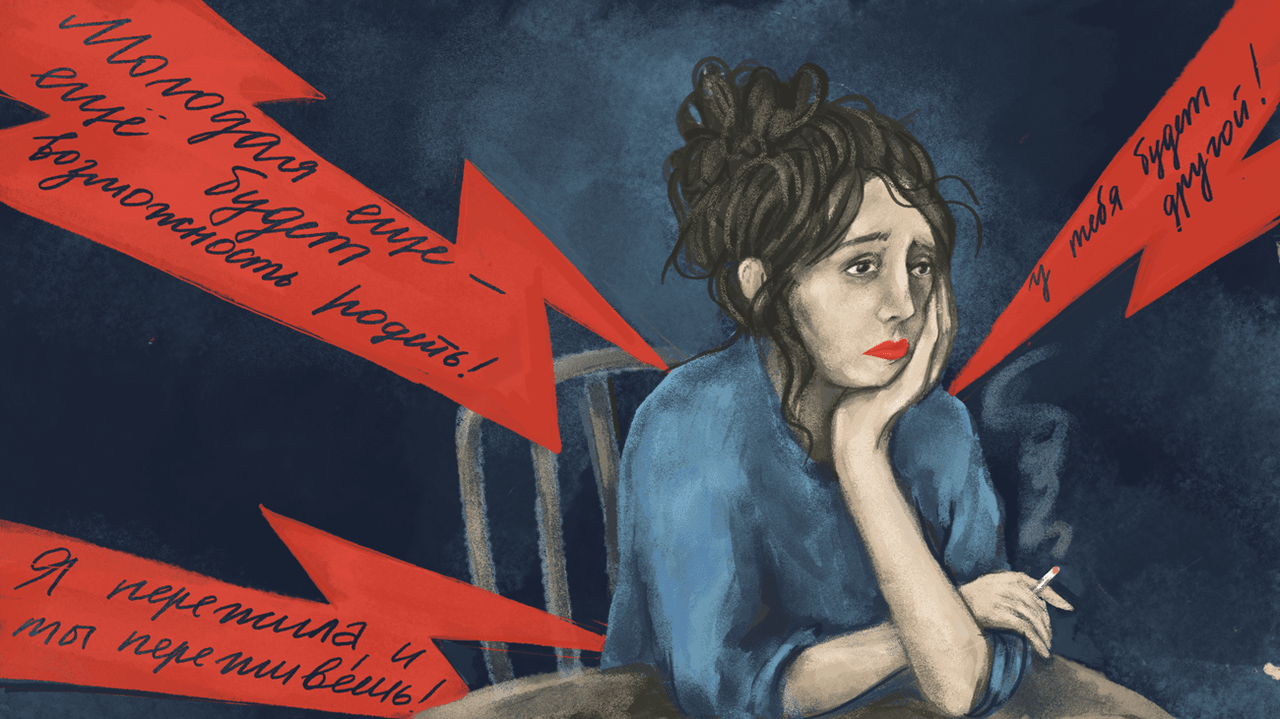
«Чаще всего люди говорят некорректные вещи, когда женщина переживает выкидыш. Например, „ну, у тебя ещё будет другой“, или „молодая ещё — успеешь, впереди много времени“, или „ну, я пережила — и ты переживёшь“. Но человеку важно пережить свою боль, и такие слова ему не помогут. В такие моменты важно сопереживание. И я, когда предлагаю свою поддержку, даю это. Иногда нужно просто выслушать человека — никакие советы ему не нужны. Люди в большинстве своём эмоционально неразвиты. Женщина, которая не может родить ребёнка, или, например, её муж не хочет, — не стоит перед выбором: у неё выбора нет, она просто не может иметь детей по какой-то причине. И если женщина мечтала о детях и хотела их, то это для неё это потеря, которую нужно пережить по всем принципам горевания, иначе у неё появится ещё новые проблемы — психосоматика, нервозность, неудовлетворённость жизнью, перенос своей боли на другие жизненные ситуации. И женщины, которые не знают этого, не могут справиться со своими эмоциями. А самым правильным будет, когда кто-то поднимает тему детей, просто уйти от неё.
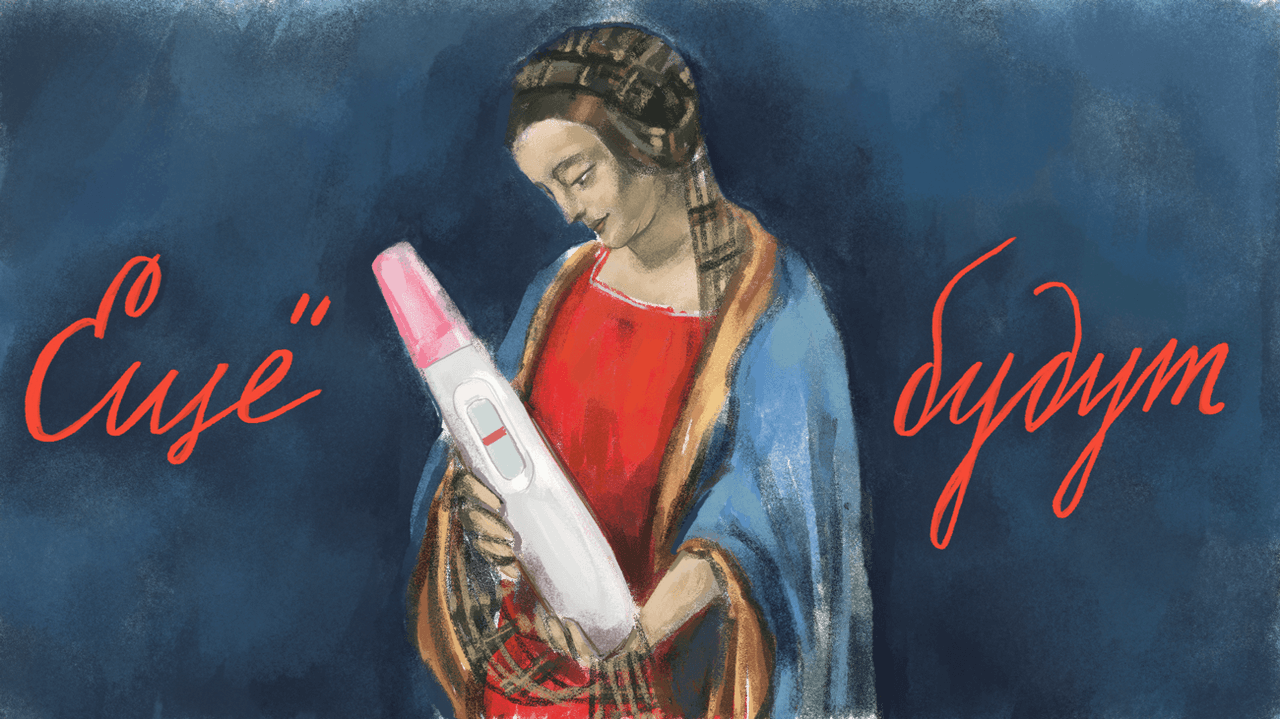
То есть если кто-то спрашивает: „А детки у вас есть? Нет? Ну, будут-будут“ — вот такие выражения особо цепляют. Женщина ведь знает, что ничего не будет или есть сложности, чтобы это случилось. И в таких ситуациях женщины предпочитают молчать, так как не знают, как справляться со своими эмоциями, не знают, что переживать боль по этому поводу — нормально, более того: её нужно пережить, и желательно поговорить об этом, с кем-то, кто в теме, кто тебя поймёт, кто способен на эмпатию.
Слава богу, есть Ютуб, и там можно найти и послушать истории, как это переживали другие. Возможно, даже поделиться в комментариях: „Вот у меня тоже был выкидыш“ или „Никак не могу забеременеть“. Для многих это уже начало пути к исцелению. Ну да, легче замалчивать больную тему или агрессивно реагировать на вопросы про детей. Да, и та тётя „родом из СССР“, которая задаёт вопросы про детей, — она ведь тоже ничего плохого не имеет в виду: действительно, дети — это счастье. И она не виновата, что действует по стереотипам своего времени, что не наделена тактом: этому тоже надо учиться».
Сейчас Катя уже не занимается своим каналом и сайтом: «Я его создавала, когда не было ничего подобного, а сейчас в интернете много профессиональных психологов и других специалистов, которые могут помочь. Да, и горе своё я перегоревала».