
Translated material
Bipedal love
About the re-release of Limonov's debut novel
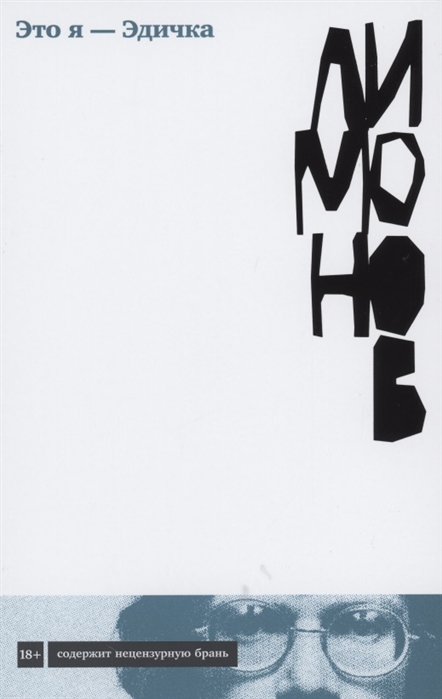
One of the notable events of the outgoing 2021 was the re-release by Alpina Non-Fiction of Eduard Limonov’s first novel “It’s Me, Eddie.” Much has been said about this work, which has long been considered a classic of modern Russian literature; but it seems that the main “literary fact” associated with “It’s Me, Eddie” is that the novel was not published in Russia for more than twenty years (republication became possible only after Limonov’s death). This fact still requires explanation: why did the author refuse to reprint his, perhaps, the most popular text? Alexey Konakov shares his thoughts on this matter with Gorky readers.
Eduard Limonov. It's me, Eddie. M.: Alpina, 2021
Perhaps the most unproductive way to read the novel “It’s me, Eddie” today is to read it head-on, reducing the text to the story of a Russian poet who survived his wife’s betrayal, is tormented by unhappy love - and it is because of this betrayal, unhappy love and monstrous loneliness that he suddenly discovers his own bisexuality : “Women disgust me, my wife has made it impossible for me to communicate with women, I can’t deal with them, they always need to be served, undressed, ***** [have sex], they are by nature beggars and dependents in everything - from intimate relationships - to normal economic life together in society. I can’t live with them anymore, and most importantly, I can’t serve them - be the first to take the initiative, make moves, I need now to be served, caressed, kissed, wanted, and not for me to want and ingratiate myself - all this I can only find in men.” (Initially the fruit of disappointment in women, in the end bisexuality becomes almost an advantage - a feature that facilitates the search for a “living soul,” love and warmth in a huge city: “I come into contact with any specimen of the human race who will only show interest and attention to me, say a word to me or smile in response. My soul and body are available to everyone. I will go with you anywhere - to the dark quarters of the West Side or to rich apartments Park Avenue. I will suck your *** [the rod of love], I will stroke you all over with my hands, I will gently and lovingly caress your genitals, I will lick your *** [havyr], quietly spreading it with thin, gentle fingers."
Such descriptions still dazzle the reader; Meanwhile, you should pay attention to the fact that Limonov’s hero not only yearns and has sex.
In fact, he spends much more time walking , tirelessly strolling the streets and avenues of New York. In fact, it is walking that is Eddie’s main practice : “Here I am <...> having taken off my only summer shirt - white with a blue check, I trudge along 2nd Avenue to downtown in August. I walk, of course, on the sunny side, only on the sunny side, never otherwise, in any heat on the sunny side, that’s why I’m always so tanned. As I pass 53rd Street, I look to the left.”
In a certain sense, “It’s Me, Eddie” is a story not so much about bisexuality as about bipedalism , about a person wandering around a giant metropolis “on his own two feet.” The author of the novel specifically emphasizes and pronounces this point: “In fact, Manhattan had to erect a monument or memorial plaque for me with the following words: “To Eduard Limonov, the first pedestrian in New York from Manhattan who loves him!” I once walked more than 300 streets in one day. Why? I was walking. In general, I walk almost exclusively. Indeed, without exaggeration, I probably walk the most in New York.” And it is worth especially noting that Limonov’s walking is not at all similar to the free, lazy “flandering” glorified by Charles Baudelaire and Walter Benjamin; the main character of "Edichka", on the contrary, is collected and energetic - he demonstrates a different, new type of walking in literature. And such walking is reflected in Limonov’s characteristic syntax, in the author’s penchant for long, complex sentences:
“I dance in self-forgetfulness, and although it seems to me that the whole world is looking at me, on the second day it’s always like this with me in the evening, in fact, even Kirill went back to tormenting the telephone receiver and saying something in English, not realizing that although he is a sweet boy, no one needs him and I ***** [at all] that evening and on all other evenings.”
This syntax every now and then strives to get lost, to wander somewhere to the side, so that the end of the sentence will refute the beginning (“although it seems to me that the whole world is looking at me,” “but no one needs him and I ***** [at all] this evening and on all other evenings”), but this wandering itself remains very active ; sentences grow not due to a series of loose definitions or empty additions (like the conventional Nabokov), but due to the main members of the sentence (I am dancing, it seems to me that the world is watching, Kirill has left, he and I are not needed), subjects and predicates, actively crowding each other, always producing some kind of action.
It should, however, be borne in mind that walking around New York, perceived by the author of the novel as a certain given, was not such a given in reality . Limonov came to the United States in the mid-seventies and perhaps did not know that the very opportunity to walk and enjoy Manhattan was the result of a serious struggle that unfolded in the fifties and sixties. The parties in this struggle (sometimes called the "Battle of New York") included Robert Moses, a millionaire highway builder, and writer Jane Jacobs, the mother of the New Urbanism.
Limonov easily writes about the beginning of his New York day: “I often come to downtown for the whole day. I usually start from Washington Square, where, if it’s working, I lie down in the fountain, put my legs there, my butt rests on the last step before the water level - I lie down and lie philosophically, contemplating the surroundings, and even more often I close my eyes, and only feel them - I don’t open them often”; but it was through Washington Square in the fifties that Robert Moses planned to extend Fifth Avenue to ease the movement of cars in Downtown. In addition, in the south of the city, in lower Manhattan, Moses proposed constructing a huge Lomex Expressway that would connect Long Island and New Jersey: “This would require the demolition of 416 buildings, the eviction of 2,200 families, the liquidation of 365 stores and 480 small businesses.”
Actually, the main goal of Robert Moses was to transform New York from a city of people into a city of machines, into a grandiose utopia of roads and bridges, auto tunnels and highways - and this, without a doubt, was a great (almost visionary) modernist project . As Grigory Revzin notes: “It cannot be said that Moses was Le Corbusier’s man, and if they had happened to work together, it would most likely be Corbusier who would have become Moses’ man. But he was a man of Le Corbusier's generation. His passion for large highways, modernist skyscrapers (New York owes him the UN building), public parks, sports fields in cities - this is all Corbusier's program. The street was appreciated by the next generation, the people of 1968.”
In the “Battle of New York,” Jane Jacobs defended Greenwich Village and Manhattan in general for people without cars, for pedestrians—and quite unexpectedly won this fight.
And so, when Limonov walks the streets of New York, he, among other things, walks through the ruins of Robert Moses' great modernist project .
Limonov was unlikely to have personally known Jacobs (who left for Canada in 1971 due to persecution by the American authorities), but a number of passages from “It’s Me, Eddie” sound absolutely Jacobean, reminiscent of her hymns to streets with wide sidewalks and short blocks, where there are always a lot of pedestrians and everyone knows each other: “On the Third of July, we went to the shops with her. <...> Then they chose fruits for her, a Latino who knew her for many years chose her, and she quarreled with him in a friendly manner, something about smoking. Either they quit smoking together, or he couldn’t stand it and started smoking again, or she, something like that. I suddenly felt pleasant from this area, from the sun-drenched Broadway flowing past, the vegetable store was right on Broadway, from the microcosm of sellers and buyers who had known each other for years, decades.”
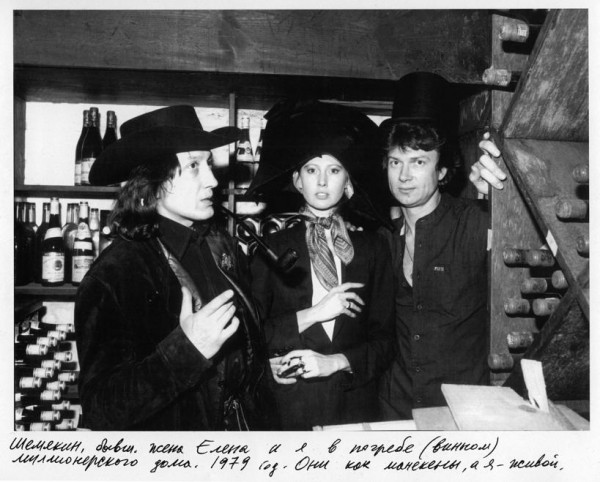
Thus, Limonov’s practice of walking flourishes on the remains of an old, dying era - the era of grandiose projects, gigantic construction projects, daring ideas and big narratives. Structurally, the position of Limonov's hero is between two great modernist utopias: Soviet socialism and American capitalism. Both in Russia and in the USA, the hero of the novel feels like a stranger (all his works “neither here, in your America, nor there in the USSR ***** [are] needed at all”); he does not want to play by the rules of these modernisms; he tries to evade the strategies of life and behavior they impose. However, the author gives this “intermediateness” itself a rather unexpected (and at the same time almost classical) sound: yes, Eddie does not believe in the great project of building communism and in the socialist way of life; Yes, Eddie does not believe in the great project of building capitalism and in the American dream - but this does not mean that we have before us a nihilist and a cynic who does not believe in anything at all and is no longer looking for anything.
Wandering among the ruins of outgoing modernism, Eddie is looking for love . His main dream, his main longing is precisely about this: “I am looking for a religious sect that preaches love, the love of people for each other, at all costs - love. My dear, where will you find such love? My dear, where will you find it, this sect, where they will caress you, put your head on your knees - sleep, dear, tired, sleep. There is no such sect in the world. Once upon a time she was on Elena's lap. Where is such a sect now? Why don’t its gentle inhabitants surround me? Mimi the ballerina will playfully stand on her head, Pascalino will ruffle my hair, and George will kiss my knee.”
Literally: Limonov’s hero walks around New York in search of love.
And here it is useful to remember that such walking across all the great projects of the state has its own theory. While the practicalities of walking in New York City were championed by Jane Jacobs in the fifties and sixties, the theory was not created until the eighties by the French philosopher Michel de Certeau. In 1980, de Certeau’s most famous book, The Invention of the Everyday, was published, in which he analyzes in detail the “invisible” city life and the “rhetoric of walking.” Michel de Certeau's tools for such analysis include the concepts of “strategies” (conducted by authorities) and “tactics” (used by people). For great modernists like Robert Moses, the city is always a view from above, a clear plan, an abstract scheme that can be changed, reshaped and remade in accordance with a predetermined strategy. However, such a “panorama city (‘theoretical’, i.e. visual simulacrum) is possible only due to oblivion and misinterpretation of everyday practices”; in reality, people living in the city constantly resist the “strategies” of power; since the ideal geometry of architects turns into very real roads, sidewalks and fences for citizens, they have to “tactically” interact with it: cross the street in the wrong place, make a shortcut through “closed” areas, step over fences on occasion, etc. This is exactly how Eddie behaves, wandering around New York anywhere, entering any slums and willingly takes over places that seem to not exist for the authorities (after all, “the lives of city residents take place on the ground, below the threshold of visibility”). And although the pedestrian Limonov cannot see the ideal grid of city streets and avenues, he is well versed in the “edges” along which New York is “rotting”: the best booze is sold here, the most expensive joint can be found there, and around the corner is the most convenient of all free toilets.
For de Certeau, the concept of “practice” is very important - and this concept is no less important for Limonov. In essence, Limonov writes the novel “It’s Me, Eddie” as a novel about human practices - and this is where its real novelty is revealed. Russian tradition suggests that the most important and significant literary genre is the “novel of ideas” (inherited by Tolstoy and Dostoevsky, and in the USSR supported by the classics of socialist realism), but it is precisely this tradition that Limonov ignores. He does not want to write a “novel of ideas” - primarily because he is not interested in the idea of “God”, or the idea of “communism”, or the idea of the “American Dream”. He, as already noted, is only interested in love. And completely in the spirit of Michel de Certeau’s intuitions, Limonov refuses to consider love as an “idea”, “theory” or “strategy”.
For him, love is precisely a practice.
From this premise the main move of Limonov the writer is born; the move that ultimately made him famous: if we understand love as a practice, then we describe it as a practice , wherever it takes us. We are not shy, like Brodsky (“love as an act is devoid of a verb”), we use all the verbs, nouns and other parts of speech we need to understand the practical side of love (in all its diversity): “she and I once attached a basket on ropes to the ceiling and took the bottom out of it, and I lay down under it, inserted *** [twenty-first finger] into her pussy, the twisted ropes unwound, and according to the thought, she should have been spinning around my penis,” “Chris was breathing heavily. I think I excited him to the extreme. I don’t know what he did, perhaps he moistened his *** [principal] with his own saliva, but gradually he entered me, his *** [bolt]. I will never forget this feeling of fullness”, “I inserted all sorts of objects into the anus, from a pencil to a candle, sometimes quite thick objects - this double masturbation - *** [cucana] and through the anus was, I remember, very animalistic, very strong and deep”, “Finally, I was really tired of it and one day, staying with her to spend the night at Alexander’s, without listening to any of her statements about pain or anything else, I was rude and creepy ****** [dishonored] her with his fingers, expanding her ***** [shaggy safe] to incredible sizes - my hand almost went inside - and she came - and how!" The real scandalousness of these fragments lies not in their crude physiology, but in the radical break with the tradition of classical Russian literature - which has always treated love as a great theoretical idea and as speculation, but has never understood it as practice.
And if the novel “It’s me, Eddie” is really a book of human practices (practices of walking, carnal love, etc.), then perhaps the issue of Limonov’s long failure to publish this novel should also be resolved not on a theoretical level (the theory of “decency”, “status”, “reputation”, etc.), but on a practical plane . From the point of view of Eduard Limonov of the 2000s and 1900s, the publication of “Edichka” was hardly “compromising” in any way - but it was obviously impractical . Carrying an openly hippie (albeit arranged “punk”) message of make love, not war , in the era of Putin consensus, the novel “It’s me, Eddie” would directly contradict the political goals of Limonov himself, who exhorted: make war, not love. Paradoxically, Limonov refused to reprint the novel not because he considered it weak - on the contrary, he considered it too strong and potentially capable of leading people astray - according to Limonov, the tenth years should not have become a “time of love,” they should have become a time of war.
The death of the great practitioner removed all practical and tactical considerations about the role of the text in the current political struggle for minds, overshadowed the (absolutely Leninist) idea of the existence of “timely” or “untimely” books, almost revived by Limonov. Two long-familiar strategies remained in sight - the strategy of building a “timeless” canon of “great Russian literature” and the strategy of making a profit from the large book business; At the point of intersection of these strategies, a beautiful novel about practical love, “It’s Me, Eddie,” now flickers sadly.