
Translated material
Research of the Solar System - 2021/2022
Since the late 1950s, automatic interplanetary stations have been the main source of information about the bodies of the solar system. Parts were carried out, the access to the orbit of artificial satellites, the delivery of substance to the Earth, self -propelled vehicles operate on the surface of some bodies. About the events of the outgoing 2021 and what is planned in this regard for 2022, we will tell in our review. We will talk about the sun, large planets, their satellites, asteroids and outer space behind the orbit Neptune.
Sun
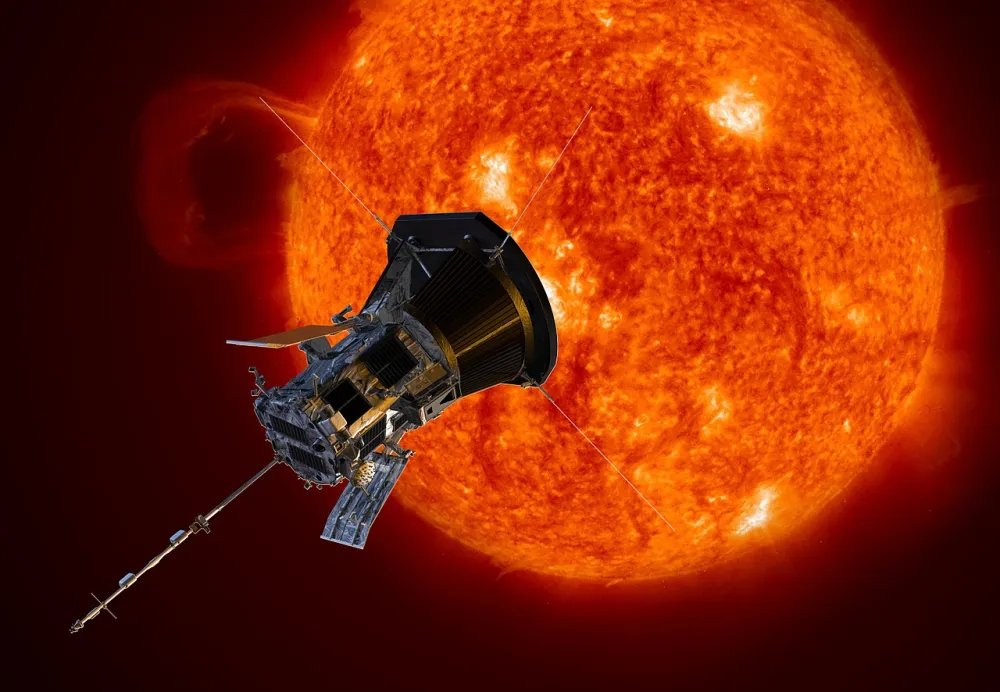
Currently, in the interplanetary space, several solar apparatus studies are being carried out: at the Lag -L ol L₁ L₁ System, the SOHO (joint NASA and ESA project) and American probes Wind, Ace and DSCOVR are located. Also, extensive programs for the study of the Sun and the near -suction space have been carried out by probes launched in recent years - the American Parker and the European Solar Orbiter. “Parker” thanks to the spans of Venus consistently pulls his heliocentric orbit. In November, the device flew at a distance of less than 15 solar radii from our star - a record for spacecraft. Further, even closer rapprochement with the sun is planned.
Moon
The Chinese station “Chane-5” (the main block of the lunar apparatus, which previously delivered a sample of the lunar substance to Earth), first in March reached the L₁ Sun-Earth system point, then in September the movement to the moon began again. Also, during 2021, the surface side of the Moon Luno Road-2 continued to study the surface of the reverse side of the moon. The Zueziao apparatus continues to operate at the Lag -Luna system Lag Lag Point. Its task is to relay signals with Yuit-2 and a landing platform.
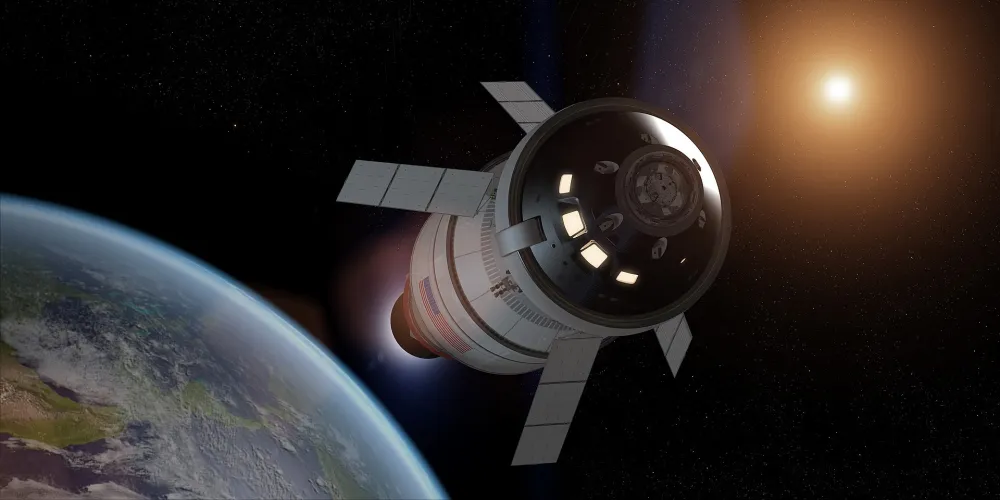
At the beginning of next year, to the Moon on the Supreme Launch System Super-Launchus, an unmanned space ship "Orion" as part of the Artemis program will be launched. The ship "Orion" will spend about three weeks in space, including three days in the retrograde orbit of the moon. In the subsequent mission of Artemis-2, it is planned to make the first manned flight of Orion. More than 10 cubes - small spacecraft for the study of the moon and near -moon space will be removed as an additional useful load to the moon. Also in 2022 it is possible to launch the Indian landing apparatus "Chandrayan-3", which carries a lunar rover on board.
In addition, in 2022, several other devices, including from the UAE and South Korea, is possible to the moon.
As for our domestic launches, it was previously proclaimed that in 2022 the Luna-25 would be launched, but the prospects for this long-planned launch remained quite foggy.
Mercury
In October 2018, the probe of the European Space Agency “Bepikolbo” went to the planet closest to the Sun. This year, during a long flight to Mercury in August, he conducted a study by Venus with a span and in October for the first time flew past his final goal - Mercury. On June 23, 2022, the second flight of Mercury should take place, and before the orbit of an artificial satellite in December 2025, six more spans of this planet will be completed in December 2025.
Other launches are not planned to Mercury.
Venus
Since December 2015, the Japanese artificial satellite Akatsuki revolves around this planet. It is interesting that the access to the orbit of this probe launched in May 2010 was originally planned for December 2010, but that operation ended unsuccessfully; The flight of the station continued around the Sun, but as a result, with a delay of five years, the task was completed. Apparently, if there are no serious malfunctions, this apparatus will work until the moment of combustion in the atmosphere of Venus and share the fate of its predecessors.
The solar apparatus is known in the context of Venus’s research - the American Parker and the European Solar Orbiter. They also make Venus flights. Parker flew past Venus the fourth and fifth time in February and October of this year, the next flight will take place only in 2023. Another probe in August 2021, with an interval of one day with Bepikolobo, flew around Venus for the second time, and on November 21 took the land. On September for September 2022, Solar Orbiter will fly around Venus the third time. It is clear that the main goal of these devices remains the sun and the volume of research of Venus is quite limited, nevertheless, they also have scientific significance.
Earth
The inclusion of our planet in such a review looks paradoxical, but the fact is that many interplanetary devices during the flight to other celestial bodies carry out the flights of our planet. Of course, the value of the scientific results obtained during these spans is quite limited: in the course of these studies, information about the magnetic field is obtained, calibration sessions of the activities of scientific devices and television receivers are carried out. As already noted, this year in November, the American Solar Orbiter probe flew past the Earth, and on October 16, 2022 - “Lucy”: it goes to the Trojan asteroids of Jupiter and should fly to our planet at an altitude of 300 km for the first time. For several years now there has been an amateur program for observing such spans.
Mars
Currently, nine devices are in the orbit of this planet in working condition-these are the American Mars Odyssey, Mars Reconnaissance Orbiter, Maven, European Mars Express, Indian Mangalyaan, Russian-European Trace Gas Orbiter, Al-Amal apparatus (UAE) and China) "Tianven-1." Three American apparatus (Insight probe, Mars -Roads Curiosity and Persevrance) and the Chinese Mark Road Zhuzhong work on the surface.
Persevrance landed on the Red Planet in February, Zhuzhong in April. In the summer, for the first time in the history of astronautics, a helicopter was launched several times from Persevrance.
In the fall of 2022, the Russian-European exomars program will be launched by the European Mark Rosalin Franklin and the Russian landing platform “Cossack”. Planting these devices is expected in June 2023. After the landing and congress of the Mars -Road, the stationary landing platform will continue to work as an automatic research station.
Jupiter
This year, the flight of the American artificial satellite of Jupiter Juno continued. Since 2016, this automatic station has been conducting a study by Jupiter and its largest satellites.
The launch of the Jupiter ICY Moon Explorer (Juice) European Space Agency into the Jupiter system is postponed by 2023, while the flight period will increase to 9 years. Accordingly, the arrival of the probe in the Jupiter system is postponed in 2032.
Saturn
In orbit around this planet there are currently no devices, and in 2022 launches to it are not planned.
Small bodies of the solar system
In 2021, the flight of the main block of the Japanese Khayabus-2 station continues. Earlier, during a close span of the Earth, a returned apparatus was separated, which secondly delivered to Earth the substance of one of the asteroids. After that, an additional flight program was adopted, which provides for the flight of one of the small asteroids in the summer of 2026 and the access to orbit around the other in the summer of 2031.
The American Osiris-Rex station conducted the latest studies of the small asteroid Ben in the spring of 2021, near which it has been rotated since the end of 2018. With samples of matter taken from its surface in May last year, it began movement to the ground. Arrival is expected in September 2023.
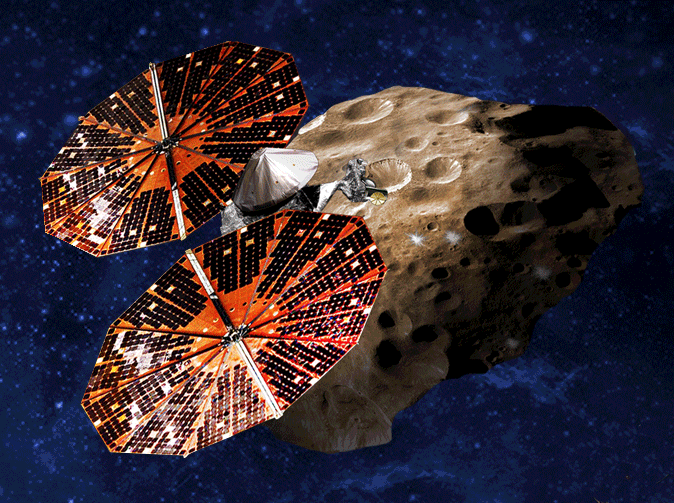
In the expired year, two new devices started to the asteroids. The sixteenth of October took the Lucy probe. The flight program first provides for two consistent flights of the Earth: on October 16, 2022, Lucy should fly to our planet at an altitude of 300 km for the first time, the next flight will take place in December 2024. In April 2025, when passing the main asteroid belt, Donald Johanson , and then in 2027, the station should arrive at the Lagrange L1 Sun-Jupiter system and conduct a study of four “Greeks” systems there. In December 2030, the station should fly past the Earth for the third time, and in March 2033 he will arrive at the L5 L5 L5 point of the Sun-Jupiter system: there it should conduct a study of the double system of the Asteroids of the Trojans of Patriotic and Menetei.
On the twenty -fourth of November, 2021, with the help of Falcon 9, the American Dart station started. At the end of September 2022, the device crashes into Dimorph - a satellite of the near -Earth asteroid Dim. The purpose of the mission is to try to change the orbital parameters of this double system and thereby work out the methodology of preventive operations to change the trajectory of dangerous near -Earth asteroids.
In August 2022, the psyche of the same name American station starts to the iron asteroid. After the flight and gravitational maneuver near Mars in May 2023, the station in early 2026 will enter orbit around an asteroid. Together with Psyche, a small apparatus of Janus will be launched to a double system of asteroids of the main belt.
In the implementation of the Artemis-1 lunar mission, in January 2022, two small cubes of the Nea Scout to two small asteroids are possible as an additional payload, and the purpose of the mission may change depending on the date of launch or other factors.
The external area of the solar system
Far beyond the borders of the orbit of Neptune, the flight of American space probes “Voyager-1”, “Voyager-2” and “New Horizons” continues. The Voyagers launched in 1977 continue to transmit the most valuable information about the interplanetary environment at a huge distance from the Sun - more than 155 a. e. Currently, work with stations is carried out on the basis of strict savings of fuel and other resources. The new horizons probe, which had previously studied Pluto and objects from the Kuiper belt, can function until about 2035, until the fuel reserves for orientation are enough and the sources of the radioisotope thermoelectric generator will not dry out.
Lev Kamensev