
Translated material
Thinking fascist
Questi Giorni Sono Come Gli Ultimi Giorni Vita Di Un Grosso Mostro Fare Più Vittime Possibile.
Giordano Cavestro
These days are like the last days of the life of a huge monster,
Which wants to destroy as many victims as possible.
Jordano Kavevestro (11/30/1925–04.05.1944), Partisan schoolboy, on the day of execution
Arrigo Boito
People with brutal history!
Arrigo Boyto (1842–1918), composer and poet
Vieni a veder la gente quanto s'ama!
E se nulla di noi pietà ti move,
A Vergognar Ti Vien de la Tua Fama.
E se licito m'è, o sommo giove
Che Fosti in Terra per Noi Crucifissso,
Son Li Giusti Occhi Tuoi Rivolti Altrove ?
Dante Alighieri , Purgatorio, VI: 115–120
Come to see how people love each other!
And if you don’t feel sorry for us, let you be ashamed of your glory.
And if I dare, righteous Lord, crucified for us on earth - why did you completely turn away from us?
Dante Aligieri, Purgatory, VI, 115-120
Torture on Bologna street
On July fourteenth, 1944, employees of the Florentine Department of Special Services of the Italian Social Republic in their own building on Bologna Street were tortured 24-year-old partisan Bruno Fanchullachci. Torture took place on the top floor. While the executioners had a break, Fanchullachci, with his hands tied behind his back, was able to jump out of the window. He died from injuries three days later, and only later the investigative police was able to establish the involvement of Fanchullachci in one of the most high -profile operations of the partisan group of the group of the Italian Republican Academy, the cavalier of the Order of the German Eagle, Senator Giovanni Gentile.
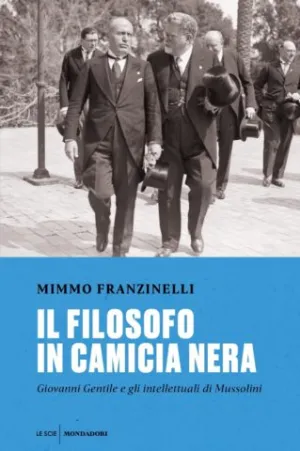
One of the most interesting figures of the 20th century in Italy, one of the few examples of an outstanding philosopher, who became an impressive statesman, Minister of Education, president of the Italian Academy, director of the Higher Normal School, director of the Institute of the Middle and Far East, the creator of the Italian Encyclopedia, the author of the secondary school reform, and the Jentile, the Gentile was given the strongest The influence on the mental life of the second quarter of the twentieth century is influence that is very tangible today.
The new book of the historian of the Italian fascism of Mimmo Franzelli is called "The Philosopher in the Black Shirt." The author continues the research by Manlio di Lalla, Sergio Romano, Gabriela Tur. He begins the book as Gentile entered the government in 1922; We will tell the background.
Years of teaching
On May twenty -ninth, 1875, a boy was born in the city of Castelvetrano in the Castelvetrano town and teacher, the eighth of ten children. According to the Sicilian custom, ego was named after the father - Giovanni.
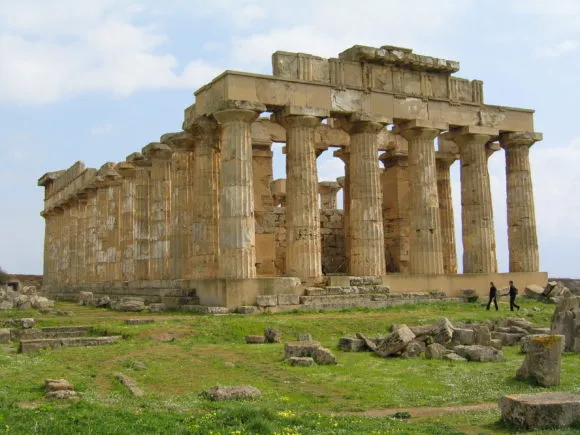
From childhood, Giovanni had seen three thousand years of Italian culture with his own eyes. The antique temples of Selinunt are nearby, and in the city museum near Archimedes the bronze statue, the most beautiful in the world, the Selinunta Young man, “L'Efbo di Selinunte”, is carefully found by a peasant.
After graduating from elementary school and gymnasium, in 1891, Jovanni was going to study in Trumpany in the classic Lyceum Leonardo Himénes (named after the famous graduate, astronomer), founded in 1580, the eighth in seniority in Sicily.
In 1893, Giovanni Gentile, having scored 36 points out of 50 in the entrance tests, entered the Higher Normal School in Pisa. One of the many paradoxes by Gentile: Having become a statesman, a native of a modest family (“His poverty is as exceptional as his abilities,” his scientific director of the egg in a recommendatory letter will write), who entered the best school in Italy when the young kingdom seeks to discover access to the light as many Italians as possible, will realize a strict career for a long shiny career as possible. The oligarchic approach to popular education. For example, the Italian encyclopedia created by Gentile was extremely expensive: only a very, very rich family could afford a subscription.
In 1896, in Pisa, a third -year student Gentile met a thirty -year -old and already famous intellectual Benedetto Croce. This is one of the main meetings in the life of both.
The path to fame
The search for work will be long and will not be successful at all. Gymnasium in Campobasso; The Lyceum in Naples (“Full Republic of Medicine, in which everyone, teachers and students, strives to get comfortable”, complains to Gentile).
In 1901, Giovanni Gentile marries Erminia Nudi: Teresa (1902), Federico (1904), Gemini Gaetano and Giovanni (1906), Giuseppe (1908) and Tonino (1910) will be married.
After a long effort, Gentile becomes a professor at the University of Palel (1906), then - the University of Pisa (1914) and, finally, the Sapienets University of Roman (1917).
Gentile works a lot and works fruitfully. His books are “The General Theory of Spirit as a Pure Act” (“Teoria General Dello Spirito Come Atto Puro”, 1916), “Logic system as the theory of knowledge” (“Sistema Di Logica Come Teoria Del Conoscere " [1] , 1917) - bring him European glory, which was confirmed by the assessment of the descendants: Gentile, along with Heidegger, is one of the most remarkable philosophers of the 20th century.
The achievements of the philosopher, as well as the achievements of mathematician, are usually difficult to describe in a few words (“created a vaccine against rabies”). Called by the definition of the Italian encyclopedia, in the center of the philosophical system, Gentile is the concept of thought as a “pure act”, “reality in the process of formation”, that is, “reality, which itself is the process of formation” (which Pico Della Mirandola would agree). Clarity, grace of presentation, pedagogical skills of Gentile are the pleasure of several generations of readers. The Russian language of the Oss work of Gentile is translated by A. L. Zorin, who also compiled a detailed introduction, in which the translator’s tendentious desire to minimize the fascism of his beloved author - just against such attempts, numerous and Italy, was directed by the controversy of Franzinelli.
We formulate, very simplifying, two theses of Gentile.
- The thought is inseparable from the act. Thought is an act. (Gentile follows Jambattist Vico.)
- A person is inconceivable outside of society. The personality is unthinkable outside of public life. The turnover "Private Life" is a contradiction in terms. Any life, according to definitely, is a public life (it is the Gentile that the term “totalitarian state” belongs - with a positive, of course, connotation). Any action is concluded in history.
The task of the philosopher is thus understanding the historical process and the action in it. Indeed, in inaction, no one could blame Gentile.
Some comicism of the phrase "Pure Act" is also present in the Italian original. In 1936, the astronomical value of the stolen jewelry of the philosopher’s wife will inspire a satirical verse:
Ma Con Volto Oscuro
Quando Ripensa al Fatto
Borbotta: “Però L '” Atto ”
Non Lo Giudico “Puro” ”.
E Come Corollario Ai Suoi Pensieri
DENUNCIA IL Furto Ai Regi Carabinieri.
(“But with a dark face, comprehending the fact, mutters:“ I do not recognize the act with pure. ”And, as a result of this reasoning, it declares the disappearance of the gendarmes of His Majesty.”)
In the meantime, the European -famous Roman professor lives very modestly: in a four -room apartment, a family of ten people, and the student who had entered during lunch is amazed at the simplicity of the meal.
Anthem of the war
Both Kroche and Gentile are in love with the war.
In Kroche, this love follows, in the strict sense, out of delight in front of Risorjimeno: “Risorjimeno’s people followed the ideal of Italy fighting, seeing the loss of military virtue the reason for the Italian decline”, “Carducci <...> dreamed primarily about Italy of the warlike”, “If only the Italians fought - <...> in this delight of Carduceschi”. Moreover: the person is a killer by nature: “Life without murders is inconceivable” (una vita che <...> non rechi norte <...> è InconCepibile). Behind the novels of the Baroness von Zyuttner, “the only degree of art that the inspiration of human lovers can achieve,” the thinker remarks sarcastically, “all the rest of the art, unfortunately, is dialectically and antipacifistically, like life”.
Gentile echoes his teacher: pacifism is one of the “spiritual positions devoid of historical meaning” (Situazioni spirituali prive di senso Storico), “the promotion of the pacifists is one of the most simple -minded, the most Donkykhotsky ways to the loss of time.” Never fought himself, at a desk, like Karducci and Kroche, Gentile comes into ecstasy, seeing the soldiers killed in the war. The rapture of soldier's blood passes from the text to the text (Gentile's tone will change later, when his own son is in danger).
For Gentile, the war, and then fascism, is the continuation of Rizorjimento, emphasizes Franzilly (the Italian encyclopedia: “[Gentile] considered the continuers of the Right Political Political Politicals” (Considerò Il Fascismo Come Il Continuatore Della Destra Storica Nell'Opera del risorgimento).
In the gathering of positions in the war years, Franzinelli and the “first communication” (Il Primo Legame) between Gentile and Mussolini sees; However, this thesis is not close to all biographers. (In the fields: the continuity between Rimorjimeno and fascism is rejected by many, however, after the fall of fascism, Risorjimeno completely disappears from the popular culture in Italy.)
In the “Turning to the Italians” on the Capitols in 1943, the Gentile will call compatriots to the feat, referring to the glory of victory in November 1918 under Wittorio-in-You, where about a million who are not able to write and read peasants, exiled from all over Italy to the borders, about the very existence of which (according to Saviano) they did not suspect, within a few days in one of the most in one of the most in one of the most The beautiful corners of the Earth were killed poorly equipped, poorly dressed, freezing in the autumn foothills of hungry peasants (Austrian, Czech, Hungarian, Croatian) and killed almost one hundred thousand.
School Reform and Academy Reform
The philosophical system of Gentile is built on the identity of thought and action, and the philosopher’s interest in practical politics is clear. The first government of Mussolini Gentile is included in the Minister of Education.
Franzinelli minimizes the political influence of the Political Gentile immediately before his entry into the first fascist government. The tour, on the contrary, emphasizes gradually, for decades, in parallel with the stronger glory of the philosopher, the growing weight of Gentile in the journalistic environment, in university personnel issues, through the Ministry of Education and, finally, in state policy.
What to judge who is more profitable, the interests of both Mussolini and Gentile are clear: the first needs the prestige of the second to strengthen the authorities; The second needs the alliance of the first to implement ambitious ideas in the field of education and in the field of culture. The deal will be honest: both will give that they promised and get what they wanted. The warmest, most cordial relationship for two decades will connect the head of government and philosopher, who will say: "Mussolini is the being and future of Italy."
From the first days, the Gentile government receives complaints from the youth of the “black shirts”. For example, the Minister writes Giorgio Levy della, an orientalist, a Jewish professor at the University of Roman, a future academician: “Your Excellency! This morning, at 10:30 <...>, the Nazis entered my house and, <...> Taking me into the building of the technical school, <...> subjected ordinary torture with castor oil [2] . <...> The reason, as they told me, became my articles in “Paes”. I bring <...> the fact before your excellency as my Jerharhic boss, urging you to protect the freedom of thought and expression of your subordinates. ”
The appeal of Georgio Levy della of the species will not be heard.
Gentile was actively engaged in school reform. He sharply reduced the number of hours allotted in the school schedule of mathematics and natural sciences. The flagship of school education becomes (and to this day remains) the classic lyceum, designed to form an oligarchic ruling class. The most serious efforts are used that the children of the oligarchs can really get a very high quality humanitarian education. At the same time, obstacles to the university for children from ordinary families are erected. According to Gentile, they are enough to prepare them for the profession - unlike future rulers, whose patriotic spirit should create in the classical lyceum.
The fundamental department of “education for oligarchs” from “education for the masses” is clearly visible on the concept of teaching the foundations of Catholic culture: considering this course in primary school necessary, Gentile would like to avoid teaching religion in the classical lyceum, where, in thought, philosophy should be taught. However, if Gentile won the battle with mathematicians, then the battle with the Catholic clergy turned out to be too tough for him: in the framework of the Latern Concordat, the Church requires, and successfully achieves, the dissemination of teaching the foundations of the Catholic religion for all school years, including the lyceum.
Reform Gentile caused objections to the Italian Academy dei Linchei. Her president, the famous mathematician, Senator Vito Voltaire, led a protest that did not give a result, but not left without consequences.
A few years later, Mussolini has been taking a radical, large -scale, only reform in the history of Italy, founded in 1603 of the Academy of Dei Linchei. The new Academy of Italy is opened; After a few years, the merger of the two academies will take place. As a sign of protest, Vito Voltaurra resigned. Gentile will become the president of the United Academy shortly before his death, in 1944. After the fall of fascism, the Mussolinian reform of the Academy will be canceled immediately. The oligarchic reform of Gentile, on the contrary, will successfully survive fascism: in the coordinates set by it, Italian school education lives today.
Gentile and Italian mathematics
Benedetto Kroche considered mathematics part of the engineering and deeply despised. I have to obey the reader: I could not understand why. Let the experts correct me. My, undoubtedly, is inaccurate, an attempt to explain to me the thought of croche is this.
The benefits of mathematics for practice are well known - but for the philosopher mathematics is useless; The philosopher, like the statesman, seeks to understand the logic of the historical process, that is, the violent struggle for power - how will mathematical logic help him? If the doctor, instead of stopping bleeding, was set about the reasoning of the strength of gravity entailing blood to the Earth, so instead of a specific action in a specific historical process, within the framework of a particular historical law, which, by definition, is strength, the mathematician reasonably reason and concludes about the abstractions that do not exist, without communication with reality - as a pacifist.
For me, the task of understanding Kroche is all the more difficult that he, in addition to mathematics, despises what is expensive for me: Christianity and music, Michelangelo and Tolstoy. It is more difficult for me to understand the knee -proped veneration, which is surrounded by Benedetto Kroche, this Marduk of the Italian educated class, “secular dad” (in the words of grams), whose contempt for humanity causes ecstasy enthusiasm in response.
The attitude to mathematicians and to the mathematicians of Gentile is much thinner. In the wonderful small monograph “Gentile and Italian mathematicians” [3] , preceded by brilliant essays, letters were published for the gentleman of Italian mathematicians, including Luigi Bianca, Gvido Castelnuo, Federigo Enrickwin, Guido Fubini, Tullio Levi-Chivita, Leonida Tonelli.
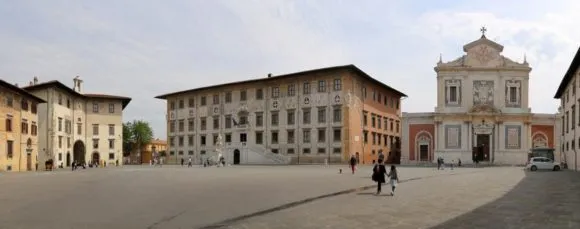
Relations of the director of the Higher Normal School Gentile with colleagues-mathematicians are thermal that his son Giovanni is a brilliant physicist. Giovanni Jr. will die at the age of 35 from the sepsis provoked by an abscess to the tooth. Father will devote an inconsolable memories to his son. (In the fields: It is the director of Gentile who redeems from the Holy Sollegio Puteano throne on the horsemen Square - to open Collegio Mussolini in it. Home in the building - the mathematical center Ennio de Giorgi.)
But all this is in the future, but for now, Gvido Fubini sends a congratulation to the Minister of Gennie, "on behalf of the one who, even if rejecting many of your ideas, has always admired your genius, with love and sympathy, following your brilliant career."
Falsification of elections. Italian encyclopedia
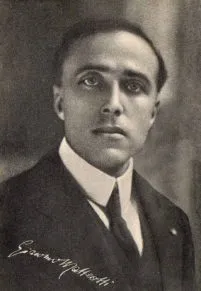
The 1924 elections were accompanied by unheard of falsifications. Directly accusing Mussolini of parliament, the deputy of Dzhakomo Matteotti tells friends: “I made my speech. You can start cooking yours for my funeral. ” On June Tenth, along the embankment of Arnaldo Breeshian, the deputy went to parliament on foot. Matteotti was abducted next to the bridge, bearing his name today, and killed on the same day.
Deputies accuse Mussolini. Soon, Gentlene, along with several other ministers, resigns. Why? He fears Mussolini's soon falling fall, as Franzinelli suggests? Or, being the author of the unpopular reform, he seeks to protect Mussolini from attacks through the Ministry of Education, as the tour writes? In any case, Mussolini copes with the crisis, and Gentile remains at the head of the Italian educational and cultural policy. He is waiting for bold projects, including a wonderful Italian encyclopedia and a brilliant long -term leadership of a higher normal school.
Писать статьи для своей энциклопедии Джентиле приглашает всех специалистов, сторонников и противников его реформы, фашистов и антифашистов, в том числе и тех, кто публично отказался принести разработанную самим Джентиле клятву верности фашизму работников высшей школы. Недавний оппонент Энриквес принял в работе над энциклопедией самое горячее участие, отраженное в активной переписке. 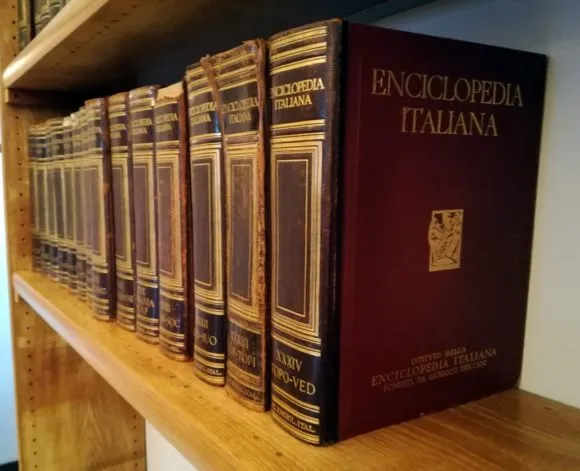
Статью «Евреи» написал уже знакомый нам Джорджо Леви делла Вида; после принятия расовых законов cтатью придется срочно переписывать. Статью «Фашизм» подписал, естественно, Муссолини; написал ее, утверждает Франзинелли, сам Джентиле.
Впрочем, пока Джентиле был министром, он без колебаний увольнял тех, кто отказывался пpинести клятву верности фашизму. Джорджо Леви делла Вида пишет: «Человек с сильным характером, Джентиле уважал тех, кто не боялся открыто защищать свое мнение». И, предвидя недоумение читателя (уважал и увольнял? со слезами на глазах, наверное?), продолжает: «Да, это были крокодиловы слезы, но это были слезы доброго крокодила, который <…>очень сожалел, что <…> неумолимый диалектический процесс истории принудил его сожрать своих жертв, и теперь оплакивал их с абсолютной сердечной искренностью».
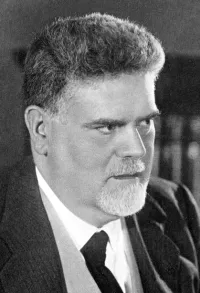
Философ — олигарх
Благоволение Муссолини приносит Джентиле личное преуспеяние, какого свет не видел никогда.
Джентиле — самый коммерчески успешный философ не просто в фашисткой Италии, но, по-видимому, во всей истории Европы. Одна лишь энциклопедия приносит миллионные гонорары с продаж — во многом, в государственные структуры: библиотеки, мэрии, институты культуры.
На полях очередного, вежливого, но твердого прошения об индексации гонорара ввиду инфляции, Муссолини отмечает: «Философ, а себя не забыл» (È un filosofo che sa fare i propri affari).
Джентиле покупает автомобиль пpемиум-класса. Роскошная вилла Эрминия названа в честь жены. Прислуга состоит из кухарки, двух горничных и няни для внуков.
Франзинелли, как и другие биографы, подчеркиваeт особенность, сближающую философа c Горьким: все, всегда, по вcем вопросам, обращаются к Джентиле за помощью, которую он часто щедро оказывает.
С другой стороны, когда студент-философ Клаудио Бальетто решает не возвращаться из стажировки во Фрейбурге с тем, чтобы избежать призыва на военную службу, возмущенный Джентиле увольняет его друга, секретаря Школы Альдо Капитини, известного своей проповедью непротивленчества. Активистам Джентиле не помощник.
Что думал Джентиле о коллегах, которым его отказ помочь сломал жизнь? Я представляю себе его ответ так: « Меня упрекают в создании просвещения для олигархов, но напомню Вам, что я поднял возраст обязательного образования с двенадцати до четырнадцати лет. Mожет быть, напомнить Вам еще, кто запретил ночной детский труд в Италии? Или Вы хотели бы вернуться в девяносто второй год? B первое правительство Джолитти? B кризис конца века, cо стотысячными демонстрациями в Милане против роста цен на продукты? С проигранной войной? Муссолини войну в Эфиопии выиграл. Сильная рука Муссолини далa мне воплотить научные, культурные, образовательные инициативы, о которых мечтать нельзя было в нищие девяностые. Bсё это я должен принести в жертву ничтожной кучкe анархистов-дегенератов?»
Салò , или Конгресс на фоне пыток
Фашистский режим был во многом мягче нацистского. B Италии не проводилась кампания преследования гомосексуалов: в мужественной Италии их нет, a раз нет, то и облавы незачем. Всё-таки это не «добровольные» кастрации в Германии и Австрии. До 1938 года в Италии не было расовых законов. Eвреи Рейха стремились в Италию (именно директор Высшей Нормальной Школы Джентиле помог историку искусства Паулю Оскару Кристеллеру сперва перебраться из Фрейбурга в Пизу, а потом, в 1938-м, из Пизы в Нью-Йорк).
Всё изменилось в республике Салò. Если в августе казалось, что Муссолини проиграл бесповоротно, то в сентябре стало ясно, что Гитлер выручил его. Без поддержки извне Муссолини не продержаться и дня. Начинаются зверства, каких уже много веков не видела Италия.
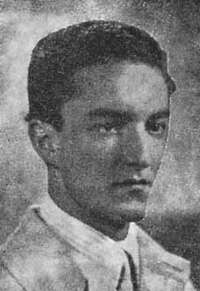
Пыткам в республике Салò посвящена специальная монография Франзинелли, так и названная: «Tortura». Here is just one example. Cхватка при Сонклино 19 апреля 1945 года. Фашистами дивизии «Сан-Марко» взяты в плен партизаны: Чезаре Патарини (16 лет), Анджело Киминелли (17 лет), Руджеро Гриделли (19 лет), Карло Рикотти (22 года), Карло Бернардони (23 года), Гуэрино Бергамини (29 лет). Им вырезают уши, выдавливают глаза, калечат половые органы. Потом кладут в гробы, ставят гробы вертикально и фотографируются на их фоне, улыбаясь, с сигаретами во рту. (Из рассказа Франзинелли непонятно, с мертвыми фотографируются или с живыми.) Русским партизанам в итальянском сопротивлении посвящены, например, «Записки русского гарибальдийца» Владимира Яковлевича Переладова, а в брешианском — специальное недавнее исследование Исайи Менси (Isaia Mensi).
Tрудный период между перемирием Бадольо и окончательным падением фашизма Джентиле мог бы тихо переждать, как сделал это, например, бывший президент Сената Федерцони (по окончании войны, от греха подальше, он уедет в Португалию — a уже через два года вернется и 20 лет спокойно проживет в Риме, никем не тревожимый).
Но прятаться в углу — не для Джентиле. Он будет сражаться до конца.
Он едет из Рима во Флоренцию. Он принимает приглашение Муссолини возглавить Академию Италии — теперь «республиканскую». Открытие новой Академии — первое заседание которой проходит в полyпустом зале — предполагается ознаменовать конгрессом в честь одного из героев Джентиле, философа Джамбаттисты Вико.
Конгресс в честь философа-иллюминиста на фоне ежедневных пыток воспринимается как провокационная апология фашистского террора. Шок тем сильнее, что через три дня после конгресса совершается жуткая публичная казнь призывников на Марсовом поле во Флоренции.
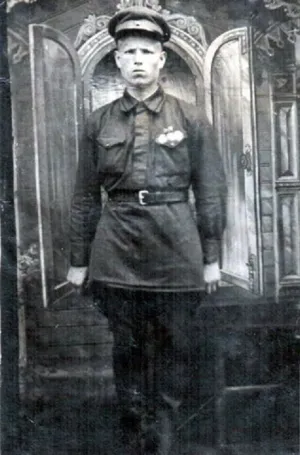
Смертную казнь в Тоскане отменил Великий Герцог Пётр Леопольд 30 ноября 1786 годa — eго yказ, запретивший также и пытки, сделал Великое Герцогство Тосканское первым в мировой истории государством, свободным от смертной казни. Публичныx казнeй не было во Флоренции с 1747 годa, когда повесили, среди прочих, и осужденного за содомию.
Утром 22 марта 1944 в результате зачистки окрестностей Виккьо-ди-Муджелло, родины Джотто и Беато Анджелико, за уклонение от призыва в армию на Марсовом поле Флоренции расстреляны пятеро: Антонио Радди, Отторино Квити, Адриано Сантони, Гвидо Тарджетти, крестьянe из Виккьо, и летчик из Сардинии Леандро Корона, крестьянами укрытый. Юные осужденные долго не могли понять, что их казнят. Капеллана спросили: «Батюшка, а очень больно, когда расстреливают?» Часть смирилась к утру, другие, по пути из тюрьмы на Марсово поле, плакали и все время кричали «Мама, мама». Усадив, молодых людей привязали к стульям. Расстрельная команда, куда рекрутов сгоняли, угрожая самих поставить к стенке, целилась плохо: после залпа из пяти остались живы двое (по другому свидетельству, трое). Oни покачивались на стульях, выбрасывая кровь и повторяя: «Мама, мама». В них стреляли в упор. Положив в гробы, чтоб отпеть, вновь услышали: «Мама».
Каждый год по Флоренции проходит траурная процессия в память о казненных 22 марта. B 2008 году президент Итальянской республики посмертно наградил мучеников Марсова поля золотой медалью гражданской доблести.
Кровь за кровь?
Джентиле не смог закончить свое исследование истории итальянской философии — 15 апреля 1944 года его убили.
Тридцатого марта философ получает записку: «Ты несешь ответственность <…> за смерть пяти ребят 22 марта». 14 апреля, выступая в рамках цикла докладов, посвященного итальянским святым, он говорит: «Если бы итальянцы только знали, <…> то ползали бы перед Муссолини с утра до вечера, чтобы отблагодарить его. Он не отдыхает ни минуты. <…> Дуче не живет больше ради себя, всё отдает нам».
Убить философа не составляло труда: он ходил и ездил без охраны. К автомобилю подошли с вопросом, он ли Джованни Джентиле, он ответил «Да», и его расстреляли в упор.
 Комитет национального освобождения тут же осудил преступление, а Тольятти горячо выступил в защиту убийц. Франзинели упоминает две теории. Согласно одной, смертный приговор Джентиле был вынесен на месте, во Флоренции, на волне возмущения фашистским террором, а Тольятти оправдывает совершившийся факт логикой гражданской войны. Согласно второй, Тольятти не мог не думать о том, что Джентиле нет и семидесяти, что его искренний патриотизм так же бесспорен, как и фашистские симпатии, что его авторитет колоссален, что он может играть самую активную роль в политике послевоенной Италии — a значит, смертный приговор философу вынес сам Тольятти и чуть ли не Кремль.
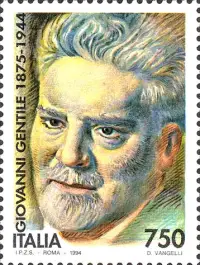
Джентиле похоронили в Базилике Святого Креста, рядом с Буонарроти, Альфьери и любимым Маккиавелли. К пятидесятилетию смерти Итальянская Республика выпустилa марку, посвященную Джентиле. Другие деятели фашизма не были удостоены такой чести.
Отец и сын
Услышав капитолийскую речь отца, cорокалетний Федерико Джентилe, директор издательства «Сансони», идет в армию добровольцем. Немцы интернируют его. Версия Франзинелли: Федерико взят в заложники, чтобы охладить возможные «миротворческие» порывы философa, которого слушает Муссолини. Страницы, связанные с Федерико, — самые теплые в книге. Чeловеческое очарование Джованни Джентиле упоминают все, кто встречался с ним. Это понятно: человек, не умеющий очаровать собеседника, не мог бы основать энциклопедию и реформировать среднюю школу. Подпадает под очарование своего героя и полемизирующий c ним биограф.
Философ, воспевавший гекатомбы на алтаре войны, теперь — мучающийся отец, y которого не принимают передачу сыну, дедушка, которому больно, что внуки не видят отца.
Федерико отпускают сразу после убийства отца.
Философ в черной рубашке
Тури упрекает Франзинелли в том, что тот больше смотрит на черную рубашку, чем на человека в ней. Вместе с тем, по словам самого Тури, Джованни Джентиле — не воплощение итальянскoго образованнoго классa в фашизме, а фашизмa в итальянском образованном классе. Книга Франзинелли обращает к Джентиле вопрос, который Пастернак задавал Маяковскому:
Я знаю, Ваш путь неподделен,
Но как Вас могло занести
Под своды таких богаделен
На искреннем Вашем пути?
С тем различием, что Джентиле, на искреннем пути его, занесло под своды пыточных камер, по стенам которых течет детская кровь.
Черная рубашка не заслонила лицо. Черная рубашка стала лицом.
Александр Буфетов ,
Mathematician, Professor of the Russian Academy of Sciences
[1] Модифицируя немецкий термин «теория познания» ( Erkenntnistheorie ), Джентиле ставит вместо существительного глагол: «наука познавать» (не teoria della conoscenza , а teoria del conoscere ).
[2] Читатель, может быть, не знает, что такое «пытка касторовым маслом»? Eе придумал писатель д'Aннунцио. Шел 1919 год, когда он освобождал город Фиуме из-под гнета Королевства сербов, хорватов и словенцев (Муссолини присоединит к Италии «свободный город Фиуме» в 1924 году). Метод прост: заставляют выпить 75 мл касторового масла. Брюки привязывают к телу веревкой. Через несколько минут спокойно отпускают домой по людным улицам. Еще эту пытку называют чисткой подрывника.
[3] Gentile, Giovanni. & Nastasi, Pietro. & Guerraggio, Angelo. (1993). Gentile ei matematici italiani: lettere 1907-1943 . Torino: Bollati Boringhieri