
Translated material
"It will be a crime." Why is the residents not satisfied with the project for the improvement of Arbat lane
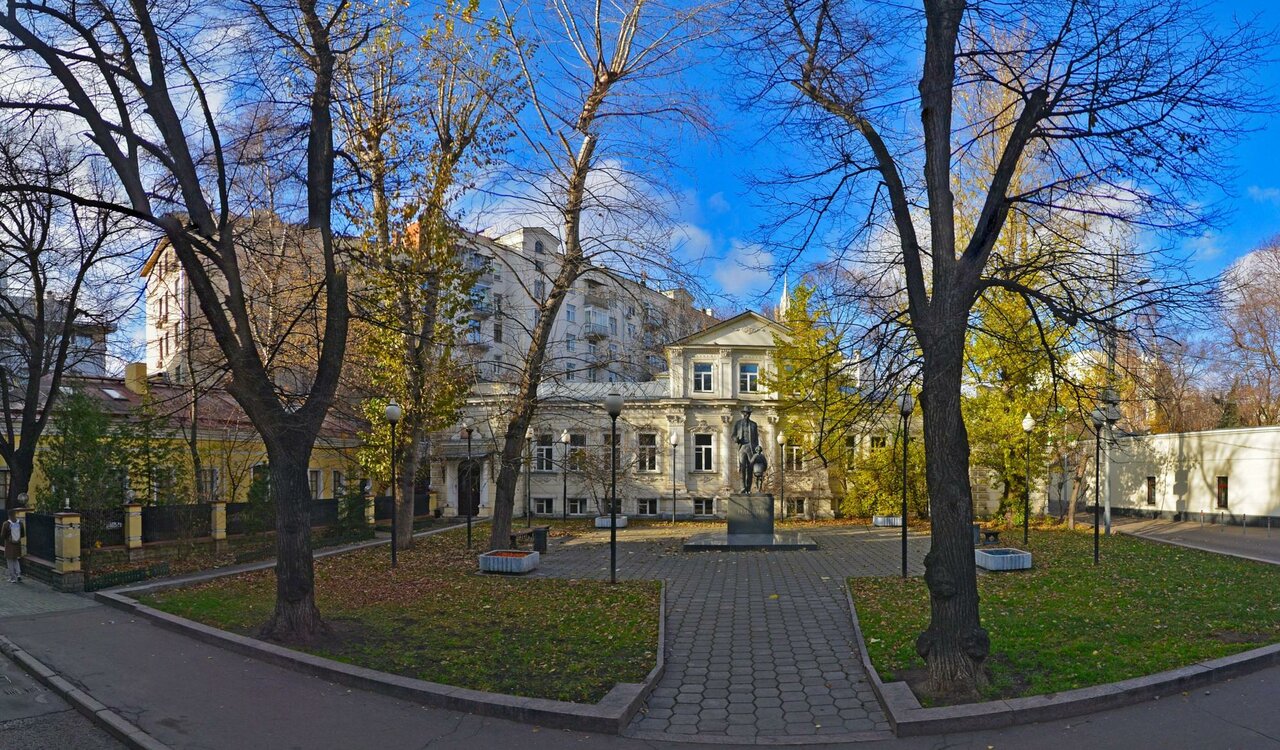
The improvement of the Arbat lanes, which is discussed since the end of 2019, the city hall planned for the coming 2022. Local residents fear that the unique atmosphere of this historical region will be destroyed, insist that template solutions are not suitable for him. In the city hall, all comments and suggestions are still ignored. Maya Baidakova talks about the main drawbacks of the developed project for the reconstruction of the lanes.
On November 12, Moscow Mayor Sergei Sobyanin on his website announced to Muscovites that after he put the “large” streets of Arbat and Khamovnikov (New Arbat, Ostozhenka, Prechistenka and Prechistenskaya embankment), 18 Arbat Lane immediately turned out to be: Sivtsev, Money, Glazovsky, Plotnikov, Gagarinsky, Big Bolshoi, Big Afanasyevsky, Chertolsky, Big Levshinsky, Bolshaya and Maly Mogiltsevsky, Old -Conhinen, Khrushchevsky, Nashchokinsky, Big and Small Vlasyevsky, Pure, Prechistensky and Krivoarbatsky .
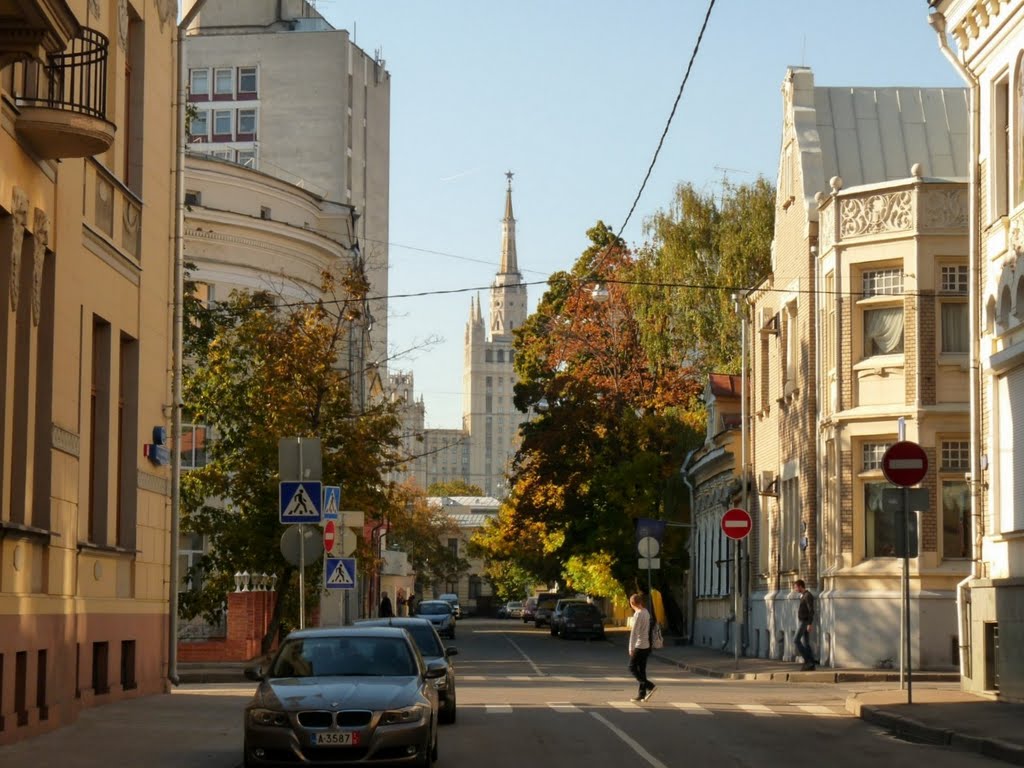
“ Arbat alleys are a special world . Each building here is history. But at the same time, these streets are home, a place of work or study for thousands of people. There are more than a dozen schools, kindergartens and medical institutions in the alleys, many museums and theaters. Administrative buildings and business centers, a height of the Foreign Ministry and foreign embassies. In the course of careful and accurate improvement, we plan to add more greenery, silence and comfort to Arbat alleys, ” said Sobyanin.
It is written beautifully. At the end of the news, Sobyanin asked readers to express his opinion about the upcoming landscaping on the website of the “Active Citizen”, where you could get acquainted with three pictures from the project of future improvement. Also beautiful.
But even after the publication of Sobyanin, the news about the upcoming works of the official opportunity to watch the 400-page concept of the improvement of Arbat lanes or at least its design decisions do not exist.
A year ago, the document managed to get the deputy of the Moscow City Duma Sergei Mitrokhin, and over time: time :
a) The concept received a negative assessment and more than 20 recommendations for its change from the Union of Architects.
b) residents sent many proposals, requests and comments on landscaping.
c) the Moscow government, in the person of the Department of Overhaul, has repeatedly promised to organize a “working group on construction and installation works” with the participation of residents and hold various “meetings with initiative groups of residents of the district”.
However, not a single proposal or remark of the inhabitants has never been included in the concept of improvement , not a single promised meeting was held, and the conclusion of the Union of Architects and the recommendations received were ignored.
Instead, it is proposed to vote on an “active citizen” who are interested in actually for a “cat in a bag”. All users could do this, so the fate of 18 Arbat lane was decided by the whole of Moscow during one “blind” vote, which ended on December 3 (almost 180 thousand people took part, 76% of them supported the project).
Comment of the resident. Christina Chemeris, art critic artist
I learned about the upcoming landscaping of Arbat lanes in November 2019. At a meeting in Library No. 3 named after Dobrolyubov, to us, residents of the Arbat and Khamovniki districts, they offered to write their wishes for the designers to take them into account when creating the concept of improvement.
All that we wanted was in a rather short list:
- replace asphalt on the roadway and sidewalks;
- Do not reduce the number of parking spaces;
- Do not make parking pockets;
- increase the number of trees and bushes where it is possible;
- Do not cut down large non -emergency trees;
- install lanterns less than 5 meters high with warm light (less than 3400 kelvins);
- replace the narrow polymer “lying policemen” with wide from asphalt according to the type of “Viennese platforms”;
- make a dog platform between the Sivtsev host and Prechistenka;
- Increase the number of urns and benches.
Unfortunately, in February 2020, in the concept of the concept of the concept, these wishes of the inhabitants were practically not reflected . We residents of Arbat and Khamovnikov received another spit in the face, namely:
- reduction of parking spaces (parking pockets without marking 12 meters long for 3 places);
- sidewalks paved with tiles;
- cutting all the landings in the squares (instead of them, new trees will be planted in rows, and tiles will be laid between them);
- high (7.5 meters) and very bright lights (in neighboring alleys between the Ostozhenka and Prechistenka, such shine exactly in the windows of residential apartments);
- Lack of dog sites.
Yes, the developers did not forget about the “Vienna platform” in pure lane and an increase in the number of benches and urn, but this is not enough for a normal, comfortable life in our areas .
Over the past year and a half, I and I wrote in all the services of the city, the Moscow government and even the President of Russia, but our pleas of improvement, which will increase the comfort of our lives, have not been heard so far.
Hands, of course, fall, but we will continue to write and fight in all ways available to us! If there are people among reading this newspaper who can affect the landscaping project of Arbat lanes, I ask you to do this. In public or secretly, but help us defend our area and not turn it into a new standardized "center of attraction" !
Now you can familiarize yourself with the concept in the Facebook group “The improvement of the lanes of Arbat and Khamovnikov”, and I will figure out the main decisions proposed in it.
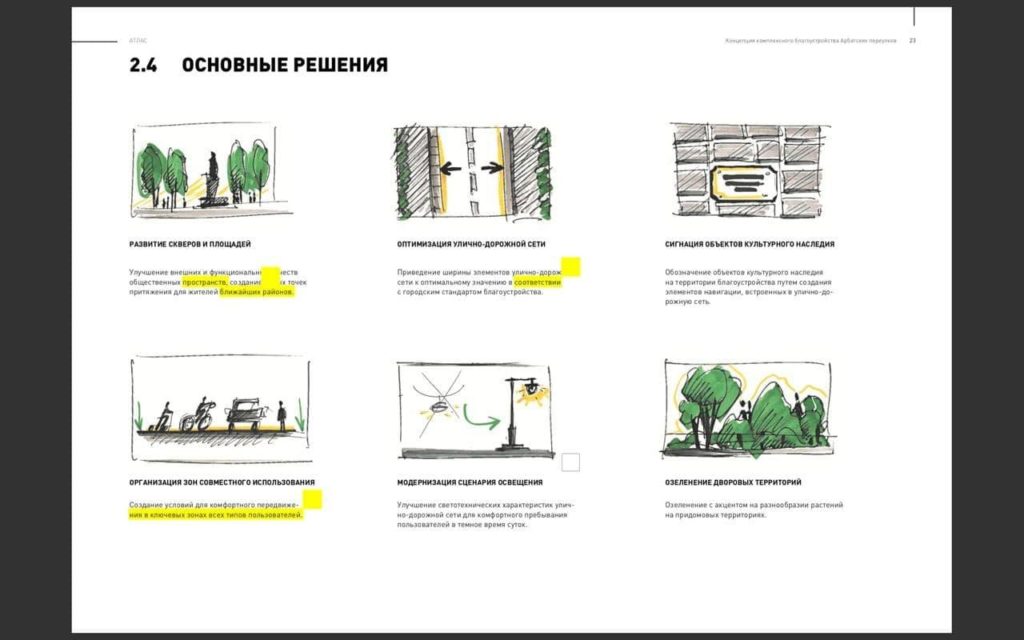
Development of squares and squares
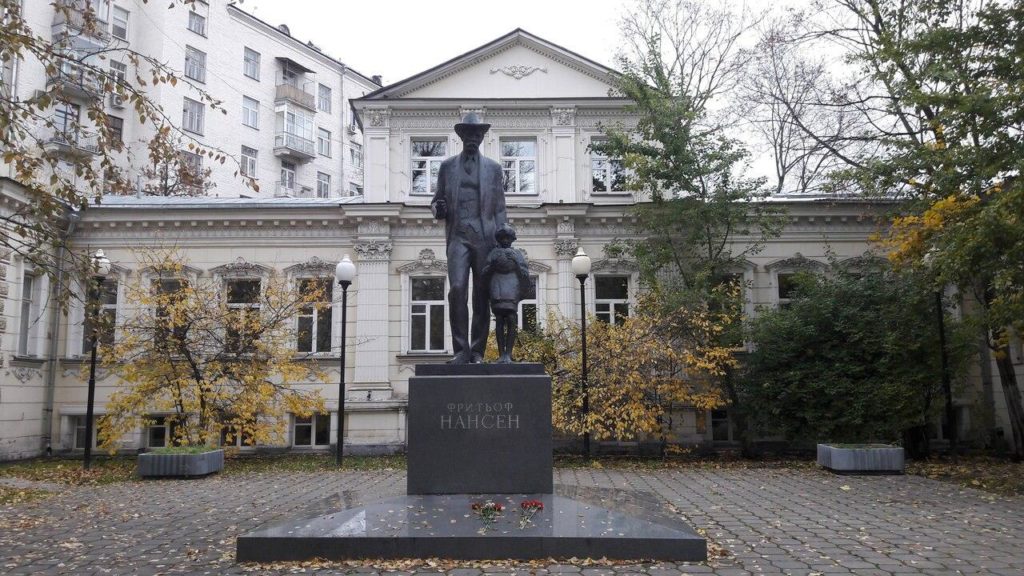
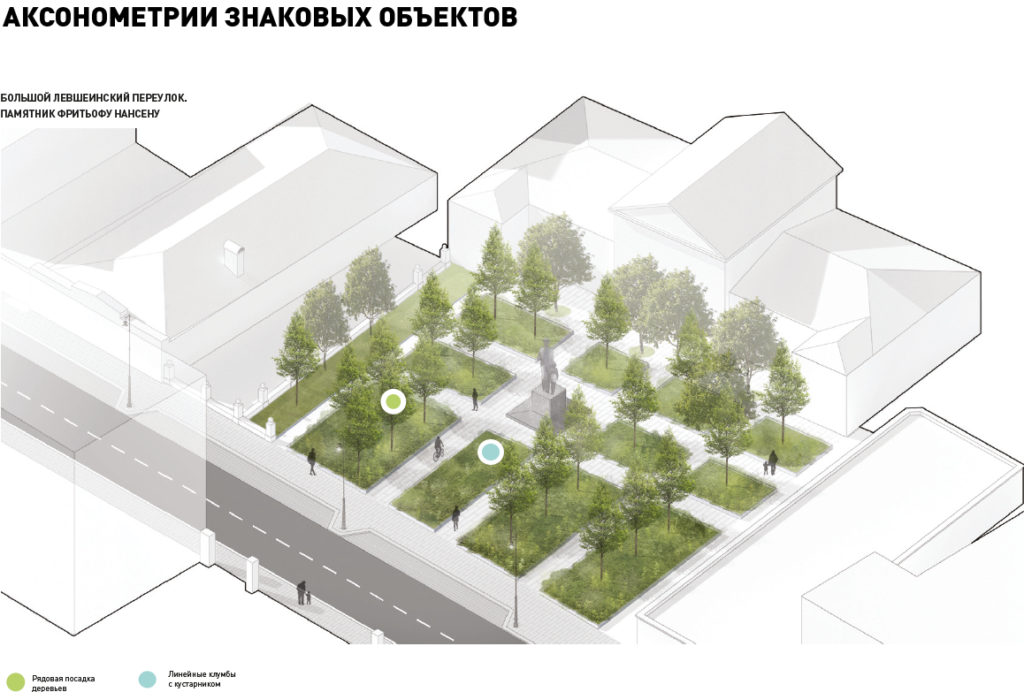
In the pictures, new projects for organizing squares in Bolshoi Levshinsky Lane - Miguel Idalgo and at the Nansen monument - look very good, but both do not take into account the historically formed planning structure and the existing green plantations.
As a result of improvement, the trees will be cut down, the lawns are replaced by tiles, and quiet squares will turn into “public spaces” for festivities.
In the Square of Idalgo, for example, the main walking area will be transferred from the far part hidden by trees and bushes, under the windows of house No. 3 along Bolshoi Levshinsky. From a square at the monument, Nansen is planned to make something consisting of paths around the square islands of a lawn with young seedlings. All this will be accompanied by illumination, because in the squares it is planned to put dozens of new lamps of all stripes: soil (illumination on the ground), low meter (shine at the level of the child’s eye), and lampposts.
It is unlikely that with such an organization of space, there will be a place for jasmine (at Nansen), lilacs (in Idalgo) and multi -meter LIPs and poplars.
Comment of the resident. Maria Surillo, guide
There are entire areas in our city where nothing should change. Where each nail and every tree are inviolable, because they are part of historical memory. Changes in such historical places are not acceptable. Arbat lane is the basis of the foundations of the history of Moscow . The rink of the twentieth century had already traveled along them, but still cannot stop. The upcoming renovation of the lanes should carefully return the lost, and not make our area faceless, with poor -quality tiles and lanterns. Our area cannot be inserted into the template, through which the city center is redrawn. This will be a crime.
Optimization of the road network
Behind this beautiful term, the expansion of sidewalks for a single denominator (excluding needs and opportunities, in order to bring the city standard of landscaping to the “city standard”) and widespread parking pockets are hidden.
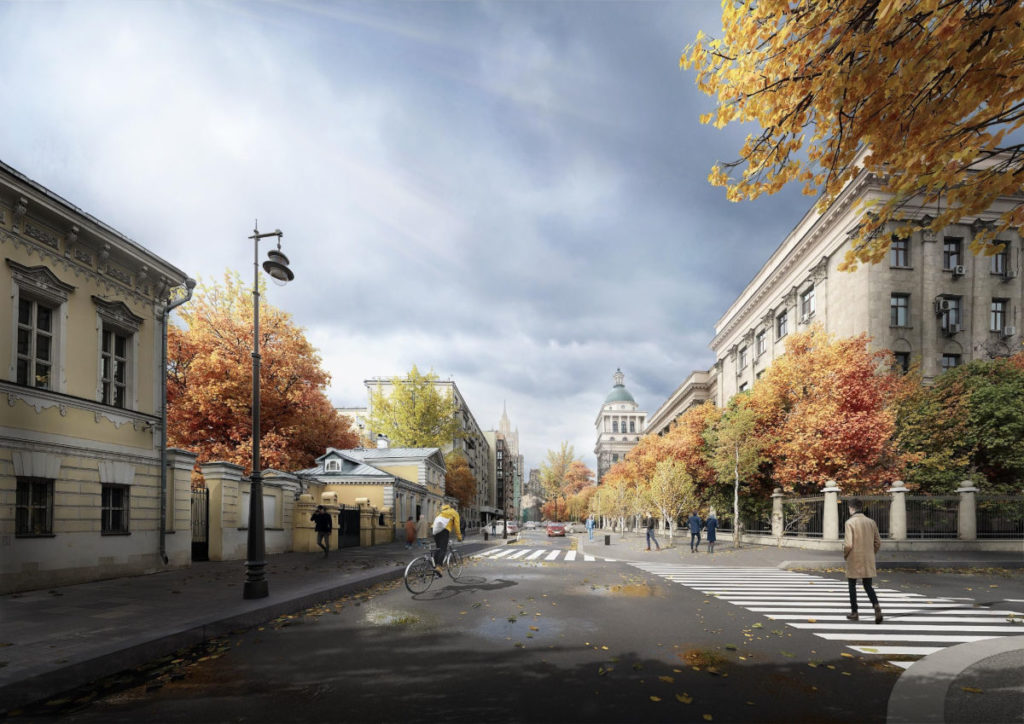
Result: only according to the project, the number of parking spaces will decrease from 864 to 827, and taking into account the interesting mathematics of the concept that considers parking spaces in public yards, at least another 40. Some parking spaces will disappear due to ledges for lights and conscious expansion of already wide sidewalks.
Cultural heritage
Ends are one of three measures proposed in the concept to preserve cultural heritage. Still - the restoration of historical fences within the boundaries of design and identification and preservation of lost artifacts.
But the repair of facades, the restoration of houses, repair of foundations, lowering the level of the cultural layer and archaeological surveys that seem more suitable for preserving cultural heritage objects, unfortunately, during the upcoming improvement are not planned.
Organization of joint use zones
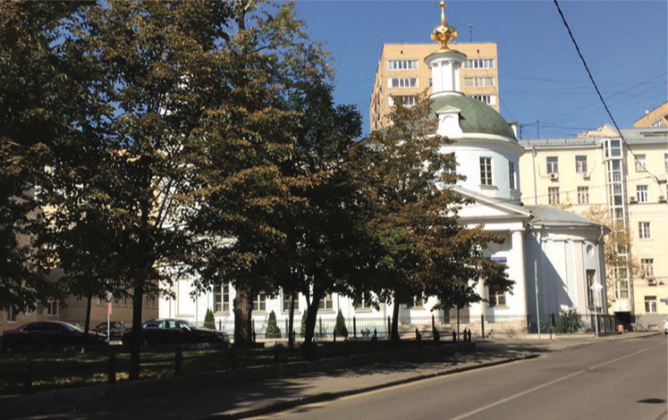
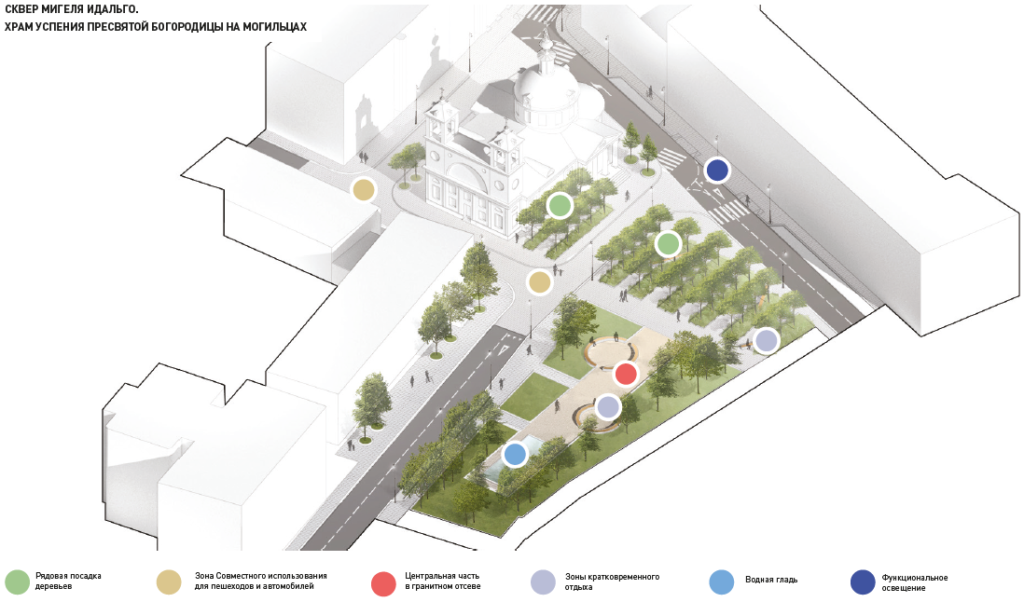
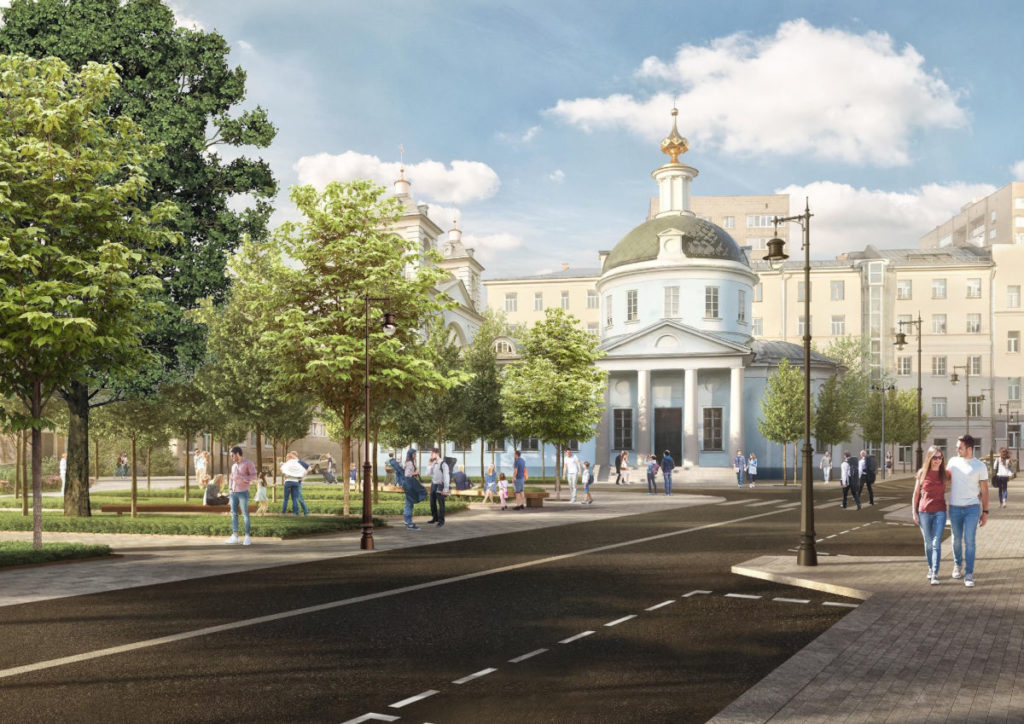
The Church of the Assumption on the Mogilts, the square of Miguel Idalgo and the Beethoven music school should turn into a single “space of joint use” for which it is supposed to remove all the fences around the square, division into sidewalks and the carriageway around the church and all parking spaces. Considering that children are running from a music school to the nearest cafe through the square, this idea causes exceptionally bewilderment.
Modernization of the lighting script
In addition to replacing the upper street lighting on the lanterns, the lighting of “public spaces” is expected. Illumination awaits squares, courtyards, turned into public, and some territories along residential buildings.
Landscaping of courtyards
The project includes two courtyards: on the corner of Plotnikov and Gagarinsky lanes and at the house No. 6 in Maly Vlasyevsky Lane. The landscaping of these yards is accompanied by the creation of public spaces with public parking lots, tiles, small architectural forms and cutting greens to comply with design solutions.
The concept contains many dubious decisions, actual and historical errors: everything in it is subordinated to the creation of the “Unified Landscape and Architectural Office of the Territory” and “New Points of Attraction” for residents of the nearest regions and tourists in the protected historical and cultural zone.
Obviously, if the concept is implemented in the current form, then the promise of Sobyanin “add more greenery, silence and comfort” to Arbat alleys will not be fulfilled.
Comment of the resident. Tatyana Datyuk, historian
Reloading is a slightly obsolete, but still understandable political cliche, proposed to create a positive tone in certain political processes. And in a strange way suitable for the entire vector of modern life. We, Muscovites, who for years, who for decades, and who are living in this beloved, metropolitan and, in general long-suffering city, we feel the sad inevitability of this process constantly. For centuries, our city suffered from military destruction and spontaneous disasters, but starting from the 18th century, conceptual reconstruction began to join them. Attempts to put the historical appearance of Moscow with a new style and urban planning “countdown” were taken under Catherine the Great, and under Stalin, and throughout the 20th century. No matter how sad it is, the historical appearance often destroys not neglect, but increased attention to the power of the pre -regulatory . Let us recall the history of the conversion of our city in recent, already post -Soviet times. Some areas of the city nevertheless retained, in spite of everything, and unique objects with the status of monuments of federal and regional significance, and the atmosphere of the Moscow urban environment. On the territory of the former Prechistensky police unit (where 18 lanes that fell into the concept were located) stood 6 of 18 parish churches and monasteries. This is a lot! In the neighboring area of Dorogomilovo, for example, there is no longer a single one. Of course, in almost every lane, yellow-brick "Tsekovsky" 12-14-storey towers grew, then the objects of point development invaded, who ate courtyards, for example, 22-24 houses in Smolensk Boulevard. The Golden Mile region from Ostozhenka to the Prechistenskaya embankment has completely changed in the interests of commercial development, which ruined the excellent opportunity to arrange the recreational zone adjacent to the Kremlin for the whole city. What can you do, because, as one of the chapters joked: "There is always a wonderful investment climate in Khamovniki." But still, noble Moscow is still read on the scale of streets and lanes, low mansions, thinly drawn facades of the best civilian engineers of profitable houses, unexpectedly surviving mighty poplars and oaks. And now there was a direct threat of unification over all this under the pretext of putting the area in order . And specifically - combing under one comb, boldly equalizing any point in Moscow, and any other settlement, give time. The sidewalks are covered with square pressed tiles that are completely unable for Moscow, swell to a meaningless width, focuses with a reduction in parking spaces deprive the inhabitants of the right to personal transport, the removal of courtyards from their historical boundaries in favor of benches for round -the -clock fables, and they seem to be legitimized by the landlords for the quarters. In our country and its capital, campaigns are regularly held to celebrate commemorative dates, especially related to military victories. Monuments are growing, including personalities who played a huge role in the construction of the national state, but not directly related to Moscow. Patriotic education is not missed. But the importance of a careful attitude to the appearance of the “small homeland” of each citizen, small and adult, who, without any additional techniques and efforts, forms in a person, the image of the most expensive place on earth - at home, is completely not realized. The width of the streets, the color of the ruthlessly destroyed real granite curbs, the routes that the townspeople with their grandparents traveled around the native city - these are reliable supports of memory that give a person a daily confirmation of what he lived here, lives and wants to live in the benefit of his city further.
Appeal in defense of Arbat lane can be signed in the Administration of the Council of Deputies of the Khamovniki district at the address: Prechistenka Street, 14 (office No. 5)
The material was first published in the newspaper "Lenivka" (number 10 for December 2021)