
Translated material
What "cement" is fastened the theater
What and how are those who are to determine the life of the scenes tomorrow today
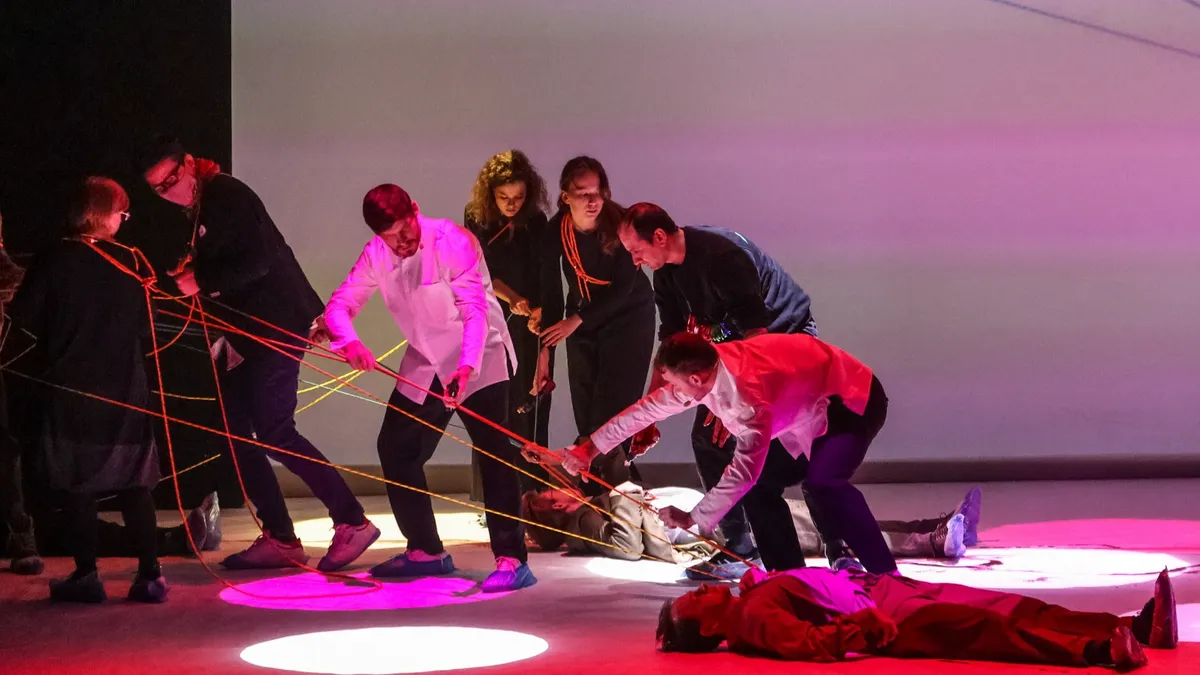
In Moscow, the festival "Lessons of directing" Biennale of theatrical art ended. In the competition program - performances of young directors.
The festival is built on the idea of the continuity of generations: in the even years, the comers present their productions to the court of beginner directors, in the odd ones - on the contrary. This year, the competition in a sense became the prologue of the future: in performances - the grain of the coming theater. And, judging by these productions that determine in it, not so much formal experiments become, as a search for ways, on the one hand, to discern reality, on the other, to escape from it, to survive the soul.
Twelve contestants showed the theater very different - the festival sought to present the most diverse palette of theatrical means: comedies, tragedies, dramas, documentary theater, the theater of a classic acting ensemble and a theater, where there is no actor at all, the theater of high technologies and the “poor theater”, appeals to the classics and modern authors, finally, to verbatim. At the same time, in two and a half festival months, the sensation of a single semantic field has crystallized, in which the search for a new Almutasim for boomers is taking place. And it turns out that the difference in schools and talents does not cancel the inner kinship of extremely dissimilar productions. The thematic and partly even the ethical vector combined the work of almost all the contestants in a kind of mosaic, which is formed in the portrait of the theater of the future.
The performance “#to treat to -livelit” Vladimir Kuznetsov (Vladimir Academic Drama Theater) is like a heavily filed boat to passengers of a ship that was distinguished. At the basis - real stories of doctors, patients, teachers and schoolchildren, collected by artists and director. A documentary statement about a person’s life in the era of pandemia is not limited to fixation of reality: it comforts, becoming an artistic act of resistance to decadence, despair and fear. Each minor episode is followed by a life -affirming major, so that the entire kaleidoscope of the scenes develops in the confident “We will live!”. The action is generally exclaiming, the history of the heroes are not unequivocally transmitted, namely, they are played out at a high degree. This softens the straightness of the chronicle, “paves” the cold of truth.
In the play of Mikhail Plutakhin “Observers” (theater of the object, Moscow), it is she who reigns - the truth - the truth. Everything that risks distorting her is abolished. No words, no actors, no game. The scene is a long narrow table, instead of heroes - things: mugs, buckets, shoes, spoons, meat grinders found in the huts of abandoned camps of Chukotka and Kolyma, on mines and landfills. Sometimes sounds cut silence, the darkness is filled with light, and the light, in turn, with shadows. Here he buzzes, knocks, howls and sings, rustles and groans the past. Trembles in the twilight. His body is these artifacts, witnesses of time, monuments of memory. Participants do not “drive” them, like dolls, do not appropriate, but concentrated as if they are presented, so much so that a person suddenly appears through the old rusty objects.
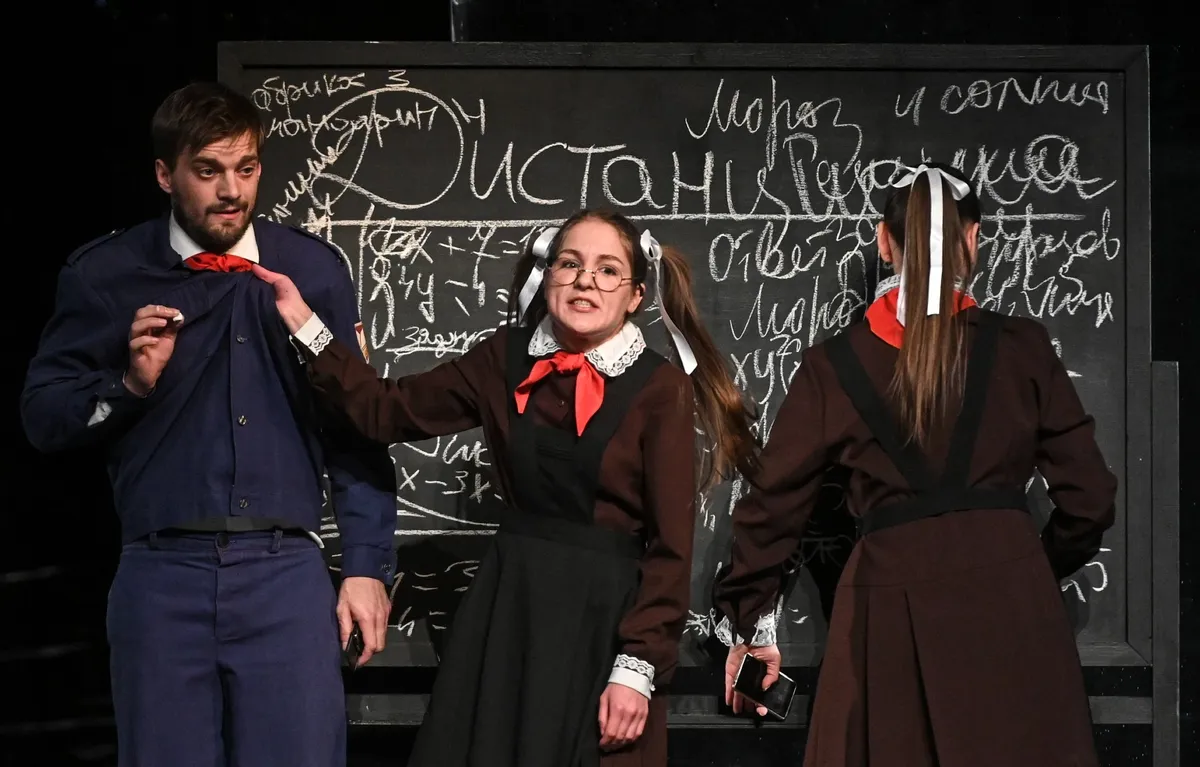
The performance of Andrei Kalinin “Comrade Kislyakov” (Alexandrinsky Theater, St. Petersburg)-about the process of the opposite: about how easy it is to divide. It is this, rapidly and irreversibly, that happens with the main character of the production (by the way, the first stage version of the work of Panteleimon Romanov, published and immediately banned in the 30s). It turned out a feverish, dizzying in his eccentric story of the transformation of the intellectual Hippolytus Grigoryevich (Ivan Trus) into an adaptive and scoundrel Comrade Kislyakov, who, painfully equipping in new circumstances, pays his conscience. It himself becomes what he despised and what was afraid. The director became the laureate of the festival with the wording "For the creation of a unique acting ensemble."
The topic of human preservation in man sounds in the performance of Artem Ustinov “Tales of the Black Forest” (National Theater of Karelia). This is a production production with the elements of the musical emphasized the conditional, where instead of the satirical causticity of Kislyakov, the persistence of the preaching of good and evil. Poor coalist Peter Munk wishes success in love, glory and wealth. And once he gets all this - in exchange for his own heart. In a whirlwind of live music, in a kaleidoscope of caramel-bright heroes in outlandish outfits, then flying through the air on a ball, then stepping on stilts, the main idea (perhaps somewhat didactically expressed) is transfusing that it is really important, and what, beckoning a reward and promising happiness, will only pull out the soul and support.
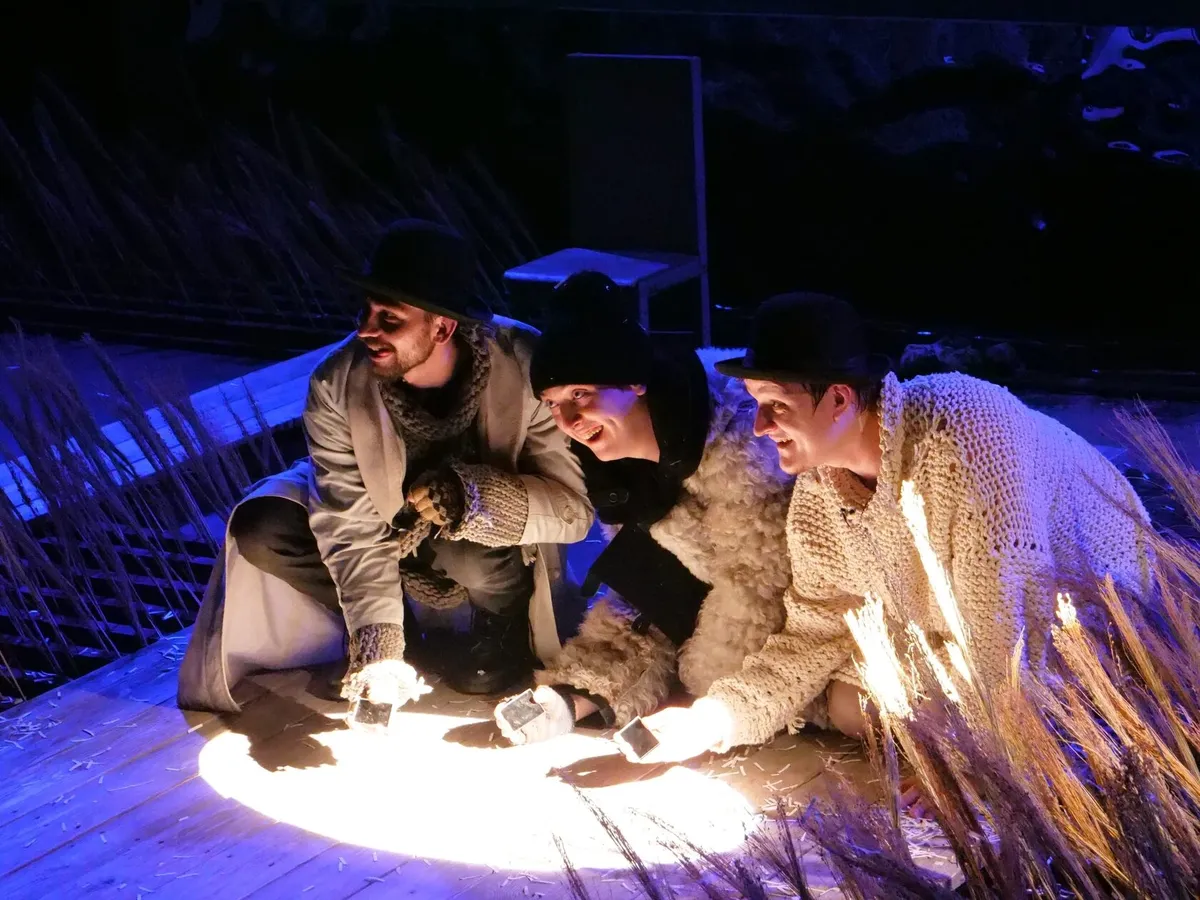
“Lyrical stories from the life of a hedgehog and a bearish” Artyom Galushin (Kansky Drama Theater) is a touching philosophical fairy tale, which also blows dust from everyday life and leads to reflection on the truly priceless. A quiet affectionate performance, it seems flickering in the moonlight with water. This is a childhood chosen on the stage in his ingenuous joy. But simple -mindedness does not cancel wisdom. Heroes drive fish, drink tea and admire the stars. They scoop up the sand and pour it in the viewers in the palm of your hand. It seems that nothing happens except the cradling course of ordinary life ... But, almost like in Norshtein’s cartoons, personal, tiny suddenly grows like a shadow on the wall - so that it begins to sound an eternity.
The stream of charm is related by this performance with “I will not return” Aidar Zabbarov (Tatar Theater named after Galiasgar Kamal, Kazan). Only this is the past, composed of real stories of the inhabitants of the dying Tatar villages. The artists, along with the director, drove around the empty villages and made a production-conservation of their native land. The action takes place in the club, somewhere the memories of the past are played, then the actor rises among the rows and simply, looking into the hall, says. About what? For example, about how they sold because of the poverty of his beloved horse, but he still ran away and returned home to die. They play in the language, sing folk songs under the accordion, dance "as then." The gray-brown sprinkled space is filled with a measured course of paintings of life, the spirit of which melts. And all the multicolor of episodes is built in the story of love and memory, that the sense of the Motherland goes out, taking with him something else from the person, something he needs. The director was awarded the title of laureate of the festival "For a convincing combination of documentary reliability and acute theatrical uniforms."
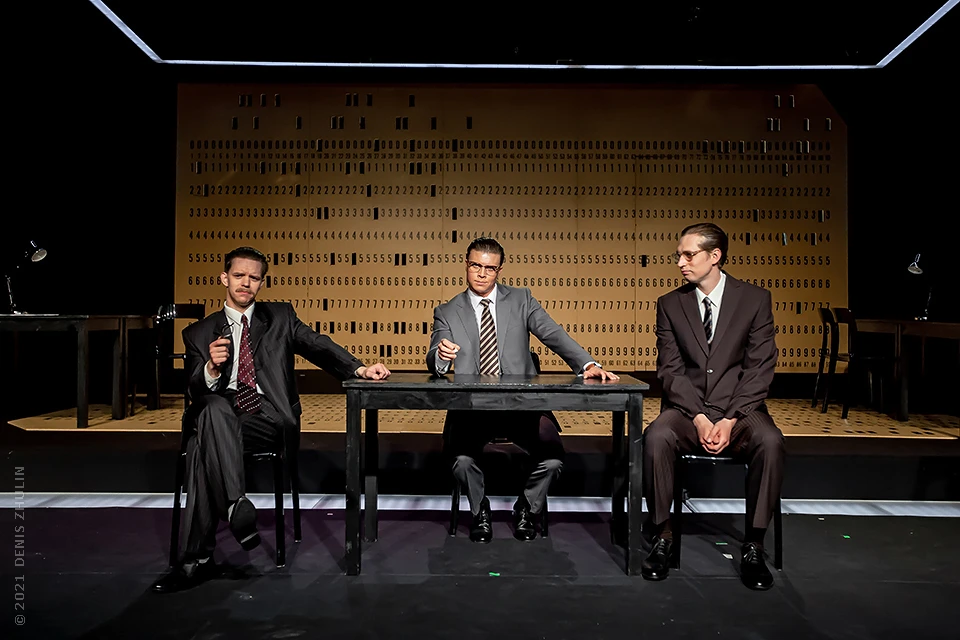
If “I do not return” as if it shakes the past in my hands, then the “innovators” of Nikita Kobelev (theater named after Mayakovsky, Moscow) subject it to rational knowledge, exploring the processes of the birth of the future. This is a documentary performance for the original texts created by the creative team of the theater, about those whose forces a computer appeared in the world. Among the heroes are today's life today: Steve Jobs, Bill Gates, Steve Wozniak, Paul Allen and others. Restrained, measured action. Instead of a backdrop - a large punch card, which are projected by large plans of the characters and photographs of computing machines. The tone of the narrative seems neutral, the director seems to only present reality without offering conclusions. But still, albeit unobtrusively, stories are intertwined into the pattern that gives up bitterness: they give birth to a new lonely, who moved from reality to a dream in order to make reality out of it, not knowing and not thinking about whether it will be good in it.
The production of Nikita Betekhtin “Cement” (the Novosibirsk Theater “Old House”) and casts doubt on the possibility of the future, if there is no hero and fastening power - a common creative idea. This is the first and only play in Russia based on the play of the Hiner Müller of the same name, written based on the novel by Fedor Gladkov. The civil war, home-into the dark black and red space against the background of the wall from which the brick boxes are advanced,-Gleb Chumalov (Jan Latyshev) comes and is taken to restore the destroyed factory, his family and life. The story of a hundred years ago rhymes with ancient myth (Prometheus, Medea, Achilles, Sisyphus ...) and a modern life, in which, like then, pulsate the question “What next?” Almighte. They play widely, as if in all directions, but concentrated. Inside is firm. Outside - hard. The actors freeze in solemn poses, as in old propaganda posters, and the words rumble or creeping - speech is built musically and rhythmically, it seems, to the note. At the same time, expressiveness and enlargement of the form do not conceal the content. There is no soul here, but there is a spirit. And he painfully exposes enormous questions: who is today's hero, who of the ashes and ruins to build life and is the thirst to destroy in a person to destroy?
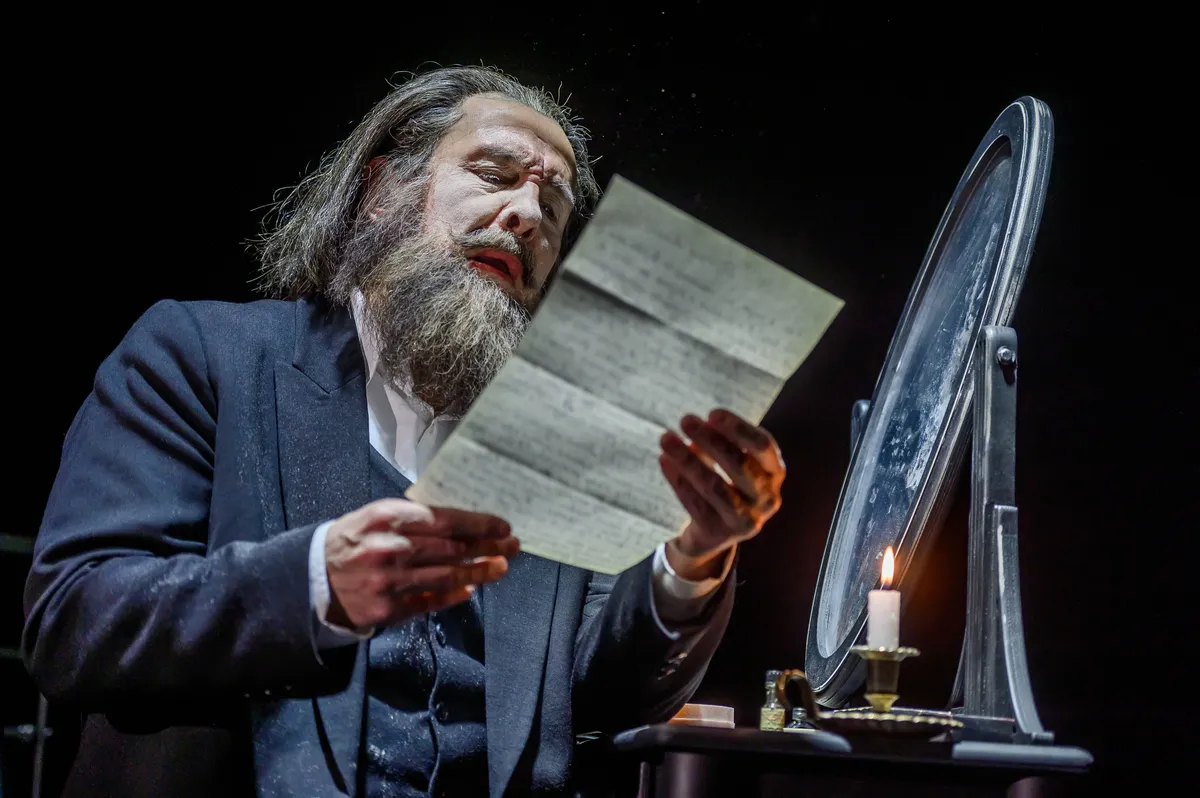
Hugo Erickssen (Pskov Academic Drama named after Pushkin) was put on the “ Pushkin’s Academic Comedy Sukhovo-Kobylin, but the director thickened the horror, and thickened it. The performance, like “cement”, is gloomy, but of a different kind: in the place of majesty is the Beswan fuss. The events that take place in tsarist Russia, were transferred to the recent 90s. The action takes place in a commodity car, inside of which Tarelkin’s room (Denis Kugai), and then a prison. Heroes shoot themselves on camera, and the broadcast of close -ups is displayed on a screen suspended above the scene. Such a report from Hell talks about the rotting of a person who is corroded by the environment, and how voluptuously people can exterminate each other. This story does not even cut, but strangles, causing the very one, conceived by the author, "a shudder of evil."
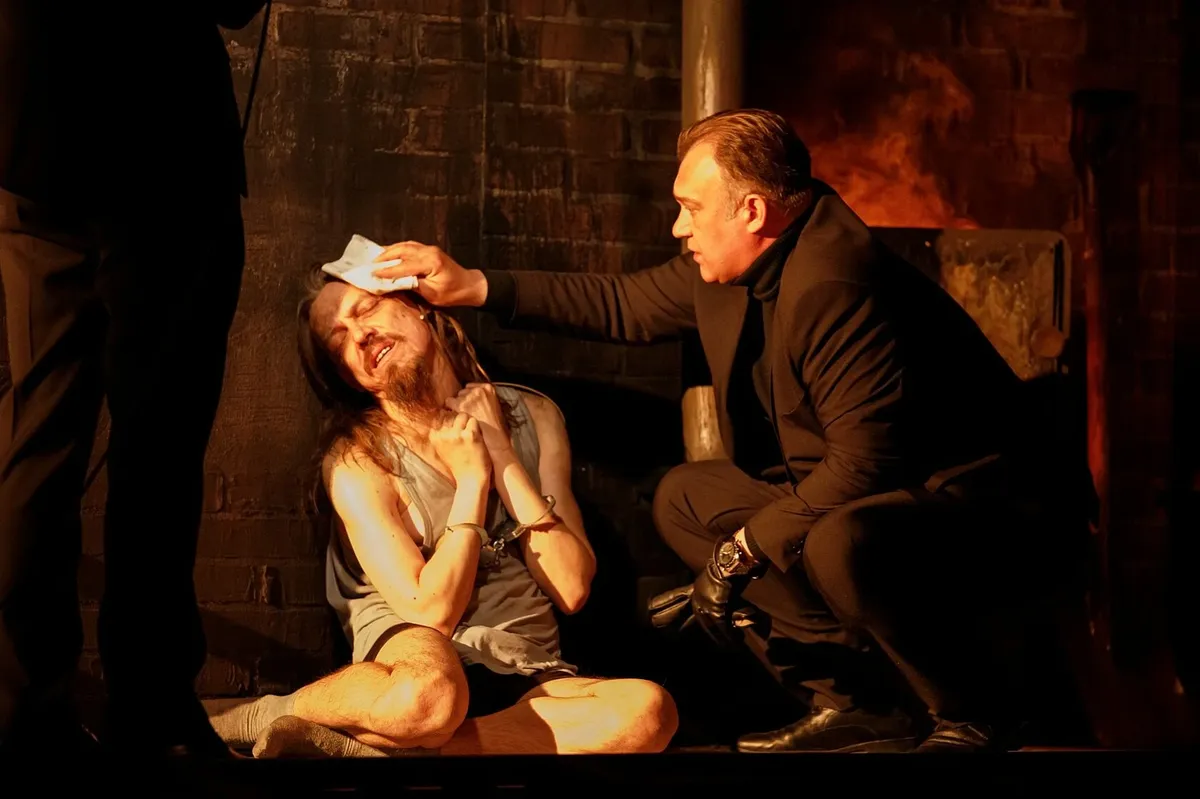
The performance “Mahagonia” by Fedor Malyshev based on the play by Ilya Kormiltsev (workshop of Peter Fomenko, Moscow) calls him. This is a parable that, with a booth, telling how the city of pleasure is created - the same Mahagonia that translates as a “spider network”. Here, people are hiding from the fear of death in the madness of entertainment, pleasures, rapidly fulfilling dreams. Perhaps everything, just pay. This is a unbridled cruel carnival, where instead of smiles - grinning, and instead of laughter - laughter. On the one hand, almost fantasy, on the other, is like a documentary cast of today. Dance over the abyss with eyes closed.
The production of Pavel Parkhomenko “Players” according to Gogol (Mossovet theater named after Moscow, Moscow) does not argue with the primary source - this is really a comedy, but with an unexpectedly stolen tempo for such material. The heroes seem to “tell themselves”, the actors are internally deployed to the viewer and almost do not cling to each other. Therefore, with the vaudeinability of the game, the sharpness and the sharpness of what is happening dissolve in the plain narrative. The satire gun does not shoot, but persistently invites you to reflect how it happened that reality was saturated with a multi -layered lie, and Ikharev’s replica (Dmitry Savkin) “deceive everyone and not to be deceived - this is a real task and purpose!” Sounds an epigraph to current everyday life.
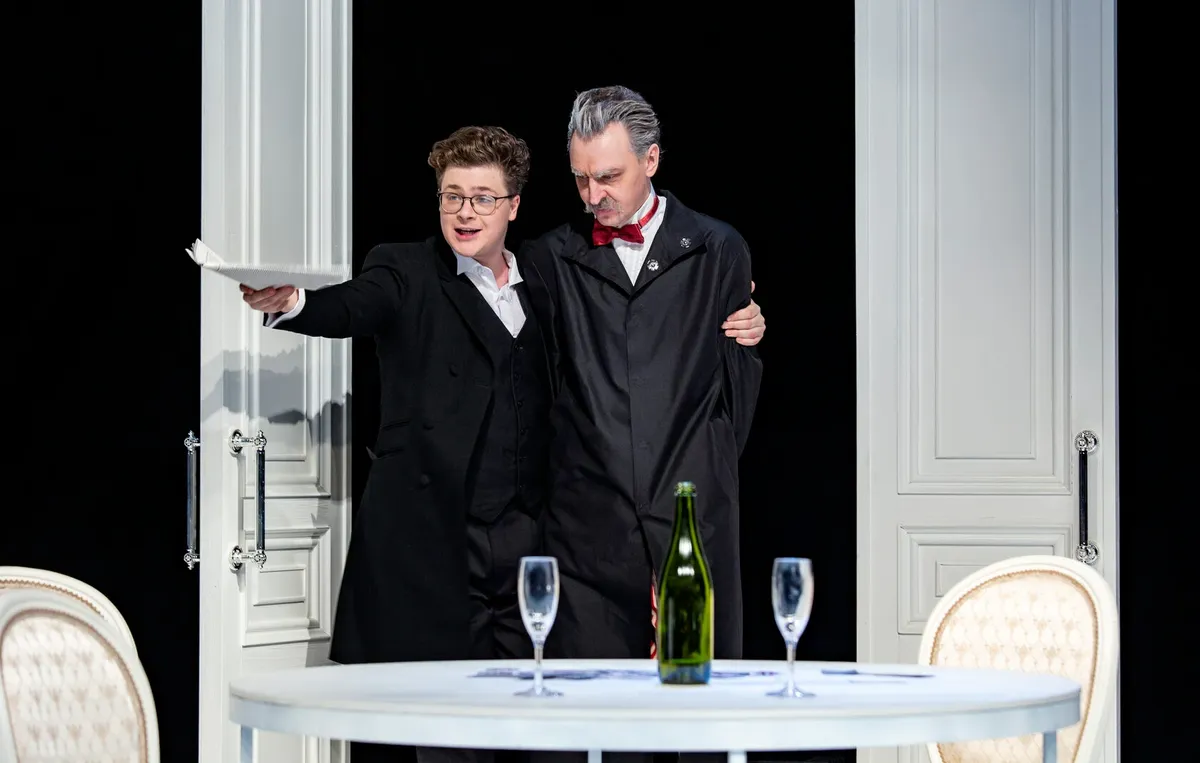
Anatoly Schuliev in the play “The fool” based on the play by Lope de Vega (theater named after Vakhtangov, Moscow) does not ridicule anything, does not grumble for anything, allowing youth, life and love to be shamelessly celebrated. On the stage-something like a ring. Fathers and children, beauty and mind, self -interest and kindness, a sense of duty are fighting with each other - with feeling as such. Everyone will come out the winner: everyone will receive what they wanted, and there will be happiness. A light comedy without fable morality, the super -task of which is to cultivate spring in the soul, stir up joy and abolish seriousness. The director received a special diploma of the festival - "Award of the audience sympathy."
The beads-sponsor formed in the competitive necklace of the second covid year and the fifth anniversary festival "Lessons of directing". It seems that young directors have less and less illusions of “beautiful far”, it is more and more difficult to cope with approaching despair. The new generation of directing exists contrary to the proposed circumstances and is looking for a way to strengthen in the present and learn to be in it without bending the spirit. Trying to look into the future and find in it reasons for fearlessness to live.
Ksenia Stolny - especially for "New"