
Translated material
Who killed our bee?
Almost a year in the Samara region, beekeepers beat agricultural holdings and farmers, fearing for the ecology and well -being of their farms
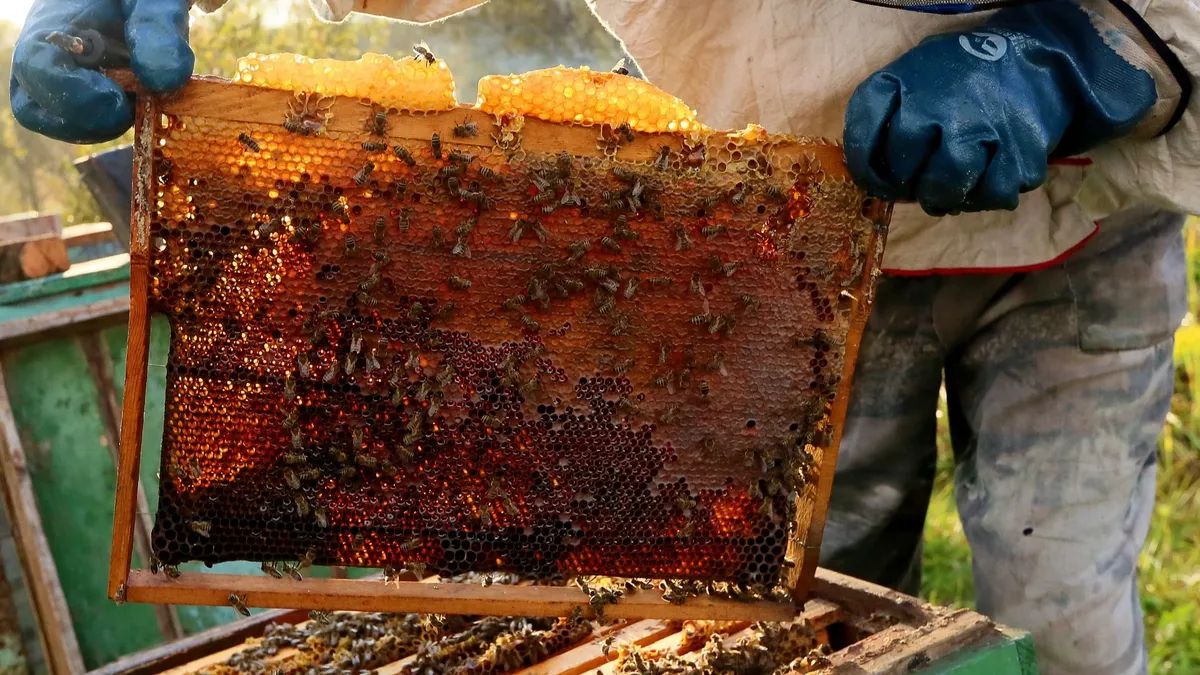
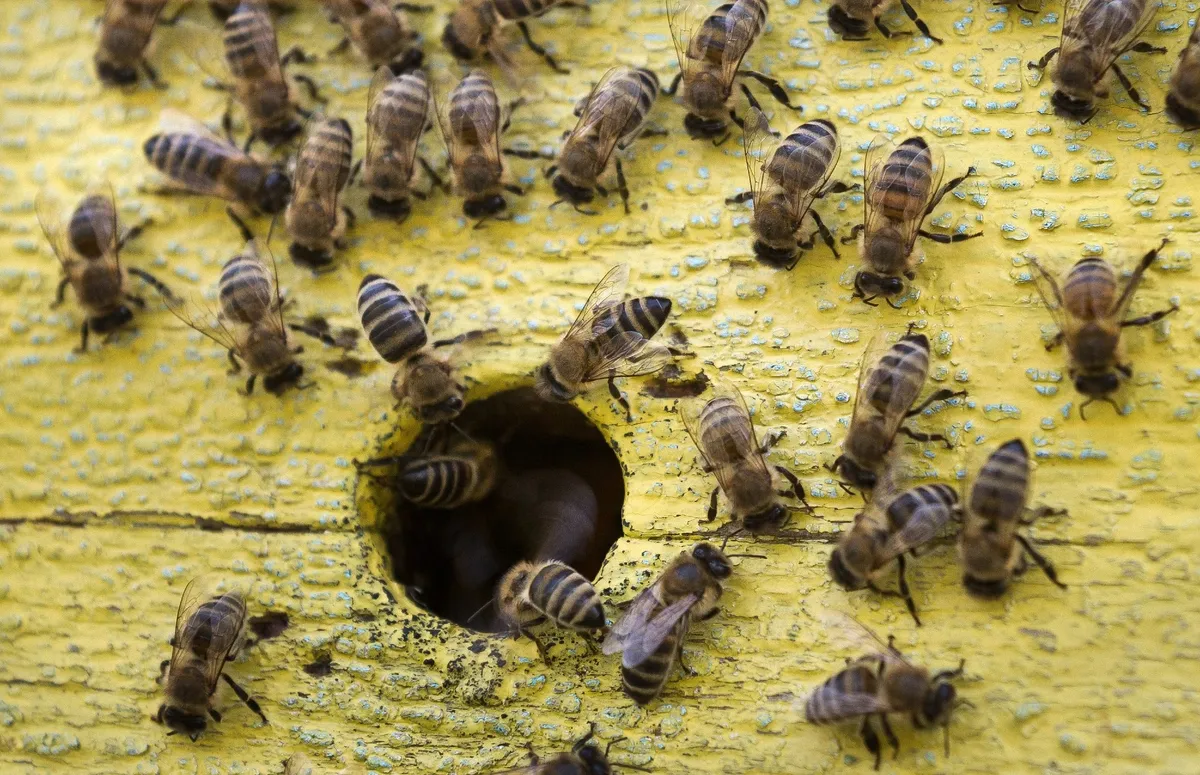
In the Borsky district of the Samara region, bees massively die. The beekeepers accuse the agricultural holdings and farmers who negligently use pesticides. For the second year, the problem has been hiding on the "bee" economy in the region, but this year it acquired a massive nature. The victims have repeatedly turned to the regional ministries and the governor Dmitry Azarov for help, but in response they received only unsubscribes.
At the same time, not only bees suffer. Pesticides - plant protection products that spray the fields - depleted the soil and kill other insects flying in the area of their actions. On July 15, after the next chemical cultivation of land near the village of Bogdanovka, local residents complained about unpleasant toxic smells.
"Prepare and kill"
The village of New Kutuluk. I fly past the old village houses and stop in the center of the only grocery store where I meet with our first interlocutor Alexander Temlyantsev.
Alexander Petrovich is a hereditary beekeeper, his father was engaged in the breeding of insects even before industrialization. Now a man is 62 years old. In the 1980s, he was a district deputy, and from 2010 to 2015-the head of the village. Toplyantsev is proud that he was "chosen by the people."
Alexander is engaged in natural beekeeping - it requires only a stationary apiary and the creation of external conditions for the development of bee family, interference in their life is minimal. In total, 100 families were recorded in his business book. Basically, local and “city” products buy products, but the beekeeper complains of falling demand due to a decrease in the general level of salaries and small pensions. “I have never seen the worst implementation of honey among the population, as this year,” he admits. There are also resellers, but they dictate their prices: 60–80 rubles per kilogram of honey.
“After us, intermediaries transport products to large companies, and they sell it in cities with a margin two to three times,” Alexander is indignant. - And okay, if they exposed the honey itself, but they “invigorate” it and stuff it with taste additives.
Toplyantsev adds that low demand coincided with the mass death of insects this summer. The very problem for two years has been terrorizing local beekeepers. The latter are accused of agricultural holdings and farmers of robe chemicals.
- In June, the first large -scale spraying of the fields with pesticides began. For the first time I noticed the problem in the middle of the month, when one of the bees did not return to the apiary, ”says Alexander Petrovich. - every swarm checked - did not find, called familiar beekeepers - they have the same problem.
According to Federal Law No. 490-ФЗ “On Beekeeping”, farmers are obliged to notify the upcoming chemical treatment through the media, the local administration, veterinary services and district societies of beekeepers. But they fulfill laws in their own way and do not always warn about spraying the fields. Thus, the Bio-Ton company notified agro-chemical work near several villages of the Borsky district in the period from May 1 to June in the local newspaper Borskiy Izvestia. Our interlocutor also recalls the announcement of the chemical processing of land from June 29 to July 30.
“The law warning the Law does not violate, but another problem appears - we must close our apiaries from sorties for almost a month, and this will lead to the death of many bee -family,” says Temlyantsev. - Imagine closed drawers with insects in the summer heat - they will burn!
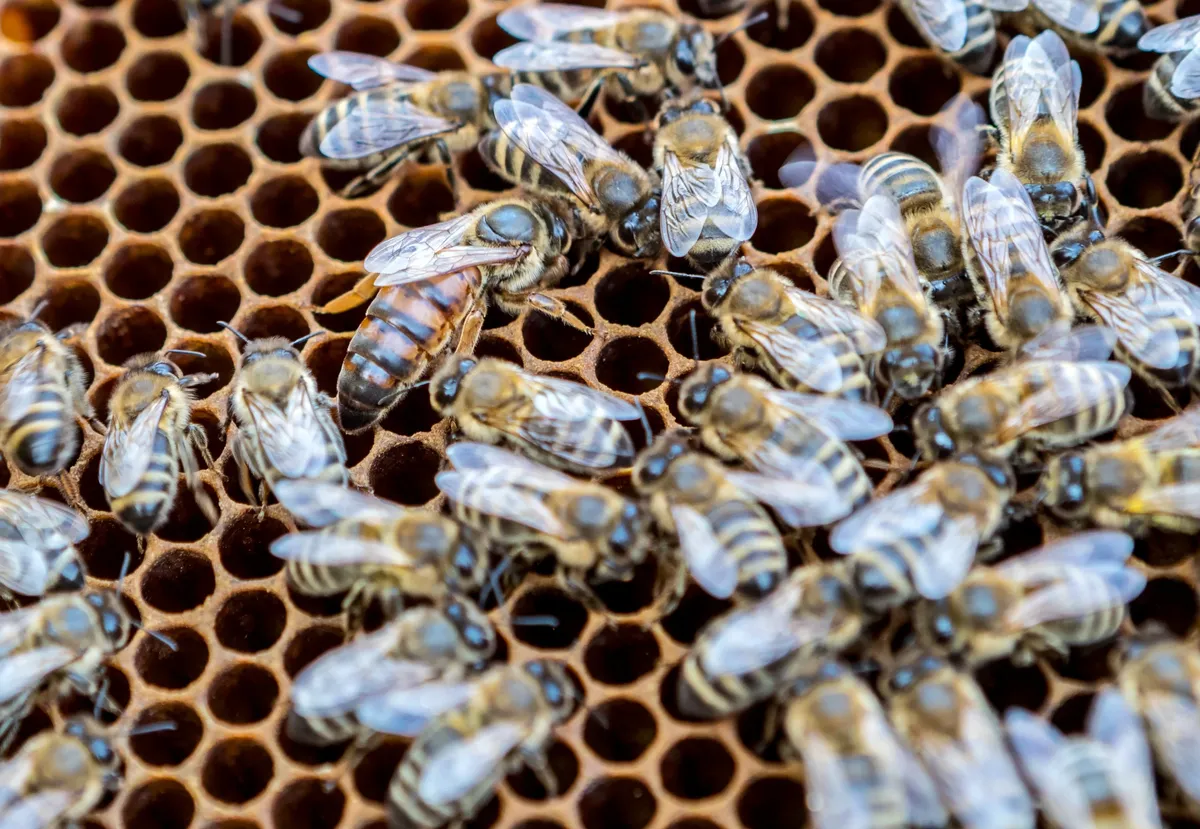
The beekeeper says that he is familiar with the spraying of the fields since Soviet times, when he led the brigade for the processing of plants from pests at the Nesk state farm. “In the 1970s, granoine ( poisonous for humans and pets light gray powder was often used.-A. E. ), but we sprayed at an absurd time for insects, since each household had its own apiaries. The death of even one bee would lead to serious proceedings! ”
If you can agree with farmers about the time of spraying the fields, then large business ignores beekeepers.
In the Borsky district, it is represented by agricultural holdings of LLC “Nesmandka”, “Bio-ton”-2020, the company completed with a record profit of 2.4 billion rubles-and OP SCP Pokrovskoye, whose founder is the “Development Corporation of the Samara Region”, associated with the regional government. The only agricultural holding with which Temlyantsev found a compromise is Nesk LLC, and he has many questions to the OP SCP Pokrovskoye.
"Development" without development
According to Alexander, “Pokrovskoye” grows grain crops and sunflower, although before the 2016 elections “United Russia” and Merkushkin promised to build a dairy farm in the village of Pokrovka for 2400 cows on its base.
“Production would improve the situation,” the beekeeper assures. - Instead of oilseeds, which farmers often process and plant every year, forgetting about the recommended interval of 7-8 years, there would be fodder plants, part of the land would be freed. But the regional government calmly pays through "development" dangerous for bees, people and soil pesticides.
The corporation’s website still hangs a page to attract investors to the project of a dairy farm. They are promised “high yields” - from 20 thousand tons of milk a year, 2400 Golstean breed cows, “higher grade” products, finished design documentation and trained personnel. The site also states that Pokrovskoye owns more than 22 thousand hectares of land in the Bogatovsky and Borsky district of the region, allocated for sowing feed for livestock. Plus, “high -quality seeds and plant processing products” were purchased.
The Board of Directors of the Corporation includes the first vice-governor and chairman of the Government of the Samara Region Viktor Kudryashov, his deputy Natalya Katina, Minister of Agriculture and Food Nikolai Abashin, Minister of Economic Development Dmitry Bogdanov and Minister of Financial Department Andrei Pryamilov.
In 2019, the regional counting chamber (SP) checked the work of the corporation to search for investors for the "dairy" project and the results of the creation of a farm based on OP SCP "Pokrovskoye". As a result of checks, the joint venture found out that the declared cost of creating the complex changed several times: in 2013 - 2.067 billion rubles, in 2015 - 6.3 billion, in 2016 - 4 billion rubles. In addition, in 2016, the project’s business plan was changed, having transferred the deadlines for the construction of the farm to 2021.
The department also discovered violations in the processing of fields, harvesting, purchasing and maintenance of agricultural machinery.
Not to buzzing
It is difficult to prove that it is pesticides that poison bees. The region has the Samara Regional Veterinary Laboratory, which explores the composition of the pesticides in the submissions of insects, but it is not accredited, and its conclusions do not affect anything.
“Unfortunately, we do not have independent laboratories and veterinary experts,” Toplyantsev admits sadly. - Plus the same “Pokrovskoye” and its founder are connected with the regional government. They have no problems, officials receive a salary, but they don’t want to quarrel with the authorities.
In July, the second large -scale spraying of fields began in the Borsky district. The problem with bees is repeated. In the same month, Alexander Petrovich first discussed the mass death of buzzing with one of the Pokrovsky agronomists.
“In July, the bees flying through the Pokrovsky fields disappeared again,” the Temlyantsev waves his hands. -One day, he started the car and drove in the same direction. I see - the tractor driver spray the earth. I take him an agronomist number. On the phone, he tells me: "This is our property - we spray when it will be convenient for us." In the end he added: "Ten years later, nothing will grow on this earth." My complaints about the damage of the apiary and ecology did not bother him.
According to the victim, farmers tend to get products with minimal costs. To do this, they annually plant the soil with a sunflower and process the fields at a convenient time for them, so as not to distill the equipment several times from the base in the village of Pokrovka, the man said.
“Local authorities scare farmers, but they will not quarrel with a big business,” my interlocutor is sure. - The district department of the Ministry of Agriculture is valid as a consultant. But why do we need consultants who only write reports? The head of the Borsky district, Ardabiev, completely forgot about us.
On August 21, Temlyantsev went to the Fiery Duga festival in the village of Borskoye, where he wanted to personally discuss the problem with Governor Dmitry Azarov. But at the exit from the new Kutuluk, his car stumbled upon a prick wire. The beekeeper suspects that the district authorities specially put her on the road so that he was late to meet with the head of the region.
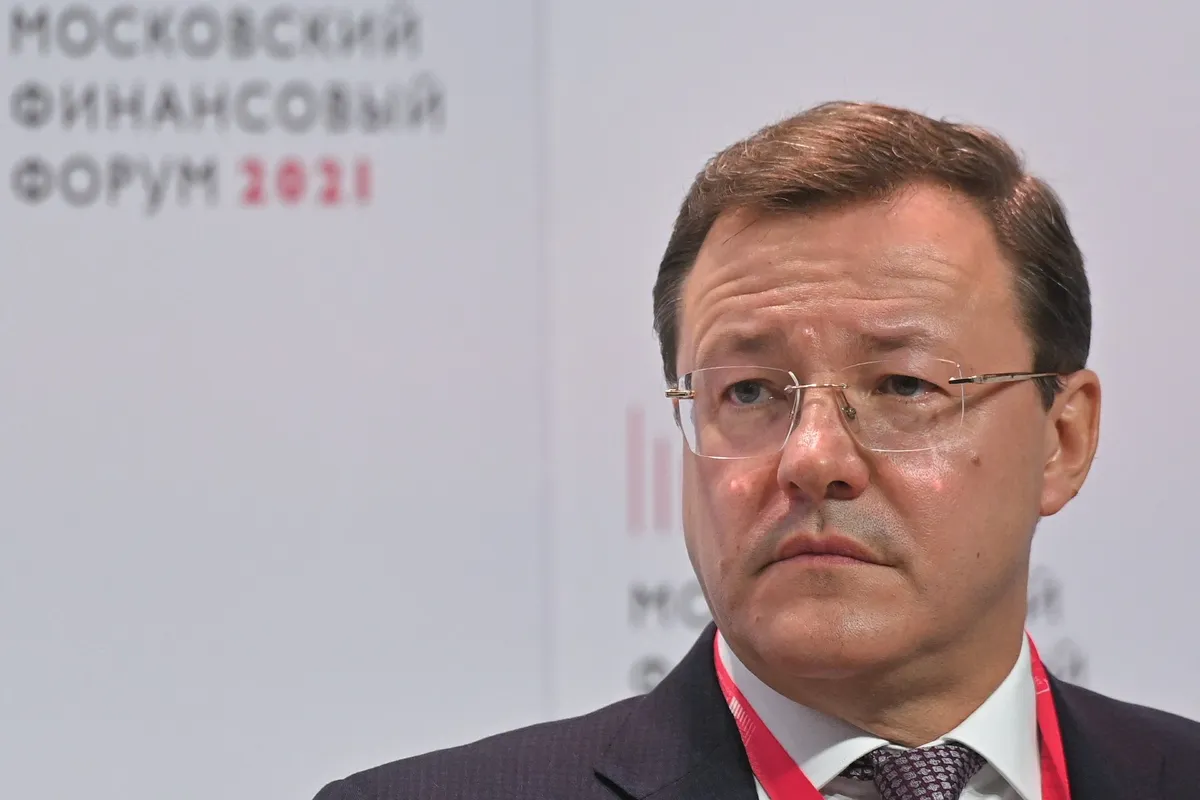
- Despite the wire, he reached Borsky. At first I did not find Azarov, and then I saw that he had been late in a helicopter, ”explains Temlyantsev. - Dmitry Igorevich quickly congratulated us and said that "he was forced to fly to another event." No one had time to talk to him.
The problem with the death of bees is not new. Back in August 2019, another affected beekeeper, Sergey Trynkin, sent the appeal to Azarov. Prior to this, he wrote to the Minister of Agriculture and Food of the Samara Region, the head of the Borsky district and the head of the district department of agriculture Vladimir Polyansky. In response - unsubscribes and promises.
“The death of bees signals to us, people that the uncontrolled chemicalization of agricultural cultures will lead to disorders in the ecosystem, and the accumulation of poisons in the ground will affect the health of a person, a consumer of agricultural products,” the governor says.
In April 2020 - then the problem of mass deaths of insects reached the federal level - the first deputy head of the Ministry of Agriculture of the Ministry of Agriculture Dzhambulat Khatuov proposed to regional leaders of agro -industrial complexes to create a joint register of beekeepers. He had to establish the interaction of farmers and beekeepers. 609 beekeepers entered the Samara Register, but there is no, for example, Alexander Temlyantsev and his comrade from the neighboring village of Bogdanovka Nikolai Ledovsky.
“Not a single state structure was engaged in us to the registry,” Trynkin complains. -The Ministry of Agriculture somehow blinded the list of beekeepers in the regions, and our interaction stopped at this.
On the initiative of Sergei, a group chat was additionally created in Viber, but in it only a couple of farmers are warned in advance about spraying plants.
This summer, the mass death of insects was not limited to the Samara region. In July 2021, more than 20 million bees died in the Krasnoyarsk Territory. In October, the prosecutor's office and Rospotrebnadzor proved that the cause of death was pesticides, which local agricultural holding processed the fields without warning. The company was fined 10 thousand rubles, and the guilty official was brought to disciplinary liability. For more than two years, this problem has been struggling in Bashkiria, but there large business remains completely unpunished.
In addition to buzzing people are suffering. The beekeeper and a resident of the village of Bogdanovka Nikolai Ledovsky say that after the next chemical asset of the nearest field, the locals complained about unpleasant odors, and the summer residents were indignant: "We come to you for fresh air, and we are poisoned here."
Now Samara beekeepers offer dialogue to agrarians and officials. Is it mutually unknown. Agricultural holdings and local authorities are silent and, as Alexander Temlyantsev said, "calmly receive a salary."
Officially
The New Gazeta sent a request to JSC "Development Corporation of the Samara Region", the founder of OP SCP "Pokrovskoye". The acting general director Andrei Lutikov answered.
According to the corporation, the Pokrovsky fields are treated with chemicals of the second and third hazard classes for humans and insects. But the list also has a domestic chemist of the first hazard for bees - Dexter KS. On specialized sites, it is described as a means "with a long period of protection and lightning -fast effect on insects."
It is clarified that the fields belonging to the OP SCP Pokrovskoye are located from 300 meters to 5 kilometers from the borders of the nearest settlements. Field processing is carried out in accordance with the requirements of the Rosselkhoznadzor, and “interested persons” are warned through publications in the district newspaper Borskiy Izvestia, indicating the date, time and place of work.
Also, to the request of Novaya Gazeta was answered from the Ministry of Agriculture of the Samara Region. The response of the department says that for communication between farmers and beekeepers a chat was created in Viber. On the basis of the subordinate “Samara-Aris”, seminars with beekeepers are held, at which state measures to support their farms are discussed, as well as “prospects for uniting beekeepers into agricultural cooperatives”.
The ministry added that their site has a list of beekeeping farms in the region. The list after our request was promised to supplement the farms of Alexander Temlyantsev and Nikolai Ledovsky.