
Translated material
Decay and then
What will happen to us when the Soviet government ends
In the late 1980s, serious American analysts talked about how the USSR would be in 2000. The decay of the second superpower looked like a fantastic script, the inertia of the bipolar world was too great, and the bets were too high. In 1991, Bush Sr. came to Kyiv to convince Ukrainians not to rush with the exit from the Union: independent Ukraine was part of the five nuclear powers of the world. Now, when thirty years have passed since the legal end of the existence of the USSR and the last television appeal of the only Soviet president Mikhail Gorbachev to compatriots, we can draw conclusions. American analysts were right. The USSR did not break up Overnight in 1991, we continue to live in the collapsing Soviet Union today.
Historians of the future after a hundred or two hundred years, probably, will write that after a short era of search for a new identity in the 1990s, a protracted reaction period began in Russia, an attempt to restore the empire, from which the communist ideology was removed. Similar processes took place in other former communist countries, such as China and North Korea, but in their cases were not accompanied by losses of territories and the desire to return the direct military-political influence on them (Taiwan, for comparison, was never controlled by the PDA). Historians can conclude that by 2021 the collapse of the Soviet state only accelerated and took more specific forms. Perhaps, for this reason, the thirtieth anniversary of the collapse of the USSR, the “largest geopolitical disaster”, causes almost zero interest in Russian society: this is not so much about the memorable date as about the lasting prosaic everyday life.
After 2014, political nostalgia turns into tragedy. The early period of the collapse of the USSR was accompanied by wars on the periphery of the empire, over the past eight years, the war came into its very heart - to the former administrative border of the RSFSR and the Ukrainian SSR. To the armed conflict could be imagined before only fanatics-nationalists.
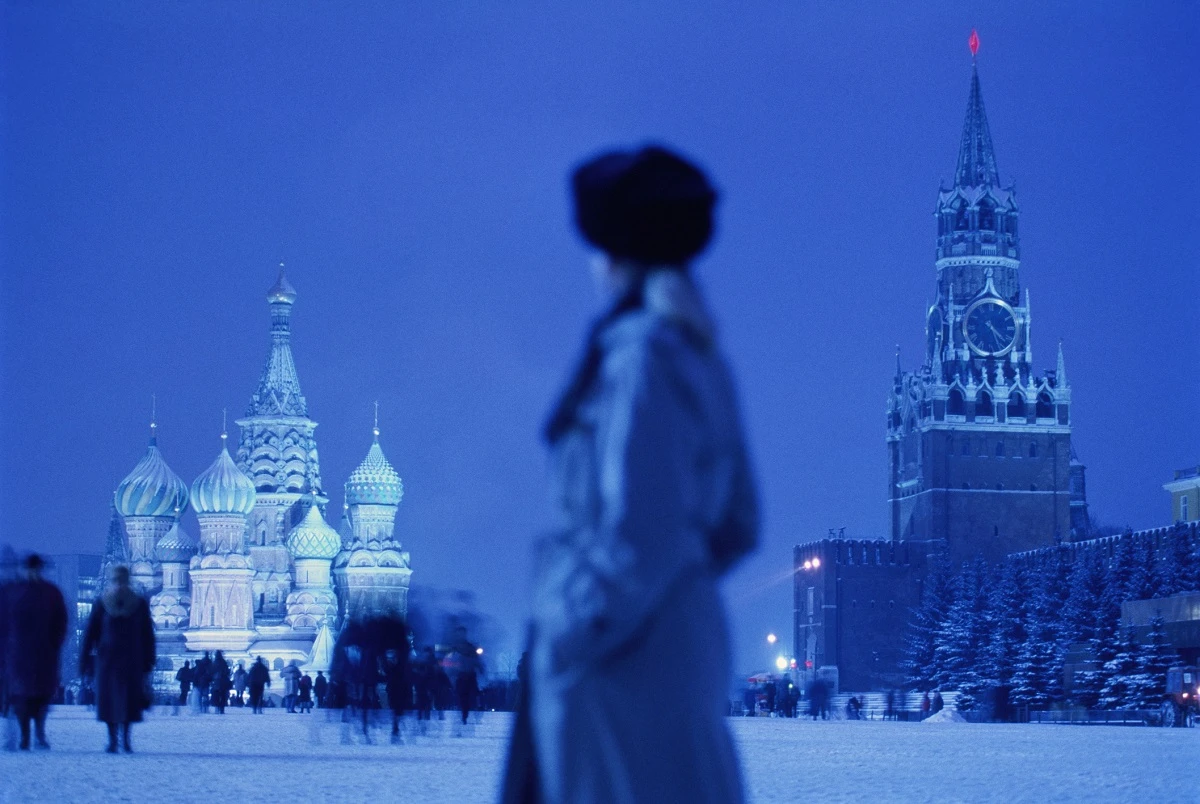
The result of the war was the new divided Europe. This is little talk about, but the wall, as if falling in 1989, rebelled from the ashes. The wall now does not take place along the Berlin quarters, but far east, along the line of separation of fire in certain areas of the Donetsk and Lugansk regions of Ukraine, along the checkpoints at the entrance to the Crimea, on the Belarusian-Polish border, where Lukashenko in recent months had arranged a cruel show with the participation of migrants. The wall passes along the line of mutually blocked sites, a confusing network of air offices, in which the path from Moscow to Tbilisi lies through Yerevan or Minsk, through the communications between people and through the impossibility of dialogue.
The other side of the 2014 tragedy was the total disappointment of Russian society in the possibility of changes for the better, ultimately, to the very possibility of the future. Within eight years, people have been losing in income, the state has passed to the handout of the management model, when the rise in the cost of the borscht set is compensated by one -time payments. According to sociologists, only two social groups think about the future - these are young people and officials. The first due to the natural openness of life, the desire to have their own fate, and more than half of Russians under the age of 24 want to leave Russia. The second-due to the features of budget planning (“we think three years in advance”) and anxiety about the fate of the “political elite” in the conditions of fragile stability (“what will happen to us and capital when everything collapses again”). The mass depression, which has covered society in recent years and has aggravated after the arrest of Navalny, is explained by rational causes. People understand that tomorrow it will be worse than yesterday, and want to try to live humanly, a measured normal life, while this is still possible.
The political rhetoric of modern Russia inherits the hyperbolized Brezhnev model. Congresses applaud themselves no worse than in 1975. The main reason for the so -called stability is that we are not at all like Europe, we tried democracy, but we did not succeed. Ultimately,
Russia remains a country in which power never in history has changed in the elections.
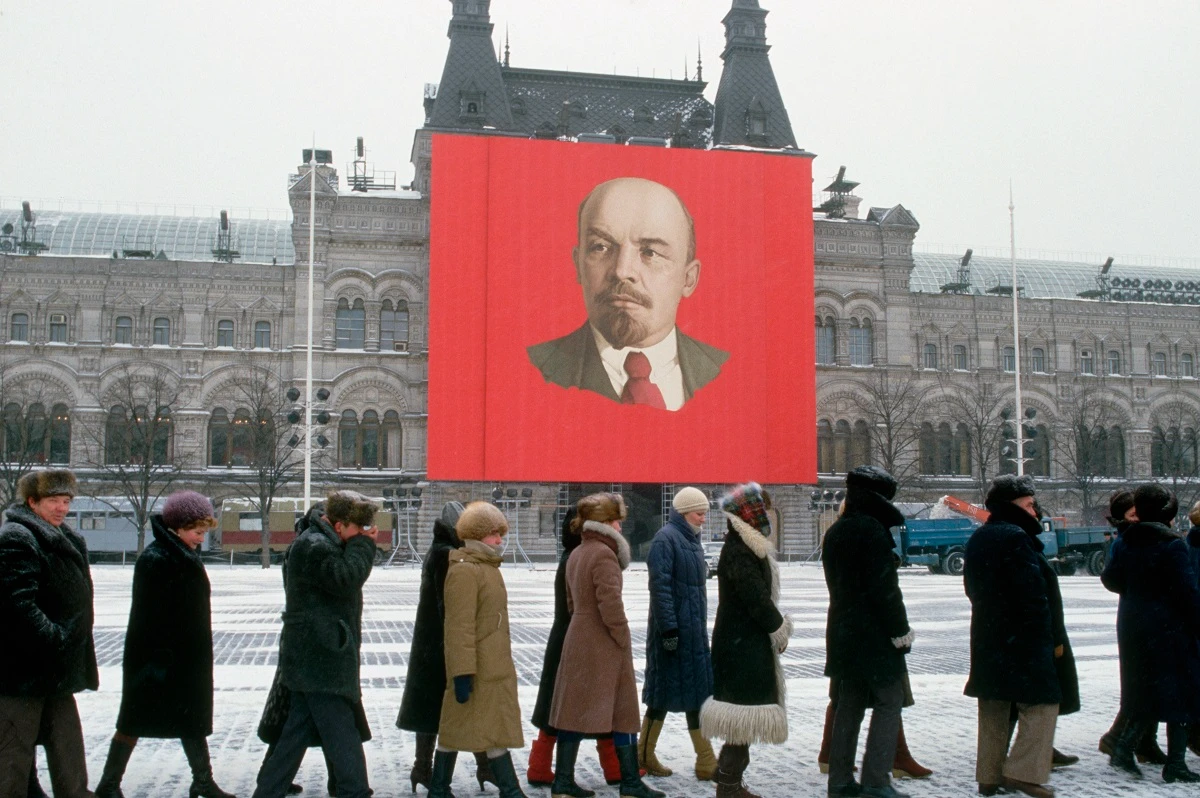
Our otherness consists in a special path, the route of which is not known to anyone. This political run on the spot involves the reconstruction of the Archaic Empire in the era of transnational corporate and state projects.
The late Nestalin justice was restored, which, after the completion of the Great Terror, was not so much ferocious as the socialist concept of “searching for objective truth in the case”, when the judge, prosecutor and lawyer work together to establish how everything was actually, so that the acquittal is regarded as the failure of their common cause. The total distrust of society in the state and to ourselves, the existence of which we could make sure during the pandemic, directly inherits the results of the utopian struggle for the creation of a “new Soviet man”, after which any form of collective action is considered as fraud. There is no more communist struggle for peace, so its place was taken by the cult of the Great War. In 2021, we do not return to the USSR, since we could not leave it. The country has changed, but the authorities about the country have remained unchanged. The infinite return of Russia to its history of the 20th century exists as a game of the imagination of the inhabitants of the Kremlin.
Under these conditions, the reality of the divided Europe can stay with us for many years, and the more valuable today the experience of politicians who retained hope for the future even in darker times. Among them, the German Chancellor, the Social Democrat Willy Brandt, who believes that, despite the Cold War, the cultural ties between the Germans in the Western and Eastern block must be maintained. Brandt played very well and, ultimately, won.
Those of us who do not want to live in the world of walls and gratings today have something to learn from him.
The Russians have no Western Russia on the model of West Germany, but there is a growing diaspora - up to 10 million people with Russian passports constantly living outside Russia. The main symbol of 2021 was a new wave of political emigration from Russia. Those people who benefited here and dreamed of the best future are leaving. The state, immersed in the reconstruction of the 20th century, defiantly does not guarantee them personal safety and pushes them to leave. In Tbilisi, where it is easy to enter and where is the cheap life, a new colony of Russian refugees arose. Now there are much less than a hundred years ago in Istanbul, but the forced outcome has already become a new national tragedy. Alexey Navalny, who traveled the emigrant’s path in the opposite direction and imprisoned, became her main symbol.
We continue to think of political emigration in the optics of the XX and even the XIX centuries, when it assumed a complete gap with my native society, alienation from it. This is especially true in relation to the Soviet experience closest to us, when the emigrants existed as “defectors”. However, today, despite the efforts of the conservatives, we continue to live in completely different conditions. The world is fundamentally more open. Zoom, from which everyone has been tired over the past two years, makes it possible to participate in public communication to people on both sides of the new wall. Ideas, information and cryptocurrency tokens exist on top of political boundaries. Far from real political life, the futuristic fantasies about the post -Pandemic world are linked to the meta -saucer, in which the communication of people is arranged in a fundamentally new way: through the community of values, not space. New political emigrants will have to come up with their status for the Russian XXI century.
It is impossible to return to the political norm of the 20th century in any case, since the current Russian society does not look like either the early agrarian USSR or the Brezhnev Industrial-Corporation system (I owe this argument to the human rights activist Igor Kochetkov, for some reason recognized by the Ministry of Justice of the Inoagentine). Russia is inhabited not only by police and oil workers, but also by bloggers, ITSHNIKS working in international markets, self -employed, existing in the gray areas of the economy, millions of people engaged in the service sector. The archaic Soviet government in the sense of the system of patronage relations will not end in any way, but society breaks out of this system along with the natural course of time, and there will be no more parades on Red Square.
When the decay is accelerating, a good time comes in order to create fundamentally new institutions among the multiplying ruins. Young Russian -speaking media working with data and almost completely recognized as “foreign agents” today is only one of the obvious examples. Similar processes will occur in education - the image of the new university is thickening over the divided space of Eastern Europe. In public life, a new era comes, when innovators take risks and take responsibility for the future in conditions of complete intellectual infertility of the state. As in earlier Russian times, the most important task of innovators is
To preserve those institutions that were created in the country until 2000 and continue to develop today.
Perhaps this discussion will indicate the dream of the establishment of extraterritorial European Russia, the project of the future, existing in the heads and networks on both sides of the new wall. Russia, open to the world, has a great inheritance for which it is worth competing: the Russian language takes third place on the global Internet.