
Translated material
The indignation of Europe
EU demands to punish Russia for import substitution
At the very end of the year, when the “collective West”, distracted from business, is absorbed in Christmas communication at the family tables, and the phones and mail of the offices in Brussels and Geneva are not available for comments, it became known about the next conflict between Europe and Russia. This time in the field of trade.
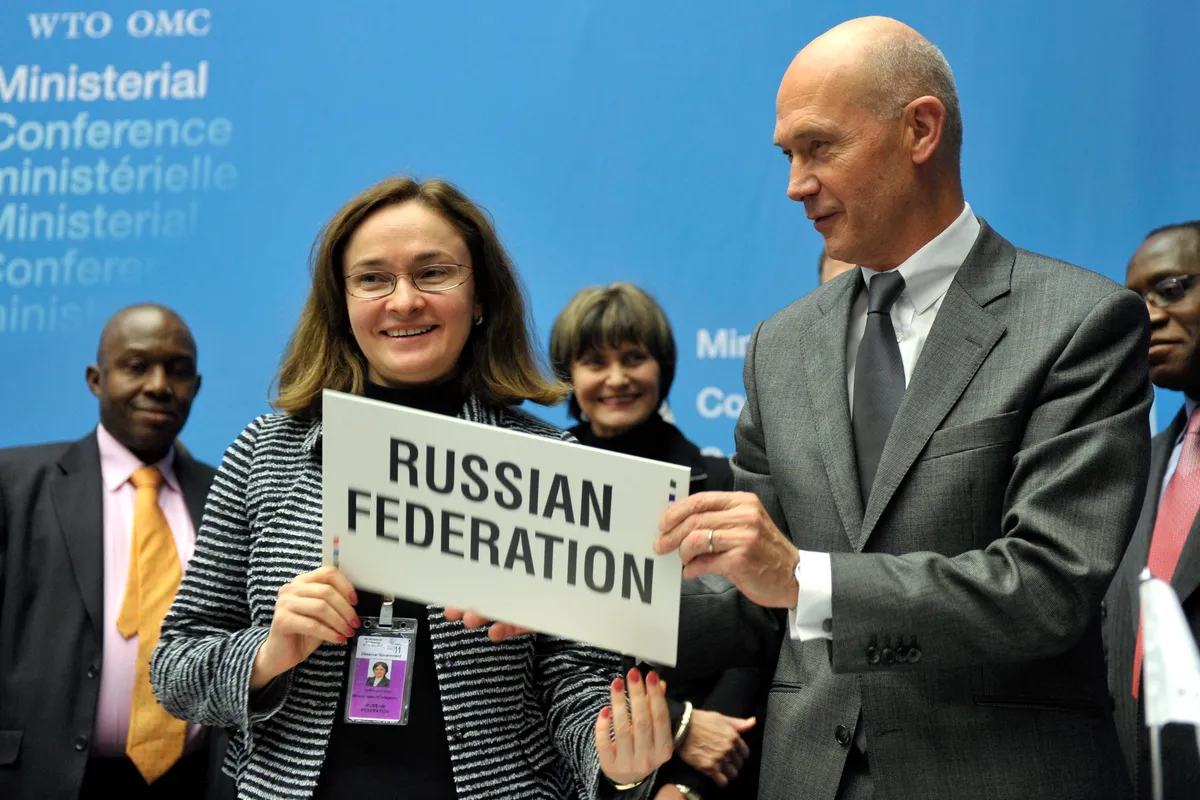
The WTO website posted a message that Moscow has long and consistently created the unprofitable conditions of trade with Russian state -owned companies. Russia is accused of non -fulfilling the obligations taken in 2012 upon joining this world market club, which consists of all decent trading players, including the United States and China. The declared price of the "penalty" is significant.
“In 2019, the cost of published tenders of Russian state enterprises amounted to 23.5 trillion rubles, or approximately 290 billion euros, which is equivalent to about 20% of Russia's GDP,” the WTO said in a statement.
The Russian import substitution program fell under the fire, which outraged the Europeans, including the discriminatory system of commercial purchases. Brussels demands to bring the rules of trade in accordance with the obligations of the Russian Federation to the WTO. Previously, the United States also put forward similar claims - there were considered illegal and Russian counter -sanctions on the import of foreign products for residents of Russia.
The publication on the WTO official website, which created so much noise for the New Year, has a rather long background.
But to date, the state of the case is as follows: the WTO body for dispute resolution (DSB) in response to the second request of the EU received on December 20, agreed to create a commission. Australia, Switzerland, USA, Canada, China, Japan, Ukraine and others will take part in the proceedings. That is, this is not a writ of execution, but a subject of negotiations and a compromise.
The European Union submitted four official complaints to the WTO during the membership of Russia since 2012. In 2014, he complained about Russian excessive imported and anti -dumping duties on cars, on the embargo of Russia on European pork from the EU under the pretext of sanitary and phytosanitary requirements. Earlier, in 2013, for the Russian fee for the disposal of imported cars. Russia also filed four complaints about the EU to the WTO: in 2014 - according to the third EU Energy Package (“Death” for Gazprom), in 2013 and 2015. - on the adjustment of gas prices as part of the EU anti -dumping investigations and in 2017 - on the anti -dumping measures of the EU regarding the import of cold -rolled flat rental from Russia. So, this is a mutual practice without extraordinary consequences. Russia fulfilled some demands of Brussels through the WTO, some disputes were hanging. In general, a trade and bureaucratic routine.
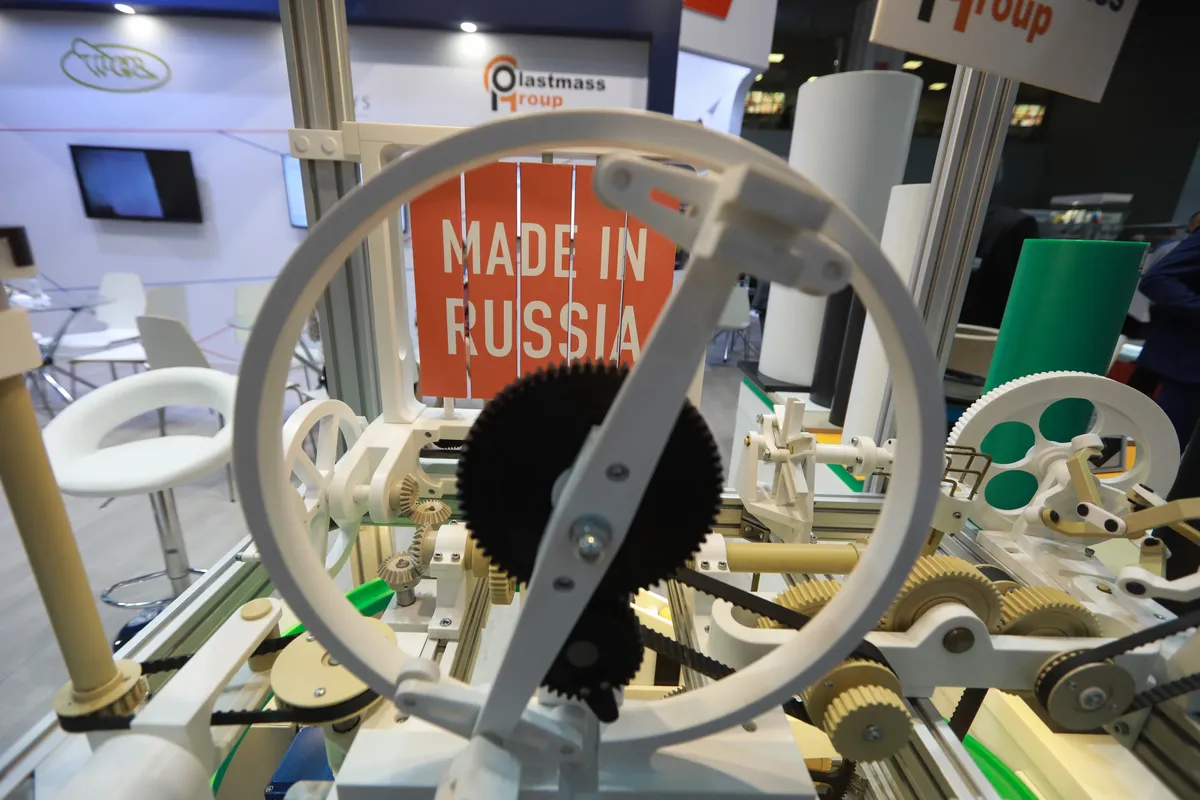
Everything broke sharply in 2014. In July, in response to the intervention of Russia in the Ukrainian crisis, the EU took a number of restrictive measures. Brussels introduced sanctions against Russia, aimed at four sectors of the economy: access to financing, the military -industrial complex, trade in dual -use goods and the sale of specific technologies for oil production and exploration. In August 2014, Russia responded with the introduction of a political ban on the import of a number of agricultural and food products from the EU for Russians: a cheese-pinched “sanctions”. In October 2017, she expanded the assortment of food products prohibited for importing into Russia. Russian consumers and European farmers were injured.
Russia now is the fifth largest trading partner of the EU, 4.8% of its total turnover with the outside world in 2020. The EU is the largest trading partner of Russia, whose fraction in 2020 accounted for 37.3% of the total turnover of the country with the rest of the world. From Russia, the EU imports 26% of oil consumption and 40% of the gas consumed by the EU. The volatility of energy prices directly affects the volume of bilateral trade. In the import of the EU from Russia, fuel and products of mining industry prevail. EU export to Russia - machines and transport equipment, chemicals, industrial goods, as well as agricultural products and raw materials. The import of services from Russia to the EU amounted to 8.9 billion euros, and the export of services to Russia - 18.8 billion euros.
Relations of the EU and Russia are regulated by an outdated agreement on partnership and cooperation (ATP) of 1997,
signed on about. Corfu Boris Yeltsin back in 1994, at the height of the honeymoon between Europe and Russia, in the era of hopes that Russia is Europe. Negotiations on a new agreement between the EU and Russia began in 2008, when everything was already clear, but were suspended in 2010 due to the lack of promotion in the section of trade and investment. In March 2014, the European Council suspended them due to a crisis in Ukraine.
The entry of the Russian Federation to the WTO in 2012 warmed up the expectations that trade with Russia would benefit from sustainable liberalization. But instead, Moscow gradually takes a series of measures, giving preference to domestic products and services and stimulating the localization of production in Russia by foreign companies. European business has practically closed access to state order in Russia. The policy of import substitution is constantly expanding. Many EU exporters are either replaced from the market or are forced to transfer production to Russia. Economic losses for EU companies are very significant.
Russian companies that want to purchase machine -building products abroad require permission from the import substitution commission. It is issued on an arbitrary basis and is not required for the purchase of domestic engineering products. National quotas are required in purchases of about 250 goods, including cars, equipment, medical devices and textile products, of which up to 90% should be domestic.
The first comments from Moscow evaluate the EU requirement as “immoral”. The game according to the rules of the World Club of the WTO is not possible against the backdrop of the war of sanctions between the West and Russia. How can world standards be fulfilled in these conditions? Economic sanctions have inflicted such damage to Russia that it is not up to the implementation of some rules of the international club.
In Brussels, they are indignant when Moscow pretends that nothing had happened in 2014.
And they write complaints about each other in the WTO.
The sanctions imposed by the EU for Ukraine and Crimea are divided into personal and sector. The former concern only persons personally who are prohibited from entering the EU and whose assets are frozen on its territory. They have a very mediated attitude towards the Russian economy. For example, the Chairman of the Federation Council Valentina Matvienko, then assistant to the President of Russia Vladislav Surkov, Director General of the Russia Today Dmitry Kiselev, Deputy Prime Minister Dmitry Rogozin, who oversaw the Russian military-industrial complex and the head of Chechnya Ramzan Kadyrov.
The list originally included 185 people and 48 organizations associated with them and then adjusted. In addition to the list “For Ukraine” and “For Crimea”, there are also such personal lists “For Skripals” and “For Navalny”. But they are not directly related to trade. Our question is about restricting the declared WTO access of European companies to the Russian market.
As for Russian companies, financing of three defense concerns is prohibited: Uralvagonzavod, Oboronprom, the United Aircraft Corporation. The sanctions list includes nine more: Sirius, Economy instrumentation, Khimkomosit, Kalashnikov, Tula Armory, Mechanical Engineering Technologies, High Skill complexes, Almaz-Antei and Basalt.
The “sector” measures of the EU, which the Moscow appeal to in this case, is a restriction of access to the primary and secondary markets of the EU for some Russian banks and companies, a ban on export and import of weapons, export of dual use for military use or final consumers of military purpose in Russia, restriction of Russia's access to sensitive technologies and services that can be used to prey and intelligence exploration oil. In July 2014, the EU also limited economic cooperation with the Russian Federation: the European Investment Bank (EIB) and the European Bank for Reconstruction and Development (EBRD) was asked to suspend the financing of new operations in the Russian Federation.
According to experts, published by the Russian Council for International Affairs, the impact of sanctions on Russia at the macroeconomic level remains relatively small. The Covid-19 epidemic, the decline in the world economy, oil prices have affected it much more than foreign restrictions. Not a single system -forming Russian enterprise or industry fell under blocking financial sanctions. But sanctions remain political risk to enterprises and business structures. They affect business ties with foreign partners, make it difficult to access markets and capital, individual goods, services and technologies, are able to cause financial damage and reputation.
The political meaning of these economic body movements is not in doubt.
They do not pose a direct threat to the Russian economy. The choice for response is not large: still try to integrate into the modern system of world trade and resolve disputes within the WTO or build your closed system without participating in the international division of labor.