Date
Author
Вячеслав Половинко, Риза Хасанов
Source

Preserved copy
Translated material
And he is on the head - Turk!
Türkiye and personally Erdogan came to Central Asia with the idea of uniting the Turkic world. The success of the venture is not obvious, but Moscow has already been furious
The first world leader with whom Vladimir Putin talked in the new year was the Turkish President Recep Erdogan. According to the Kremlin’s official statement, the parties discussed “well -known proposals on the development of legally executed agreements guaranteeing the security of the Russian Federation, the situation in the Transcaucasia, issues of Syrian and Libyan settlement”. Meanwhile, Moscow and Ankara have a new pain point - central Asia. Last year, Erdogan actually headed the Union of Turkic states that lay idle before, and Turkey, though implicitly, but stated that the region is now part of their interests, and not just the zone of influence of Moscow and Beijing. And although even among the participants of this union themselves, a single opinion about how it should develop, so far, the unification around ethnic and religious communities looks promising - especially considering that Moscow does not yet really understand how to deal with it.
While everyone was afraid of NATO
As soon as the USSR collapsed, Türkiye, which had previously been the only international recognized Turkic-speaking state in the world, immediately intensified contacts with former Soviet republics from the Central Asian region. Already in 1992, the then Turkish President Turgut Ozal called in Ankara the first summit of the Turkic -speaking states to which the presidents arrived
Kazakhstan,
Kyrgyzstan,
Uzbekistan,
Turkmenistan,
Azerbaijan.
Then all the leaders immediately agreed that it was necessary to establish political and economic unity. But next year, Turgut Ozal suddenly died (disputes about whether he was poisoned, they are still underway), and although in 1994 the summit of the Turkic -speaking states took place a second time, the organization somewhat shifted emphasis towards cultural and social cooperation.
Subsequently, representatives and other countries joined the organization on an ongoing basis, but in general, the organization as a public association frankly woven. I must say that there was no interest in this, first of all, among Turkey itself: representatives of Turkish business entered Central Asia without any problems and without a big support for allied agreements. The visible effect of the organization was the opening of Turkish lyceums in different countries. In 2009, four countries - Kazakhstan, Kyrgyzstan, Azerbaijan and Türkiye - created the Turkic Council, which became the prototype of the new union.
The new activity among the Turkic states began in 2014 due to two events: Erdogan came to power in Turkey, and Crimea also happened.
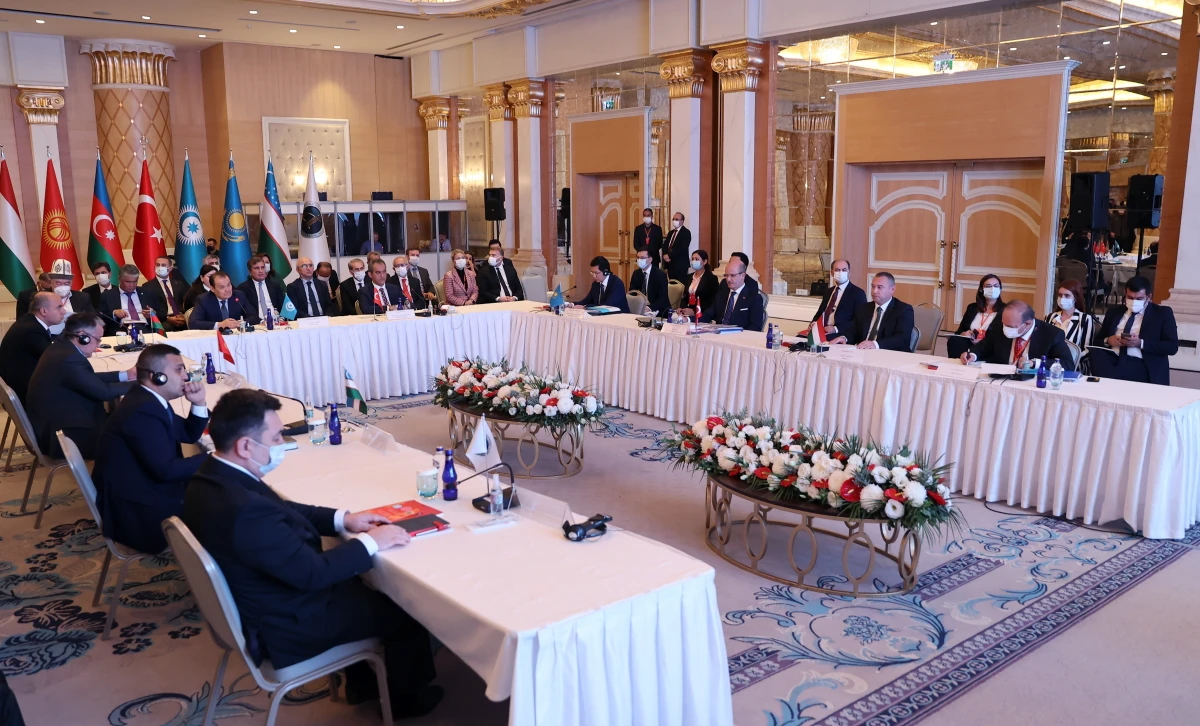
Already in December 2014, the first regional representative office of the Turkic Council was opened - and this happened in Kyiv. In the same year, Turkmenistan joined the Council, Uzbekistan surrendered three years later: Islam Karimov died, who was not enthusiastic about the growing influence of Turkey in the region, and the new President Shavkat Mirziyoyev was much more pragmatic. Also, Hungary entered the Turkic Council on the rights of the observer, and at the end of 2020 even Ukraine announced her desire to participate. Russia did not receive any of the stages of the establishment of the organization of the invitation to become a full member.
The Turk is cocked
At the beginning of 2021, Russian propaganda grinned when
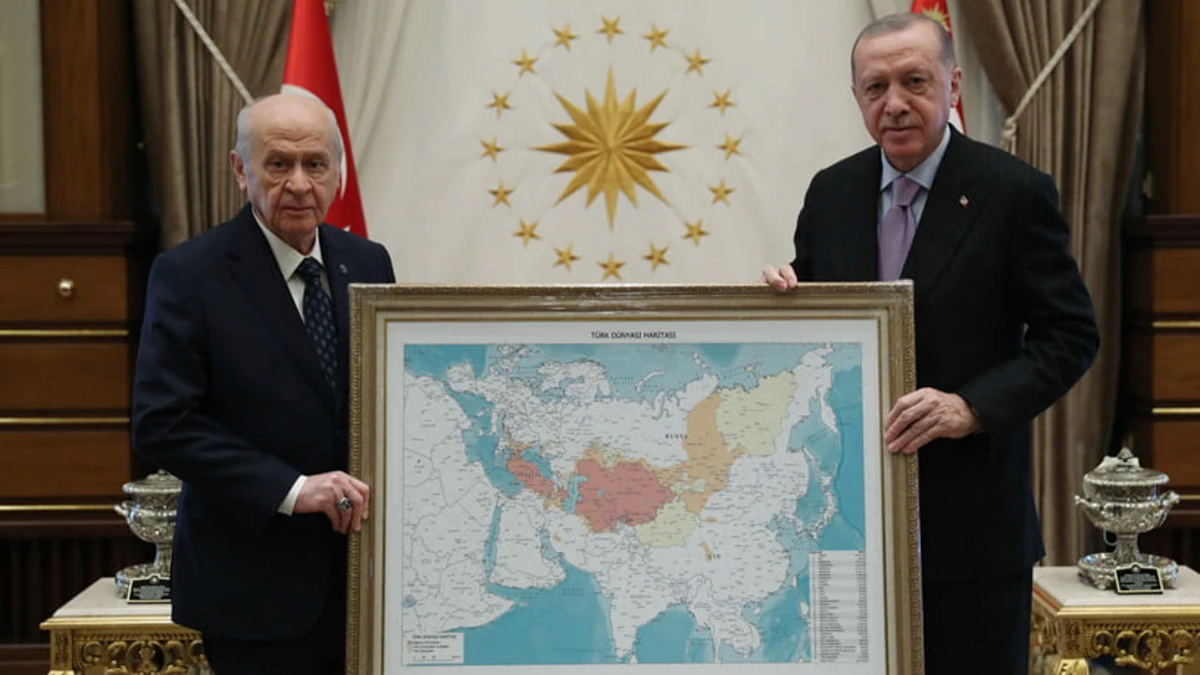
A map was shown on the state channel of Turkey, on which Crimea and Kuban were indicated with an area of interests of Ankara.
The deputy statements in the spirit of “All wars with any intentions against our country, as a rule, ended with a parade in the capital of the defeated enemy,” said MP Andrei Krasov. The map suggested a zone to which the so -called “great Turan” would spread - that is, a territory united by national and religious attributes: all Turks plus the countries professing Islam. It is assumed that we are talking about a new empire, and Türkiye will occupy a dominant place in it. Such a prospect was very scared by propagandists and pro -Russian political scientists: they began to look for hints for the recreation of Turan - and as a result they began to find them. A map with Turan terrorities in the fall of 2021 was personally presented to Erdogan, and in the telegram channel of the International Turkic Academy (this is such an institution in Kazakhstan, which serves as an application to the Union of Turkic states), Yakutia was called the "unrecognized world community of state education." And in general, “the script has long been written, including the ocean. Erdogan comes in all directions and is sure of victory. ”
In fact, propagandists mix different things. “The idea of the great Turan is a working for a limited number of Turkish nationalists, and it was their representatives who gave Erdogan that very card,” says the “new” Islamic Akhmet Labelkapov. - Erdogan, as a sophisticated politician, uses this rhetoric, but understands that the idea itself, being ultranationalistic, is utopian. In parallel, he sees the prospect in the Union of Turkic -speaking states - and promotes it until a certain point. ”
In other words,
The great Turan is something like communism
(an idea that would be nice to strive for), and the Union of Turkic states is a real education in which integrations of various kinds are possible - from economic to political. Therefore, the Turkic Council was renamed the Union of Turkic states in the fall of 2021, and it was Erdogan who announced this. “Türkiye wanted to go to the European Union for a long time, but even not close to this, and then Erdogan decided to advance the idea of uniting the“ Turkic world, ”says political scientist Dosy Satpaev. - In this sense, Erdogan does the same as the Kremlin. And after last year, in Nagorno -Karabakh, Türkiye showed itself as a key player, she had arguments that she could offer members of an updated union. Of course, everything will now spin around two things - economics and security. ”
“The Turkic states that are part of the organization seek to be closer to each other, which is completely natural,” adds an opposition Kazakhstani politician and businessman Serikzhan Mambetalin. - They, by and large, have the opportunity to revive the Silk Road in connection with the possibility of restoring the Zangezur corridor ( a hypothetical transport corridor between the western regions of Azerbaijan and its exclus of the Nakhichevan Autonomous Republic through Armenia . - Ed. ). Which, in turn, enables the Turkic countries to create a large transcaspey corridor that is beneficial for all members of the organization, which will connect the Turkic states with Europe. ” In the military sense, there are also some movements, Mambetalin adds: in the joint documents of the participating countries, “the creation of the so-called common people of the Ministry of Emergencies is already spelled out, and this is such a semi-native organization, and, based on this,
I assume that after some time a military block of Turkic states may appear. ”
At the same time, although the role of the first violin in this Turkic orchestra is quite obvious, Turkey is unlikely to put pressure on the participants at the very beginning, preferring the eastern way of doing business - that is, they will try to agree with everyone. But in the future, the economic and military union will surely turn into a political one, the Satpaev is predicted to the reciprocal. Tired of waiting for entry into the European Union, Türkiye simply created its own association of countries.
There is no agreement in comrades
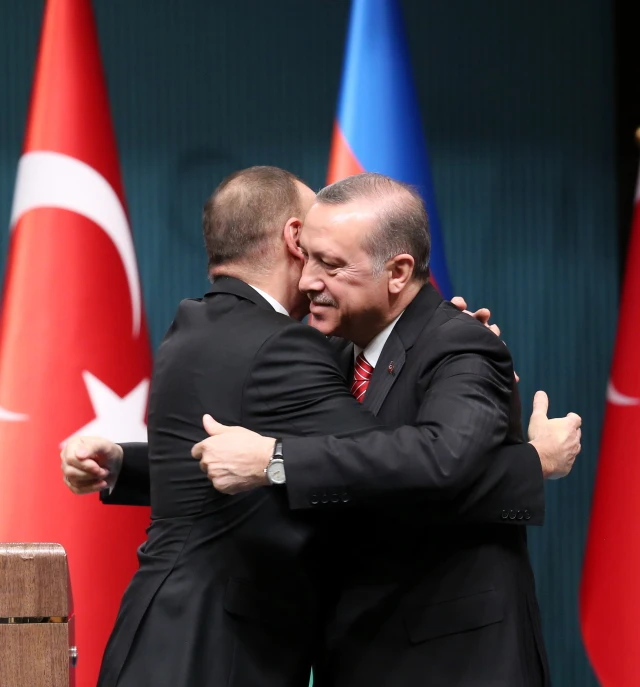
Despite the rosy prospects of an updated organization, members of the Union of Turkic states have their own plans for participation. The easiest way to Azerbaijan , which, being in a dense coupling with Turkey, is ready to consider the reunification of the Turkic world as the main goal. Other states solve their problems.
The country's most interested in the stable work of the Union after Turkey is Kazakhstan . The “new” has already talked about how the republic, squeezed between Russia and China, is constantly looking for additional players who could influence the balance of interests in the region. Europe and the United States are still far away, and Türkiye is an intuitive partner in terms of language and culture. “From the point of view of influence on public and religious consciousness, Turkey has more chances in Central Asia than that of Russia,” Satpaev explains to Dosy. - This happens in a natural way: in the same Kazakhstan, the number of Turkish -speaking people is increasing by itself, for whom Islamic identity is also important. Actually, therefore, Russia reacts so painfully to all language questions: it understands that in Kazakhstan it is now vulnerable to Turkey. ”
Kazakhstan is perhaps the most rebellious state in the Eurasian Economic Union (although it externally demonstrates loyalty): anti -Eurasian sentiments are as strong in the country, and after the history of Crimea Russia in the republic began to be afraid. The conversations of the first persons in Russia that the former Soviet territories are “gifts” to the republics, and it would be worth taking them, they obviously do not increase the level of trust. And a potential bow with Turkey in matters of culture, economics and security for Kazakhstan would be a very convenient counterweight to any claims from Russia, Satpaev is sure.
The problem, however, is that Kazakhstan sometimes seems too multi -vector state. He enters all possible unions - with Russia, and with Turkey, and with China. This means that almost everywhere the republic prefers to take a distance of controversial issues. So, Crimea Kazakhstan did not formally recognize the Russian, but reacted to the referendum “with understanding” (which was why Ukraine was extremely outraged); The republic is advocated for the development of the Muslim world, but is silent regarding the persecution of Uyghurs in Sinjiang. More sustainable ties with Turkey put Kazakhstan on shabby soil, if suddenly Moscow and Ankara are once again fighting tightly. Then the official Akord ( the residence of the president of the country. - Ed. ) You will have to choose the side, and in Nur-Sultan they really do not like this. Separately, it can be noted that Kazakhstan, like Türkiye, stood at the origins of the creation of the organization, Nursultan Nazarbayev personally pestrated the idea. And turn away from her in case of something just like that, let, let, in fact,
Erdogan and “stole” the Union of Turkic states from Nazarbayev, as the Kremlin previously appropriated the EAEU.
In a similar position - adjusted to the scale of the state and its priorities - is Kyrgyzstan , which also preaches multi -vector, but even more dependent on Russia. Questions about who the country will be with, if something happens, experts in the republic do not like. “Kyrgyzstan is free to pursue the foreign policy that meets its national interests. Communicating with brothers is good or bad? Kinship for us is the highest value, we protect relations with the peoples with whom we have a common history, culture and religion. The organization of the Turkic states is gaining authority, strength, grows stronger, becomes on its feet. This is a completely normal process. And do not worry about anything here. Cooperation is growing, all indicators are normal. Who can violate the balance of our relations with Russia and the CIS countries? Only giant strong powers. Türkiye is not a world, but a regional power, she, of course, cannot violate the balance of our relations, ”said the Kyrgyz politician and political scientist Zainidin Karmanov. For Russia, in the Union of Turkic states there cannot be stimuli, he adds: "This is not a military bloc."
But actually, Türkiye in Kyrgyzstan has a significantly greater influence than it seems,
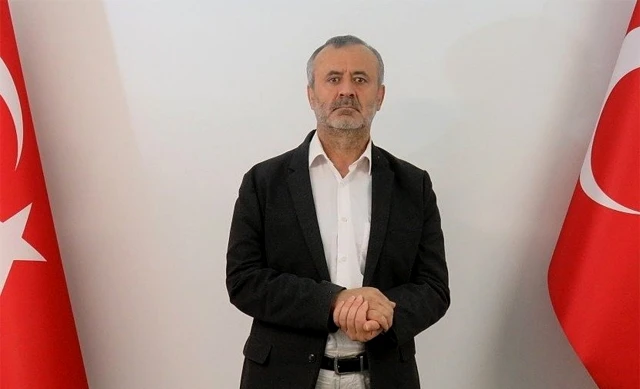
And about the argument about the fact that this is “not a military bloc”, the expert is cunning. Two weeks ago, Kyrgyzstan was the first of the CSTO member countries from Turkey by Bayractar strike complexes. In the connection economy, they are also stronger: in the first six months of 2021, imports from Turkey to Kyrgyzstan grew by 92% - almost doubled; In the opposite direction of the goods it took a third more than in the same period of 2020. And most importantly, Türkiye seems to have political influence in the republic: last year, the President of the Kyrgyz-Turkish schools "Sapat" Orhan Inhany was stolen from Kyrgyzstan last year. Ankara suspects that he is an accomplice of Fethullah Gulen, a longtime enemy Erdogan. And despite the fact that the Inanda is a citizen of Kyrgyzstan, the security forces and politicians in Bishkek only shreded their hands: they say, what can we do?
However, the degree to which Kyrgyzstan is ready to defend the interests of the new union is not yet clear. It is not obvious to the reaction of Uzbekistan to expand the functions of the Union, if this happens. Uzbekistan is not only with Turkey in difficult relationships, but in Tashkent, in principle, they do not like it when someone climbs with their charter, political scientist Arkady Dubnov explains. “Any external attempt to dominate Uzbekistan is wary,” he says. -In the early 90s, Islam Karimov tried to stand on the Turkish path of development, but the pressure of Ankara-ideological and religious-he did not like it, so the reforms were rolled up. As stated in the joke, the spoons were found, but the sediment remained, and now Uzbekistan, which itself is growing,, in principle, will not allow itself to drag itself into someone’s geopolitical influence. ”
Different figures on a common field
The very appearance of Turkey in the territory of the former Soviet republics, and even Asian, Russia, in principle, judging by the ultimatum delivered by NATO, does not perceive them as completely independent states, the Kremlin is nervous. He is even more annoyed that no one is calling for Russia to this union. Although the Council of Elders of the Union of Turkic states stated that Russia and China - the “natural members” of the Turkic world - was not an invitation. Nursultan Nazarbayev tried to take concentration functions on himself. “Immediately after the organization of the Union, he stated that it would be good to unite the Union of Turkic states, the Eurasian Economic Union, the Shanghai organization of cooperation and other structures,” says Arkady Dubnov. “That is, he tried to show this: this union is not against Russia, do not worry.” At the same time, in early December, the allied agreements concluded Kazakhstan and Uzbekistan-it is believed that this is part of the establishment of new communications in the structure of the Union of Turkic states, and Moscow again was only confronted with the fact.
Yes, and not for that, Erdogan took the initiative into his own hands in order to call Putin to the Union of Turkic states: in one organization, they definitely cannot disperse sides, both love to dominate too much.
In Russia, by the way, they have already clarified that they are also part of the Turkic world and, moreover, its focus with the center in Altai. It was there, according to the press secretary of President Dmitry Peskov, that the Red Star should be on the same map of the interests of Ankara.
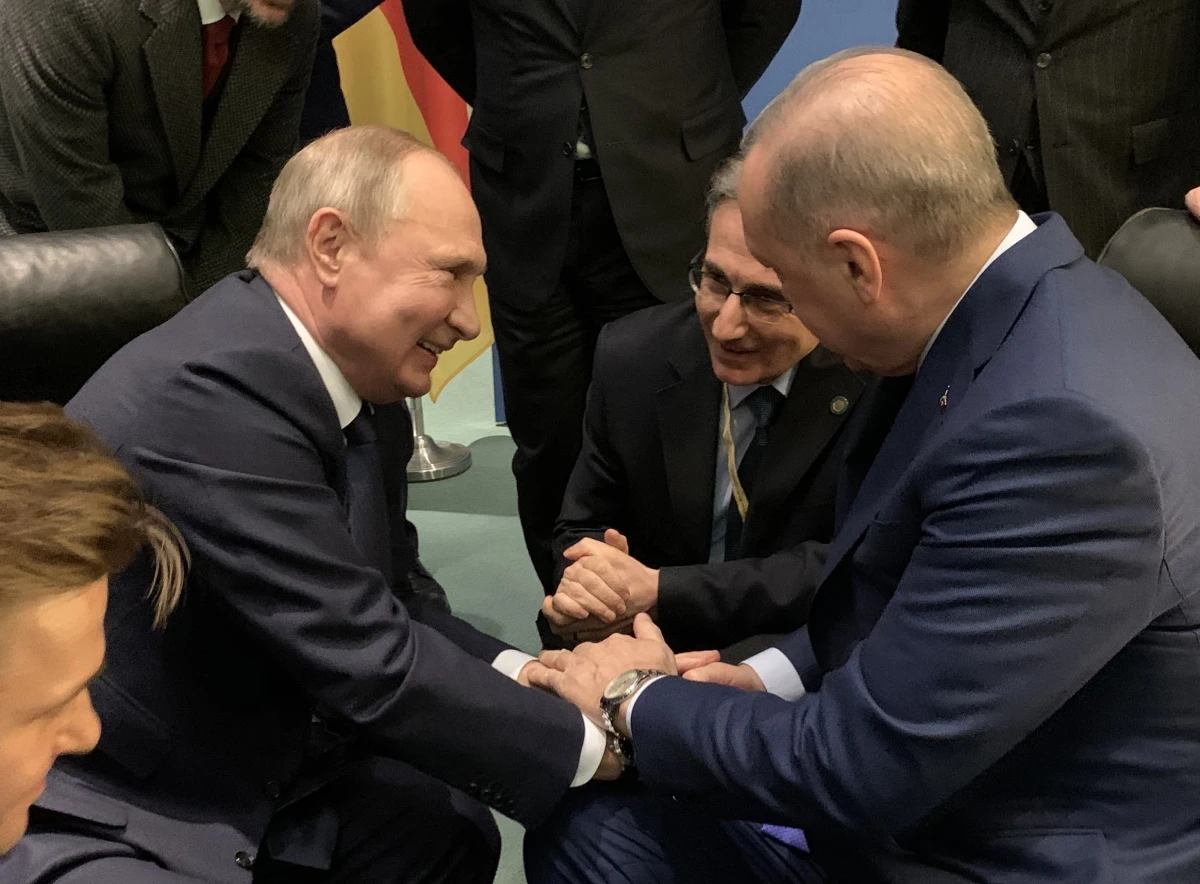
To worry to the Kremlin, perhaps prematurely. “You need to see how all this will function. Even the organization of Islamic cooperation - the organization is more powerful - also cannot boast of efficiency, it is at a fairly low level, ”says the Islamic scholar Akhmet Labelkapov. “It is possible that this union will be limited to the conclusion of only some non-specific declarations.” This assumption is not meaningless also because Erdogan may well step on the throat of his own song if circumstances require it. So, he was publicly indignant at the position of Muslims in Sinjiang, but at the same time he assured China that he fully supports their territorial integrity. By the way, perhaps understanding Erdogan's maneuverability, Beijing has not yet responded to the creation of a new union - he knows how to wait without hysteria and excess inflating his cheeks.
Nevertheless, the Kremlin’s anxiety about the coming of Turkey is understandable: he is not so much scared by Erdogan as such as the fact that he offers other countries, previously devoid of geopolitical choice, a real alternative in development. “If suddenly Kazakhstan has to choose, then standing under the wing of Russia, taking into account its updated aggressive foreign policy, will be fraught with,” the political scientist Dosy Satpaev explains by the example of his republic. -Firstly, Kazakhstan will begin to perceive exclusively as Russia's satellite (second Belarus). Secondly, supporters of the “Russian world” can perceive this as a recognition that we are already part of it, and this is not so. Well, inside the country it will cause great discontent. Kazakhstan is different. ” Беда в том, что для Москвы «другой» сейчас — синоним слова «чужой». А там и до «врага» рукой подать.