
Translated material
The pogrom empire
The results of Kazakhstan chaos: Tokaev won, Nazarbayev and his environment are deduced from the blow, Moscow strengthens its influence in the republic
January 7, 2022, the world saw the new President Tokayev. The intelligent diplomat-reformer was replaced by a tough, imperious autocrat with steel intonation in his voice and peremptory rhetoric. Speaking with an appeal to the nation on the fifth day of the most massive protests in the history of Kazakhstan, after which giant pogroms began in several cities of the country, Tokayev publicly allowed to shoot those who did not fulfill the will of the security forces (all those who went out into the streets turned into “terrorists”, without dividing on peaceful demonstrators or aggressive pogromers). In addition, the president accused independent media and human rights activists of “inciting” to the events, announced the “debriefing” for security forces and stated that only “20 thousand bandits” attacked the city of Almaty.
All that was supposed to issue in speech the former Tokayev’s mood for dialogue with society also looked like a statement of power. The requirements of peaceful protesters, as the authorities sees them, have already been fulfilled, and for those regions that are faster to submit to a new order, bonuses are provided like early removal of an emergency or inclusion of the Internet for a while. And then, Tokaev specifically specified, using the Internet no longer involves “free fabrications”.
The tough style of speech of the President of Kazakhstan can be explained by the circumstances in which it was uttered. Starting on January 2, mass economic protests in Kazakhstan first grew into political manifestations, and then, apparently, were replaced in several cities with pogroms with signs of an erupting real civil war.
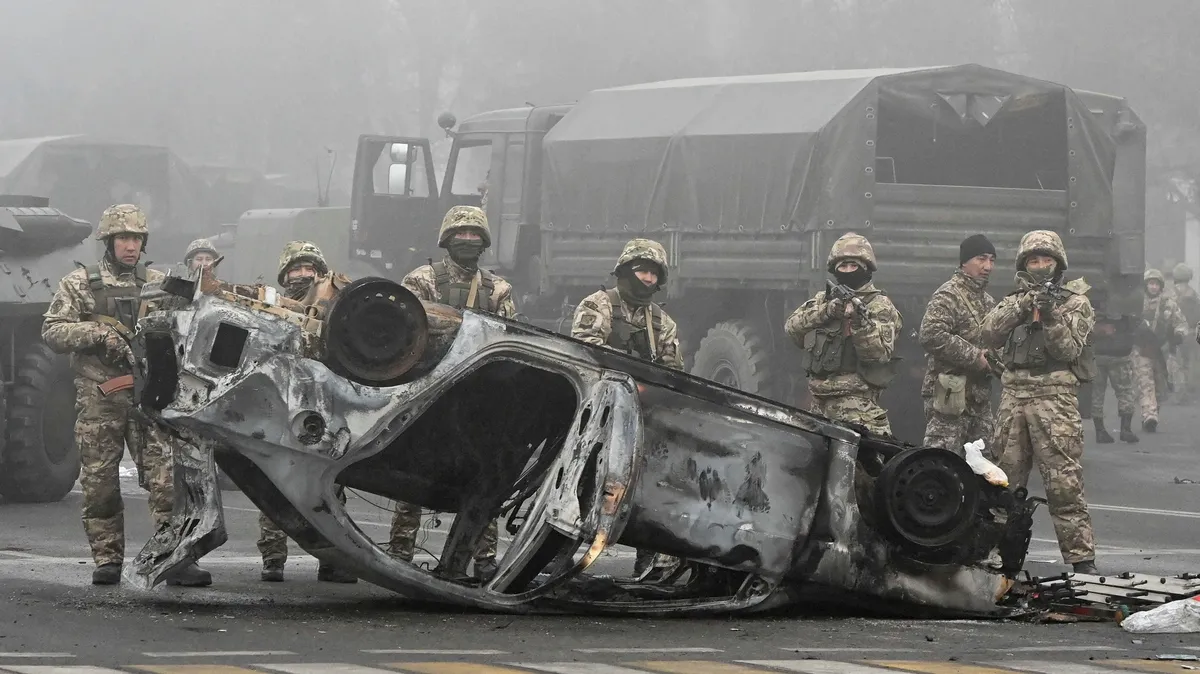
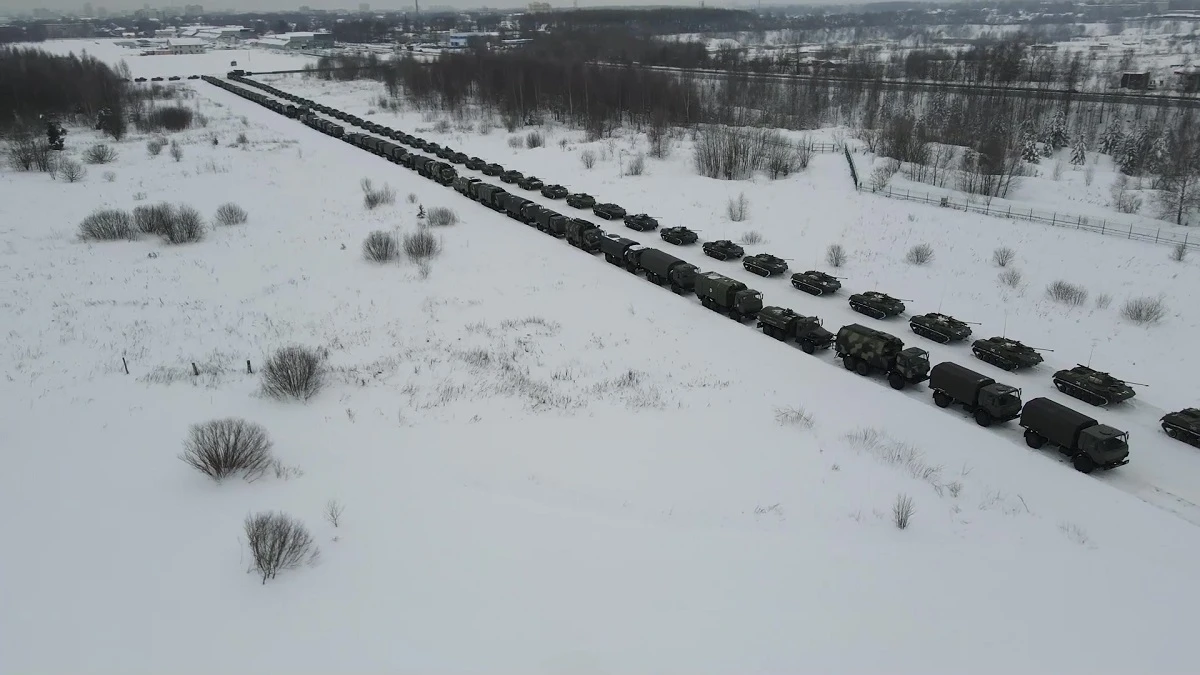
The situation is especially strong in Almaty, where clearly trained groups of people (the figure of 20 thousand is so amazing that even experts of state channels of Kazakhstan doubt it; however, it is quite obvious that there were a lot of pogroms)) captured and almost destroyed a number of state authorities, including the city administration, the prosecutor's office, the airport and the building of the national security committee. The Kazakh security forces and the military could not cope with them (or did not want) for several days, and Tokaev called for help in maintaining the order of the CSTO. As a result, the internal conflict turned into a large political problem for all its actors, including the foreign military people who came at the call of Tokaev, the vast majority of which are Russian.
At the same time, the rigidity of the Kazakh president is also explained by the fact that during these five days he actually completely destroyed Nursultan Nazarbayev, who was pursuing his “technical shift”, the “technical shift”. At the same time, Nazarbayev himself, as a political subject, is currently actually multiplied by zero. And although some commentators appreciated Tokaev’s speech as written “according to the Kremlin training manual”, in fact the president did not have any other way out, except to demonstrate all the force that he has.
Would he be so tough if he had not felt behind his support for the support of the union peacekeeping contingent? Perhaps yes, since people who know Tokayev describe him as a person with iron discipline and very fundamental. But now this peremptory is also mixed with the future problem of the withdrawal of the CSTO troops from Kazakhstan: Tokaev himself is sure that all the military will leave after some time, but no one calls the exact deadlines, and besides, Russia is already throwing absolutely provocative hints through the State Duma deputies that they do not mind linger in the republic.
In general, all these Kazakhstan protest are nearly ten days of Kazakhstan, in which there are still more questions than answers, and even those that already exist, look either slurred or implausible. Too many actors, too many plot turns, too many statements. “New” tried to restore the full picture of what had happened, at the same time focusing on the most important unclear circumstances.
The first phase. First protests
The main conspiracy theological version of Kazakhstani events is their planning: they say that the inhabitants of Zhanaozen in the west of the country in the Mangistau region were protested against increasing liquefied gas prices at someone’s pointer. But so far everything indicates that the protest was originally completely spontaneous, and most importantly - it could end almost on the same day.
For the past few years, Kazakhstanis have been rapidly impoverished: against the backdrop of a gradual decline in tenge and comparable to Russian inflation (official 7.5% in 2020), the already small salaries of the residents of the republic began to melt before our eyes. Products were rapidly valuable in stores, the cost of housing sharply jumped in cities (including due to the decision of Tokayev to allow retirement money for the purchase of real estate). In such conditions, any next increase in prices could become a trigger. The question was only where and when it would happen.
As luck would have it, from January 1, 2022, the sale of liquefied gas in the republic was supposed to switch exclusively to electronic trading floors, which, according to the developers of this bidding structure, was supposed to lead to market prices. Later, the Minister of Energy Magzum Mirzagaliev states that the cost of liquefied gas for many years was artificially underestimated for the sake of social obligations, which, in particular, could not be normally reconstructed gas processing plants. And this is true, but only part of it.
In fact, the gas industry in the republic is divided between the first President Nursultan Nazarbayev - primarily the former son -in -law Timur Kulibaev and businessman Kairat Sharipbaev (who is called the current son -in -law). And the market mechanism in such conditions could not work by default.
In addition, the increase in price over a short period is almost twice in itself - an occasion for discontent. And here the product turned out to be too fuel the material to start protest.
On January 2, residents of the city of Zhanaozen in the west of Kazakhstan reached the building of the local administration - akimat - demanding to sharply reduce the price of gas. In the fall, the gas cost 60 tenge per liter, December 31 - 100 tenge per liter, and on January 1 it began to cost 120 tenge per liter (about 20 rubles). The inhabitants of Zhanaozen have a great and tragic protest experience: in 2011, after a seven-month boycott of oil workers, due to low salaries, the authorities shot the protesters right on the country's day on December 16 (only 17 people were officially perished). And gas is doubly sick: most of all hydrocarbons in the republic are mined in the west of Kazakhstan, but the inhabitants of these regions paid almost more than the rest of the country. They were ready to endure, but the fact is that it is in the western regions that many motorists are refueling with gas (accurate statistics are unknown, but approximately we are talking about a quarter or even a third of families with their cars - many times more than the average in the country). And for them, such an increase in prices is critical. True, the protesters, blocking the road, demanded to reduce the price at all to 50 tenge - that is, below the lower.
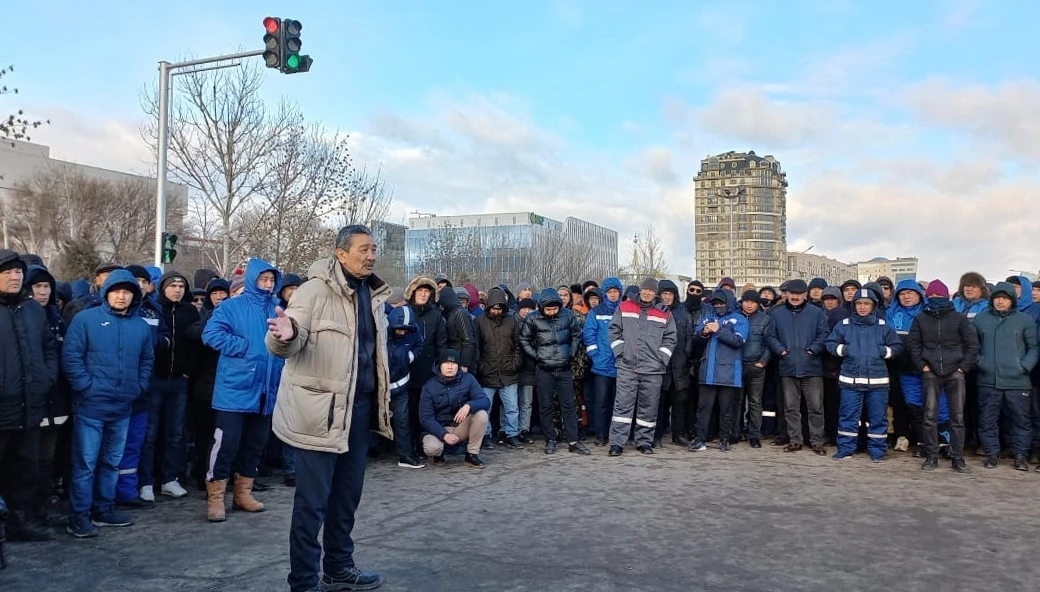
Only the acting Akim of the city of Galym Baizhanov came to the protesters, who said that the rest of the authorities were on vacation (not otherwise the New Year), he listened to the requirements and instead of a human conversation immediately began to say that this meeting was illegally. Obviously, after that, the Zhanaosenians went on the principle and decided not to leave the Akimat building, and the whole Mangistau region, which was taking place with them, showed solidarity with them. The number of demonstrators began to grow and be calculated by hundreds.
President Kasim-Zhomart Tokaev, all two and a half years of his reign, promoted the concept of a “hearing state” in society: that is, people's requirements should not be ignored, but listened and resolved if possible. In this case, Tokaev himself acted as a conductor of this “hearing state”, but did it somewhat awkward: he stated that “he instructed the government to urgently consider the situation in Zhanaozen, taking into account economic feasibility, in the legal field,” but did this through his favorite personal twitter account at a deep night-and it was necessary to react earlier and in the offline mode. Nevertheless, this decision could become a turning point in protest if adequate solutions followed this. But it did not happen.
The next morning, the Minister of Energy Magzum Mirzagaliev said that the price would not decrease. But, understanding the effect of these words, the government in a few hours reduced gas price for residents of the Mangistau region to 85–90 tenge per liter. In the protest ranks, this was perceived as a mockery and refused to leave the squares.
Moreover, the geography of the protest began to grow: the Atyrau, West Kazakhstan and Aktobe regions began to join the Mangistau region-that is, the entire West of the country. The authorities reacted to this by jamming of the Internet in the center of Almaty (so that the local protest would not reach the state level due to a large city). Demonstrators in Zhanaozen and Aktau demanded that Tokaev come to them personally, and all his “viziers” like the akim of the region or the government commission as negotiators were not perceived. Nevertheless, according to the results of the meeting of government officials with the initiative group who flew from Nur Sultan (though, according to some reports, it included more deputies than people from the street) to satisfy the main demand of the protesters-to reduce liquefied gas prices to 50 tenge per liter. But only for the inhabitants of the Mangistau region.
Shortly before that, President Tokaev wrote on Twitter: “The commission has an order to find a mutually acceptable solution on the problem in the interests of stability in our country. Law enforcement agencies are instructed to ensure the prevention of violation of public order. Demonstrators should show responsibility and readiness for dialogue. ” It was on the morning of January 4, and clearly arrogant vocabulary, close to the threat, obviously became a mistaken step in power. And 50 tenge per liter of liquefied gas only for one area is a solution that looked like a real detonator. The valves of the entire system began to fly one by one.
Firstly, the requirements of the demonstrators have changed from economic to political. From great resentment, the protesters now began to demand not a decrease in prices, but the resignation of the government, resigned both Tokayev, and especially Nursultan Nazarbayev (not imaginary leave of positions, namely complete disappearance from politics), the liberation of political prisoners and even the return of the 1993 Constitution. According to it, the deadline for the board of the presidents is sharply limited, and the term “Elbasy” - “leader of the nation” - does not exist at all.
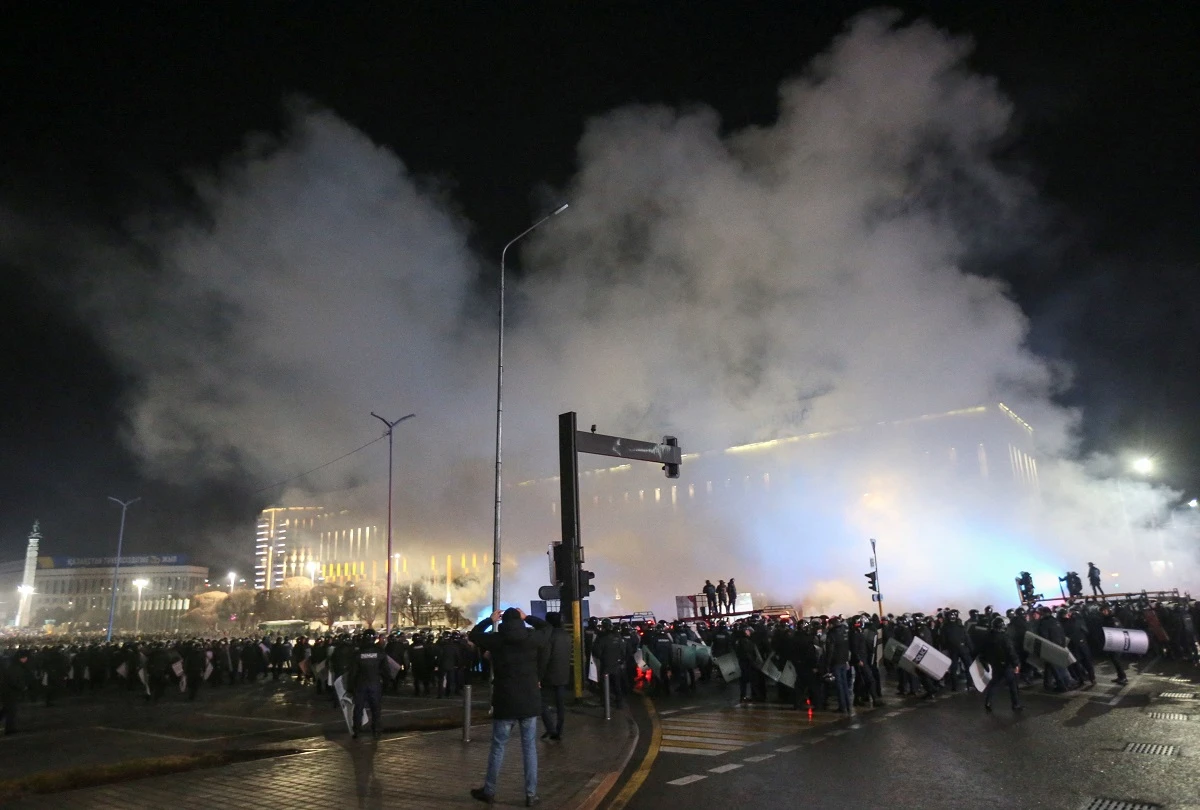
Secondly, the protesters themselves have become significantly more. Now these were far from drivers, and not only the West of the country participated in the protest. In the same Almaty, activists of opposition movements held several shares (as a result of which many of them were detained). In Aktobe, a thousands of thousands occupied the central square in front of the regional akimat. In Uralsk, 500 people, gathered on the outskirts of the city, went to the center, breaking through a police cordon on the road five times. As a result, by the end of the day in the square in front of the regional akimat there were from 2000 to 5,000 people (as in Aktobe).
It is important to clarify that all these were still peaceful actions, without violence on both sides. In addition, the protesters themselves made a fundamental decision to behave as correctly as possible, without provocations and without unnecessary reasons to increase the degree of confrontation. In particular, the leader of the Rock Group “Adaptation” Ermen “Anti” Yerzhanov, who visited Aktobe Square on January 4, noticed in an interview the observer of “New” Jan Schlenkman that people consciously leave any national question behind brackets.
“I was afraid and afraid of nationalist manifestations, therefore I specifically drew attention to this: in the square not only Kazakhs, many Russians, everyone is held together, no nationalism; God forbid, so that there is no further. The problem because of which they came out concerns all the citizens of the country, ”said Yerzhanov. - The matter, of course, is not only in gas, it was just the last straw. The protest was in the air, they brought a match - and blazed. For the past few months, a strong increase in prices has been going on, almost twice, primarily for food. Sunflower oil began to cost twice as expensive, eggs, potatoes, carrots. Even the middle class is difficult to survive, and even more so the poor, whom we have a lot. They suffered for a long time, and they could not endure. Such as now, in Kazakhstan has never been. Everyone is madly tired of the fact that one person has been in power for so many years. This fatigue is simply physically felt. ”
In the neighboring Uralsk, the “new” journalist and civil activist Lukpan Akhmedyarov told the “new”, they were going to “install the yurt, volunteers brought drinks and food on the square; The question will be resolved that the scene and sound recording equipment are installed on the square - in general, people do not intend to leave here yet. ”
On the night of January 4 to 5, President Kasim-Zhomart Tokaev introduced a state of emergency in Almaty and the Mangistau region. The authorities in the cities passed to the commandant’s offices, the connection began to mock, the Internet disappeared, the sites of many media outlets ceased to open (some were blocked even earlier). Military equipment appeared in the cities. The protesters in Almaty began to accelerate with light -school grenades and gas, while the ramp was also overcame in Uralsk. In other cities, they did not dare to do this, although Tokaev recorded a rather sinister video message in which he promised that "the power would not fall."
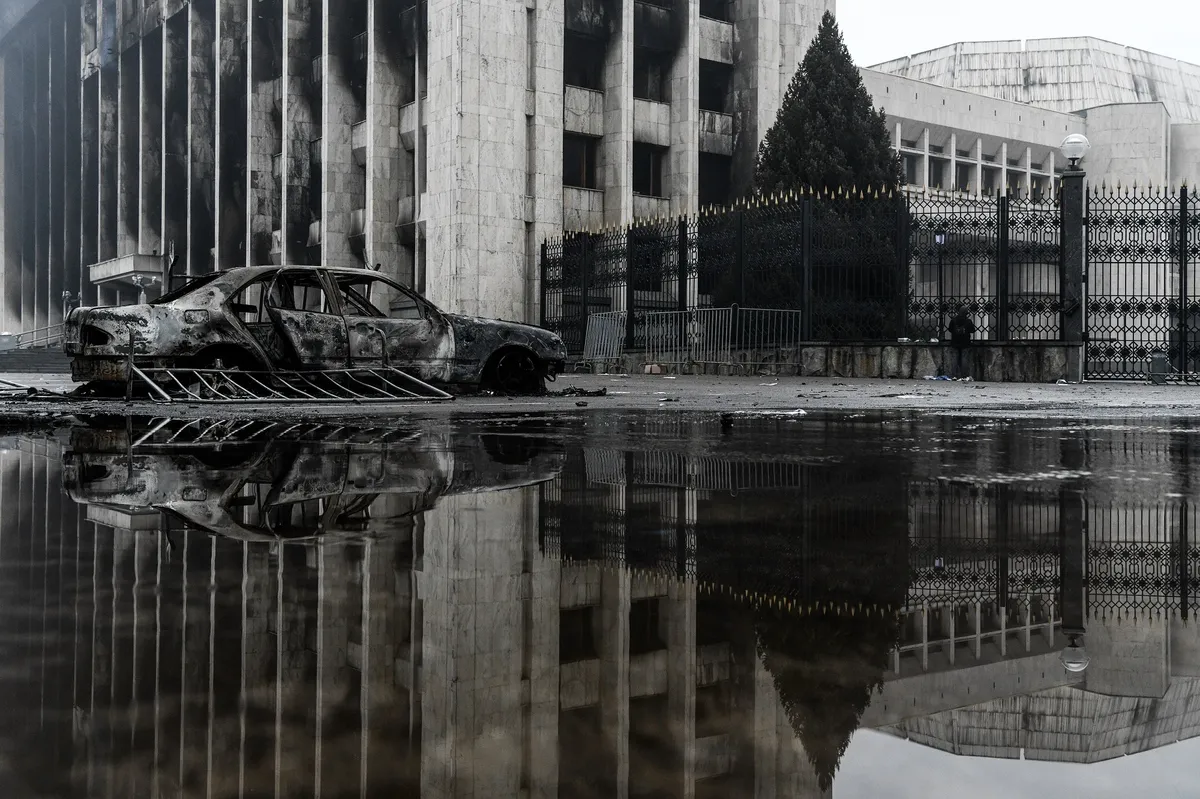
Early on the morning of January 5, Tokaev announced the resignation of the government. It was a bold, albeit belated solution. The Cabinet of Ministers for several years was headed by a political heavyweight and the absolute loyalist Nazarbayev Askar Mamin (who was always called "Papin" in a joke). His departure, albeit, formed as a voluntary resignation, according to the presidential administration, was supposed to become the fire extinguisher who would make a protest. Another important, although not seen in the first hours, was the replacement of the first deputy chairman of the National Security Committee of Samat Abish with his person: the first deputy of the head of the KNB was appointed Marat Nurtleu. However, the deputy chairman of Abish was secondly, and in the first - nephew Nursultan Nazarbayev. Previously, Tokaev had already shot a relative from the post of Nazarbayev: in May 2020, the eldest daughter of the first president Darig Nazarbayev lost her posts. But she later again became a deputy, and Abish (who was called one of the successors of Nazarbayev) was a large figure in many ways. And with this step, Tokaev showed the demonstrators much more than they perhaps expected themselves. But the protesters themselves did not understand this and did not appreciate. And on January 8, the KNB even stated that Abish did not go anywhere and continues to fulfill the duties of the first deputy head of the department.
And then they came.
The second phase. Then pogroms
If until this moment everything that happens is more or less documented and confirmed by several sources, then there are still quite fragmentary information about the events that began in the morning of January 5. More precisely, it began still on the evening of January 4, when a group of aggressive young people began to burn police cars. The correspondent of the Central Asia ( the Russian Mediazona, according to the Ministry of Justice, is considered to be considered a “foreign agent.” - ed. ), He who tried to take off what was happening. In the morning, however, fires flashed throughout the city.
A large group of young and extremely aggressive people began to attack the security forces, to take their weapons and equipment from them. Part of the weapon, as follows from several videos, are publicly available, these people were brought up on cars and distributed from trunk. The main target of this whole group of people was administrative buildings: shortly after its appearance, the Akimat of Almaty lit up, fires began in the office of the Nur Otan party, the city prosecutor’s office, the old Nazarbayev residence. In some buildings of state television channels, fires also broke out.
With all the ostentatious behavior of the pogromers, neither then nor now it is reliably known neither their number, nor qualitative composition, nor the degree of weapons - at least the original. On the night of January 8, President Tokaev on his Twitter once again wrote that “20 thousand bandits” attacked Almaty, and there were six wave waves on the city. But who and how considered these waves and the number of bandits is completely incomprehensible. Right now, the Kazakh authorities are offering simply believe in these data, issuing information as dosed and without evidence (in particular, as of the morning of January 8, not a single name of the detainee for pogroms was published).
Meanwhile, the tenderness of Almaty continued. К этому моменту в городе внезапно резко сократилось количество силовиков, и никто до сих пор внятно не объяснил, почему это произошло. Погромщики могли делать все что хотели — и они делали. По свидетельствам нескольких алматинцев, группы агрессивных людей начали громить магазины и банкоматы, сжигать автомобили — как гражданские, так и специального назначения. Было зафиксировано несколько нападений на машины скорой помощи.
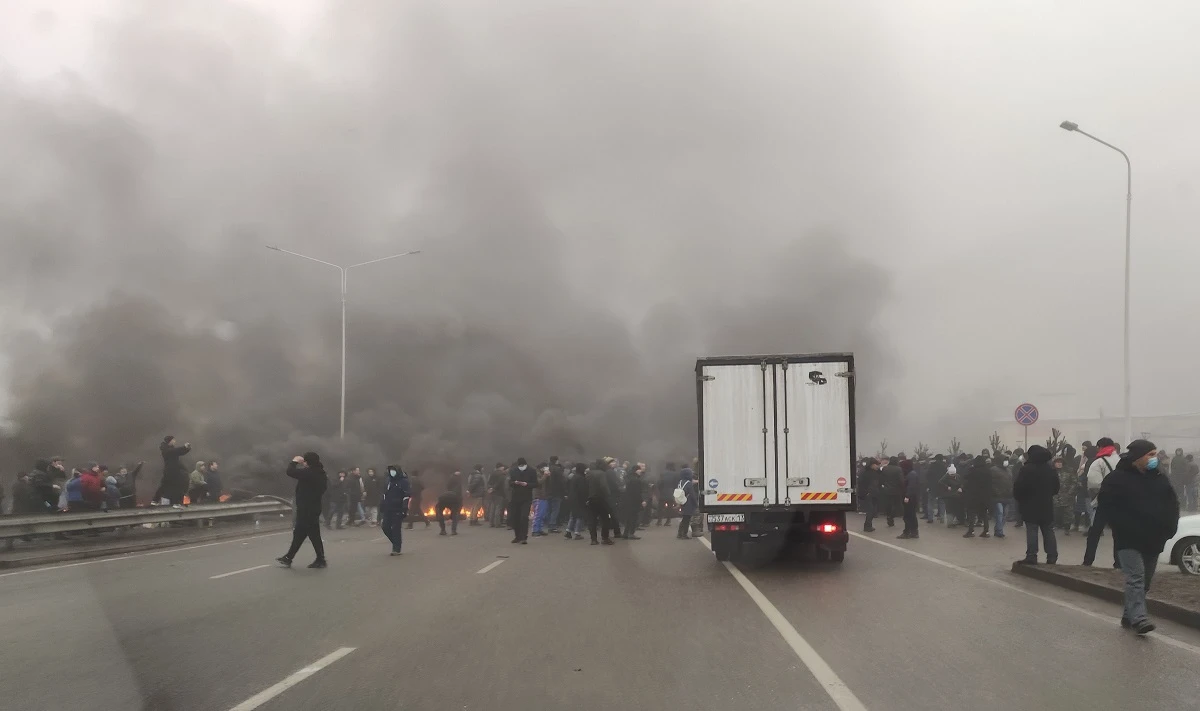
Два ключевых события произошло ближе к вечеру 5 января. Погромщики смогли захватить и порушить здание международного аэропорта Алматы. При этом СМИ и очевидцы в самом начале обратили внимание на то, что
силовики, охранявшие аэропорт, внезапно исчезли за некоторое время до захвата, оставив здание без защиты.
7 января об этом же в эфире государственного телевидения заявил бывший советник президента Назарбаева, а сейчас провластный политический эксперт Ермухамет Ертысбаев: «Я обладаю информацией, что за 40 минут до нападения на аэропорт была дана команда полностью убрать оцепление. This is possible only with direct connivance of those people who should be responsible for security in the country. Это государственная измена». Нападавшие почти полностью разгромили здание.
И самый поразительный сюжет — захват здания алматинского Комитета национальной безопасности. Судя по имеющейся информации, КНБ сдался почти без боя. Нападавшие легко завладели табельным оружием (правда, неизвестно, в каком количестве) и, возможно, сожгли архивы. Затем погромщики, вероятно, отправились штурмовать здания отделов полиции и нападать на тех, кто попадется им на пути. Впрочем, здесь фактуры для полноценных утверждений мало, что, однако, не помешало тому же Токаеву несколько раз повторить, что нападавшие «убивали мирных граждан, насиловали женщин» (без уточнения о количестве жертв конкретно этих преступлений).
Важно отметить, что, по всем имеющимся данным, нападавшие на административные здания и мирные протестующие предыдущих дней были разными людьми .
Это было видно не только по событиям в Алматы. В Актобе, к примеру, акимат был захвачен протестующими, однако они сами выставили нечто вроде народных дружин, чтобы провокаторы и мародеры ничего не разрушили (а такие люди там тоже были). Позже протестующие в Актобе также были разогнаны — при помощи водометов. При этом нападавшие не ограничились городом Алматы: административные здания и полицейские участки пострадали и в других регионах. В Талдыкоргане был полностью сожжен акимат, а также была совершена попытка нападения на СИЗО. В Таразе сгорело три здания полиции и минимум 50 полицейских машин. Сожженная техника демонстрировалась и на кадрах из Шымкента. По официальным данным, пришлось освобождать аэропорты Актобе и Актау — значит, нападавшие, по идее, были и там (хотя часть жителей городов это опровергает).
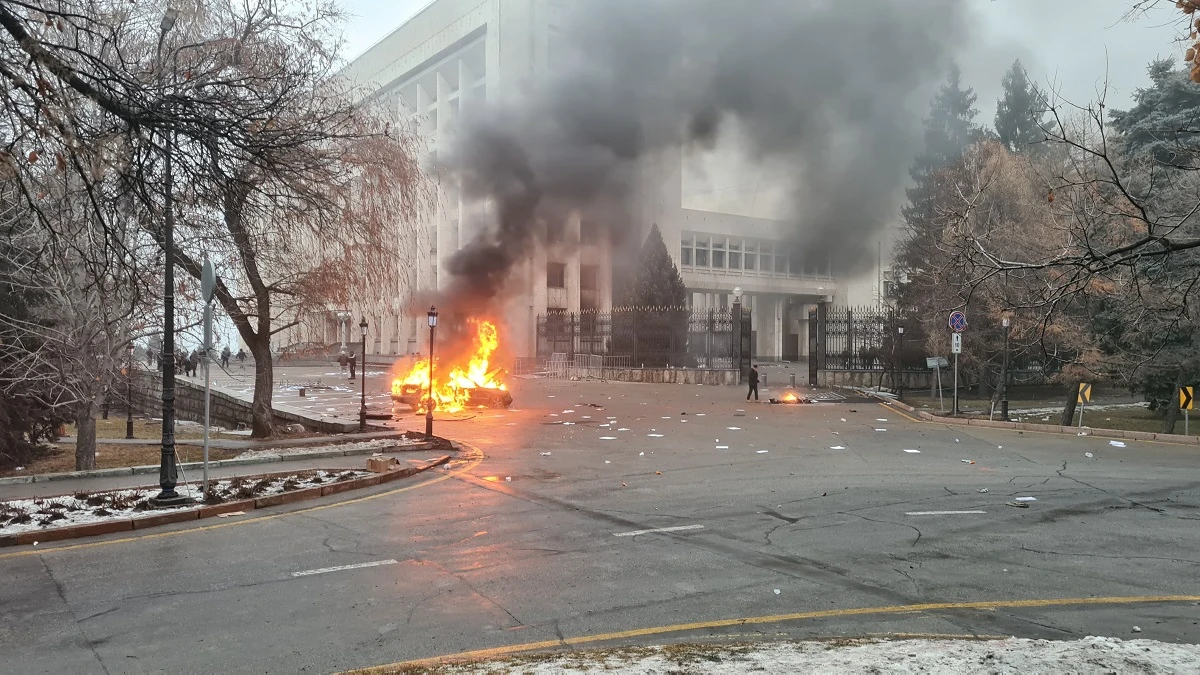
Все это происходило на фоне спорного решения выключить интернет во всей стране, а также отключить связь в ряде регионов. Из-за этого практически отсутствуют сколько-нибудь объективные данные о количестве нападавших, пострадавших, погибших и разрушениях. Государственные структуры также сообщают информацию минимально. В один момент 19-миллионная страна осталась в полном неведении относительно того, что происходит, и это спровоцировало определенный уровень паники. Началось стихийное мародерство, перестали работать банкоматы, люди оказались предоставлены сами себе.
К вечеру 5 января режим ЧП был введен во всей стране. А дальше события развивались стремительно. К этому моменту президент Токаев заявил, что теперь является главой Совета безопасности вместо Нурсултана Назарбаева, который так и не появился в публичном пространстве, и снял еще одного ультралояльного сторонника Елбасы — главу КНБ Карима Масимова. Вечером Токаев во всеуслышание заявил, что происходящее в Алматы —
террористическая атака «извне», которая угрожает «целостности государства», и поэтому он принял решение обратиться за помощью к ОДКБ, чтобы организация ввела миротворческий контингент.
И хотя еще днем российские, в частности, власти были очень аккуратны в своих суждениях о происходящем в Казахстане, решение об отправке военных было принято в максимально быстрые сроки. Уже через два часа ОДКБ дала согласие на ввод войск, объявил об этом армянский премьер Пашинян, по иронии судьбы, пришедший на свой пост вследствие уличных протестов.
Фаза третья. Потом решили совместить
Решение позвать чужих солдат на землю Казахстана для самого Токаева — очень рискованное. Хоть это и миротворческий контингент, у значительного числа казахстанских граждан перспектива видеть в своем государстве российских военных (в первую очередь — их) не радует. Это в определенном смысле наследие 2014 года, когда после событий в Крыму и на Донбассе в Казахстане стало фиксироваться больше антироссийских настроений. События последнего года, когда Москва все время пикировалась с Казахстаном по языковому вопросу, точно не добавили симпатий к россиянам со стороны жителей республики. Так что риск для Токаева заключался в том, что
любое применение оружия российскими солдатами в Казахстане может привести к потенциально более серьезным последствиям, чем нападение на город.
И все же он рискнул — потому что другого выбора у него, похоже, не было. Собственной армии и силовикам доверять в полной мере Токаев в момент обращения к ОДКБ, видимо, не мог: как показали дальнейшие заявления близких к президентской пропаганде людей, история про предательство со стороны КНБ имеет под собой некоторые основания или будет рассматриваться как одна из основных. Как заявил тот же экс-советник Назарбаева Ермухамет Ертысбаев, «в течение нескольких лет, оказывается, существовали тренировочные лагеря [для подготовки нападения на Казахстан], и КНБ, который периодически обезвреживал ту или иную группу, о многочисленных тренировочных лагерях, созданных в горах, молчал».
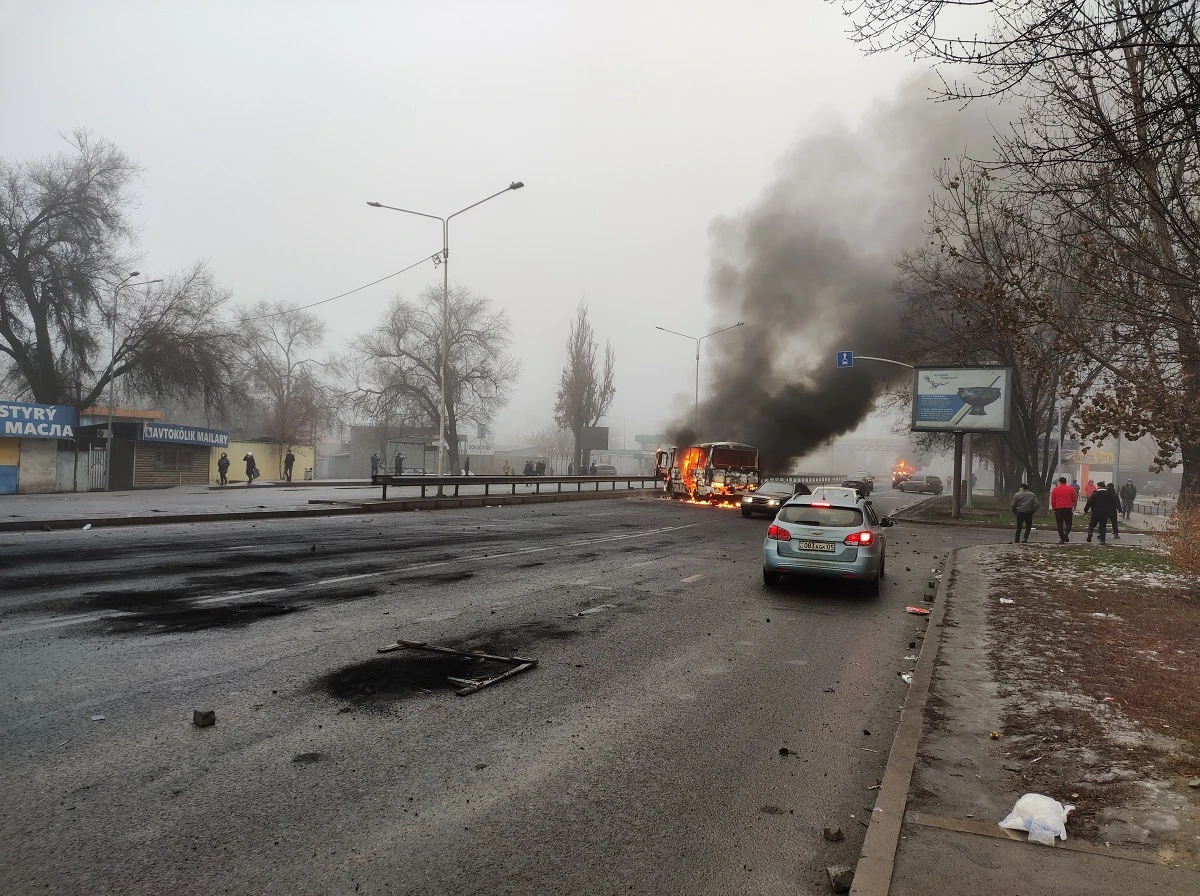
Формально миссия ОДКБ будет заниматься охраной инфраструктурных объектов, и Токаев в речи 7 января подчеркивал это отдельно. Как будет устроено функционирование тех же российских военных на самом деле (суммарно заявляется о численности контингента в 2500 человек, но россиян даже в этой непроверяемой цифре — абсолютное большинство), понятно не до конца: кроме красивых кадров отлета и прилета, присутствие миротворцев пока выглядит совершенно незаметно. Но оно словно стало стимулом для казахстанских силовиков: сразу после заявления о помощи со стороны международной организации они пошли в контратаку на Алматы.
Что происходило в Алматы 6–7 января, во время официально объявленной «зачистки», известно лишь по данным, которые журналистам предоставляют казахстанские власти. По состоянию на утро 8 января, МВД говорило о нескольких десятках убитых с разных сторон (цифры все время разнятся) и сотнях раненых. Сообщалось о том, что 6 января, во время самых ожесточенных боев, нападавшими была предпринята попытка штурма департамента полиции (неудачная), попытка захвата телевышки (также неудачная). Несколько раз публиковались новости о том, что некоторые жертвы погромщиков среди силовиков были «обезглавлены». По некоторым данным, перестрелки в разных частях города продолжались и 8 января. Часть нападавших удалось задержать, часть ушла в сторону Алматинской области (официальные сообщения об активной стадии КТО поступали, в частности, из Талдыкоргана).
7 января Токаев объявил о том, что разрешил силовикам стрелять сразу на поражение. От любых диалогов с «террористами», как он назвал нападавших, президент отказался. «Их надо убить», — был категоричен Токаев. Это, в частности, привело и к смене риторики госпропаганды и МВД: «террористами» стали называть любых задержанных (по данным на утро 8 января, их больше четырех тысяч по всей стране). Хотя в некоторых городах — например, в том же Актау — до сих пор люди на площадях стояли в мирном протесте (однако в существенно меньшем количестве). А 6 января, по свидетельствам радио «Азаттык» ( аналог радио «Свобода» в Казахстане, радио «Свобода» признано Минюстом «иноагентом» в России. — Ред. ), военные открыли огонь по безоружной толпе демонстрантов в Алматы. Утверждается, что минимум один человек погиб; однако, как и в случае с госпропагандой, в условиях тотального отсутствия связи установить истинность тех или иных сообщений не представляется возможным.
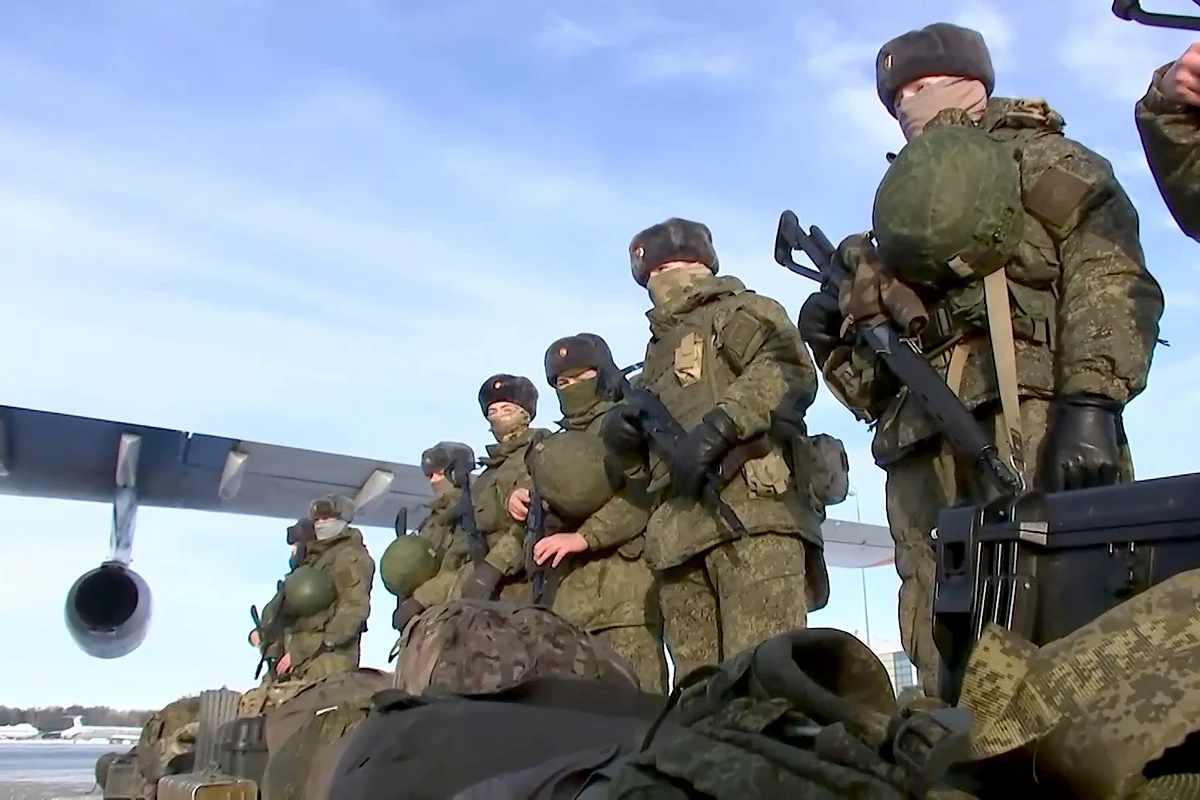
При этом в своем обращении к нации Токаев заявил, что требования мирных демонстрантов услышаны, да и вообще общая концепция власти такова: были мирные протестующие, но потом пришли «боевики» из другой страны (не уточняется, из какой и каким образом), которыми управляли в том числе «забугорные деятели». Тот факт, что власть согласна отделить мирный протест от нападения на города, может вселять оптимизм, но нет ответа на вопрос: каким образом будет определяться, когда закончился один протест и начался второй, более жестокий? Тем более достаточно очевидно, что, объявив «свободные СМИ» и правозащитников «подстрекателями», Токаев фактически анонсировал будущие чистки в гражданском обществе и среди активистов (прямо скажем, и без этого не очень твердо стоящих на ногах).
С кем точно расправился президент, так это с предыдущим президентом.
Даже если Токаев не хотел этого изначально, не воспользоваться моментом он не мог. Впервые о Нурсултане Назарбаеве стало слышно поздно вечером 7 января, на пятый день протестов. Назарбаев, по утверждениям провластных белорусских телеграм-каналов, поговорил с Лукашенко о происходящем. Кроме того, политолог Аркадий Дубнов со ссылкой на свои источники заявил, что два его племянника задержаны. Один из них — Самат Абиш, экс-первый зампред председателя КНБ, второй — Кайрат Сатыбалды, которого называют куратором всех религиозных радикалов в Казахстане. В частности, по одной из широко распространенных версий, Сатыбалды отвечал за вербовку молодых людей и курировал исламистов-салафитов в Казахстане. По сути, это те же самые «титушки», которых готовили для власти, но при критической ситуации обернули против нее. Официального подтверждения информации о задержании президентских родственников к обеду 8 января не было за исключением уже упомянутого заявления КНБ о том, что Абиш вообще продолжает работать.
Наконец, 8 января стало известно, что задержан по подозрению в госизмене бывший председатель КНБ Карим Масимов. Это, кстати, легко объясняет смелость спикеров на госканалах и свидетельствует о том, какая версия произошедших событий может быть приоритетной для государства.
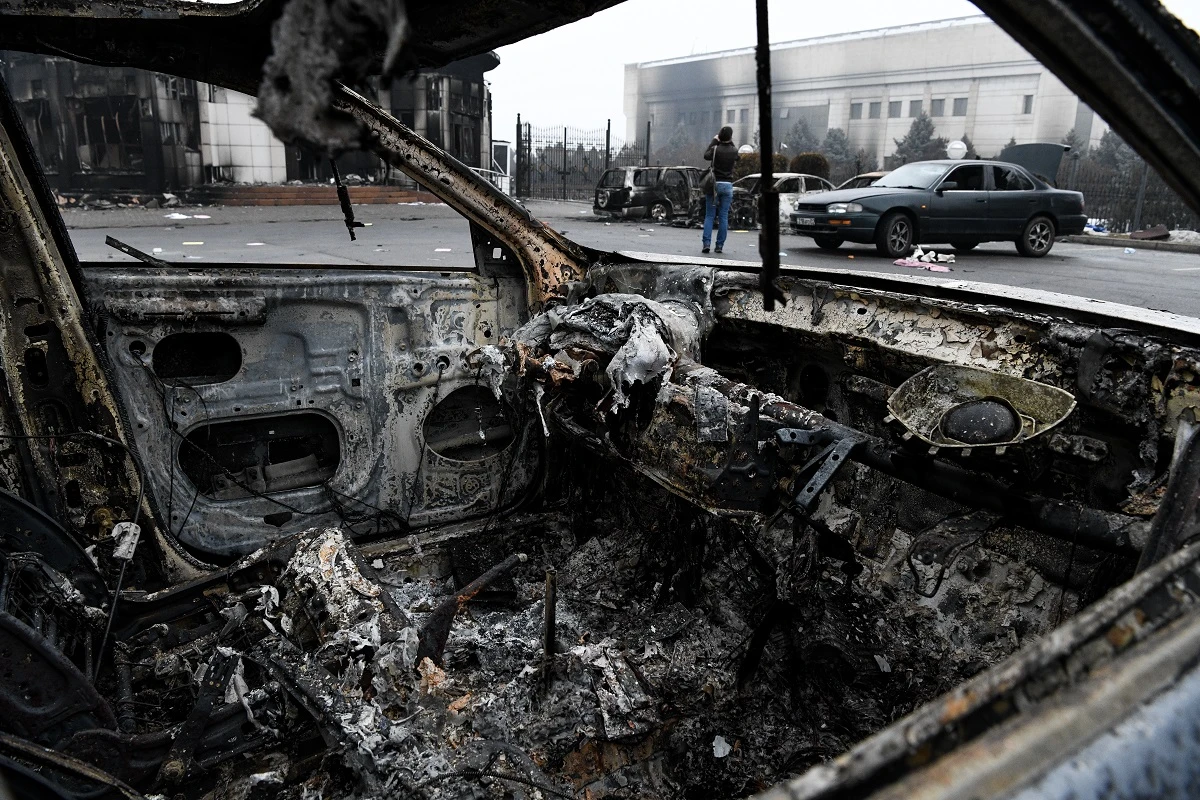
И даже если Нурсултан Назарбаев лично не имел отношения к тщательно конструируемой версии о кураторстве нападения по линии КНБ, никто его теперь вообще слушать, похоже, не станет. Всё, на что пока хватило его пресс-службы, так это написать, что Назарбаев никуда из страны не уезжал и что он призывает сплотиться вокруг Токаева. Но, по наблюдениям журналистов, даже официальная риторика по отношению к вчерашнему полубогу Назарбаеву сильно изменилась: в частности, в новостях перестало упоминаться название столицы «Нур-Султан». Хотя есть, конечно, и более очевидные признаки: за первые пять дней протестов сам Касым-Жомарт Токаев ни разу не упомянул о Назарбаеве, а когда в Талдыкоргане толпа снесла памятник Назарбаеву (а затем почему-то избила уже лежащий монумент дубинками), этому вообще не была дана никакая оценка. Чисто гипотетически, к слову, Елбасы может даже вернуться в политическую жизнь страны, когда все уляжется, но есть большие сомнения, что этого хотят и Токаев, и вчерашние демонстранты.
По итогам первой недели 2022 года Касым-Жомарт Токаев стал абсолютным властителем Казахстана — как минимум на какое-то время.
Прошлое в виде Назарбаева в целом забыто; мирные демонстранты в большинстве своем или разошлись, или задержаны, атака погромщиков — вне зависимости от ее истинных масштабов и организаторов — практически отбита, причем своими силами. Но главное — прямо сейчас Казахстан является государством, в котором что правда, а что нет, решает, по сути, один-единственный человек. Дозирование связи и интернета, блокировка неугодных СМИ сейчас и потом, самостоятельное определение любых цифр, любых понятий, издание вообще любого приказа без возможности его оспаривания — слишком лакомый набор «привилегий», чтобы от него так просто отказаться. «Казахская зима» — мрачно шутят политологи из России и Беларуси, экстраполируя всю ситуацию на свои страны.
Впереди у Касым-Жомарта Токаева важные вызовы. Нужно вернуть страну в нормальное русло жизни (с интернетом или без него). Нужен новый премьер-министр, его обещают представить 11 января. Вероятно, понадобится новый парламент, поскольку за эту неделю о его существовании вообще никто не вспомнил. Нужно решить, что делать с миротворцами ОДКБ, а самое главное — нужно решить, какую цену Казахстан будет платить за их помощь.
Даже в таких условиях и российская пропаганда, и российские депутаты не обошлись без своих традиционных высказываний. Маргарита Симоньян предложила взамен потребовать от Казахстана признать русский язык вторым государственным, выгнать из страны «американские НКО» и заставить власти республики признать Крым российским. А депутаты Сергей Миронов и Леонид Калашников предложили оставить миротворческий контингент ОДКБ (или как минимум российскую его часть) в Казахстане навсегда. Очень маловероятно, что все эти высказывания нравятся Токаеву. Вопрос в том, насколько его новой силы, достаточной на внутренней арене, хватит для противостояния другого типа.
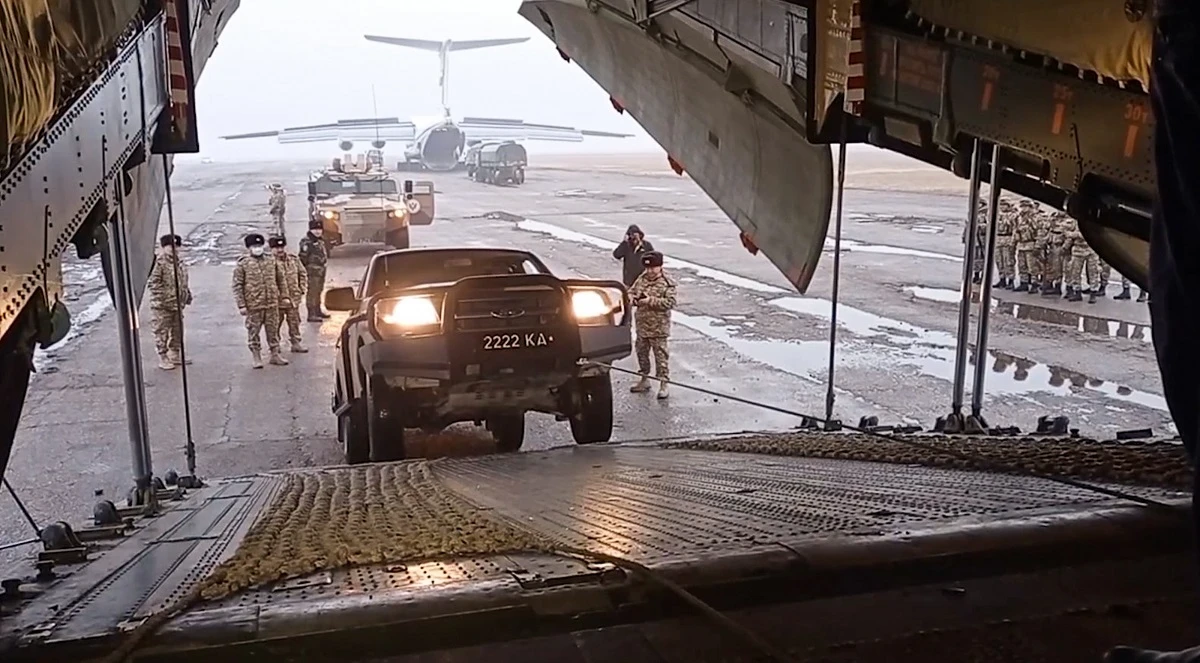
Применительно к нападению на Алматы есть тоже две задачи. Нужно восстановить город (ущерб для бизнеса в целом по стране оценивается примерно в 200 миллионов долларов, но на южную столицу приходится подавляющее большинство разрушений). А еще нужно все же решить, как будет проходить расследование и кто в итоге будет признан виновным в атаке. Будет ли это только высшее руководство КНБ, весь клан Назарбаевых (самого Елбасы очевидно будут выводить из-под удара), или сюда приплюсуют чудовищный микс из исламистских террористов-одиночек и несчастных гражданских активистов из Казахстана? А может, это будет поиск «мировой закулисы» как самый удобный вариант объяснения событий, исключающий необходимость призывать к ответу предыдущие власти? Тем более что один кандидат на роль мирового злодея готов: опальный олигарх Мухтар Аблязов, живущий за границей, сам с радостью взял на себя ответственность за организацию протестов, хотя достаточно очевидно, что он не имеет к ним практически никакого отношения (и вообще степень его влияния на казахстанскую политику была высока исключительно потому, что его демонизировали сами казахстанские власти).
Но главное — нужно будет решить, что и в какой тональности по итогам всех волнений в Казахстане сказать простым людям. Тут у Токаева все еще есть вилка возможностей: он может честно рассказать о произошедшем по итогам объективного расследования, а может сконструировать альтернативную версию правды — удобную для своего нового образа стального руководителя.
По иронии судьбы, в одном Токаев точно был абсолютно честен. Выступая 7 января с речью, он сказал, что пожелания мирных демонстрантов были приняты к сведению. And this is true. Цены на газ снижены по всей стране, введено госрегулирование цен на некоторые категории товаров, запрещено в течение года повышать цены на коммунальные услуги. Правительство в отставке, Назарбаев, видимо, тоже максимально уведен в тень. Почти все, о чем мечтали протестующие в Жанаозене, было выполнено. «Слышащее государство» вас услышало. Звоните еще.
With participation
Ризы Хасанова и
Яна Шенкмана