
Translated material
"We will all pay together for it"
Political scientist Arkady Dubnov - on the transfer of CSTO troops and the situation of Central Asian countries after events in Kazakhstan
Since January 2, mass protests do not subside in Kazakhstan. It all started from the city of Zhanaozen, located in the south-west of the country, where the inhabitants took to the streets, protesting against the growth of prices for liquefied natural gas. Instant protests expanded throughout Kazakhstan, and the requirements of the protesters were politicized. One of the most popular slogans was "Schal, Ket!" (“Old man, over there!”), Addled by the ex-president of the country Nursultan Nazarbayev.
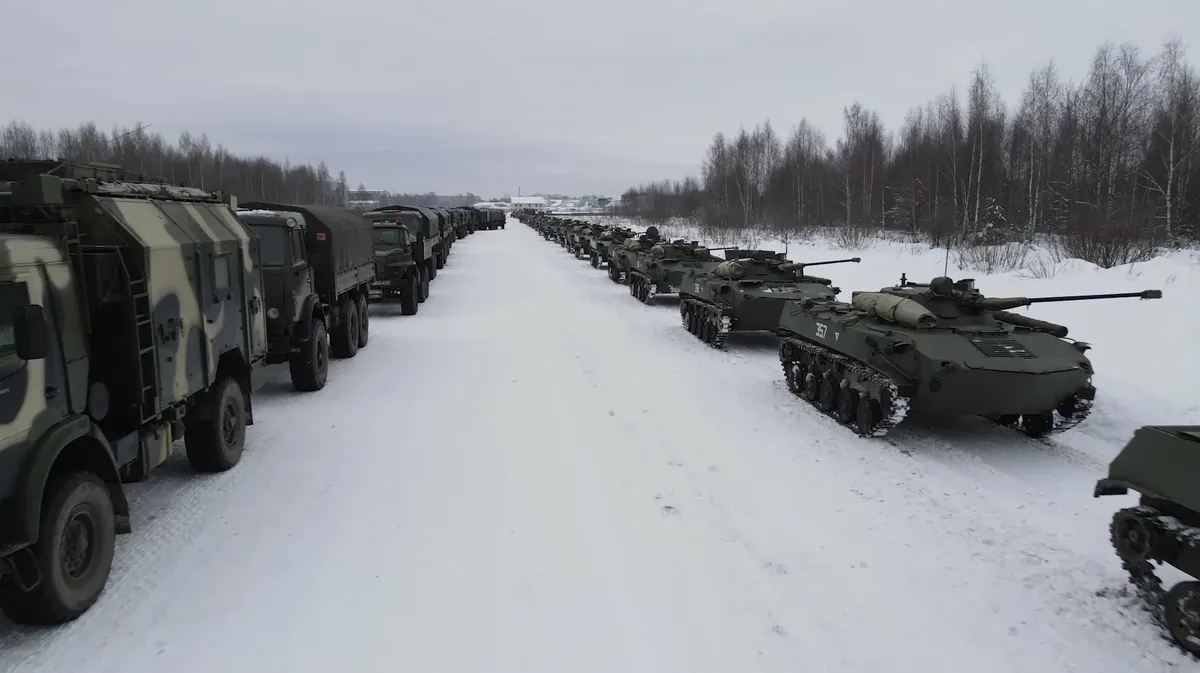
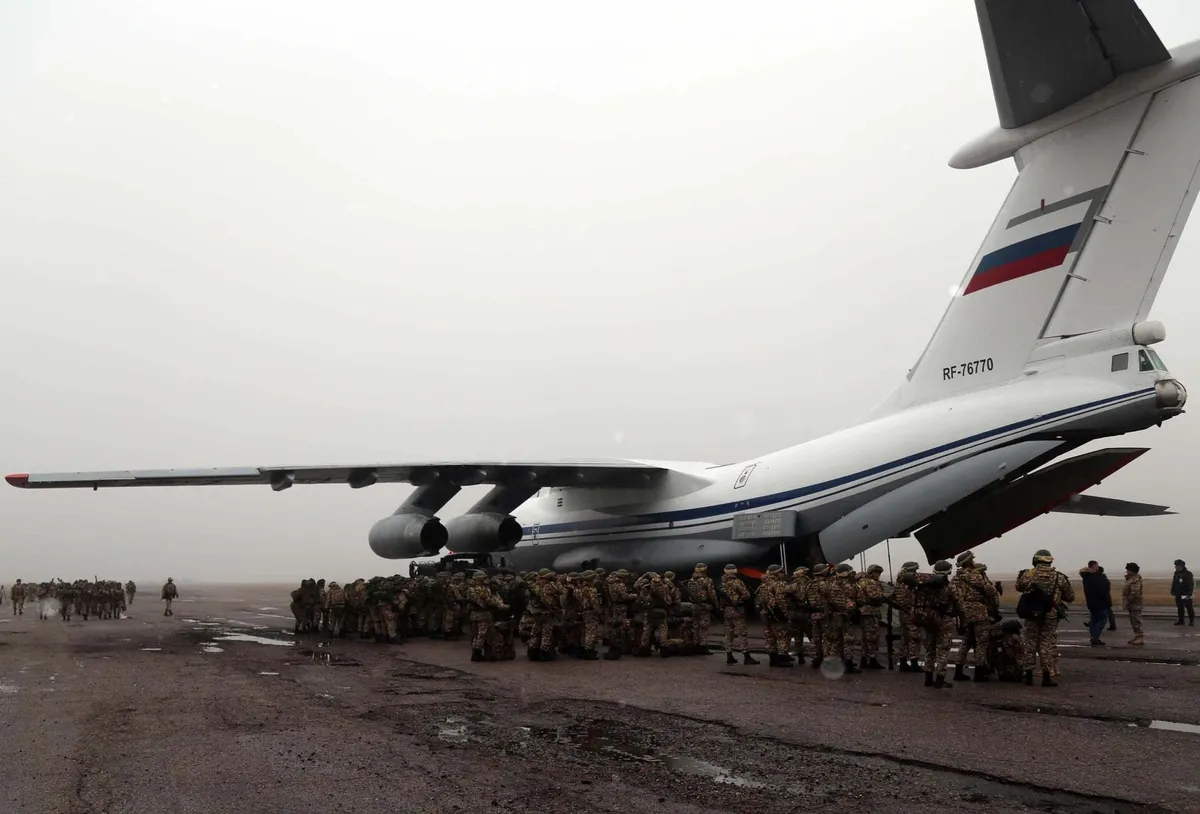
The most radical events took place in the city of Almaty. On the night of January 4 to 5, after large-scale clashes of citizens with security officials, the Government of Kazakhstan retired, President Kasim-Zhomart Tokaev introduced a state of emergency throughout the country, and then headed the Security Council, the chairman of which Nazarbayev was previously. The CSTO countries, including Russia, were sent to Kazakhstan the military as part of the "peacekeeping mission". This was asked by Tokaev himself. The transfer of more than two thousand Russian military is reported. Why the decision to introduce the CSTO troops was made in a matter of hours, what the situation in Central Asia now looks like and, as a whole, the status of the CSTO will now be perceived in the world, says political scientist Arkady Dubnov.
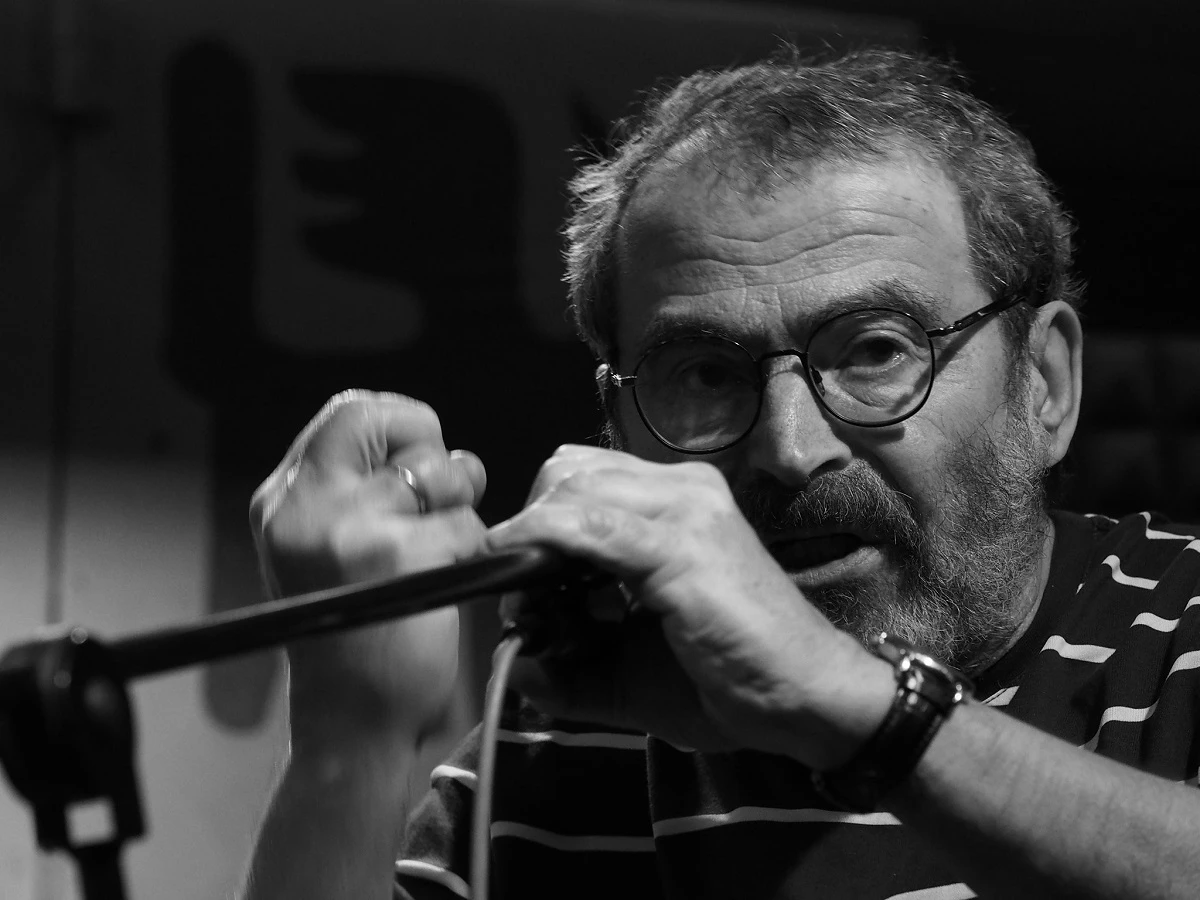
- Why was the consent to the introduction of the peacekeeping contingent given so quickly? Only a few hours have passed before the request of the President of Kazakhstan Kasym-Zhomart Tokaev before the consent. Was it a planned action planned "Multicorial"?
- If a short answer, then I do not know. And I have exactly the same questions to explain the reasons that in the middle of January 5, the situation, primarily in Almaty, changed in the most dramatic way. That is, when it was found that well -organized groups of people armed with lethal weapons that acted - and I am ready to almost quote Tokayev - according to a clear plan, coordinated by their leaders, chiefs, occupying the main objects of public significance, including the akimat [Buildings of the Administration] and the KNB office [Committee of National Security].
I believe that at this moment there was a danger of any uncontrolled development of events, the outcome of which could be Tokayev’s displacement from the post of president. And this is in the conditions when Tokaev has already shifted Elbasy, the chairman of the Security Council [ex-president of Kazakhstan Nursultan Nazarbayev], that is, he eliminated the first center of power. And the people who performed in response, in the interests of Nazarbayev, apparently, were ready to demolish the second center of power, and thus, arrange a counter -transmission.
As a result, the third center of power could arise, the new one, which probably seemed threatening to Moscow too. With the feed of Tokaev.
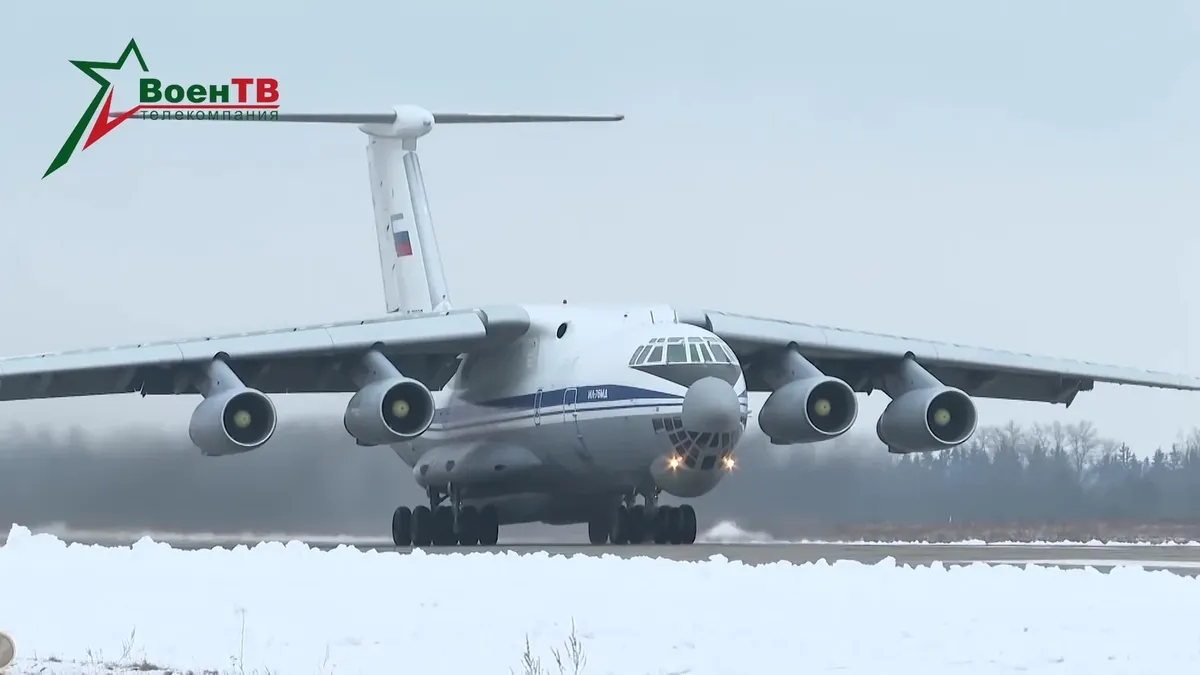
I can only extrapolate what kind of scenarios were proposed by Moscow, which - and I have no doubt about it - in principle, I was ready to cross my military to the territory of Kazakhstan. The speed with which the landing flew out and accommodated in Kazakhstan confirms that such scenario developments have already been involved.
- It turns out that in Moscow they were afraid of more dangerous scenarios?
“I think yes.” The point is that those people who could come to power in Kazakhstan could, to put it mildly, are not too loyal to Russia.
-The plot with Kyrgyzstan, who sent his military to Kazakhstan only the second time, seems some exception to the rules. Why in the country even many government representatives publicly resisted this?
- Kyrgyzstan among all members of the CSTO, despite all the contradictory nature and doubts about the stability of power, is the country, in general, with some democratic traditions. Therefore, there it was necessary to get the consent of the parliament. Can you imagine that [Alexander] Lukashenko would ask for deputies, or [the president of Tajikistan Emomali] Rahmon would ask to make a decision through parliament? Of course not. And Kyrgyzstan - yes. This is the first.
The second, and this is even more significant, although it follows from the first: Kyrgyzstan is a country of fraternal to Kazakhstan. And now he sends peacekeepers to Kazakhstan. Kyrgyzstan, which, in particular, itself is not able to pacify the situation on the border with the same Tajikistan. This, of course, looks pretty curious.
The third general consideration - I have a dejavu of today's collective input of the CSTO with how it took place in 1968 in the early days of the input of the Warsaw Treaty of Czechoslovakia.
Other military were introduced there, in particular from the GDR. This was very quickly recognized as a political mistake: so that the Germans reappeared in the territory of Czechoslovakia - this cannot be allowed. Literally in a matter of days, all other countries, except the Soviet Union, withdrew their troops from Czechoslovakia. In the end, I cannot exclude that approximately the same thing will happen here.
Entering troops into Czechoslovakia in 1968
On the night of August 21, 1968, the troops of the five countries of the Warsaw Treaty were introduced into Czechoslovakia - the USSR, Bulgaria, Hungary, the GDR and Poland - to suppress the so -called "Prague Spring". The operation is also known as Danube. The reason for the entry of the troops was the fears of the USSR about the possible loss of control over Czechoslovakia.
- They say a lot about the fact that now that there is a precedent for entering peacekeepers during inner riots, even though this is justified by “external aggression”, other presidents within the CSTO will enjoy using this option, if it happened. Will they?
- Nobody experiences any pleasure here and will not experience. As for the rest, before our eyes, a simple political scope is created. The “threats of stability” in the countries of the post -Soviet space focusing on Russia will be considered external, characterized as external, regardless of their origin. So, the main CSTO mechanism is turned on when it is necessary to provide assistance in external aggression.
- The figure of the Tajik leader Emomali Rahmon is interesting in all this configuration. Do you think for him such a decision of the CSTO carries some personal risks or, conversely, advantages?
- I didn’t even think, to be honest, the figure of Rahmon in this situation the least worries me. Rahmon can only be interesting because this is the first of the CSTO leaders who will have to ensure transit of power in the foreseeable future. Apparently, to his son [the current mayor of the capital of Tajikistan Rustam Emomali], which is already being said. Therefore, of course, you can reflect on what kind of problems he can have during a transit operation. But in any case, in this situation, we must remember that in the country he has a lot of structures that guarantee this security from the point of view of security. I mean the 201th Russian base. There is nothing to be introduced, everything is already in a well -fortified form, especially after the change of power in Afghanistan. ( The 201th Russian military base in Tajikistan is located in two cities-Dushanbe and Bokhtar; it includes, in particular, motorized rifle, tank, artillery, reconnaissance units, air defense units.- Ed. ).
- Why did the words about sending the CSTO mission to Kazakhstan let Pashinyan tell? Is it only because he is the Chairman of the CSTO?
- He had to do this on this temporary, during the year, to the status, Armenia presides now in the CSTO, please report. Sorry. Prior to this, when Armenia asked for help, Rahmon held consultations ( in May 2021, Pashinyan addressed the then chairman of the CSTO collective security council, President of Tajikistan Rakhmon in connection with the situation in the Sunik region on the border with Azerbaijan. - Ed. ). Then it was also funny to watch Rahmon coordinating the answer of the CSTO. And now it happened by chance very successfully for Moscow, again not her voice ...
- Do you feel sorry for him in this situation? After all, Pashinyan in 2018 came to power in the wake of folk protests.
-Firstly, I have no personal relationship with Pashinyan, I have never seen him, I have not known him. Secondly, in principle, there is no personal relationship in politics. Thirdly, the situation previously formed in Armenia and served as the reason for contacting the CSTO is fundamentally different from the situation in Kazakhstan, in my opinion.
- Uzbekistan is not included in the CSTO, but is closely in contact with some states - members of this organization. What conclusions from what is happening can Shavkat Mirziyoyev make for himself? He even expressed support for the leadership of Kazakhstan.
- One conclusion is absolutely clear - the leadership of Uzbekistan once again comes to the conclusion that the position of failure in the CSTO was correct and looks optimal in this situation.
- Why?
- Because there is no temptation to resort to Tashkent to help the CSTO, on the one hand. Thus, the easiest way to avoid imposing external intervention. Uzbekistan has sufficiently available security structures, including to reflect internal threats, in order not to be in the same position in which Kazakhstan found himself.
- How will the situation affect Russia, will it change the position of Russia in Central Asia? Propaganda channels already say that it is necessary, they say, to lead the “fraternal policy”, “not to play with the Naziks” and so on. Is it possible to say that this decision - to ask for the help of the CSTO - will affect both Kazakhstan itself and the influence of Russia on it?
- Of course, Kazakhstan today is much more than before, ended up in the force field of Russia's influence.
All foreign policy decisions of the leadership of Kazakhstan now cannot be undertaken without taking into account without looking at the country of foreign troops, primarily Russian.
Moscow today goes into the status of the foreign policy curator Nur Sultan (however, quite soon again-Astana), and Kazakhstan itself almost becomes something like a Russian protectorate. Tokaev understands this, and therefore on January 7, in addition to his speech before the nation, he considered it necessary to indicate that the CSTO troops would not be in Kazakhstan for long. He understands that if earlier his sovereignty as a leader was limited by the center of power in the person of Nazarbayev, today his actions are to a certain extent are connected by another center of power.
- Will the status of the CSTO in the world change and how, in general, the status of this organization will now be perceived in the world, in your opinion?
- In my opinion, the CSTO, for the first time by carrying out a military interference campaign, cannot but change its international image as an alliance that is able to accept serious, I would say decisive action. That is, if earlier it could be considered such a “paper tiger” and it was treated quite condescendingly, now he declared himself as a certain structure that really provides his ambitions to ensure security in the zone of influence of Russia. This confirmed the Kremlin’s determination to be responsible for the situation in the countries of the military-political bloc actually led by him.
- For Russia, is it more a plus or minus?
- If Russia seeks to regain a certain imperial status, then encumbrances are inevitable and related. We will all pay together for it.