
Translated material
Refusal totalitarianism
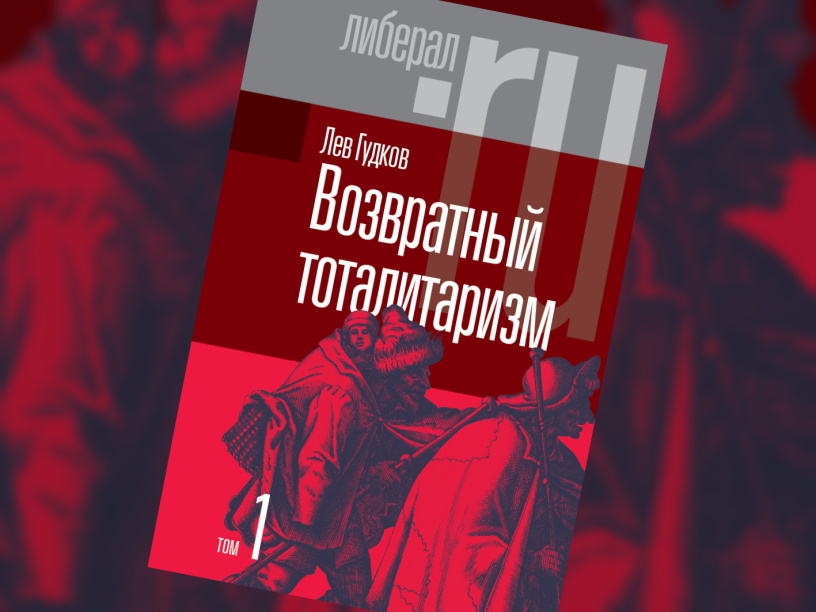
The publishing house "New Literary Review" is represented by a two -volume collection of Lev Gudkov’s work “Five Totalitarianism” .
Lev Gudkov is a sociologist, doctor of philosophical sciences, scientific director of the Levada Center, editor-in-chief of the magazine “Bulletin of Public Opinion”. Why did not work in Russia and the society failed to establish control of the power elites? The articles of Lev Gudkov, included in the book “Five Totalitarianism”, are united by the search for an answer to this fundamental question. In order to identify reasons that do not allow the country to free from the totalitarian past, the author considers many factors that form mass consciousness.
The traditions of state violence, mass immoralism (or the moral of adaptability), the reproduction of the imperial and militaristic “historical consciousness”, impulses of counter -modernization - this is an incomplete list of problems that fall into the field of view of Lev Gudkov. Based on numerous research materials that the Levada Center has been conducting since the late 1980s, the author offers theoretical schemes and analytical constructions that meet the real socio-political situation. The articles from which the book was compiled, written in the period from 2009 to 2019 and reflect the dynamics of changes in the Russian mass consciousness over the past decade. “Five Totalitarianism” is a natural continuation of the work, begun by the author in the books “Negative Identity” (2004) and “Abortive modernization” (2011).
We offer to read one of the articles that included in the second volume of the collection.
The image of Stalin in the public opinion of Russia: the structure of the totalitarian symbol [1]
Preliminary remarks
The rhetorical appeal of the current Russian politicians to Stalin as the standard of the statesman and the no less frequent representation of the Stalinist era itself as an example of the forced development of the country [2] should be regarded primarily as evidence of the ignorance and cynicism of the Russian political class, but the resonance that their performances in society do not limit themselves to such estimates. This is not about historical Stalin. They know little about him, since historical knowledge for most inhabitants is not available and is not of particular interest. “Stalin” in today's Russia is a props from political mythology used both by the Kremlin administration to compensate for the weak legitimacy of the current regime and the Communists who position themselves as opponents of the current government.
Like the other “myths of the twentieth century”, a set of ideas about Stalin has nothing to do with traditional cosmogonic or heroic beliefs reproduced in tribal rituals, or folklore legends explaining the origin of institutions.
The Stalinist myth is a product of bureaucratic work, primarily mass propaganda. To understand its effectiveness, it is important not its credibility, but the frequency of repetition, playing the role of an analogue of a group ritual or state ceremonial, through which repeated judgments turn into stereotypes or cliches of mass consciousness. Such symbols exist not because the masses need and believe in them so much, but because various influential political forces are constantly appealing to them, which, guided by their interests, impose on them to society.
Political myths control not separate facts or arguments, but with whole rhetorical contexts [3] . Thus, the name “Stalin” combines heterogeneous ideas about the style of leadership of the country, the nature of society, relations with other countries, it maintains the connectedness of times and the orderliness of mass identity, sets the definitions of “reality” and guidelines of national development. The structure of the Great Stalin mythology includes the following chains of representations:
1. Stalin and hardware intrigues, the struggle for power with the "Lenin Guard", the old Bolsheviks, the associates of Lenin; Stalin and the destruction of the intra -party opposition as a condition for the unity of power necessary for successful industrialization and collectivization.
2. Stalin and the triumph of victory in the Great Patriotic War, Stalin and the division of post -war Europe, the USSR’s exit to the international arena as a nuclear superpower.
3. Stalin and the formation of a great power, the apology of mass terror as extraordinary measures and the inevitable fee for the rapid development of the country; The assertion that only such methods could be preserved by the country, the nation from the destruction that the war with Germany threatened; Terror in these conditions should be considered the only effective means of forced mobilization and modernization.
4. Stalin combined technical modernization with social counter-modernization, which caused the subsequent stagnation in the 1970s-the collapse of communism.
5. Stalin is a paranoid personality, a maniac and a sadist, his personal features determined the features of the repressive organization of the state and society, the victims of which became millions of innocent people, the exposure of the personality cult at the twentieth Congress of the CPSU does not mean recognition of the error of the party’s policy and Soviet leadership.
6. Stalin - the embodiment of the national glory of Russia, an effective manager who ensured the transformation of a backward country into one of the two world superpowers, all his mistakes and excesses cannot obscure the merits of a great statesman who created a huge block of social camp countries, opposing the West, etc.
The list of elements and components of this myth is fundamentally open, it allows the inclusion of any other components that have become relevant in some kind of socio-political situation (they can be any: the need for the leader, the wisdom of power, the father of the nation and the defender of the Russian idea, the organic structure of society, enemies and the enemy environment, the romantic enthusiasm of the builders of the new society, etc.). “The Greatness of Stalin” is a rather complex semantic composition that fixes the key value of the structure of the mass identity of the mobilization, closed and repressive society, which is aimed at suppressing the processes of structural and fraud differentiation and approval of autonomy of individual institutions. These ideas are broadcast, no longer being attached to the person of Stalin, but are reproduced through the entire context of the interpretations of the current events of the heroic past, the legends of the Soviet state, its most important moments (war, the formation of superpower), with which the name of Stalin was necessarily associated and associated. Elimination (after 1953, and especially after the “exposure of the personality cult”, initiated by N. Khrushchev in 1956) from this configuration of the values of the “personal component” itself (historically specific Joseph Dzhugashvili-Stalin), to which party ideologists managed to bind the problems of the totalitarian regime (terror, institutes of repressions, and the double nature of the social organization society-states, the nature of communist ideology, etc.), in this way, did not affect the structure of these meanings. “Stalin” today is not the image of a particular political figure or a set of any reliable knowledge about the historical person, but a set of symbols and stereotypical, banal representations that play a significant role in maintaining the coherence and ordering of samples of mass identity, political attitudes in relation to the state and its greatness. On the one hand, for a significant number of residents of Russia, Stalin is an inhuman tyrant, an executioner and a dictator, a figure with which the ideas about mass repressions, concentration camps, the deaths of millions of people are associated, but on the other hand, for no fewer people, this is a national leader, under whose leadership, the country won the Great Patriotic War, defeated the Hitler, and reached the Hitler, and reached the country. The highest success in its history has become one of the two superpowers in the world. For the most part, these ideas, as we will see below, somehow fit into the same heads.
It is important that in all variations of this ideologist there are two constant motives: a) the sovereignty of leadership, the full power (almost mystical) without responsibility, the passive population without participation, without representation (without the mechanisms of representation) of group interests and values, a society without politics, a person without the rights and consciousness of his own, immunity value, only as an object of management and coercion; b) the constancy of confrontation policy, the need for confrontation (enemies of various kinds).
The need for mythologems of this kind is usually manifested in situations of the crisis of the mobilization state or the weak legitimacy of undifferentiated and personalist power, especially acute in the situation of its inevitable transfer, change or fall in mass support.
The secular (political) myth, like any other ideology, does not exist separately from those social groups or institutions whose efforts it is developed, transformed and spread. There is no spontaneous or “natural” need for society for such ideological complexes. The fall or increase in the significance of the Stalinist myth is “man -made”, artificial character and can be quite rationally explained by the actions of propaganda mechanisms. Any ideology (including the ideologized “culture”, which becomes the subject of special care of the “state”), exists only in the practice of its social organization, bureaucratic departments that ensure its reproduction in the mass layers of society. In relation to such ideological structures, not the “internal logic” of the movement of ideas works, but only the orientation of group and institutional interests of the current government (ensuring mass support, mobilization, retention of power, discrediting opponents, neutralizing dissatisfied) or its competitors and critics.
The metaphors of the “freely soaring intelligentsia” by Manngame or the “third kingdom” of Popper's ideas as a model of the internal organization of the institution, which introduces new meanings into the consciousness of the public, are not applicable here. On the contrary, we are talking about the intentionally imposing a certain model of relations between the authorities and society and the mass readiness to accept or resist it. The latter can indirectly indicate the latent structure of society or its culture. Therefore, I would like to consider here the Stalinist myth as a “swording atom”, that is, a kind of indicator of various states of a posttotalitarian society.
To the question asked by sociologists in March 2016: “Can we say that our country has already got rid of the consequences of Stalinism?”, 34 % of the respondents answered “Yes, have already got rid of”, 21 % - “No, but gradually overcomes”, 13 % - “never gets rid” and 15 % - “this is not necessary, with Stalin there were a lot of good”; 17 % found it difficult to answer. Such a distribution means that in Russian society today there is no certainty in relation to the Soviet past [4] . The theme of Stalin, first of all-mass repressions in the 1930-1940s, has largely lost their acuteness and relevance, since relatively few Russians admit a return to the policy of terror in the future.
The attitude towards Stalin in the Russian mass consciousness is dual and controversial. The strength of such a collective myth is measured by its ability to attach to the main scheme of the “brilliant leader and teacher”, developed in the 1930-1940s, new ideas and propaganda cliches: from the nostalgic image of the Generalissimo-the winner in the war with Germany or the leader of the world communist movement to the symbol of the national superiority of the Russian “effective manager”, the sample of the state “effective manager”, ensured forced modernization of a backward country [5] .
The main thing is that the semantic dominant of the interpretation of Stalin, imposed by propaganda, remains the same: the absolute power of the dictator, which is not subject to any control or restriction from society, which is thought of passive, dependent, directed by its will and interests. The personification of absolute power (wise, far-sighted, paternal, caring, capable of concentrating the country's resources and subordinating people to the tasks of state prosperity) is related to the idea that the life of an individual is insignificant, that there are no opportunities to “present an account” for anyone for the destroyed life of millions of people during the repressions, and therefore we must endure or forget what was. It is important to emphasize that mass ideas about Stalin are set by routine, everyday and practically not controlled by an individual by the influence of many institutions: a school, mass literature and cinema, the media, the army, etc. It is the extremely clicked forms of the appearance of Stalin’s figure, as a rule, as a character of the third row against the background of any plots of war or life in Soviet times, sets the standard of its perception and evaluation in collective consciousness. The stereotypical and repeatability of this image makes it resistant to attempts to criticize and reassess, other interpretations. Any changes in the mass perception of this figure are due to a change in the general ideological and political context of the interpretation of the present and the following projections to the past. I will note one more point: the gap between the academic knowledge of professional historians and the world of mass culture, due to the lack of a system of communications between science and a public sphere under the control of the current media [6] .
Dynamics of attitude to Stalin
The sharp, although very superficial perestroika criticism of the Soviet past was mainly reduced to exposing the bureaucratic “perversions of socialism”, to the disclosure of the scale and tragic consequences of mass repressions, 1937 terror, collectivization, etc.
But at the same time, journalism did not affect either the reasons or the moral and legal assessment of the Soviet totalitarianism itself, reducing the whole thing to the paranoid personality of Stalin, the ideological dogmatism or the cruelty of his environment. Therefore, in 1989, in one of the first polls, where the “pantheon” of “the most outstanding people, public and cultural figures who had the most significant impact on world history was set, the name of Stalin in Russia named only 12 % of respondents (11th place in the list, including more than a hundred different figures) [7] . In 2012, 23 years after the first measurement, Stalin took a leading position in this list: he was called 42 % of the respondents (Table 127.2).
Rice. 14.2. "Please name the ten most outstanding people of all time and peoples"
During this time, ideological figures - symbols of the Soviet era - gradually lost their significance and faded into the background. The names that embodied the glory of the empire-commanders, politicians, heroes, classic poets and scientists, with the mention of which the mass school education begin, and hence the process of socialization and the formation of national identity, took their place. The classics of Marxism-Leninism and Soviet legendary figures (Marx, Engels, Lenin, Bolsheviks, active participants in the revolution or construction of the USSR) were supplanted by those who represented a new ideology-patriotism or Russian imperial nationalism. All previous characters were interpreted in a new way in the changed framework of understanding the nature of collective identity. So, for example, Tsar Nicholas II, who caused sympathy in 1990, only 4 % of Russians, by the beginning of the 2000s, had already been revered by 22 % of respondents, and antipathy to him practically “to nothing” (4 %). The characters of perestroika - Sakharov, Gorbachev, etc. left.
In the first measurements, Stalin, in comparison with other “figures of the time of the revolution and the Civil War,” caused the strongest antipathy: in 1990, 49 % of respondents responded about him in this vein [8] . At the end of 1990, at the end of perestroika, few in Russia thought that Stalin would remain in its history in some other context, except for the descriptions of mass terror, collectivization, hunger, military disaster of 1941, etc. So, in early 1991, only 0.2 % of the respondents thought that anyone else, except for Stalin, would remember 70 % of the respondents. It was then believed that by 2000 they would forget Stalin or it would not have any significance, only 10 % of the respondents believed that in 10 years the name of Stalin would still mean something for the “peoples of the USSR” (the remaining 10 % did not have any specific opinion on this score). But in the future, after a severe crisis associated with the collapse of the USSR and transformational processes in the economy, against the background of a fall in the standard of living, among the poorest part of the population or those groups that have lost their former social position and authority, nostalgic sentiments and idealization of the Soviet past have noticeably intensified. In contrast with the current situation, Soviet symbols (but not the near time - Brezhnev’s “stagnation”, and more distant - military and post -war periods) began to gain strength and attractiveness. Therefore, the Stalinist period against the backdrop of the reforms of the 1990s began to be evaluated more and more positively (Table 129.2).
[1] The article was written in 2017. This article presents the results of sociological studies conducted from 1989 to 2017 by the team of the Levada Center. All of the following surveys of public opinion polls were obtained by national representative samples that reflect the structure of the Russian population according to the main socio-demographic characteristics (gender, age, education, ethnic composition, types of settlements, employment, etc.). All surveys regarding this topic-attitude to Stalin, repressions and the like were carried out in the order of their own initiative of the Levada Center (were not ordered) and financed from his own funds. Distributions are given as a percentage of respondents.
[2] An example of this kind is Putin’s speech at a meeting of the Security Council in October 2012. He said: “It is necessary to make the same powerful complex breakthrough in the modernization of defense industries, as was the case in the 30s of the last century” (URL: www.gazeta.ru/politics/2012/31_a_4747493.shtml; see also: see also URL: .http: //globalconflict.ru/analytics/5276-putin-modernizaciyu-kak-u-stalina).
[3] D. Gross emphasized that myths are objectification of the views and beliefs of the group; They can be either true or false (therefore they cannot be refuted), and also be represented in a detailed form (divided into parts), their purpose to be significant, and be images of action (Action-Images). See: Gross D. Myth and Symbol in Georges Sorel // Political Symbolism in Modern Europe. Ny; L.: Transaction, 1982. P. 104–105.
[4] Groups with more or less defined views and positions were distributed approximately by thirds: 34 % believe that “got rid”, against 34 % of those who still “overcome” or “never overcome”, and 32 % of those who consider it “unnecessary” or refusing to answer.
[5] In recent years, state policy in relation to the past has opened emphasis on the eclectic combination of a variety of slogans and symbols of national, imperial greatness, uniting in one series of Stalin and Orthodox hierarchs, prince Vladimir and Ivan the Terrible, Soviet generals and white generals, antipolis rhetoric (the expulsion of the Poles from Moscow in 1612, the campaign of the 1920 Red Army in 1920 Warsaw) and the war in the Caucasus, etc.
[6] The thorough criticism of propaganda and mass myths about Stalin, see: Oreshkin D. B. Dzhugafilia. M.: Thought, 2019.
[7] An open question, that is, interviewed people themselves called certain figures, and did not choose how this is done in many cases, from the list offered by sociologists.
[8] For comparison: Makhno and Kerensky - 19 %, Kolchak - 22 %, Trotsky and Nicholas II - 10 %, 5 %, Dzerzhinsky - 4 %, etc. Among those revolutionaries who, on the contrary, caused “sympathy”, the first positions occupied: Lenin - 67 %, Dzerzhinsky - Dzerzhinsky - Bukharin - 21 %, Trotsky - 15 %, 15 %, 15 %, 15 %, 15 %, 15 %, 15 %, 15 %, 15 %, 15 %, 15 %, 15 %, 15 %, 15 %, 15 %, 15 % Makhno - 8 % and only then Stalin - about 8 %.