
Translated material
Your exit is very important for us
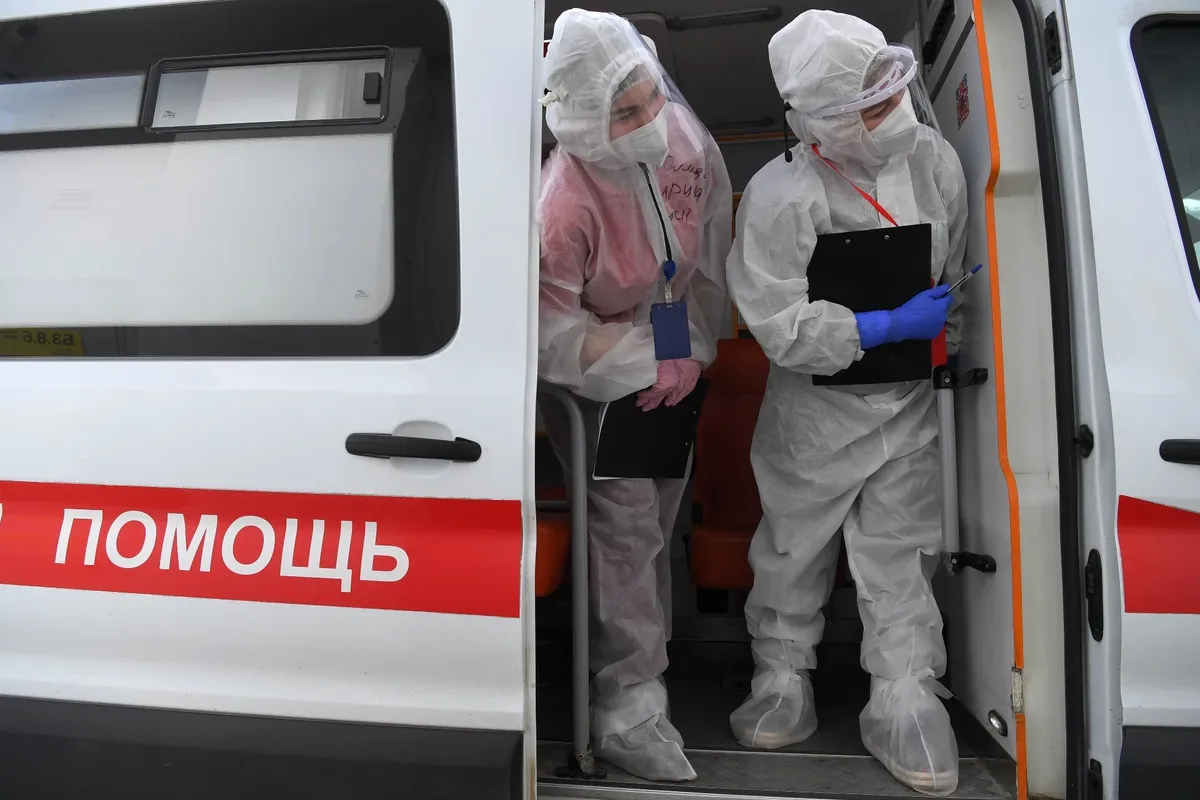
18 million residents of rural areas are at risk not to wait for an ambulance. About why - in the study of "new"
In 2016, an “arrival standard” entered into force - 20 minutes since the call. It relies on the theory of the so -called “golden hour”, during which it is possible to save a person with heart attack or stroke. In rural areas where 30% of the population of Russia lives, ambulance brigades should also come to the call within 20 minutes. We decided to check whether the Ministry of Health is observing the standard, which was approved five years ago, which settlements are located from medical facilities at a long -life distance for life and how many people are at risk.
Optimize it
According to the report of the Ministry of Health, in 2020, 83.5% of the ambulance departures were stacked in the standard - that is, the ambulance reached the patient in 20 minutes or less. However, the situation in large cities and small settlements is strikingly different. According to our calculations, 42% of residents of rural areas (18.3 million people) are forced to wait for urgent assistance for more than 20 minutes, and another 5.5% (2.4 million people) (2.4 million people) - more than an hour (“important stories”*, which analyzed not only rural areas, but also the cities).
In 20 Russian entities, most of the inhabitants of the countryside live with a 20-minute barrier from the nearest medical institution.
In the top of the anti -rating, the northern regions: Magadan, Arkhangelsk regions and Karelia.

Half of the villagers of the Magadan Region - an anti -owner of the availability of rural medicine - are forced to wait for an ambulance for more than an hour. This is more than 20 thousand people. At the same time, the region has been leading in terms of mortality from heart attack for ten years.
As we thought
To study the availability of medical organizations in rural areas, we used the base of the settlements of Russia of the project “Infrastructure of research data” and the register of medical organizations of the compulsory medical insurance fund.
By combining the registers on the name of settlements in each subject of the Russian Federation (preliminary excluding the cities), we allocated settlements in which there are state medical organizations. Further, according to geographical coordinates, we calculated the distance from each settlement with a population of more than 100 people to all settlements where there is a medical institution, and allocated the closest to everyone. In order to take into account the distance of roads, we, using the Yandex.Maters service, calculated the distance from settlements without medical organizations to the closest settlements with medical organizations.
But even if the regions comply with the standards of the Ministry of Health and the ambulance reaches the patient on time, this may not guarantee operational medical care. The cardiologist Artemy Okhotin explains: “In the big city there are multidisciplinary hospitals nearby where you can quickly deliver the patient. However, in the small provincial hospital there is no way to maintain all the services of assistance, and the patient is being taken to another hospital. Therefore, the actual time of the argument can be much larger than the time of arrival to the patient. And then this standard does not matter much. ”
The availability of medicine for rural residents primarily affected the reduction of medical institutions: from 2005 to 2018, the number of hospitals in the villages decreased by 73%. Mindrazdrazdrazdrazdrazdrazdrazdrazdrazdrav explains this by increasing the quality of medicine, which made it possible to transfer some patients to outpatient treatment, that is, to help in the clinic. Despite these statements, since 2004, the number of patients who were assisted when leaving at home or outpatiently decreased by 13%.

In 2010, all beds eliminated all the beds in the Shkinskoye hospital in the village of Krapivna of the Tula region. “There is no money to keep it, and personnel to serve them,” says the doctor Alexander Slugin. - For intensive treatment, there are enough places in the village, and there are nowhere to put the elderly who require care. Many lonely grandparents in the villages cannot get to the hospital themselves, but they need to do certain procedures, to be in a round -the -clock hospital. For such a contingent, there are not enough beds. ”
At the same time, many of the medical facilities require repair:
20% of hospitals in the country are in disrepair, and 26% of the clinic do not have hot water supply.
For low -mobility, only half of the medical institutions are available - the rest are not equipped with ramps.
In addition to places in hospitals, the healthcare system has lost 30% of the ambulance over the past 20 years. As Artemy Okhotin explains, this is due to the shortage of resources: “In order for an ambulance to work, you need to maintain at least two cars and staff that could work a day after three or at least a day in two. There are simply no people and cars in the system in order to keep their station in each village. ”

Health reform began in 2010, when a law on compulsory medical insurance was adopted. Its goal was to eliminate ineffective hospitals and redistributing funds into more modern medical institutions.
In 2019, Tatyana Golikova called the optimization of “unsuccessful”, and the Minister of Health Veronika Skvortsova said that no one has touched the systematic [medical] infrastructure since the late 1950s. ”
There are no doctors, but you are treating
57% of doctors, according to a survey of the professional community "Doctors of the Russian Federation", recognize a decrease in the availability and quality of medicine and almost 90% indicate a shortage of medical personnel. Since 2008, the number of doctors has declined by 20%, and in some regions, almost half of the specialists have left the state health system over 13 years.

In the district hospital, the village of Krapivna, according to Alexander Slugin, from 20 district therapists left 3-4 specialists: “Doctors leave for old age. University graduates come to work, but they do not cover the lack of specialists. As a result, we have 3-4 doctors for 20 sites. ”
One of the reasons for the outflow of personnel is low salaries in state medical institutions. According to a survey conducted by the Community “Doctors of the Russian Federation”, in which about 8 thousand specialists accepted, the average salary of doctors in 2017 was 42 thousand rubles. According to Alexander Slugin, specialists received a maximum of 60 thousand rubles before the pandemic.
According to the May decree of the president, the salary of a doctor should be brought up to 200% of the average salary in the subject. In 2019, before the pandemic, according to official figures, doctors received an average of 80 thousand rubles. This data cannot be called correct, since Rosstat calculates the average value - that is, if several chief doors in the region have more than 300 thousand, then this can greatly affect the average salary for the subject.
We decided to check how much doctors really get. To find out the real salaries, we studied vacancies for the position of a doctor (a cardiologist, a district doctor, etc.) of the Russian Work Service, where the employment centers publish ads. To avoid accounting for additional accruals for the work during the pandemic period, we took a salary from vacancies excluding premiums and the data of the Federal State Statistics Service for 2019 (the difference between the average salary of doctors, according to official figures, in 2019 and 2021 differs by 9 thousand rubles).
Salary from vacancies differs from official data in half: on average doctors are offered not 80, but 35 thousand rubles.

Ambulance doctors, according to vacancies, receive above average - about 43 thousand rubles. At the same time, many regions experience a lack of personnel: on average, there are 0.85 ambulances for ten thousand people, and in some regions one specialist is forced to serve more than 50 thousand people. This is five times higher than the standard established by the Ministry of Health, according to which from 6 to 10 thousand people, depending on the density of the population, should account for one ambulance team.

Some specialists go from budgetary medical institutions to the private sector. Since 2006, the volume of the market for paid medical services has grown by 30%.
If a private clinic works in the compulsory medical insurance system, then, as a rule , the provision of emergency care is not included in its tariff plan. Participants in the compulsory medical insurance provide separate services by pursuing marketing goals or receiving adequate compensation from the state. Only 8% of private clinics in Russia that work in the compulsory medical insurance system, according to the study of the British audit company Ernst & Young, provide all the services laid down on compulsory medical insurance.
Even in the regions - leaders in the amount of the attached population to private clinics - the Amur, Kostroma and Lipetsk regions - the share of “insurance” patients of private medical institutions does not exceed 7% of all insured persons.
The lack of doctors entailed a deterioration of not only accessibility, but also the quality of medicine. “If the patient cannot sign up for a doctor, this is visible. Therefore, the authorities are trying to achieve more accessibility, and what is happening after the recording does not care about anyone is very difficult to check, ”comments Artemy Okhotin.
Compensation for lack of personnel by reducing the quality of medicine is primarily associated with the order of the Ministry of Health of 2015, which allowed graduates-medical graduates to occupy the post of a district doctor without passing. A specialist in the primary link, that is, a local therapist, since 2016 can become a graduate of the medical institute after six years of study. According to Artemy Okhotin, a reform, aimed at eliminating staff deficiency, reduces the quality of medicine, since graduates are not trained without passing the residency to work as a district doctor.
“Primary link specialists are a very prestigious, low -paying job that no one wants to go to. Basically, elderly people work in such positions. Especially in small cities and villages, since young people want to work in more civilized places, ”says Okhotin. - It is very difficult to attract new people. This is an international problem, but in Russia it is solved in rather strange ways. ”
Infographics: Artem Shennikov