
Translated material
"Wolves and liars"
The Russian Orthodox Church began the invasion of Africa. What troubles are threatening the Moscow Patriarchate?
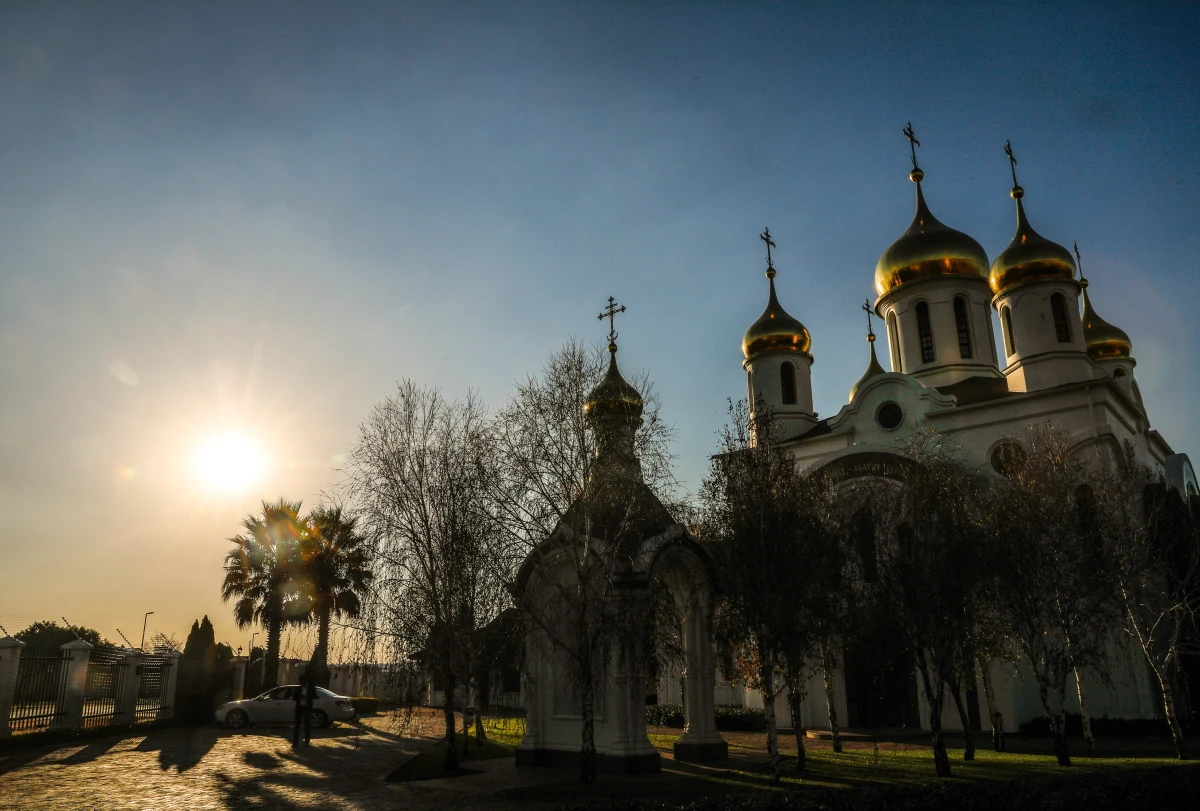
Africa as revenge for Ukraine
With such tough accusations, the leaders of the local Orthodox churches of the world have not exchanged since the time of the Ecumenical Councils of the Early University era. The reason was the decision of the ROC Synod on December 29 to open its dioceses and exarchate in Africa. In the territory, canonically belonging to the ancient Alexandrian Patriarchate, to whom the leadership of the Russian Orthodox Church declared war. Contrary to the canons, the Russian Orthodox Church accepted 102 African clergy - about 15% of the entire clergy of the Alexandrian Patriarchate.
On January 13, the Patriarch of Alexandria Theodore-a large friend of the Russian Orthodox Church (in the 1980s served and studied in Odessa)-published an emotional message . He calls the leaders of the Moscow Patriarchate “wolves and liars”, sowing the “Clote” on the African continent.
In revenge for recognition by the Alexandrian patriarchate of autocephaly (independence) of the Church of Ukraine, writes the Patriarch, the Russian Orthodox Church "violated the tradition of the Ecumenical Councils, which was respected by all the Patriarchs of the Russians to this day."
Theodore calls the ROC invasion of Africa “colonialism” and “theft” of the clergy using bribery.
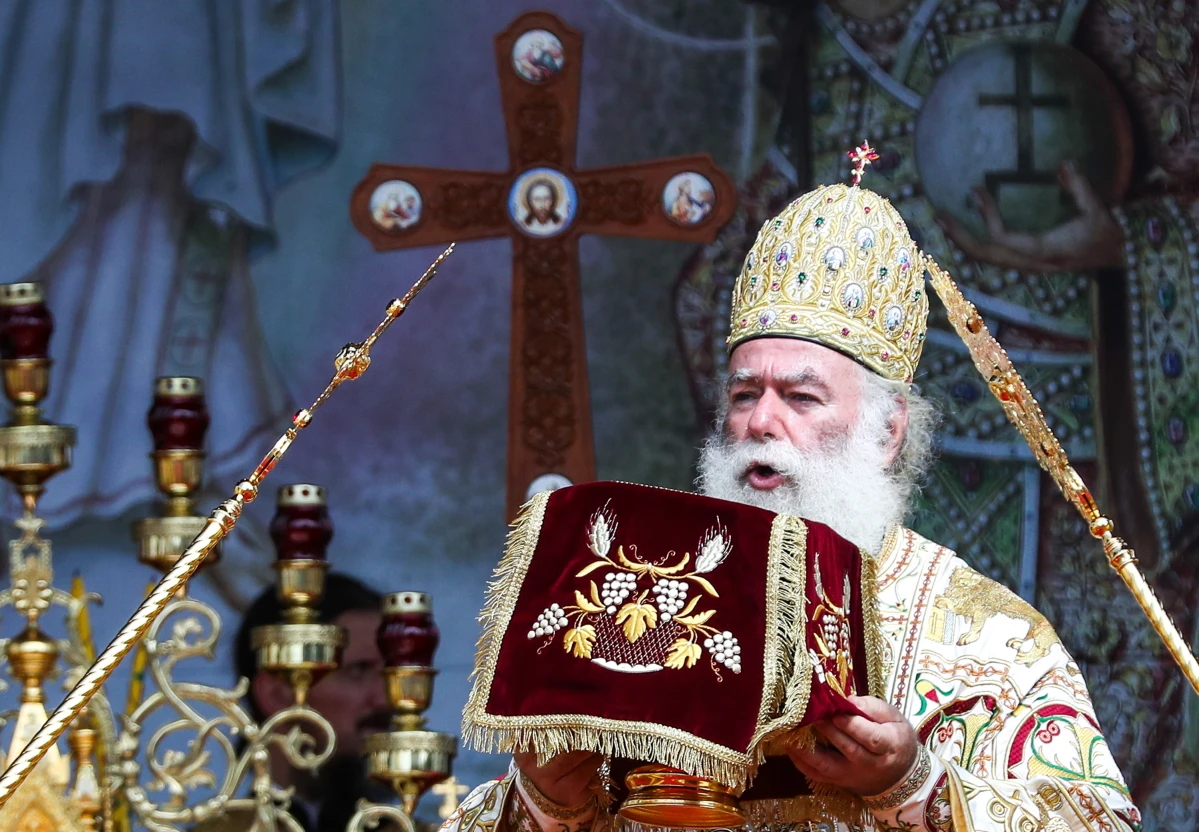
The origins of the current conflict, fraught with the new global split of the Christian world, lie in the events of 2016–2019. For more than 50 years, world Orthodoxy (including the Russian Orthodox Church) has been preparing the All -Orthodox Council, and when he finally gathered in July 2016 in Crete, the Russian Orthodox Church suddenly refused to participate in it. One of the main topics of the cathedral was a way to provide autocephaly (church independence to new local churches) and, in this context, the “Ukrainian question”. Parts of the Ukrainian Church sought autocephaly by almost the entire twentieth century, and after Ukraine gained independence, this issue rose even more acutely. Without arriving at Crete, the Russian Orthodox Church unleashed hands with the Ecumenical (Constantinople) Patriarchate, who, firstly, considers itself the only institution in Orthodoxy, to give autocephaly, and secondly, it does not recognize the jurisdiction of the Russian Orthodox Church over Ukraine, accusing Moscow of annexation of the Kyiv Metropolis of the 17th century. As a result, on January 6, 2019, the Patriarch Bartholomew gave Tomos about autocephaly of the Orthodox Church of Ukraine (PCU), and on November 8 of the same year, this act was recognized by the Alexandria Patriarch.
In response, the Russian Orthodox Church tore the canonical communication with both patriarchs, and when the Athens and Cyprus Archbishops were recognized as PCU, she acted more cunningly: she tore the communication personally with the archbishops, but began to support the provincial “opposition” bishops who spoke in Greece and in Cyprus against Ukrainian autocephaly.
The disgraced Protodiacon Andrei Kuraev draws attention to the almost complete absence of the “PR operation” of such a sensational solution to the Russian Orthodox Church Synod within Russia. The first explanations began to appear only after a long New Year's weekend. Kuraev explains this inherent in Patriarch Cyril by the state of Un Capriccio Isterico , in which the decision was made.
- no religion - only business?
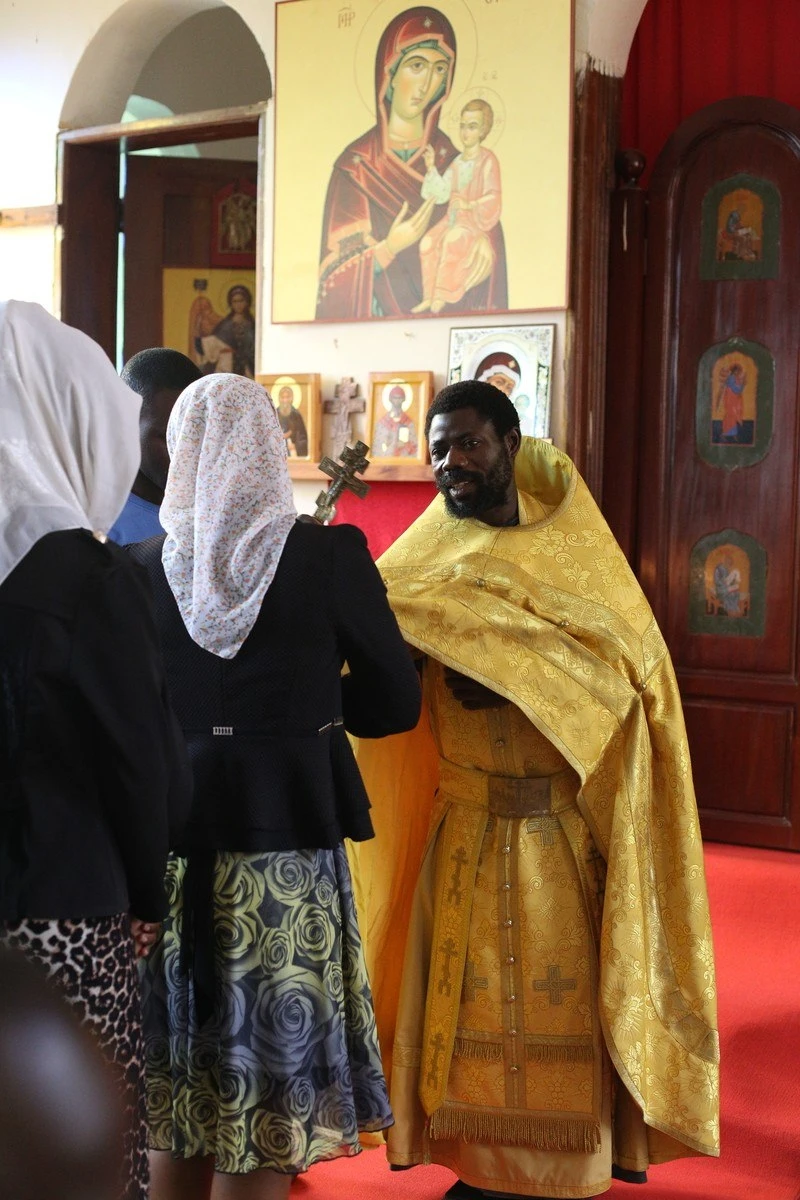
The Alexandrian Patriarchate has a reputation as the missionary church in the Orthodox world. Back in the XIX century. This patriarchy was, albeit ancient and respected, but small, uniting several Greek communities in the north of Egypt and Libya. Today it has 29 dioceses, 6 monasteries, 43 bishops and more than 700 clergy - mainly in equatorial Africa. The missionary department of the Russian Orthodox Church assures that the “vast majority of these clergymen“ want to go to the Russian Orthodox Church. ”
In the Alexandria Patriarchate, they do not share such "optimism." Metropolitan Grigory Kamerunsky assures that “the Russian Orthodox Church scored in her African ranks of schismatics and marginalists. Most of the priests who have passed to the Russian Orthodox Church are old -style ( representatives of the "alternative" Orthodox churches . - A. S. ), as well as various violators of canonical norms previously prohibited in the service or deprived of the dignity. "
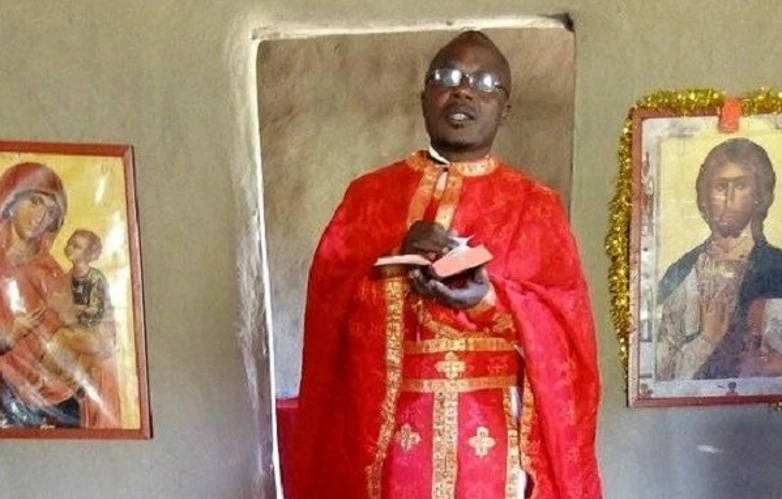
A source in Alexandria informed Novye that some African clerics adopted in the Russian Orthodox Church are simultaneously Catholics.
To understand this phenomenon, we dwell on the biography of the already late “Apostle of Orthodox” in Uganda Fr. Joachim Kimba .
Born in the family of the Anglican priest, who moved to the Alexandria Patriarchate. He studied at the Leningrad Theological Seminary and also became a priest of the Alexandria Patriarchate. In 1991, he joined the material “Synod of the opposing” IPC Greece, which in world Orthodoxy is considered schismatic. Then the opposite roll - in 1998, Joachim moves to the Antioch Catholic Church. Two years later, he returns to Orthodoxy again - to one of the small American jurisdictions. Then again the “Synod of the opposing”, then the smaller (but also richer) American jurisdiction and, finally, the “know -how” is the Russian Orthodox Old Believer Church, which had never had parishes in Africa.
Newly converted Orthodox Africans are a specific phenomenon. Of course, there are sincerely believed among them, but
Often the choice of denomination depends on financial motives, and the same priest can belong to two, three or more churches of completely different traditions.
With the laity is even more difficult. Of course, the situation of African Christians (some of which are also adherents of traditional tribal cults) and they need help. But is it ethical to mix the humanitarian mission with speculation on African poverty due to revenge or political dividends?
How to justify aggression
The special honor (second place after Constantinople), which is used by the Alexandrian Church in the Orthodox world, is due to the fact that in the 1st century. Its founder was the evangelist Mark, the author of the second of the four canonical gospels. Alexandria played a key role in the dogmatic disputes of the 4th - 5th centuries, in which Orthodoxy has crystallized. This church is mentioned at least in the three rules of universal cathedrals, including the 6th rule of the Ith Ecumenical Council of 325. There is a link to “ancient customs”, according to which the jurisdiction of Alexandria extends to Egypt, Libya and Pentapol. Then the custom was born to call the Patriarch of Alexandria "a pope, the judgment of the universe and the thirteenth apostle." The increase in “and all Africa” was added to the title only at the beginning of the twentieth century, the Russian Orthodox Church almost immediately recognized it and never disputed it. Other local churches also did not claim jurisdiction of any regions of Africa.
The charter of the Russian Orthodox Church contains a list of 16 states whose Orthodox citizens are “obliged” to be in its jurisdiction. Not a single African state is in the list. True, in 2000, on the initiative of then Metropolitan Kirill, the charter was added that the jurisdiction of the Russian Orthodox Church applies "to the Orthodox, living in other countries voluntarily included in it." But the same
Cyril is considered the author of the term “canonical territory”, which he always insisted on the inviolability of the boundaries of which he always insisted. Until the invasion of Africa. The reduction of these boundaries opens up the real “Pandora box”, threatening the decay of the Russian Orthodox Church.
The priest Georgy Maksimov is trying to condemn the invasion of Africa, but it turns out unconvincing. It recalls that according to the rules of the Ecumenical Councils, only Egypt, Libya and Ethiopia enter the Alexandria Patriarchate. So, the rest of Africa may well belong to the Russian Orthodox Church. Suppose. But why, in this case, the ROC Synod established the North African diocese in Cairo? Isn't that Egypt? The second apologetic argument - "entering into communication with schismatics subjected to excommunication from the church communication of the very one who entered." By “schismatics” here is meant by the PCU, the recognition of which made the “schismatic” and the Alexandrian Patriarch. But all the local churches, except the Russian Orthodox Church, do not think so and do not break communication with it. As well as the Russian Orthodox Church does not break communication with these local churches.
Zone of military-strategic interests
Military rhetoric, accompanying the invasion of the Russian Orthodox Church in Africa, is in harmony with the image of the first “African exarch” - a metropolitan (from January 7) Leonid (Gorbachev) .
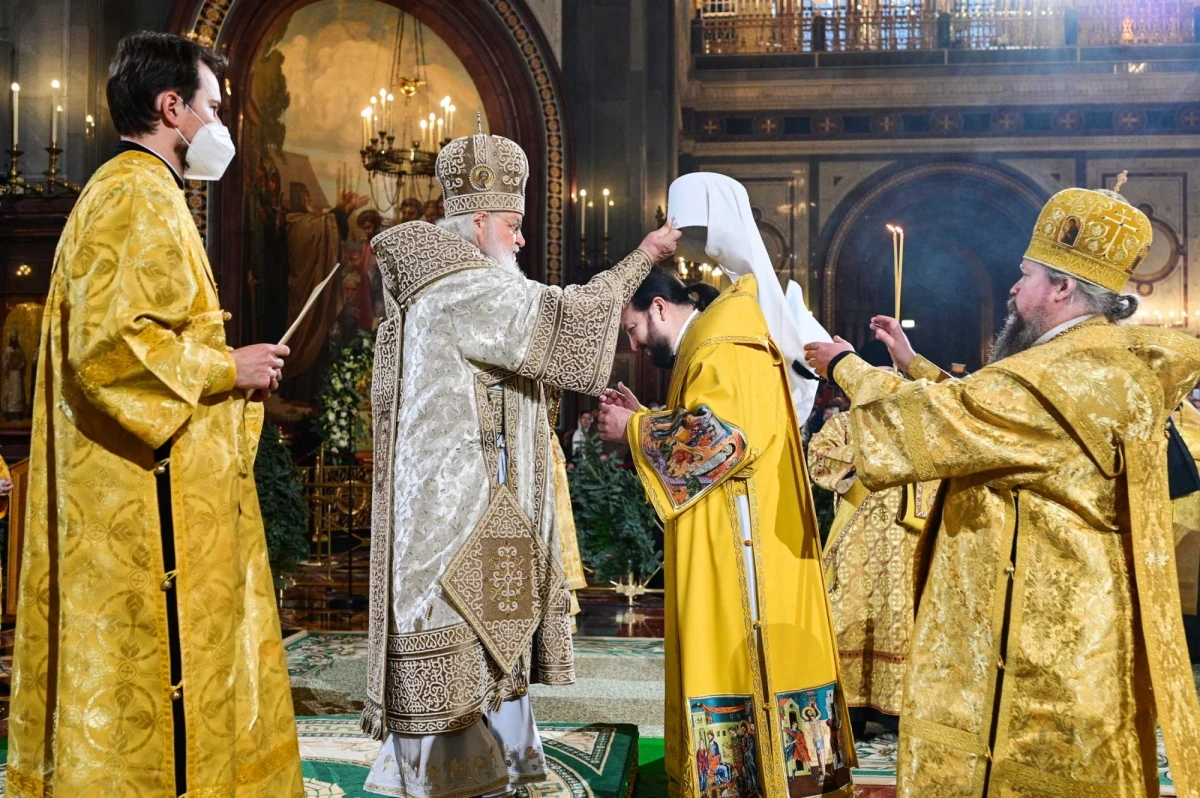
He began his career after school with a laboratory assistant of the Department of Dynamics of Flights at the Air Force School in Krasnodar, then served in the army, and since 1997 he worked in the Department of Interaction with the Armed Forces of the Moscow Patriarchate. In this capacity, he went on a business trip to the Russian airborne brigade in Bosnia and Herzegovina. Having moved to the department of external church ties, he was appointed to the post of rector of the ROC in Alexandria, where he extremely negatively perceived the Arab Spring. In 2013, he was ordained Bishop Buenos Aires and South-American, but three years later, he was recalled by the homeland on the eve of the “cocaine case”, which was involved in Moral (Mecenas Ortodoxos En america Latin-“Russian Orthodox philanthropists in Latin America”). Then the Argentine authorities seized more than 362 kg of drugs from the backbone of the school at the Embassy of the Russian Federation and put forward suspicions against members of the Orthodox organization. At the new department - in Vladikavkaz - Leonid came into conflict with the head of North Ossetia Vyacheslav Bitarov and the national intelligentsia - in his opinion, they revived pagan customs and did not help the Russian Orthodox Church. Having moved to Moscow, he became Deputy Metropolitan Hilarion to the Assembly and defended his master's work on the persecution of Christians in Africa at the University of Friendship of Peoples.
Exarch's plans are general.
“Believe me, the matter will not. Now the development of a full -scale program of not only the development of parishes, but also the full presence of the Russian Orthodox Church on the continent, including the liturgical, educational, social, humanitarian components, ”Leonid said on January 12. He added that the Russian Orthodox Church "has philanthropists" who "from their bounties" will support the "Russian mission in Africa." A source in the Alexandrian Patriarchate clarified that the Russian Orthodox Church offers a black salary to the priests four times more than their current dioceses. The exarch promises not to be limited to Africa, but to increase the expansion of the Russian Orthodox Church around the world, where the Orthodox "refuse to associate themselves with a split."
A complete list of African priests who have passed to the Russian Orthodox Church has not yet been published. It is only said that they serve in eight states. The Russian Foreign Ministry maintains intensive contacts “at least 20 countries of the continent. Since the Soviet era, the parishes of the Russian Orthodox Church in the far abroad have established themselves as ideal conspiracy points; Besides,
“On the church line” we can solve a lot of issues that are inconveniently solved by diplomatic or business channels ...
What next?
The Bishop Cathedral of the Alexandrian Patriarchate, held on January 10–12, initiated the convocation of the Sinaxis of the Pentarchy, that is, the collections of the five Primate of the most authoritative official Orthodox churches - Constantinople, Alexandria, Antioch, Jerusalem and Cyprus. Its goal is to develop "response measures for attempts by the Russian Orthodox Church to destroy the centuries -old canonical structure of the Orthodox tradition." According to the former assistant Patriarch Kirill, and now the university teacher in Los Angeles, Archimandrite Kirill (Govoruna), the main goal of Sinaxis is “the trial of hierarchs and clergy of the Russian Orthodox Church, who will try to translate the synodal decision in Africa” and “over the particularly talkative hierarchs of the Russian Orthodox Church, which erected a public blasphemy to the ancients Patriarchs ... The chain reaction of events can accelerate, and the results in their significance will compete with the effects of the reformation. " If the Pentarchy is judged by the Russian Orthodox Church, then the Moscow Patriarchate, “playing ahead of schedule”, will excommunicate from the church and anathematize all participants in such a court.
It is sad that to the destruction of the centuries-old structure of world Orthodoxy, not even some high-religious or moral-disagreements, but the primitive projection of the "large" geopolitics of the Kremlin for church affairs.
Before our eyes, the eternal is sacrificed to the temporary: if Russia is “in the ring of enemies”, then the Russian Orthodox Church is in a hurry to go into isolation from the rest of the Orthodox world, conspirally subordinate to the “Washington Central Committee”. But setting up other local churches against himself, the Russian Orthodox Church runs the risk of encountering both the “war of compromises”, which will further undermine its reputation, and with the collapse of its own “canonical territory”. Is this a worthy fee for a hundred African clergy with an incomprehensible canonical status?