
Translated material
Panorama of one dream
The exhibition "peace and joy" in the St. Petersburg "arena" recalls how life ends in Eden
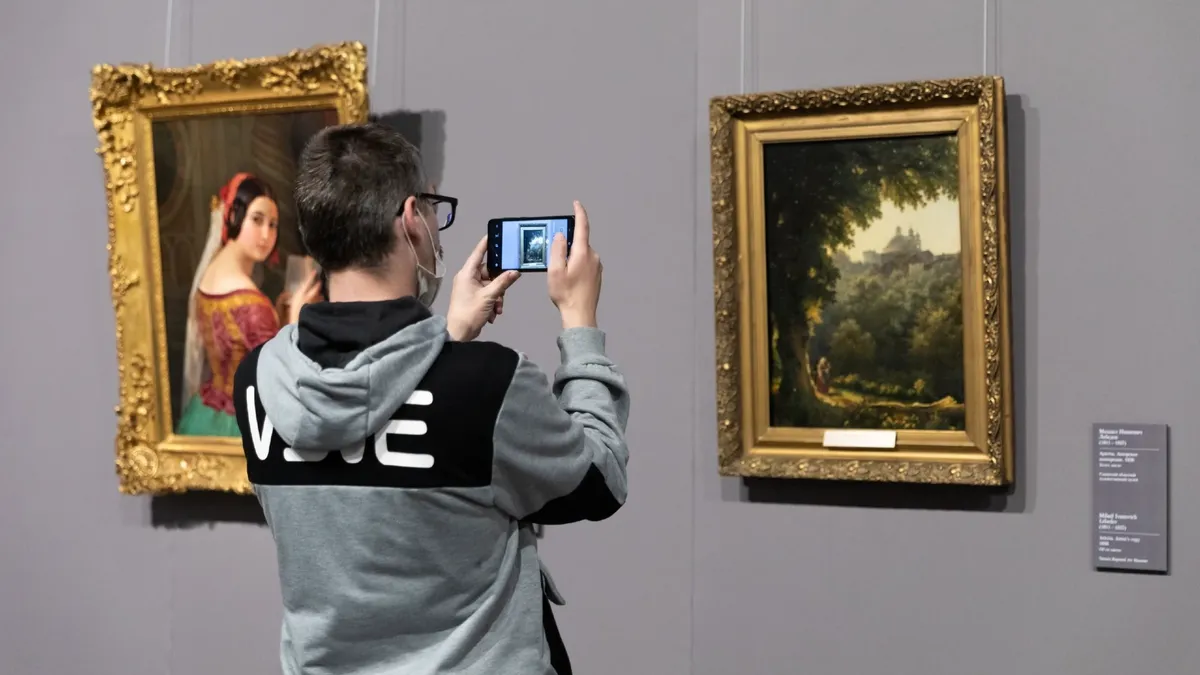
The nineteenth century from today's perspective seems to be a refuge for happy people. Everyone will imagine himself a nobleman on the estate on the banks of a large river, or a traveler that opens Sorrento and Saxony, or, at worst, of St. Petersburg Lovelass, Lorning the Parater. Few people will remember that such citizens were less than two percent of the total number of the imperial population and the fate of the soldier in a dusty steppe, servants in the tavern on the Siberian highway or, the Lord, the serf was statistically more often.
The large exhibition "peace and joy", opened in the St. Petersburg "arena", welcomes escapism in its various manifestations. Already in the first hall of the audience, two types of estates of Prince Alexander Borisovich Kurakin (1752–1818) Nadezhdino in the Saratov province, now Penza region, where he went upon the command of Catherine II, dissatisfied with his excessive proximity with Pavel and found a reason to refer to his Freemasonry. In exile, he lived for 14 years in the hope of lifting the disgrace - in fact, the estate was at first Borisoglebsky, Kurakin renamed him in Nadezhdino, because, although he was swearing, he was afraid to stay here forever.
Excessing excesses
The prince did not lose time, indulged in his memories of his many European travels with the heir and tried to materialize the aesthetics of European courtyards in the layout of the park and collecting art objects, the maintenance of two orchestras and an extract for peasants from abroad of music and painting teachers. As Philip Wigel, who was growing in the neighborhood, recalled, “in his magnificent solitude he created himself, like the courtyards he visited, also something similar to the yard. Absolutely poor nobles for a large fee took his posts of the main palace managers, even stalmaster and ceremonies. <...> Every day, even on weekdays, his music rattled at the table, and on Sundays and holidays there were large exits; The distribution of time, affairs, like fun, was subordinated to strict order and etiquette. <...> He enjoyed and was tormented by the memories of trianon and Maria Antoinette, dedicated her a wooden temple and called her a long alley leading to him. ” There was also a temple of patience - another self -improving about evil rock and faith in change. Other temples reminded of the parks of Pavlovsk and Gatchina - it was to Gatchina, the heir, Kurakin sent letters with a description of the species from his own window, designed to convince himself rather that life was being established.
The bachelor remained a component barin, survived, to the displeasure of the local clergy, 70 children, some of them were exhausted by Baron's titles: this is how the Dynasties of the Vrevsky andian compassion appeared in Russia. Surely it would have been more, but Catherine died, returned to Petersburg. A brilliant career, the position of vice-chancellor, the embassy duties in Vienna and Paris began (before the start of the war of 1812, and if it were not for the injuries received during a fire at the ball on the occasion of the marriage of Napoleon, the state would continue to continue).
Nadezhdino is an ideal example of how disgraced nobles retains self -esteem, constructing a parallel world. If the authorities punishes without rash and does not seek to finish off the defeated, this may be finances. Most got books and landscapes, it is no coincidence that the household genre and the types of nature form the basis of the exhibition on Isaac's Square.
Statistics and around
In total, the works of more than a hundred authors are collected here. From Vladimir Borovikovsky and Vasily Tropinin to Mikhail Nesterov and Viktor Borisov-Musatov. Painting and graphics were selected from the funds of almost forty museums, from Tambov to Petrozavodsk, from Nizhny to Kislovodsk, where the memorial museum-estate of the artist Nikolai Yaroshenko is located. There is also a gas, forever close to us Minsk.
As a result of the impressive preparatory work, the Manege collected a lot of amazing. So, a portrait of Catherine Stolypina’s brush of the first artist-Chechen, the 19th century, Peter Zakharov-Chechens, arrived from the capital of Buryatia. Those who are depicted on the portrait were installed only in 2018, when the Moscow Honey researcher Shakhbieva discovered the Litography of Zakharov-Chechen with a portrait repeating the picture from Ulan-Ude in the Dmitrov Museum. A rare work of Peter Zabolotsky was brought from Yekaterinburg, capturing a “girl with a cigarette” in the 1850s. And the Moscow Museum of Tropinin shows the Tropininsky "Girl with the Grow of Roses." She disappeared in Alupka during the war, where the Russian Museum brought her to the exhibition. Then, the collector Felix Vishnevsky found it in one of the antique stores (his meeting became the basis of the Tropinin Museum), and in 2003 the Russian museum officially handed over the canvas to Muscovites.
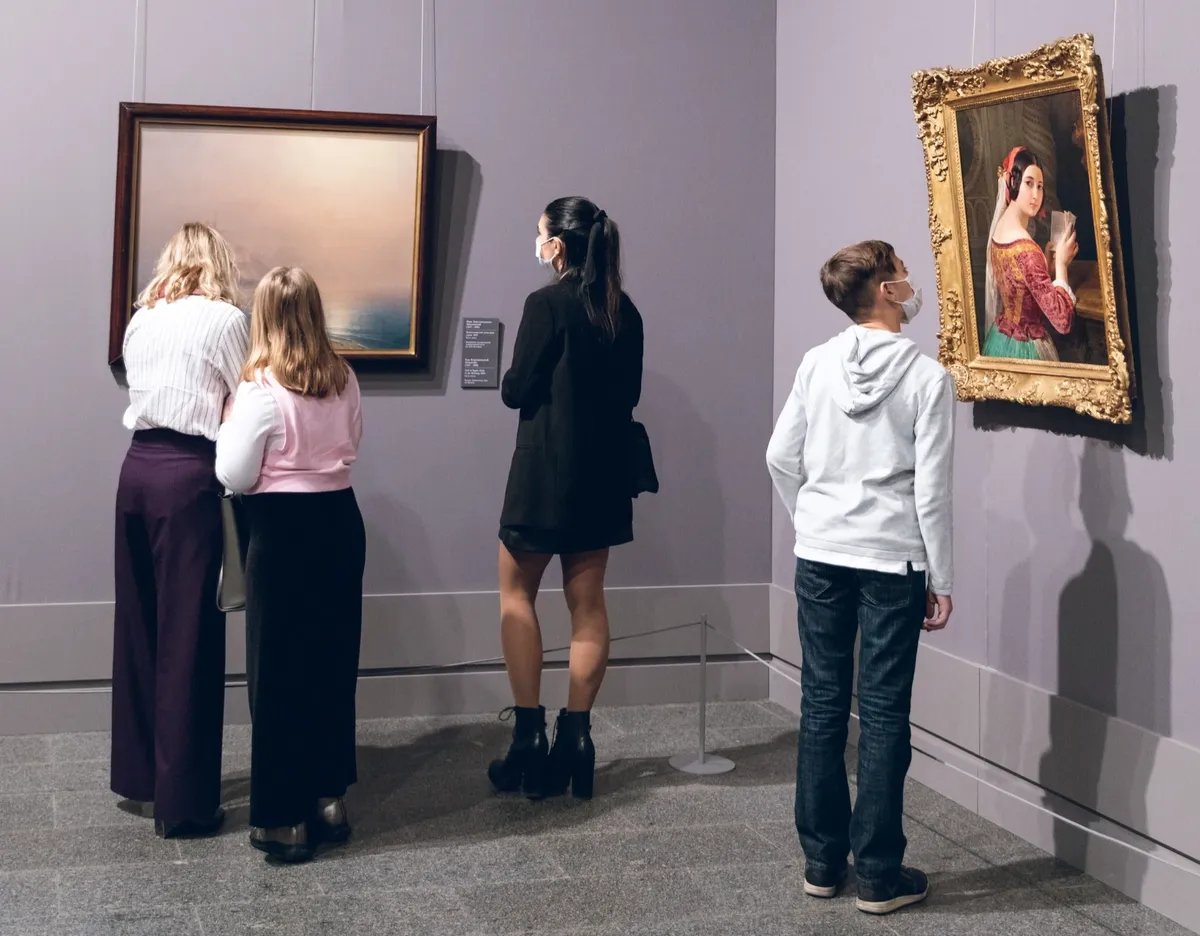
Someone generally first issued works for the exhibition and, as the curator of the project Semen Mikhailovsky says, literally learned to draw up the necessary documents on the move. But not only this turns into an event an exhibition spreading on two floors.
The Bel Paese Hall is about the idyll of the “beautiful country”, as Italians usually call Italians, “La NATURA” - about the triumph of nature, “russe” - it is clear that the most ironic chapter, although the rest are not without impressions, and finally, “la vie privée”, private life, the last person in the world of great history and unclear and unclear and unclear inhumane politics.
Burglaki, the people's veins and the Decembrists who worshiped them are left behind the walls, without them, peace is more joyful. The organizers failed to get the paintings of Venetianov and his students, at the same time in Moscow there is their retrospective, and the gingerbread, the poet sang, is always not enough for everyone. This is annoying: a Russian Bidermaier was built on the Venetian myth, without it quite frail and not reaching the European, primarily Austrian, the heights of the genre.
Demand dictates the proposal, and our art market was much more modest in size, and potential customers of such painting were smaller, since instead of a stronger philistine, serfdom triumphed, inhibiting the development of not only industry, but also art.
Musical Nepauza
And the landscapes, and still lifes, and the romantic type of young lady behind the book or by the window are examples of how to run from external reality to your own world. But dreams, ideas and conversations are no less dangerous than access to the square, because the abundance of reading in portraits is perceived not only as the need to occupy a model, but also a dream of the world of dreams. It is difficult to write about them, which does not justify, however, the stinginess of explanatory texts in the halls. There are so many works that without explanation, not everyone will see in the “Moonnaya Night. Open Borisov-Musatov, a subtle rhyme to the “window” of Alexander Vernik-between them for almost a century of way from optimism to quiet depression.
The public likes clarifications, and not always audio guides - they have a bet in the “arena” - the written text is fully replaced. To some of the institute, the textbook is nicer than the lecturer, and at the same time the task is to look and at the same time. In St. Petersburg, the choice is small: you listen to an audio guide or music of Anton Batagov, in the halls it sounds non-stop.
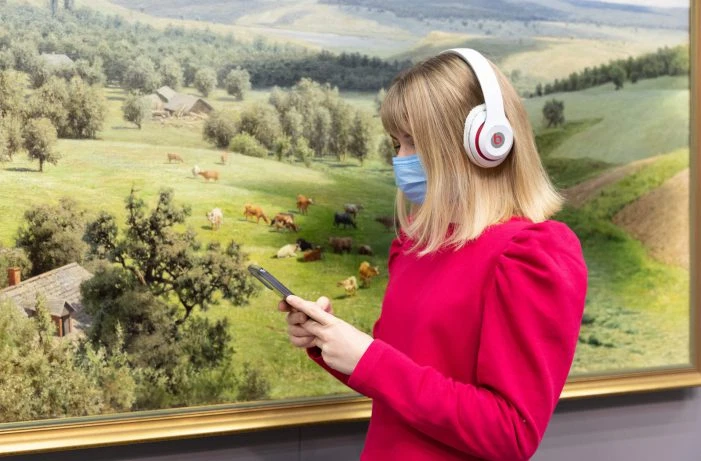
It seems that the Manege decided to make the musical accompaniment of the expositions with their signature sign. On the previous blockbuster dedicated to Russian sculpture, they sang continuously: the work of the sculptors was tied with the opera, looked, listened almost without effort.
The meditative music of the practicing Buddhism of Batagov is good, but the conflict with hearing threatens vision. It is just right to start sessions with and without music - for those who appreciate silence.
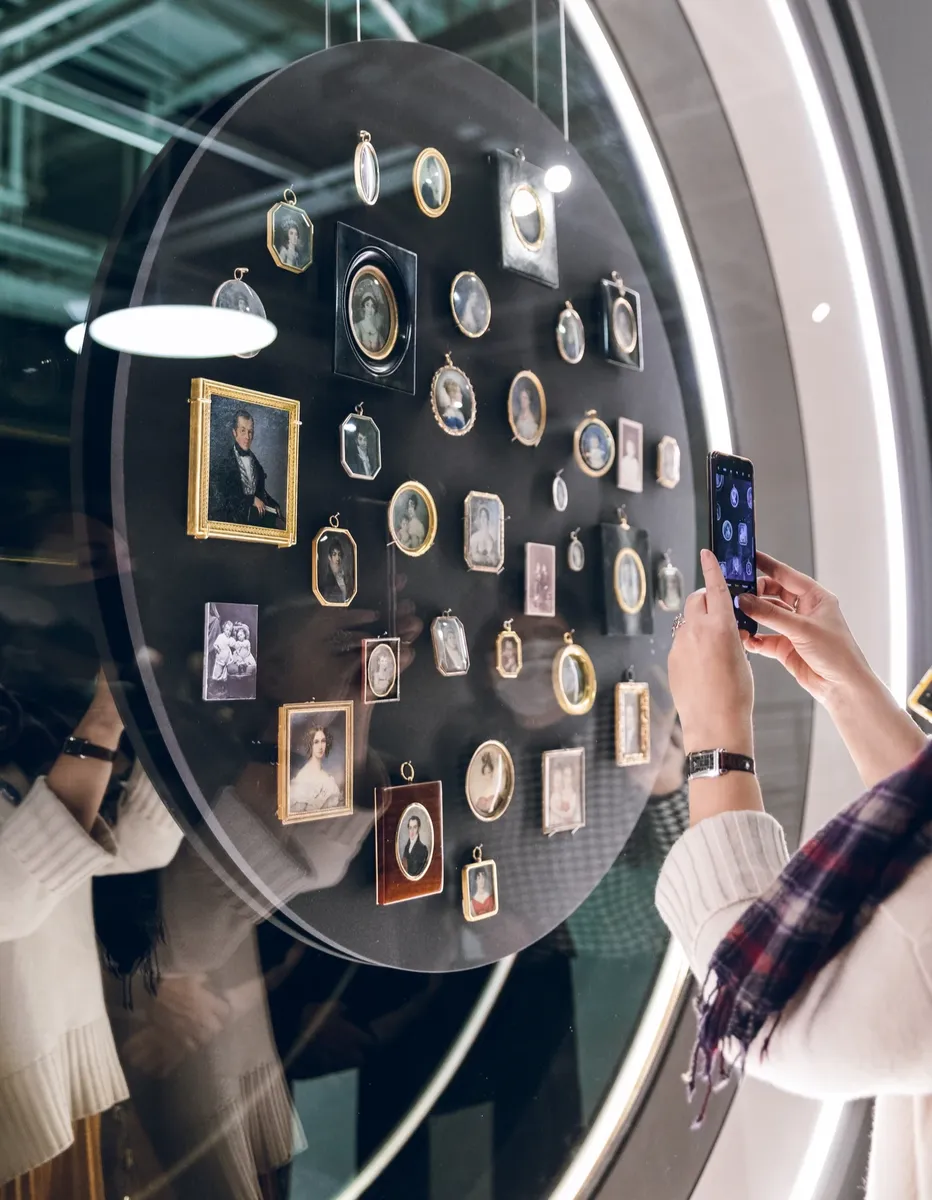
History loves a fork, including the choice of how to absorb art. The final tondo, composed of 35 miniature portraits, someone can run, and someone to consider in detail. And then two similar children's photo portraits will be found. One is the future emperor Nikolai, the other is Volodya Ulyanov.
It is easy to comment on the obvious, incredible - outside rest and joy.