
Translated material
"We are not terrorists." Ivan Zhdanov about blocking accounts to the supporters of Navalny
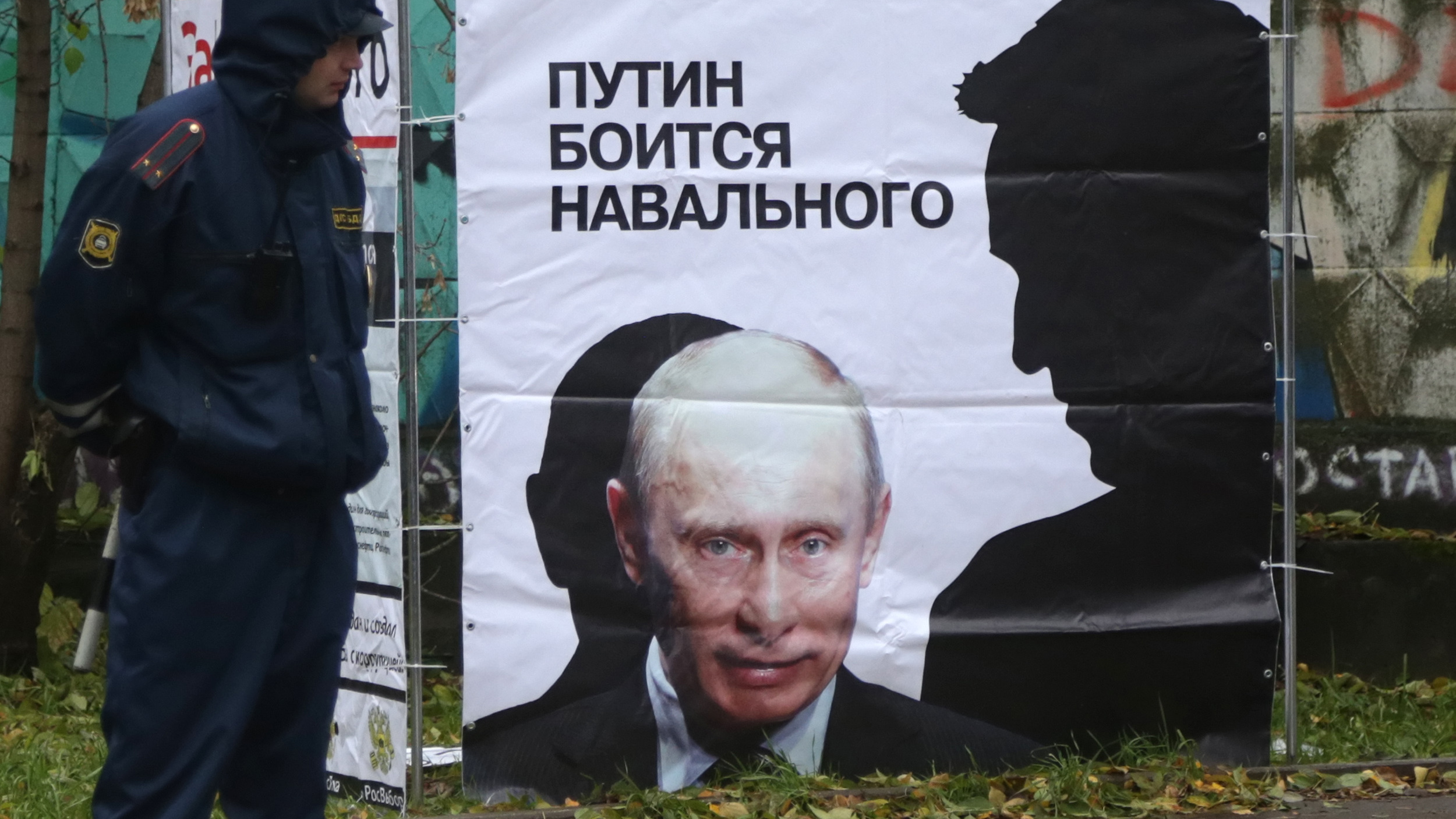
On January 14, it became known that Russian opposition politicians Ivan Zhdanov and Leonid Volkov were included in the list of terrorists and extremists of Rosfinmonitoring. Staying in this list means blocking accounts, arrest on property and deprivation of free access to the banking sector - there can be neither cards, nor accounts, nor loans. Considering that the criminal case on which Volkov and Zhdanov is persecuted, one way or another applies to most supporters of Alexei Navalny, this new repressive practice can become mass.
A criminal case is being investigated against Ivan Zhdanov and Leonid Volkov under Article 282.1 of the Criminal Code - "Organization of the extremist community." Last summer, the Moscow City Court was recognized by the Fund of Corruption, its legal successor, the Foundation for the Protection of the Rights of Citizens (was created after the liquidation of the FBC, against whose leaders were filed for tens of millions of rubles) and the headquarters of Alexei Navalny.
FBK was created in 2011 and before its liquidation managed to release more than 80 anti -corruption investigations about high -ranking Russian officials and oligarchs. The last - and the most popular, more than 119 million views - was the film "Palace for Putin. The story of the largest bribe." He went out already when Alexei Navalny himself was in prison. A year ago, January 17, 2021, he returned to Russia after poisoning and was detained. Navalny was replaced by a real sentence of conditional punishment in the Yves Rocher case, although the verdict on it was already challenged in the European Court of Human Rights.
The headquarters of Alexei Navalny (also recognized by the court of an extremist organization and banned) have worked since 2017 in almost all regions of the country, and about half of them continued to activities until 2021. It was the headquarters of Navalny that became the organizers of the most massive protests in the country. In the wake of last year's January rallies, criminal cases against activists are still investigated - in the so -called. "Palace business", excited in St. Petersburg, dozens of defendants.
Most of the leaders of the Navalny movement, as well as many of the ex-coordinators of the headquarters, left Russia. And those who remained are subjected to criminal prosecution. In Ufa, under arrest, the headquarters of the headquarters Lilia Chanysheva sits. In Tomsk, the ban on certain actions is Ksenia Fadeeva, a deputy of the Tomsk City Duma.
The last director of the FBK, lawyer Ivan Zhdanov, told the North. Real to the correspondent, how much the new repressive practice against supporters of Alexei Navalny can become and whether it scares potential victims.
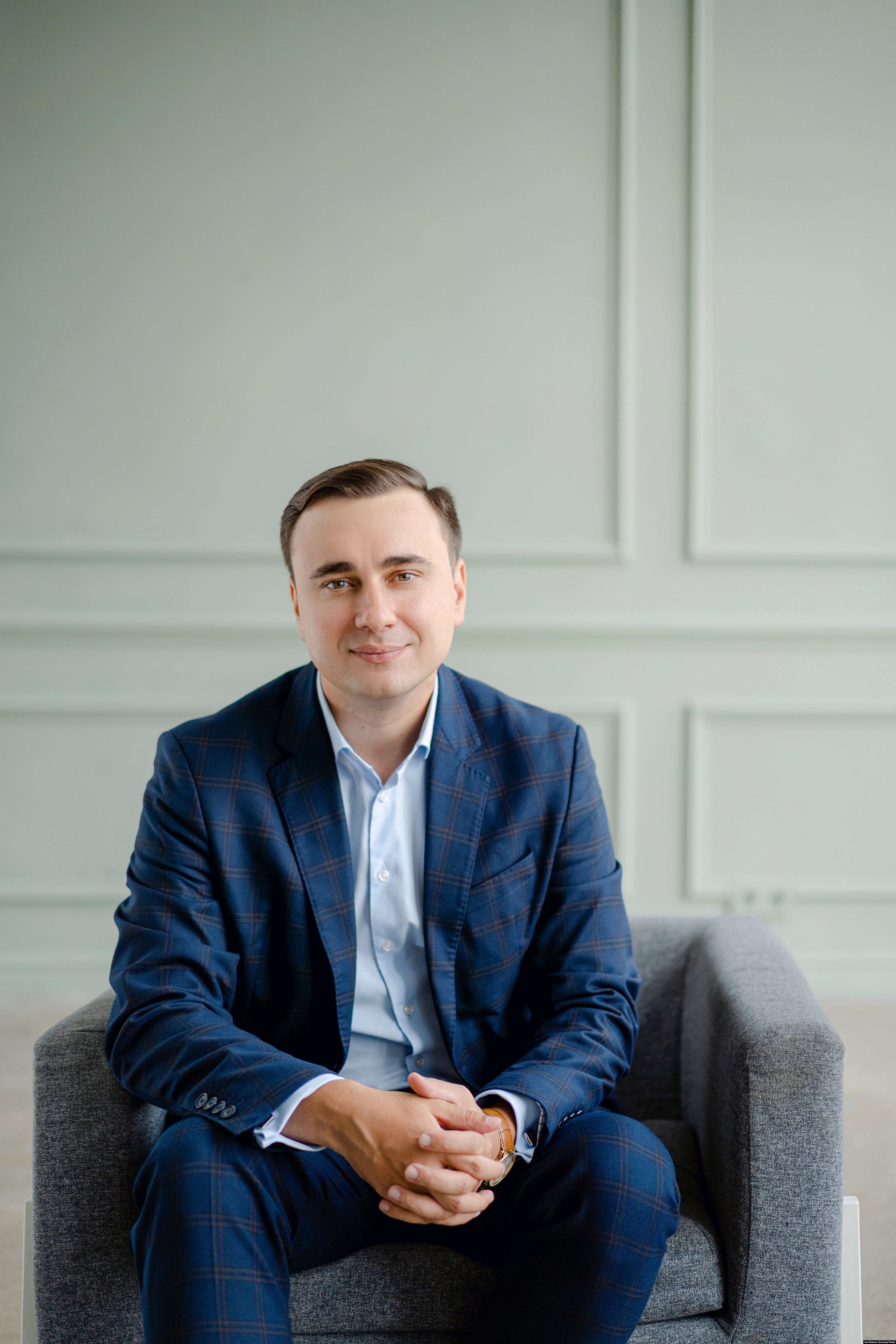
- Given that you are abroad, how painful this block of accounts turned out to be?
- This measure practically did not hit us, and here it is not even important where I am. Rather, this is a factor that since 2019 we have blocked all our accounts, and we are used to either bypassing blocking or using cash. Thanks to criminal cases, we learned to live without bank cards, so the inclusion in the list of terrorists did not affect us much in a practical sense. This list already has 12 thousand people. But there is a certain border when they go to public politicians. Still, we remain in the political field. After they introduced us to the list of extremists and terrorists, I am afraid that this will become a completely mass practice. Of course, there are fears of this nature. And secondly, the terrorists are real-they really exist, they commit terrorist attacks. And when politicians, activists, journalists in the same list and terrorists are mixed, then, of course, the level of perception of this terrorist threat is reduced. People think that this is probably not terrorists, but maybe the same politicians. Now many jokes and memes are published about the fact that we are not real terrorists, but Lavrov accepts real terrorists ( we are talking about the Taliban movement, whose representatives of the Foreign Minister Sergei Lavrov met in October 2021. - SR ). I am to the fact that the perception of terrorism as a dangerous problem is blurred and reduced. In this regard, I see another problem - this is the problem of perception of terrorism as a real threat.
- In a criminal case that is being investigated by you and Leonid Volkov (creation of an extremist community), there are other defendants. Is there a threat to become "terrorists" over them?
- Now there is a large criminal case that includes many articles: financing of extremism, an extremist community, even such exotic articles as involving minors in participation in public events. Even the article that has been hanging over the FBK since 2019, to legalize the funds received by criminal means, it is also there. Now this is a really huge thing, in which a large number of participants. Basically, they are all witnesses. Nevertheless, they are listed there in large lists, after a comma after Navalny, Volkov, Zhdanov. And therefore, there is a serious risk that the security forces will include more people from this case. I do not think that everyone is absolutely, because there are (and this is obvious even for them) people who have nothing to do with the corruption fund at all. Nevertheless, formally, they can enter the list of everyone in a row - this is completely possible, yes.
-That is, if a person earlier, for example, in the field of view of the EE center, if he already has any administrative protocols, then welcome to the list?
“But I don't think this happens so fast.” The criminal case is still being investigated by a unified group of the Central GSU, and it is clear that the group also has limited resources in order to include each at the request of some regional eshniks ( operatives of the Center for the “E” of the Ministry of Internal Affairs of Russia, who are engaged in extremist crimes.-SR ). Therefore, I do not think that it is so simple, but those who have already appeared in the case can certainly face problems.
- A list of people who are in danger, open or closed?
- I think that these are all people who have been searches in 2019, there were a lot of them. And I think that all these people are also actually accustomed to locks. Because all of the legalization case fell under locks under the 174th article (Article 174 of the Criminal Code of the Russian Federation: legalization (laundering) of funds or other property acquired by other persons by criminal means.-SR) . I think everyone understands who is at risk. We have all sorts of warning systems. But we cannot directly contact people, because we are jealous of our former employees who are in Russia.
- Is this a coincidence that the inclusion in the list of Rosfinmonitoring occurred immediately after we learned about the upcoming film about the poisoning of Alexei Navalny?
- Well, we, employees of the Fund for the fight against corruption, basically had nothing to do with the film. Therefore, there is no direct connection, but we drew attention to two details. Previously, Rosfinmonitoring published his lists on Thursdays, and it is unusual that he suddenly suffered publication on Friday. And now, perhaps, this will become the same tradition as the Ministry of Justice on Fridays declares foreign agents. Of course, for them, information about this film is extremely unpleasant, all Thursday all wrote that there would be such a film, and probably it would be logical to kill this agenda. Of course, here you can trace their ordinary love to interrupt the agenda of independent media with some such reasons.
- It is very curious to learn more about this film ...
- You know, I am constrained by all sorts of agreements, we cannot say anything. That is, I am even constrained, and I don’t know anything about the film, and Masha of the singers is constrained and knows something. I myself am interested in, I have not seen the film.
- After the arrest of Lilia, Chanysheva, Leonid Volkov wrote on Facebook that all coordinators were made an offer to help evacuated from Russia. Is it planned to repeat such a proposal now or extend to a wider circle of supporters?
- It makes no sense to repeat it, because we always watch an individual situation. If a person has a high risk, then, of course, we help him evacuated. High risk is obviously completely instituted criminal proceedings or simply a special zeal of regional law enforcement officers. It is clear that there is a basic attitude that we are helping, but it is impossible to take out all one and a half thousand people who during these three years had at least some relation to the corruption fund, to the headquarters of Alexei Navalny. When a person asks for such assistance, we either help ourselves or ask for organizations that help with export, and mainly help everyone. It's just that there is another problem: there are people who are at a serious risk, but do not want to leave. They don’t want, moreover, for various reasons-someone has a dog, someone has a house or something else, and it seems that it is more important. Although we see that a person has a high risk, and we themselves say: probably, you would better leave, but the person says: no, I will stay, and that’s it.
- At what stage is it now disputed by the decision of the Moscow City Court on the recognition of headquarters and the FBK with extremist organizations?
- We have passed almost all instances. We still have a cassation, but from the very first instance we immediately filed a complaint with the European Court of Human Rights, even before the decision finally entered into force. And the European court accepted the complaint, assigned the number and said: and then inform in the course of the case what stages you are passing. All this is a little unusual. As a rule, if you file after the first instance, they return the complaint to you, and here, understanding the importance of the case and its application [in further repressive practice], now, before entering into force, the European court has gone a different path. Very soon, we simply inform the court that we have passed the cassation, and there will already be some kind of movement on the complaint. Maybe in an accelerated manner, because we report, including about criminal cases. From the very beginning, we said that the decision to recognize the Fund for the fight against corruption as an extremist organization would be the beginning of mass political persecution. So it is, people are planted, people are deprived of suffrage and the opportunity to use accounts. And this becomes a mass phenomenon.
- An example of Kazakhstan showed how important it is when there is an understandable subject of negotiations by protesters. And before the defeat of the headquarters, it was the political organization of Alexei Navalny that was perceived as such a potential negotiator. Now, after the evacuation of most supporters abroad, is this potential preserved or will have to look for some new power?
- We remain the organization that continues to influence Russian politics and engage in Russian politics, wherever we are. And in this regard, we remain Russian politicians and try to be them, I hope, so far it turns out. We are not doing other matters, this is our professional work. Of course, given any such event, according to the type of Kazakhstan, Belarus, the regime, of course, will be eliminated the first thing to be eliminated by those political entities that can subsequently become the subject of negotiations. I hope that we showed this year that we continue our investigative activity, despite the fact that many of us were already abroad at that time, we still organized protests. Of course, some other force may appear, another subject of negotiations. This is quite normal. There is no monopoly. But I hope that we remain in the Russian political space. We are an organization that is not separated from Russia, regardless of whatever point in the world we are.