
Translated material
"My film is political"
Audrey sofa shot a film about an abortion and received the main award of Venice for him. We talked to her before the Russian premiere
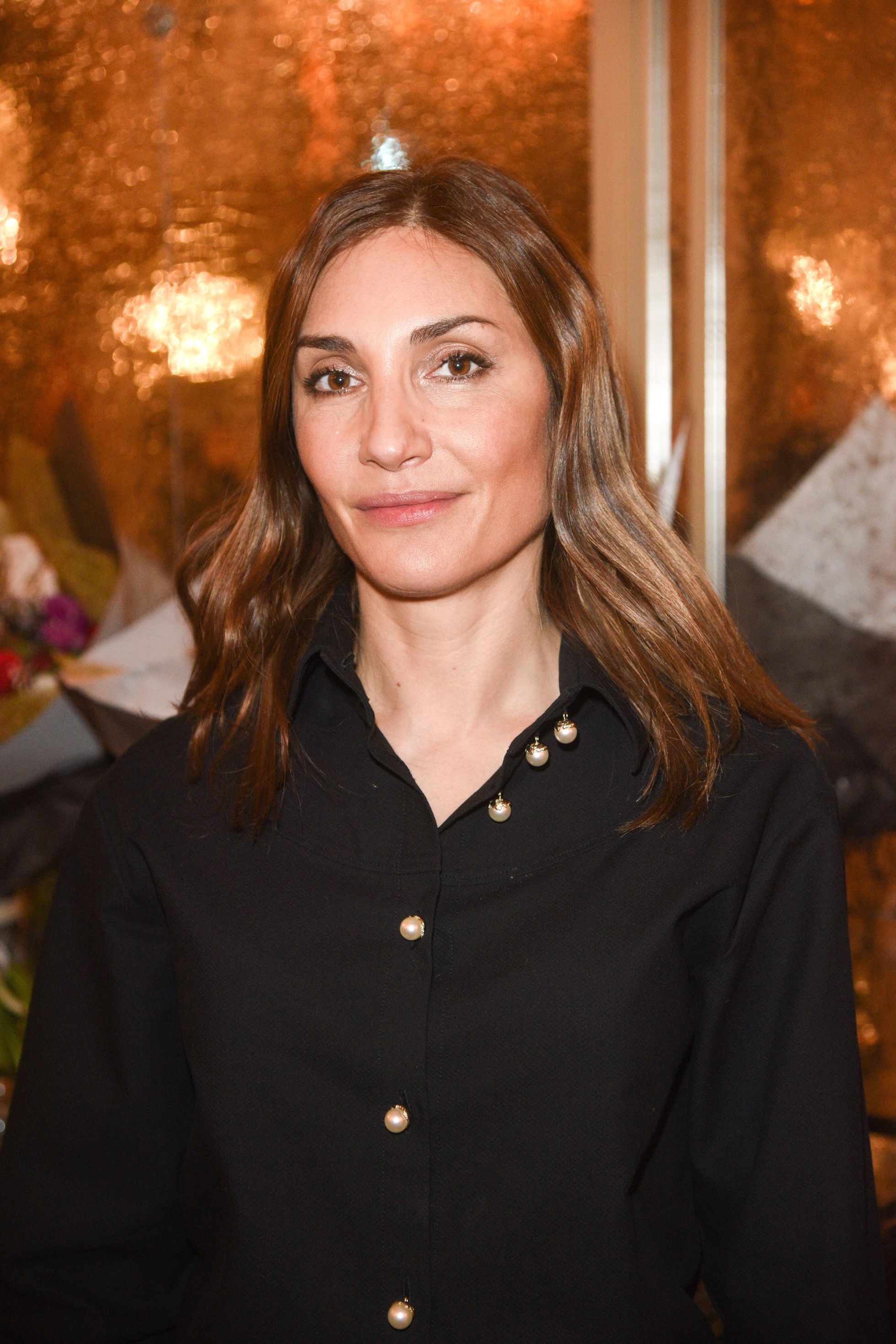
The French journalist, writer and director Audrey sofa unexpectedly received the Golden Leo for many - the main award of the Venetian Film Festival - for the drama according to Annie Erno’s novel Event. This tough psychological picture is a story about a student who decided to have an abortion in France in the early 1960s, when abortion in the country was prohibited. Anton Dolin spoke with the director of the film on the eve of his premiere in Russia (at the box office from January 20).
- How did you come to the plan of this picture based on the Annie Erno autobiographical book? You and the writer at least belong to different generations. As with the actress .
- A very clean and interesting connection arose between us. Reading Erno's texts, in fact, formed me - precisely as a person, and not "as a woman." Reading the “Event”, I practically shot the film in my imagination, I was so sharply experiencing a book. Although then about the specific planning of the visual style and the general aesthetics of thoughts was not yet. But the general feeling was the strongest, as well as the desire to make the film a kind of physical experience for the viewer - this was the reading of the text for me. At first I wanted to convey this feeling of my main actress, anamaria by Warstoleum, and she also responded to reading strongly: like me, learned something new about herself and changed.
- What changes are you talking about?
- About the courage that was necessary for me and her to remove the “event”. About the new level of honesty. In my opinion, this experience combined the anamary and me with Annie Erno.
- How did you choose an anamaria by Warthologo for this role?
- The main character is a student who studies literature and dreams of becoming a writer. I needed not just a performer - I needed an intellectual partner. Having met an anamaria, I immediately realized that she captures the task: I need to hide more in itself than to show, to play sometimes with one eyes. I instantly decided to take her for the role. Anamaria is a unique actress and personality. She is a happy and joyful person, with a very strong will, she is very smart ... I would dream of possessing these qualities at her age!
-Today in France, abortions are legalized, this happened back in the 1970s. But this problem remains serious for a huge number of countries. What exactly made you make this film in 2021?
- It was like that. My friend knew that I once went through an abortion myself, and told me: “You love Annie Erno, you just need to read the“ event ”.” Only then did I realize the gigantic gap between what I went through-an abortion in a medical institution-and an illegal abortion in the 1960s. It seemed to me that I had an idea about this, but I was mistaken. This is so little said, it is written, removed ... This is silent, of course, is political in nature.
Annie Erno told me that of all her books, the “event” was the most unread, not discussed aloud. I wanted to contrast something in silence. Physical pain and the need to speak were transmitted to me from the heroine of the book. I needed to share this with all, regardless of generation and gender.
I understand that for many spectators around the world the story told in the “event” is more than relevant, even if the action takes place in France in the 1960s. Therefore, my film is political, although he, I hope, is a work of art, not a manifesto.
- There are many films about illegal abortions, some - in particular, “4 months, 3 weeks and 2 days” Christian Munjiu, “Vera Drake” Mike Lee, “never rarely always” Eliza Hittman - won at international festivals. What helped you not to get scared of talking when contacting the topic?
- I am not able to think about such questions. In addition, there are not many films about abortion, if you compare them, for example, with films about the Second World War. But there were also many victims.
Of course, doubts overcome me. I respect Munzhiu’s picture, it is close to me intellectually, and at first I asked myself if I would like to take up my film after it. But this is a stupid question. Munzhiu tells a completely different story, its time and place - Romania at Chausko. Why compare? Realizing this, I realized that prejudices and fear said in me. And since the book was so touched that I literally could not stop thinking about it, it is only important only this, and not the experience of other directors. In this I allowed myself to be a selfish.
I myself needed to free myself, to overcome my own desire to be silent. We grew up, knowing firmly that abortion is not a topic that we should talk about. Sitting on the plane to fly to Venice for a press conference for the premiere of “Event”, I thought: should I mention my own abortion? For three years I did not allow myself to even stutter about it. And only after hearing how actress Anna Mugglis speaks freely and openly about this, I realized my mistake. We must say. You can’t be afraid.
- It’s one thing to decide, another is to implement. How did you and your actress “assigned” Erno’s personal experience described in her book?
- The only way to achieve the desired was marginal honesty. It got to the point that the shooting of some scenes caused us serious suffering. When we shot a painful scene with knitting needles, through the camera lens I saw only the face of the anamaria. But the sound of this knitting needle terrified me, and I began to cry-at some point so clearly that the sound engineer asked me to leave the site and not interfere with the filming.
The key issue in the shooting and installation for me was the rhythm, withstanding the necessary time intervals individually determined for each scene. You can’t be too sentimental, reducing the suffering of the heroine or actress for a few seconds, but you can’t renew them, otherwise the viewer will see the deliberate provocality in this. Somewhere between these two wrong decisions, the truth is hidden.
- The subtle work of the operator Loran Tanja is also noteworthy. At times, it seems almost documentary.
- The main thing was to keep the body in the center of the frame, not to let you forget what kind of film we are shooting: this is not a costume movie for you. "Event", first of all, is a film about the body. From the very beginning, the operator and I follow the anamaria, this is a kind of dance - the coordinated choreography of the movements of the actress and the camera. We tried to convey the sensations of the heroine, her experience, so that the viewer generally forgot about the operator.
The film has many long plans, and the actress follows my instructions, and the operator is already following her, the focus is subordinate to the vision of the heroine, and not vice versa. We look at what she sees, but already after her. The viewer must feel what she feels. In scenes with Anna Muguglis, this is a game in which attention switches from one actress to another, following the views of the heroines.
All this was rehearsed and worked out in advance, very carefully, and still during the shooting it was necessary to rebuild on the go and answer a million tiny questions, making one or another spontaneous decision. In a similar way, we worked with sound. We are now inside her head, then in the outside world with all its annoying noise.
- Music for the “Event” was created by composers from Russia Eugene and Sasha Halperina.
- Yes, I was very impressed by the original soundtrack, which they wrote for the "dislike" of Andrei Zvyagintsev. These topics were unforgettable, and I set them under the frames of my film - it seemed that we did not have time to order new original music. And then I sent it to Halperin: “Guys, we could not get rid of the feeling that your music is ideal for our film.” And they received the answer: “Usually we hate when someone uses our movie music for another picture, but, I must admit, in this case you did it!” So they took up the work on the "event".
- What has become for you the Venetian "Golden Leo"?
- A colossal chance. The film was needed. When I shot the “event”, the producer told me: “We will have to compete for the right to show this film - and show it not only in France.” But the prize in Venice opened us doors to cinemas around the world. An unexpected fate for such a picture as mine.
Anton Dolin talked