Date
Author
Ангелина Богачевская, Юлия Любимова, Анна Козкина, Юля Темная
Source

Preserved copy
Translated material
"A traitor, you are depriving three children of a father"
Partners of people with mental disorders - about their lives and problems that are faced with
Despite the modern therapy and the work of activists in the Destigmatization of mental problems, many mental disorders are still considered socially dangerous. Partners of people with such disorders told the “cold” about how relatives and colleagues relate to their choice, what is difficult in a life together with a person who has schizophrenia and what is not at all as others suggest.
In order not to miss the main materials of the "cold", subscribe to our Instagram and telegram .
"I try to explain everything in detail, do not brush up"
Anastasia, 22 years old, student, France
A little more than two years ago, I moved from Volgograd to study in France, at the Faculty of Psychology in Reims, and a year later in Tinder met Florian. We met for a year, and a month ago we rented an apartment together.
We did not correspond for long-after two or three days we met, and I immediately noticed something in his behavior. In general, it seems to be adequately communicating, not some kind of super-zadrot-well, a little nursery, but normal, normal. But still there are some small details, gestures, movements: how a person sits in a slightly compressed pose, how he speaks-uncertainly in himself, does not quite look into the eyes. However, I did not have the idea that he had some serious disease-I thought that probably his splocking at school.
Florian told me that he had schizophrenia, when we had already begun to meet, somewhere a week after our acquaintance. He told his story for a long time, thoroughly, in chronological order. I had time to listen calmly and digest all this. Of course, at first I was at a loss and even guarded, but he immediately said that he specifically wanted not to dump all this at the first meeting, but to choose the right moment in order to present it after I already had time to understand that he was not crazy, and I would already know how he behaves in ordinary life.
According to the international classification of diseases taken by WHO, schizophrenia is a mental disorder characterized by impaired thinking, perception, self -awareness and human behavior. The main symptoms of schizophrenia are persistent delusional ideas and hallucinations, but also a disorder can manifest itself in the form of attention and memory, the feeling that feelings, thoughts or behavior of a person is controlled by some external force, loss of motivation, dullness of emotions, bizarre or aimless behavior, unpredictable or inadequate emotional reactions.
Now from the symptoms he has only derealization , but before we met, he had several psychotic attacks. For the first time he said, three years ago he began to hear voices and he had a strong desire to commit suicide. Then it became clear to him that something was wrong with him, he went to the doctor, and he was put in the hospital. A few months before our meeting, this was repeated. Now he is regularly observed by a psychiatrist, and he now made him a “therapeutic window”: he accepts only antidepressants, and so far they have refused to see how he would feel without them.
Florian works at the Anticaf with an animator. Formally, he is “an employee with additional needs”, but I am sure that it is absolutely not noticeable to customers that he is different from them. You can only notice that it is a little absent -minded, but working with people does not bring him discomfort.
Of course, the first months after our acquaintance I was worried, because before I did not encounter this disorder. But then the alarm gradually left, because I saw that nothing supernatural was happening - Florian does not grow up the third hand.
We have a pretty close relationship in our family. Therefore, almost immediately, as Florian and I began to meet, I told about his illness to my parents, grandparents, in general to everyone. I realized that in this disorder there is nothing incredibly dangerous or terrible - Florian is absolutely non -aggressive, for example. But many people are afraid when they hear about schizophrenia. Therefore, I immediately and in detail told everyone about it. I want people not to be afraid of this disorder, especially in my family, so that they do not stigmatize it. For me, such educational work is very important.
My mother was very worried, and the rest of the relatives were scared: “Where did you go? What is the nursery of madness? He will cut you just at night. " Then they got used to it, of course, however, grandparents - people from another world and do not fully believe that you can’t just pull themselves together and be normal. But still, it is more important for them that everything suits me.
I don’t have very many friends, but those that are, calmly perceive everything, although at first they, of course, also asked typical questions: “Is this not dangerous?”, “Is it not aggressive?” I always try to explain everything in detail, not to dismiss, because when people have understanding, they have more tolerance.
Now we have a super -stabil relationship. Even before we started living together, it was clear that we found each other - so to speak, two boots of a couple. We have similar interests and values, that is, we are directly supermet. Although, of course, it is difficult to compare with something, because this is my first partner. Well, okay. If everything is fine, then what else is needed?
"I was very sorry for him, and all"
Marina (name changed), 29 years old, English teacher, Sverdlovsk region
Once, my first husband and I were visiting his grandmother, and she laughed with a laugh how 15–20 years ago she felt that her grandfather did not love her, and tried to feed him with soup, welded from all the pills that she found in the medicine cabinet. After that, she was put in a psychiatric dispensary and diagnosed with schizophrenia.
I was not funny, but scary. Firstly, because this happens in life. Secondly, my ex-husband was also diagnosed with schizophrenia shortly before, and I thought: not only did her husband have problems, but his grandmother did this in due time. It was scary for me to imagine what could happen, and at first I associated his diagnosis with heredity, but then I read the article where they wrote that schizophrenia was transmitted only along the female line. I calmed down: this was in no way connected with my grandmother, she was on her father's line, and indeed, she took her drugs and behaved completely normal.
Initially, my husband was diagnosed with depression, but then the doctors said that he had schizophrenia. At that time, we met for two years, just signed and moved to Yekaterinburg.
I perceived the first diagnosis easier, because for me depression is not as scary as schizophrenia. And the second, of course, was a blow. I was very scared, because the psychiatrist who watched my husband said that he must be put in the hospital, since we turned in serious condition. My husband had suicidal thoughts, he stopped sleeping-in my opinion, at that time he had not really slept for two weeks. His work did not go: he could not write plays, but only thought that he was bad. He lay in the hospital for three months.
At first I thought I could not cope. Naturally, I empathized with him: it is very difficult when a loved one is seriously ill, and not a fact that he can overcome it. It seemed to me that perhaps I did not look somewhere, missed something that it was all because of me. It was still scary and incomprehensible to me how we would live, because I worked at that time, I have small salaries at the school, and all the drugs that were prescribed to him were expensive. His parents, of course, helped, but we were above just sitting on their neck, and often refused help. I tried to take part -time jobs, but it seemed to me that I could not pull it all at this pace.
Then I was still able to pull myself together, stopped roaring at night and began to try to support him. I set myself up to perceive this as one of the difficulties that we can handle-it seemed to me that some kind of illness could not prevent us from living. But this difficulty has become insurmountable.
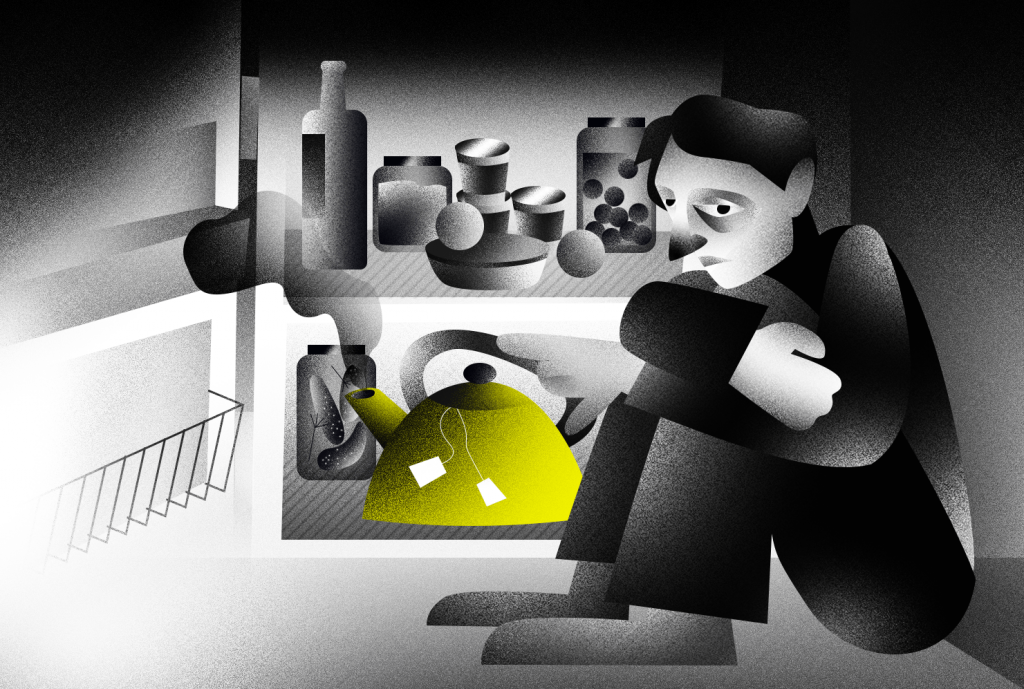
The husband often behaved in a detachment: in the company he simply clogged into a corner, went into himself, and that’s all. Sometimes he had a wild non -concern: he could, for example, put a sugar bowl or a hot kettle in the refrigerator. When he was discharged from the hospital, he accepted very heavy pills that suppressed any desire in him: we did not have any intimate connection, besides he could not eat for a week. His condition was almost amoebic: he simply crawled around the apartment, washed away once a week - it was already good. I did nothing more.
I did not hide from anyone that my husband had a disorder. My best friend and colleague, as soon as I found out, said: “Think, do you need it? They hit you like a dusty bag - all bewildered. Look at yourself and think about what will happen in ten years. ” Her mother also said: “Why do you need all this? You are a young girl, you can still arrange a new life. ” Even my husband’s mother said to me: “If you want to get divorced, tell me right away - I will prepare him.” Everyone in my environment, apparently, believed that I could not cope and we just quickly scatter. Only my parents said: “Do what you want - we will support you anyway. You will stay with this husband - please. You decide to leave is also your choice. ”
Then I took the words of those who advised me to leave my husband. But I’m generally a non-conflict person, so I answered that I probably still need to decide for myself, and I simply said my best friend: “Yes, well, thank you, I'll think about it.” But, of course, it was unpleasant for me when everyone advised to quit what I did. I tried to help my husband, pull him out, and I wanted support, and I became even more heavily in my soul.
The decision to get divorced for me formed to some extent under the pressure of others, but still my husband’s behavior influenced me more. He began to behave as if I were obliged to go out of his skin, but every evening to come to his hospital when he was lying there, and it doesn’t matter if I have work and some other things or not. He was jealous of my best friend, said: “Why did you spend time with her tonight, not with me?”
It seemed to me that after so many years the insidious of this person had opened. He used to be very responsible and, if he promised something, he certainly did. It is important to me. It seemed to me that he would always be near, like a stone wall behind which I would feel comfortable and calm. I had confidence in this person and tomorrow. But it turned out everything wrong: he is not at home, I work, I fulfill all his Wishlist, as far as possible, I go to him through the whole city.
For about a year I suffered and thought that I was too sorry when my loved one needs help and support. But suddenly at some point I realized that it would be easier for me without him. It is better to be alone in the apartment, do not bear the responsibility for anyone and just exhale. I finally thought about myself.
I also realized that I feel nothing more to this person except pity. We talked with him, I told him: "That's it, I can’t be in such a family, you please I'm sorry, but I'm leaving." And no one persuaded me to stay in a relationship with him, not a single person, even his mother. She said: "I understand everything, he has a serious illness, why do you need to destroy your life."
I returned to my hometown in the Sverdlovsk region. Of course, it was very difficult for me, and I could not recover for two months yet: I didn’t really eat, I lost almost 20 kilograms, I was shaking from experiences. But gradually I returned to life. I still have mixed feelings: I finally thought about myself, but, on the other hand, why did I think about myself when it is difficult for a loved one? After all, I threw him in a sick state.
Four years later, when I was already married a second time and I already had a child, we collided on the street with my first husband's mother. She congratulated me on the fact that everything was fine in my life, and shared a story. After our divorce from her first husband, she handed him to the violent department, because he was destroying the apartment, he could not cope with him at all, cut off all the ties. His mother with difficulty came to him because he closed all the castles and did not want to let anyone in. He lay in a violent month, then he was simply transferred to another department, and then every six months he was lying in a hospital. But after all this, the doctors said that he still did not have schizophrenia, but a bipolar disorder. When I heard this, I just thought: "Poor boy." I was very sorry for him, and that’s it.
Bipolar affective disorder (bar) is episodic mood disorders that occur due to manic and mixed episodes in the case of type I bar or hypomanic episodes in the case of Bar II type . They usually alternate with depressive episodes. The manic episode without treatment lasts at least a week and is expressed in euphoria, increased activity or subjective sensation of increased energy that accompany such symptoms as fast speech, “flight of ideas”, increased self -esteem, reducing the need for a dream, impulsive behavior. The hypomanic episode is expressed in a similar way, but in a less extreme form, and although it affects the mood, behavior and level of a person’s energy, does not violate life. The mixed episode involves the presence of several pronounced manic and depressive symptoms that either occur simultaneously or alternate very quickly - during the day or day after day. Such an episode without treatment lasts at least two weeks.
"I was confused, I thought: maybe I think, maybe he just became such a bastard"
Svetlana, 58 years old, psychologist, St. Petersburg
When I was 22 years old, I met my future husband. After six months of communication, we got married. Everything was fine, we gave birth to three children, but when the youngest was a year, my husband had psychosis. It began very strangely - with a social decline, as it is now called. The husband began to change his work at the obviously worst: he worked as an engineer - he became a car deleser, worked as a car dealer - he became a loader, was a loader - he generally stopped working. I sat with the children and worked as a private music lessons at home. It was 1991, the country in the ass, and the husband in the family with three children went to such a decrease.
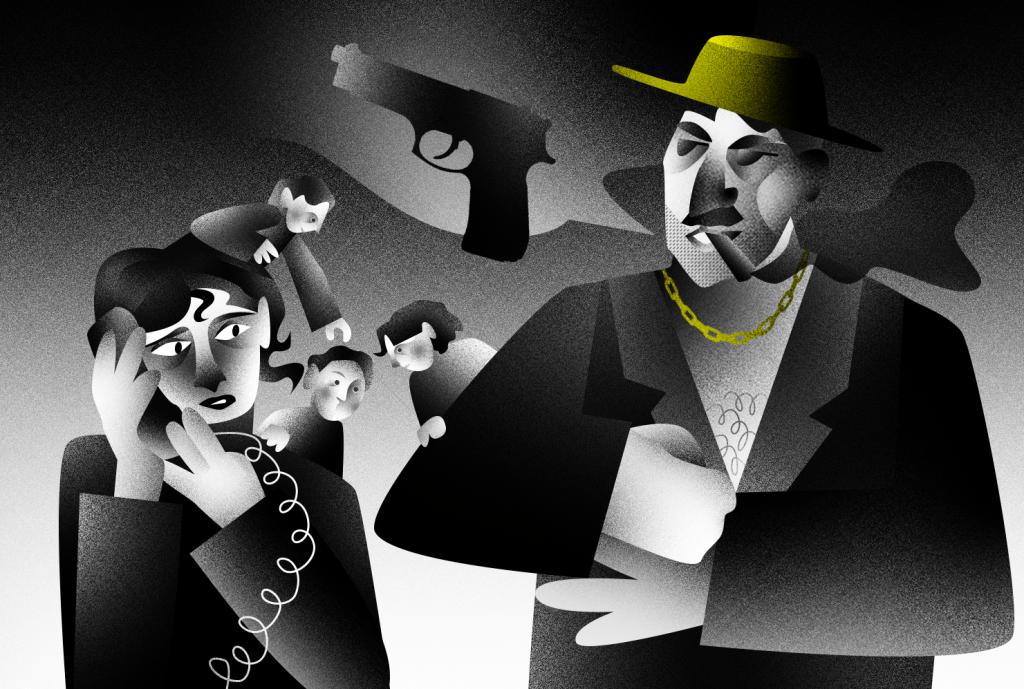
We both were 28 years old. I understood that something was wrong with him, but did not understand that it was: if a person, for example, ran a naked along the street and shouted that he was Napoleon, there would be no doubt about his disorder. And he simply refused work, said that he was tired, he had some strange fantasies. For example, he said that he was the leader of the St. Petersburg mafia, and lives poorly for conspiracy so that the special services would not be calculated.
I could not understand what was happening, I thought, maybe it seemed to me, maybe he just became such a bastard. She married her beloved man, but a goat became - well, it happens.
When my husband’s behavior became aggressive due to the fact that I do not believe in stories about the mafia and refuse to obey him as the main mafiosi, I called an ambulance. The doctor made his husband an injection and said to see a doctor in a clinic. After the injection, my husband felt bad, and I called an ambulance again. He was hospitalized with a diagnosis of neuroleptic poisoning and prescribed a psychiatrist consultation. After the consultation, he called me and said that the preliminary diagnosis of my husband is schizophrenia.
When I heard this word, the first thing I wanted to climb into some reference and read what kind of beast it was, because I heard the word “schizophrenia” before in jokes about Shiziks and a fool. And the doctors answered all my questions: "You still will not understand, you do not have an education, you are not a doctor."
When my parents found out, they said: “He can be dangerous not only for you, but also for children. Until he began to run after you with an ax, throw him him. ”
His parents had a different position: “Yes, you are slandering him all, you invent everything, everything is fine with him. You probably want to divorce him? Netshki - you married him, so come on: both in grief and in joy to the grave board. " They did not even believe the doctor, believed that he called such a diagnosis, because I told him it, or maybe also gave money. Gradually, they apparently recognized the problem, but still they told me that they gave it to me normal, and I did something with him that he became abnormal. At first, they dressed this in such a polite, saliva-oil shape, something like this: “Svetochka, my dear, what I want to tell you. You have a good husband, you love him. Well, why are you like that with him, well, what are you doing with him? Maybe you don’t give him sex? ” It angered me. Their manners gradually became more vulgar and rude, so I began to communicate with them as little as possible, suffered only because of children.
I had such a plan: I will persuade him to be treated, and then we will look at the results. If the treatment will not affect him or get worse, then I will definitely part with him, because the children are a priority for me. If the treatment helps and he will try not to be a burden to the family, then why not stay in the family? I also have such a position to this day: a mentally ill person who is not treated is a parasite. And if he tries to do something, then he is a full member of the family. The treatment was the main condition for continuing our relations.
But little by little I was convinced that my efforts are useless and divorce is inevitable. It took me four years to understand this. It was possible, of course, before, but it turned out like that. By that time, I had no idea that he would be able to persuade him to be treated, and I understood that I could not live like that, because the disease would only progress.
The main difficulty for me was that he could not wear his nonsense in himself, he had to tell me everything. And when telling? At night, because in the afternoon I'm with young children. I did not get enough sleep for weeks. Сначала я думала, что это ему помогает, разгружает его — то, что я слушаю его до часу ночи, до двух, до трех, до четырех… Утром встают дети, им нужно мое внимание, а я не выспавшаяся, и в голове крутятся остатки бреда мужа. Слушать его было совершенно невыносимо: на душе неспокойно, хочется убежать, хочется переключить этот «канал телевизора». Я ему говорила, что я не могу его слушать, мне надо ложиться спать. Он жутко злился, мы ссорились: он настаивал на том, чтобы я слушала, а я говорила, что ему надо идти к врачу.
Когда мы развелись, сразу стало легче — я почувствовала, что у меня не четверо детей, а трое. Я сразу задышала, стала оживать, нашла новую работу, младшему ребенку садик, жизнь наладилась.
Мои родители сказали, что все к тому и шло. Его родители протестовали, говорили: «Ты предательница, ты лишаешь троих детей отца. Ты клятву давала, что в горе и в радости, до конца жизни. Ты его выставила из дома только потому, что он заболел. Как он здоровый — он тебе нужен, а больной не нужен». Меня их нападки сначала расстраивали, потом бесили, я даже боялась, что они придут ко мне кричать и ругаться. Но, к счастью, я жила в полутора часах езды, а они были пожилые, им физически было трудно ездить.
Конечно, сильно осложняло ситуацию то, что мы все были психиатрически безграмотные люди. Сейчас есть интернет, где можно что-то почитать, можно сходить к платному психиатру для консультации — возможностей очень много. В 46 лет я сменила профессию и сейчас работаю психологом и веду в фейсбуке группу поддержки для родственников людей с ментальными проблемами. Это моя месть мирозданию: люди не должны оставаться одни, когда у них в семье кто-то психиатрически болен.
«Первое время я боялась, что ее симпатия ко мне — одно из проявлений болезни»
Маргарита, 22 года, инженер, Краснодар
С Кариной мы познакомились в сети. Мне попалось на глаза объявление во ВКонтакте, что идет набор в беседу ЛГБТ-людей Краснодара, где Карина была администратором, и я туда попросилась, потому искала общения с новыми людьми. Через два месяца у нас завязались отношения. Первые полгода это были отношения на расстоянии: между нами было 200 километров. Первый раз мы увиделись, когда Карина приехала в Краснодар к своему психиатру, потому что в ее городе (который находится в Краснодарском крае) не так много хороших клиник. Мы провели вместе буквально несколько часов и поняли, что хотим видеться чаще. И вот уже почти пять лет мы вместе.
Сначала я не знала, что у нее есть какое-то заболевание, потому что внешне оно никак не проявлялось. Но, перед тем как начинать отношения, она мне рассказала, что у нее биполярное расстройство, и дала мне несколько дней, чтобы я подумала.
Я стала искать информацию в интернете о том, как люди с этим живут, советовалась и с подругами. Они говорили, что, конечно, решать мне, но предупреждали, что ее заболевание может быть опасным для меня. Мне было обидно, что о ней говорили как о глубоко больном человеке, которому место в психиатрической больнице. В итоге я решила: так как Карина серьезно относится к своему состоянию и лечится, у нас все будет хорошо.
Но тем не менее первое время я боялась, что ее симпатия ко мне — одно из проявлений болезни, что ей нравится проводить со мной время просто потому, что она в мании, а когда ее состояние станет более ровным, она расстанется со мной. But this did not happen.
Возможно, из-за предупреждений друзей меня долго пугали состояния Карины, когда она становилась слишком активной, — мне казалось, что она совсем себя не контролирует, несмотря на то, что ее препараты довольно сильные. Например, когда мы еще не жили вместе, она начала продавать вещи в квартире своих родителей, сказала мне, что ей очень нравится все продавать. Я сразу же написала ее маме, и она быстро все разрулила.
Конечно, я старалась откладывать тревожные мысли в дальний ящик и не забивать ими голову, но через год не выдержала и созналась Карине: мне бывает страшно, что я однажды приду домой, а дом пустой, потому что Карина все продала, или что она захочет сделать что-то с собой или со мной. Карина отреагировала, как и любой нормальный человек: она обиделась. Я понимаю, что ей было очень неприятно, но когда я ей это рассказала, мне стало легче и страх сам собой постепенно рассеялся.
Этим летом из-за дороговизны лекарств она самостоятельно отменила один препарат, и это сильно сказалось на ее психике: она стала очень злой, обидчивой. Она не делала чего-то странного, но я смотрела на нее и будто не узнавала. В один из дней того периода мы с Кариной немного поссорились. Казалось, все быстро улеглось, но она пошла в ванную, и когда я спустя некоторое время зашла к ней, увидела кровь. Мы вызвали скорую, а скорая сразу направила вызов в полицию. Полиция и мама Карины приехали быстрее скорой. Мы с Карининой мамой перевязали ее раны, остановили кровь — ее оказалось не так много, просто мне от страха показалось, что кровищи столько, что она сейчас умрет. Полиция расспрашивала, состоит ли Карина на учете у психиатра, а поскольку она тогда работала, нам нельзя было ставить ее на учет и пришлось договариваться, потому что полицейские начали обыскивать квартиру и нашли рецепты на лекарства. Они намекали на взятку, и мы были не против. Вызов скорой отменили, полицейские ушли, Карина успокоилась, хорошо поспала, мы поговорили, и все уладилось.
С тех пор я стараюсь контролировать, чтобы она все таблетки принимала вовремя и чтобы был запас. А когда она принимает все нужные лекарства, ее состояние долго не колеблется, и, если не знаешь, что она пьет таблетки, не догадаешься, что у нее есть расстройство.
Единственное, Карине очень сложно работать: ей нужно легкое занятие, а она выучилась на юриста по направлению «правоохранительная деятельность», поэтому по специальности не может пойти. Бывают периоды, когда она не может встать с кровати, нет аппетита, может заплакать посреди ночи, но это редко.
Сейчас все наши друзья видят в нас семейную пару, и разговоры о том, что Карина из-за расстройства может быть опасной, пропали сами собой. В 2019 году мы поженились: Карина сделала мне предложение, я сказала «да», потому что хотела и ждала этого. Мы поехали на два дня в Копенгаген и там зарегистрировали брак. Потратили на билеты последние деньги, потом месяц питались гречкой, но были абсолютно счастливые, как будто выиграли миллиард долларов в лотерее.
Я понимаю, что лекарства, эпизоды обострений и врачи будут на протяжении всей жизни, и я уже привыкла к этому. Сама Карина говорит: «Я бы не хотела, чтобы у меня не было БАР, потому что тогда это буду не я». Даже если бы я хотела ей помочь избавиться от этого расстройства, это невозможно. С ним живут всю жизнь. Просто нужно больше внимания уделять ее здоровью. Единственное, о чем я могу задумываться, — это хватает ли ей таблеток.