
Translated material
The final statement of the Khazar question
To the 60th anniversary of the "discovery of Khazaria"
Exactly 60 years ago, at the beginning of 1962, the book of Mikhail Artamonov “History of the Khazar” was published. Four and a half years later followed the “discovery of Khazaria” by Leo Gumilyov. The title was with double meaning: not only a scientific discovery, but also the opening of a topic, previously closed for political reasons. Artem Efimov says about how the “Khazar problem” was reflected in the life and works of Artamonov and Gumilyov.1
You probably came across this picture:
 I saw some variation even on billboards in Moscow. They say that at one time such leaflets also spread. With all this dende, you can’t get it anymore, it is seriously or trolling.
It is especially touching that the portrait of Prince Svyatoslav, the winner of the Khazar, is clearly inspired by the description of the Byzantine historian Leo Deacon ( “History” , Prince 9, Ch. 11), probably made from nature: a strong physique, long mustache without a beard, a stranger on a shaved head. Unless there are not enough earrings in one ear. Well, that is, the artist at least some foot stood on the basis of reliable historical sources.
The “Tale of Bygone Years” about Svyatoslav’s victory over the Khazars said the following:
“In the year 6473 (965). Svyatoslav went to the Khazar. Hearing, the Khazars went out to meet with their prince Kagan and agreed to fight, and in the war, Svyatoslav Khazar defeated them and took their white Belona ”(the translation of O. V. Bestyogov).
Everything, nothing more. So, with several general phrases, the chronicler tells of the conquest of some Vyatichi or Radimichs. Even the Pechenegs raid to Kyiv in 968 is described much more and more lively, not to mention the subsequent exploits of Svyatoslav in Bulgaria, his defeat and death on the way back.
The Khazar campaign found the epic meaning not in ancient chronicles, but in the paranable controversy of the 20th century. Why - understandable: the Khazars were Jews. In the well -known kind of works, medieval news that the Khazars charged tribute from some East Slavic tribes turned into a narrative about the Jewish IGe, and the barely intelligible news of Svyatoslav’s campaign was a heroic song about the overthrow of this yoke. And so far where the anti-Samit from the plow will say “Jews”, there is an intelligent anti-Semite, no, no, and plunge “Khazars”.
2
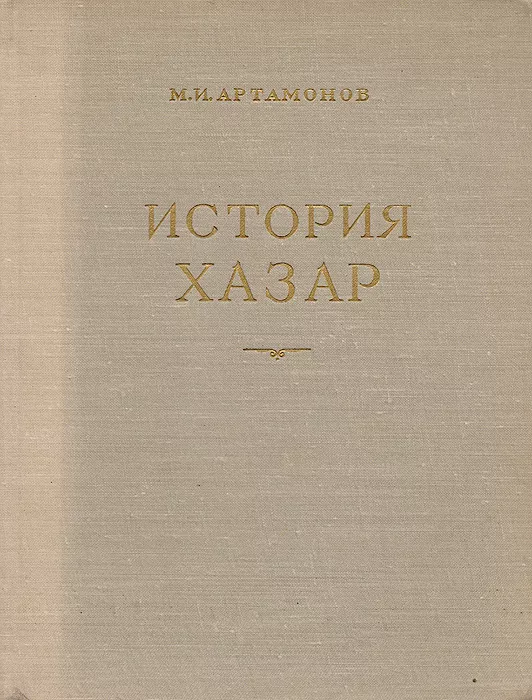 Mikhail Artamonov belonged to the first generation of Soviet scientists proper. He born in 1898, studied already at the Soviet University and had no experience in any scientific structures except the Soviet ones. His generation acquired an academic weight in the 1930s: in 1932, the first elder of Soviet historians Mikhail Pokrovsky died, in 1933-the disgraced elder of the “old-regime” historians Sergey Platonov, in 1934-the first Soviet archaeological elder Nikolai Marr.
Pokrovsky and Marr built all -clear theories based on the Marxist doctrine of the basis and superstructure and the stadium “five -member” (primitiveness - slavery - feudalism - capitalism - communism). Specific studies often interfered with these constructions. But they took a class approach and administrative authority. Both had undeniable merits: Pokrovsky issued many historical sources, Marr, before the revolution, excavated the ancient Armenian capital of Ani . But in both cases, they were overshadowed by ideologized and often simply invigared theories (in particular, the Marrovsky “new doctrine of language” ), as well as the indefatigability with which both Pokrovsky and Marr produced or crushed various institutions for themselves: the first - the Communist Academy, the Institute of Red Professors, the Centerchive, the Party History Commission; The second is the Academy of the History of Material Culture, the Public Library, the Yaphtheti Institute.
In addition to understandable political background, there was also an insurmountable desire to comprehend the fundamental and unchanging laws of public life - the same as Ibn Khaldun in the XIV century, with Jean Boden in XVI, Vasily Klyuchevsky in the XIX, and then with Lev Gumilyov and Fransis Fukuyama. History and archeology with their completely strictly defined objects, objects and methods, firmly rooted in empiricism, in specific texts and artifacts, should have dissolved in the social “theory of all”. Moreover, in the first one and a half decades of Soviet power it was believed that this had already happened, so there were no historical faculties at universities already - instead of them were faculties of social sciences (backgrounds), which instead of source studies were the “political minimum” and “hystmat”.
The recognition that with the “end of history” hurried was followed in the same 1934. The joint decree of the Council of People's Commissars and the Central Committee of the All-Union Communist Party of Bolsheviks (b) was so directly said: “Instead of teaching civil history in a lively entertaining form with the presentation of the most important events and facts in their chronological sequence, with a characteristic of historical figures, students present an abstract definition of socio-economic formations, thus replacing a coherent presentation of civil history with the abstract sociological schemes.” In this regard, it was ordered to restore the History of the Moscow State University and LSU and write new history textbooks. Signed: Molotov, Stalin.
Artamonov was not eager to lead everyone and clearly preferred specific research universal theories. In the same 1934, he began excavations of the Khazar settlement of Sarkel on the Don. At the same time, Tatyana Passek (born in 1903) began to dig Tripoli, a little earlier Artemy Artsikhovsky (born in 1902) - Novgorod. All three were listed at the Academy of History of Material Culture, which Marr was still formally headed, although in fact he had already retired after a stroke for a year. He died in December 1934.
The first Sarkel expedition of Artamonov lasted three seasons (1934–1936). In the last season, he took with him the 23-year-old Leo Gumilyov. That was recently arrested for the first time on charges of counter -revolution. They released less than two weeks later by the personal order of Stalin after the intercession of her mother, Anna Akhmatova, and Boris Pasternak. But from the university (the second course of the Permanent Fund of Leningrad State University) was excluded.
Even then, Artamonov conceived a monograph on the history of Khazaria and even published a small preparatory book “Essays on the ancient Hazard History” . True, he did not know the oriental languages, and the most detailed information about the Khazars was left by Arab authors. But in the USSR there was a strong oriental school, and Artamonov had the right to count on first -class commented translations.
In 1937, the Academy of History of Material Culture was renamed the Institute and poured the USSR Academy of Sciences. Artamonov became the deputy director for science and the actual leader, since the director Joseph Orbeliani simultaneously headed the Hermitage and the Armenian branch of the Academy of Sciences, and did not get along with the team . In 1939, Artamonov was officially approved by the director of the institute.
Gumilyov, meanwhile, was mastered in Norilsk: he still received five years of camps under the 58th article (counter-revolutionary activity).
Artamonov held a war in evacuation, Gumilev - first in Norilsk, and then at the front. They reunited in 1946: Artamonov organized the next archaeological expedition to the Ukrainian steppes, and Gumilyov went with him. Then he was given an exterior to finish the Physics Fund of Leningrad State and took him to graduate school of the Institute of Oriental Studies. True, a year later they kicked out: according to the official version, for ignorance of the oriental languages (which, in general, is true: he only owned Farsi), by unofficial - for an inanimate character (which was also true, even Artamonov admitted, when he stood up for him), according to Gumilyov himself - “for my mother” (Akhmatova then became one of the main targets of the “Zhdanovschina”).
In 1948, the construction of a long-conceived Volga-Don complex began: a channel connecting two great rivers at the site of their greatest rapprochement, the Stalingrad and Tsimlyanskaya hydroelectric power stations, as well as the systems of locks, reservoirs and canals, which, among other things, were to ensure irrigation of agricultural lands in these arid lands.
At one time, there was a drag between the Volga and the Don. Sarkel, opened by Artamonov before the war, in the 9th century, with Byzantine help was built by the Khazars to cover this fiber. Now the settlement was sentenced to flooding. Artamonov hastily organized an archaeological expedition, which three seasons (1949–1951) dug Sarkel and surroundings.
Gumilev dig only one season. In 1949, he was imprisoned for the second time.
3
 A fragment of a copy of the letter of Khasdai ibn Shaprut Joseph Ben Aaron, approx. 950.
Source
Khazaria had an important emotional significance for the Jewish diaspora a thousand years ago. In the Middle Ages, a curious literary monument circulated in it - the correspondence of Khasdai Ibn Shaprut with the Khazar king Joseph Ben Aaron.
Khasdai, who lived in the 10th century, was an adviser to the cord cord Caliph Abd al-Raman III and one of the leaders of the Jewish diaspora. Once I learned from merchants that there was a Jewish state somewhere east of Byzantium. These have not existed since the 2nd century, when the Romans, suppressing the Bar-Kohba uprising, expelled Jews from Jews. Hasdai sent his man in search of this unknown state, but he only got to Constantinople - the Byzantine authorities did not miss him. Then Khasdai wrote a letter to the Khazar king and handed it to the merchants. And some time later received an answer. Tsar Joseph thoroughly told him about the history and geography of his country, about how his ancestors turned to Judaism, and about his relations with neighbors: Byzantium, Baghdad caliphate and Russians.
Khasdai, obviously, made some efforts to spread this text in the diaspora - at least as a consolation for fellow tribesmen. Acquaintance with him is discovered by Jewish authors since the 11th century. In the 16th century, it was published in Istanbul.
Already in the XIX century, it turned out that they had published a brief edition. The lengthy was discovered in the department of Jewish books of the Imperial Public Library in St. Petersburg in the 13th century manuscript, which comes from the archive of one Cairo synagogue. Which of the two editions is closer to the original is not quite clear.
And at the beginning of the twentieth century, the University of Cambridge was found in the library of the University of Cambridge (list of the late XI century), in all likelihood, related to the same correspondence, the so -called Cambridge anonymous. He also comes from Cairo, from another synagogue. The beginning and end of the manuscript are lost, so you can install the sender and addressee only by indirect signs. Judging by them, the messenger Hasdai found a certain Khazarin in Constantinople, and he answered the same questions about his country that Khasdai proposed to King Joseph. All the more curious that the answers did not coincide in everything. For example, different versions of the legends are set out about how the Khazars accepted the Jewish faith.
This whole body of texts is known as the Khazar correspondence. Her first full edition was published in Leningrad in 1932. He was prepared by academician Pavel Kokovtsev.
There is a version that Khasdai either fabricated all the correspondence, or took a pamphlet for a clean coin composed by Constantinople or Egyptian Jews. About two centuries later, many in Europe accepted behind the Presistor of John for the pure coin about a certain powerful Christian state in the East, ready to collapse at the Muslims simultaneously with crusaders. They believed because they really wanted to believe.
But modern researchers for the most part agree that the correspondence is genuine.
4
For Soviet scientists, the history of Khazaria was “its own” primarily on the territorial principle.
In the preface to the “Essays on the ancient History of the Khazar”, Artamonov stigmatized “The narrow nationalism of the Russian noble-bourgeois historiography”, which prevented historians of the 19th century from seeing and recognizing the historical significance of Khazaria. For the most part, this is the literary etiquette of the 1930s. Karamzin, and in Solovyov and Klyuchevsky Khazara - this, of course, is primarily steppe barbarians, but all three recognized their relative advancedness: they know a lot about trade and not only destroy, but also build cities. Kachenovsky, on the other hand, was completely assumed that the first Russian princes were by the origin of the Khazars, and not the Scandinavians.
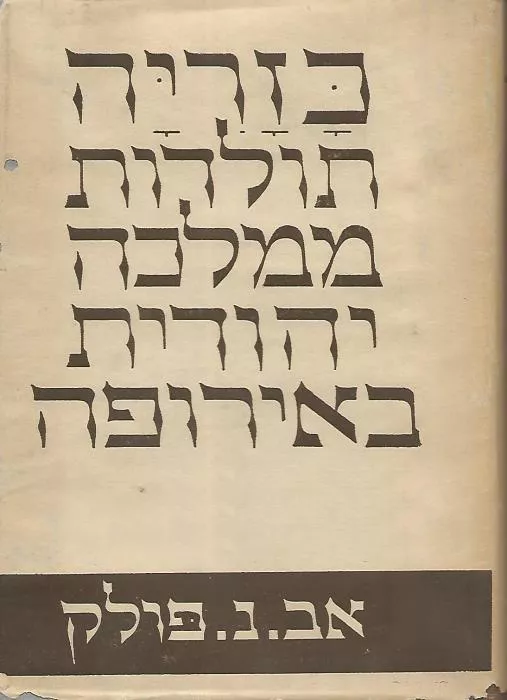
In 1943, the book of Abraham Pole “Khazaria: the history of the Jewish kingdom in Europe” was published in Tel Aviv. The Pole, who received international recognition as a specialist in the Arab Middle Ages, published a book about Khazar not in English and not in French (he was published a lot in both of these languages), but in Hebrew. That is, he did not address it to the international scientific community, but of the Jewish audience.
The central thesis of the Pole was that the Eastern European Jews - Ashkenazi, to which he himself belonged (he was born in Ochakovo of the Kherson province), came from the Khazar.
In the 1940s, it was not just a scientific hypothesis, but a risky political statement. Palestine, who was under the British mandate, was flooded with Jews who fled from the Holocaust - mainly just ashkens. And by the time of publication, the Holocaust has not yet ended. Jews' claims to Palestine - the entire Zionist movement of the last fifty years - were based on the fact that it was their promised land, their historical homeland. Therefore, moving to Palestine was not emigration for Jews, but repatriation.
It turned out that the majority (75 percent) of modern Jews did not come from the Israelis, expelled by the Romans from their original lands in the II century, but from the Turks or Mongols, and their historical homeland is not Palestine, but the Astrakhan region and Northern Dagestan.
For orthodox Zionists of that time, religious and racial aspects of Jewish identity - Judaism and Middle Eastern Semitic origin - were equally important and inseparable. The Pole's hypothesis, undermining these foundations, the Jewish world took mostly with hostility. Abroad she remained almost unknown. Artamonov most likely learned about her only after ten years from exile in the same American book.
5
Honestly, there is nothing particularly mysterious in the Khazars. The nomadic people are either Turkic or Mongolian. They came from somewhere in Central Asia. For some time they dominated the steppes along the northern shores of the Caspian and Black Seas. They fought, then put up with other nomads and with sedentary neighbors. They left extremely few traces and for the most part unkind memory as “barbarians” and “steppe predators”. Dissolved as if nowhere. Plus-minus the same can be said at least about the Huns, at least about the Avars, even about the Pechenegs, even about the Polovtsy.
As for the Khazar Judaism - and what, in essence, is he more exotic than, say, Kalmyk Buddhism?
The Khazars themselves retained the legend of the choice of faith - it was set out in the letter of Tsar Joseph Hasdau Ibn Shaprut. It sounds almost like a joke. They come to the Khazar king Rabbi, Mullah and Pop. Everyone persuades to accept their faith. The king first talked with the rabbi. Then he calls the priest and says: do we know that the best faith is Christian, but of the remaining two-which is better-Muslim or Jew? Pop says: Jew. The king calls the mullah: it is clear that the best faith is Muslim, but from Christian or Jewish - which is better? Mullah says: Jew. Well, the king accepted Judaism.
By the way, there is a version that the priest from this joke was not a pop, but Konstantin the philosopher, later known as the Holy Equal -to -the -Apostles Cyril. In his life , probably written with his brother Methodius, it is reported that he went to Khazaria and participated there in a dispute with the Jewish and Muslim theologians.
In the legend, the pragmatic background of such a seemingly paradoxical choice of faith is almost directly presented. Christians and Muslims are at war among themselves, and to accept one of these religions means to accept one of the parties. But both recognize the Jews, unlike the Gentiles, some rights are ready to deal with them. Several coins of Khazar coinage were preserved - imitations of the Arab dirhamam, but instead of the legend of “Muhammad - the Prophet of God”, “Moses - the Prophet of God” is listed on them. Neither Christians nor Muslims would argue with this maxim.
6
In August 1951, in the midst of the last season of the Volga-Don expedition, Artamonov was urgently called to Leningrad and appointed the director of the Hermitage. He was already ready for the publication "History of the Khazar", which he wrote since the 1930s. Obviously, it was Akme.
And suddenly, on December 25, 1951, the “Pravda” was published “On one erroneous concept”, in which Artamonov was directly accused of “improper assessment of the historical role of the Khazar Kaganate”: of “incomprehensible love of the Khazar culture”, in exaggerating the significance of the Khazars in the world, and primarily in Russian history, in the needlessness of evil, which the Khazars caused the Khazars. “To our ancestors,” Pravda proclaimed in the seventh year after the victory, “more than once I had to protect their native land with weapons in their hands from the raids of the steppe hordes. Ancient Rus' defeated the Khazar Kaganate, freed the original Slavic lands from his dominance and rescued Vyatichi and other Slavic tribes from under the Khazar Iga. ” And finally: "In the idealization of Khazar culture, one has to see a clear relic of the vicious views of bourgeois historians who belittled the original development of the Russian people."
Note on a special issue of early medieval history in the print body of the Central Committee of the Party. К тому же фактически анонимка: подписана «П. Иванов» без регалий и аффилиаций. Да еще и с упоминанием «буржуазных пережитков». Артамонову было от чего прийти в ужас.
Заметка недвусмысленно вписывалась в тогдашнюю кампанию по ликвидации академического вольнодумства: «философская дискуссия» 1947-го, «павловская сессия» и статья Сталина «Марксизм и вопросы языкознания» 1950-го, антикибернетическая кампания начала 1950-х и проч. В 1949-м декан истфака ЛГУ Владимир Мавродин в публичной лекции яростно обличал «норманскую теорию» — по всей вероятности, не из научных соображений, а из политических: он по должности не мог не иметь связей с фигурантами «ленинградского дела» . Помогло: от деканства его отстранили, из партии исключили, но хоть не посадили.
Общее направление кампании было «патриотическое»: все русское — хорошо, все иностранное — плохо (это огрубление, конечно, но не сильное). Особенно плохо для историков утверждать, что Древняя Русь сформировалось под каким бы то ни было внешним влиянием: норманским, хазарским или любым другим. Славяне — коренной народ Восточной Европы, и они исключительно своим умом дошли и до государственности, и до высокой культуры.
Все это, в свою очередь, вписывалось в кампанию против «безродного космополитизма» и «низкопоклонства перед Западом». Очень узнаваемо: внутренние оппоненты или просто недостаточно восторженные приравниваются к внешним врагам. Именно эта кампания во многом сформировала современное «народно-патриотическое движение» — причудливое с точки зрения классических политических теорий сочетание националистической и левой повесток.
Еврейскому вопросу в этой кампании было отведено особое место. С возникновением Израиля в 1948 году и с его стремительным уходом в американскую орбиту влияния всякий советский еврей оказался под подозрением в двойной лояльности. Ну и антисемитизм, который, по многим свидетельствам, был свойствен Сталину, свою роль тоже сыграл. Отсюда и разгром Еврейского антифашистского комитета в 1948-м (включая убийство Соломона Михоэлса), и «дело врачей» 1952-го, и «дело Сланского» того же 1952-го в Чехословакии.
Артамонову, можно сказать, повезло с безукоризненным русским рабоче-крестьянским происхождением. Будь он не Михаилом Илларионовичем, а, скажем, Моисеем Иосифовичем, его бы, пожалуй, уличали не в «буржуазных пережитках», а в «сионистском заговоре» — и не в «Правде», а в Большом доме на Литейном.
По некоторым предположениям, разгром Артамонова в «Правде» под псевдонимом «П. Иванов» устроил лично Сталин. Ну а что, разбирался же он в языкознании и в генетике — почему бы не в истории хазар? По более распространенной версии, которой придерживался и сам Артамонов, это был декан истфака МГУ Борис Рыбаков . Он это всегда категорически отрицал.
Но со всеми положениями «Иванова» Рыбаков солидаризировался. Причем не за страх, как Мавродин, а за совесть: он, выходец из московской семьи купцов-старообрядцев, был убежденным русским националистом.
В 1952—1953 годах антиартамоновские статьи появились во многих изданиях — от «Ленинградского университета» (под характерным заглавием «Правильно освещать историю нашей Родины») до «Советской археологии». Две из них написал Рыбаков. Ничего прямо антисемитского в его статьях как будто не было. Хазары были для него не стереотипными евреями-торгашами, а стереотипными степняками-грабителями. Но Рыбаков навязчиво применял к хазарскому государству термины «паразитарное» — других степняков он так не характеризовал. Учитывая контекст, все, кажется, вполне понятно.
Уже готовая книга Артамонова «История хазар» тогда, в начале 1950-х, так и не ушла в печать.
7
 В 1956 году, вскоре после ХХ съезда, в Ленинград вернулся Лев Гумилев. Артамонов был одним из тех, кто написал ходатайство о его освобождении, а потом взял в Эрмитаж старшим научным сотрудником. Благодаря его покровительству Гумилев за пару лет подготовил к изданию две монографии, над которыми работал в лагере: «Хунну» и «Древние тюрки» (по последней он защитил в 1961 году докторскую диссертацию).
Артамонов, несмотря на выволочку начала 1950-х, не оставлял хазарскую тематику. Тем более что оттепель давала шанс все-таки опубликовать книгу. Но теперь возникла другая сложность: британско-американский историк Дуглас Данлоп в 1954 году издал монографию «История хазар-иудеев». Артамонов не по своей вине лишился приоритета. Остается только догадываться, как это должно было его бесить. Чтобы публиковаться, ему теперь нужно было что-то такое, чего не было у Данлопа.
Главным преимуществом Артамонова был доступ к хазарской археологии. Но, будучи директором Эрмитажа, он не мог себе позволить на несколько месяцев уехать в экспедицию.
Тут-то и проявил себя Гумилев. Они вместе, сидя в библиотеке Эрмитажа над древними описаниями Хазарии и современными картами, приблизительно рассчитали местоположение хазарской столицы Итиля в дельте Волги. В сентябре 1959 года Гумилев отправился на место — проверять расчеты.
Хазарские экспедиции 1959–1962 годов — это, пожалуй, главное достижение Гумилева как исследователя. Пассионарная теория этногенеза, которую он начал разрабатывать с середины 1960-х и которая принесла ему наибольшую известность, — это, конечно, лженаука. Но даже самые суровые критики Гумилева признают исключительную важность озарения, к которому он пришел, пока искал следы хазар в Астраханской области, Калмыкии, Дагестане и Чечне.
Можно сказать, что это озарение — результат междисциплинарности. Сам Гумилев описывал его по-бытовому. Он рассказал своему давнему другу Василию Абросову, специалисту по рыбному хозяйству, что нашел в речных наносах в дельте Волге керамический черепок X века. Тот в ответ рассказал ему о теории циклических колебаний климата, которую разрабатывал географ Арсений Шнитников (его монография «Изменчивость общей увлажненности материков Северного полушария» вышла в 1957 году). Гумилев и Абросов всю ночь просидели над составлением хронологических таблиц: сопоставляли многовековую динамику движения атлантических циклонов с динамикой движения кочевников Великой степи — и к утру у них была вчерне готова теория.
Попросту говоря, она устанавливала зависимость политической ситуации в Евразии от того, где проходили циклоны и где выпадали приносимые ими осадки. При одной комбинации климатических условий дожди шли в Великой степи — и тогда процветали тамошние кочевники. При другой дожди шли севернее, в степи наступала засуха — и кочевники отправлялись на поиски новых пастбищ. Гумилев ставил в зависимость от этих циклов нашествия степняков на Китай, Среднюю Азию и Восточную Европу.
Кроме того, эта теория объясняла колебания уровня азиатских озер (прежде всего Балхаша) и Каспийского моря. Когда дожди шли в степи, озера поднимались, а Каспий мелел. Когда же дожди шли в средней полосе, поднималась Волга, а с нею и почти полностью зависимый от нее Каспий.
Здесь Гумилев увидел решение «хазарской проблемы» в ее научном аспекте: археологи никак не могут найти огромные хазарские города, многажды описанные древними авторами, потому что после очередного изменения климата их смыли разбухшие Волга и Каспий.
Результаты этих исследований дополнили «Историю хазар» Артамонова, которая наконец вышла в 1962 году. Вышла, что характерно, в издательстве Эрмитажа, а не в издательстве Академии наук. То есть не получила автоматического доступа в сеть магазинов «Академкнига», куда в первую очередь ходила за знаниями советская интеллигенция.
За этим последовало несколько научных и популярных публикаций Гумилева, а также статья Абросова под малообещающим заглавием «Гетерохронность периодов повышенного увлажнения гумидной и аридной зон» в «Известиях Всесоюзного географического общества». Наконец, в 1966-м в престижнейшем академическом издательстве «Наука» вышло «Открытие Хазарии» Гумилева — научпоп, в котором в полной мере раскрылся его писательский талант. Мало кому удавалось сделать захватывающими пространные описания степных ландшафтов и рутинных обследований речных наносов. Гумилеву удалось.
Благодаря этому и собственной нескромности Гумилев для читающей публики стал единственным «первооткрывателем Хазарии». Артамонов в его изложении превратился в «отправителя» — как царь в сказке, который велит герою «пойти туда, не знаю куда, принести то, не знаю что». Абросову оказалась отведена роль Серого волка — случайно встреченного волшебного помощника.
Некоторые выводы Гумилева, изложенные в «Открытии Хазарии» и связанных с ним работах, в дальнейшем подверглись резкой критике. Прежде всего — отождествление обнаруженного им хазарского городища близ станицы Шелковская в Чечне с древней столицей каганата Семендером. Да и в целом его концепция слабовато подкреплена эмпирическим материалом и слишком сильно зависит от климатологической теории.
Но для Гумилева это было лучшей частью концепции. Он считал ее естественно-научной и потому гораздо более основательной, чем всякие там построения гуманитариев (притом что сам по базовому образованию и складу ума был самым что ни на есть гуманитарием). Историки не переставали его упрекать в том, что он не владеет языками, полагается на устаревшие переводы древних авторов и вообще не умеет в текстологию. Книгу «Поиски вымышленного царства» (1970) он мстительно начал с главы «Преодоление филологии»: какой смысл ковыряться в древних текстах, если мы давно уже знаем, что там сплошное вранье и путаница? Ландшафт, в котором живет народ, — вот лучший источник по его истории. География > филологии.
Этим подходом Гумилев фраппировал гуманитарную интеллигенцию и покорил техническую, которая на долгие годы составила его фан-базу. However, this is a completely different story.
8
Уже в 1970-е годы британский писатель Артур Кёстлер, по происхождению венгерский еврей, издал книгу «Тринадцатое колено», в которой популяризовал забытую было теорию о хазарском происхождении ашкеназов. Тогда ее отвергли, как и в 1940-е, когда с нею выступил Авраам Поляк.
Новый всплеск дискуссии случился уже в XXI веке: это была одна из первых тем, за которую взялись популяционные генетики. Их первые результаты кому-то удалось интерпретировать как доказательство моногенеза евреев от библейского Израиля, кому-то — как доказательство полигенеза: современное еврейство — это общая идентичность групп, имеющих разное происхождение и разные прародины (Палестина, Испания, Германия, Иран, нижняя Волга...). Дискуссия еще очень далека от завершения.
«Хазарская проблема» никогда, и особенно во второй половине XX века, не была сугубо научной. Тот же Лев Гумилев предусмотрел в своей теории этногенеза особый закуток для «химер» и «антисистем» — чуждых групп, которые внедряются в этнос и его губят. А теперь, если не читали, догадайтесь с одного раза, что, по мнению позднего Гумилева, случилось с хазарами.
Некоторые биографы полагают, что Гумилев стал антисемитом из-за того, что, вернувшись после второй отсидки, он застал вокруг матери компанию молодых поэтов еврейского происхождения (Анатолий Найман, Евгений Рейн, Иосиф Бродский) — и взревновал. Это, пожалуй, слишком отдает вульгарным фрейдизмом. Степень и характер гумилевского антисемитизма — вообще большой вопрос.
Но вполне очевидны долгосрочные последствия «борьбы с космополитизмом». Она во многом сформировала ту специфическую повестку, которую одни называют «красно-коричневой», а другие — «народно-патриотической»: смесь национализма и социализма, не сводимую к простой сумме ингредиентов. Добавьте сюда популяризацию «хазарской темы» — результат совместного открытия Артамонова и Гумилева — и получите те самые «славные победы», которые «мы помним».