
Translated material
Musketeers instead of Harry Potter
Five non -trivial novelties of the Storytel service
The next issue of the Gorky joint section and the Storytel service is released after a slightly greater break than usual - the fault of how easy it is to guess, New Year's holidays. Yuri Kulikov decided to take advantage of this pause, conducted an audit of interesting innovations, which were still bypassed by our attention, and chose five of them for this material.Sherwood Anderson. Wainsburg, Ohio. Reads Dmitry Bykov * recognized by the authorities of the Russian Federation in the agent.
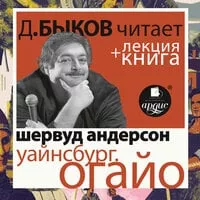 For a book unconditionally recognized by the classics of American literature, Wainsburg has a rather strange, if not sad, fate. Immediately upon the way out of the press in 1919, this voluminous cycle of stories (or, conversely, a compact novel in the novels) received a cult status-the poet Hart Crane even invited the Americans to stand in front of Wainsburg on his knees-but only 3,000 copies were sold in the next two years. Anderson brought the relative success of his debut much more problems than fame or money: all the subsequent writings of the writer necessarily compared with Winsburg, of course, in favor of the latter, and as a result, his work laid in pain “a promising principle - a gradual decline - death in oblivion”.
A brave man and with all his soul, devoted to literature, Anderson unconditionally deserves a better relationship. By 1919, this son of Shornnik from the Middle West managed to go through the whole country, participate in the war in Cuba, to work as an advertising agent and seller of roof paint-until at some point he understood what was enough from him and completely devoted himself to literature. The same painful rupture with the past, in fact, is in question in Wainsburg, Ohio. Twenty -two stories, united under this name, are not connected by a common plot, but a place of action (a small city is clear in which state) and a dozen through characters. A lonely school teacher, a family of Puritan fanatics, an eccentric, giving a crazy ideas-literally every inhabitant of this wilderness is unhappy in his own way, but only young George Willard, a clear alter of the author’s ego, is decided to break out of a closed world.
In an attempt to draw attention to Winesburg, one could say that this is just the “missing link” in the history of literature, which connects Turgenev’s psychologism with high modernism, or to call Anderson the teacher of Faulkner and Hemingway, but, God sees, this is completely not necessary to do this. With this fragile, excessive pathos can only harm anything like the stories. Fortunately, Dmitry Bykov remained faithful to his dry, restrained manner of reading and with an amazing tact, read this, according to the author himself, “The Book of ridiculous people”.
Alexander Dumas. Twenty years later. Reads Andrey Kuznetsov
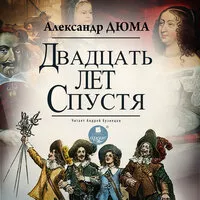 Another novelty from the Ardis publishing house, this time does not need an additional presentation. I must admit, Andrei Kuznetsov also read the first part of the musketeer trilogy, and on the way, probably, Viscount de Brazhelon, but it was “twenty years later” that the author of the article always seemed to be the best novel of the cycle, so today we will briefly say one thing about it.
So, France, 1648. Louis XIII is dead, Louis XIV is too small to accept the reins of government, so that his mother, Queen Anna, and the successor of the Almighty Richelieu, Cardinal Mazarini are at the head of the country. D'Artagnan, who, after all his exploits, had the right to count on a brilliant career, remained a submarine lieutenant, and the rest of the heroes completely abandoned the military service: Athos retired to the estate, Aramis went to the monks, and Portos to earn life, enough to remain Portos. Fate will again bring the musketeers together, but will make you raise a weapon on top of each other and tolerate a crushing defeat in England, where they (a spoiler!) Cannot be saved from the execution of King Charles I.
The charm of “twenty years later” is in the carelessness with which Dumas spits on all the expectations of readers. He could, like any self -respecting author of boulevard novels, write ten more continuations about the adventures of the four in his youth, but instead immediately shows us their old age. This is a book of cruel truths: a reward does not always find a hero, friendship, as a rule, does not withstand time checks, and a cruel ruler is better than no. In addition, the characters of the “three musketeers” sometimes aroused admiration, but where they often angered their perfection with their perfection. You finally begin to sympathize with a somewhat beaten moth of d'Artagnan, even realizing that in the final of the trilogy this sympathy will again cost you bitter tears. In general, the hottest recommendations to those who have already reviewed all films about Harry Potter on holidays and are looking for a new saga about growing up, love and death.
Listen to StoryTel
Alexey Ivanov. Gold of rebellion. Reads Ivan Litvinov
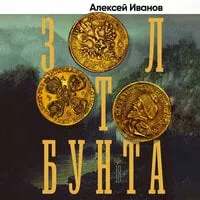 Almost simultaneously with the reprint of the first novels of Alexei Ivanov, the Alpina publishing house also released their new audio versions, including the main Ivanovo hit of the middle of the zero, the “gold of the riot”. Frankly, it is difficult to come up with books that are less suitable for ear to perception than these transformer monsters, originally conceived to destroy domestic literature. The “gold of the riot”, a hybrid of a production novel, Slavic fantasy, a cool detective and Hollywood peplum, was supposed to break through the walls of a literary establishment, where Ivanov could not get either with fantastic stories or with a realistic novel about a provincial teacher. The assault was a success, and Ivanov received a life right to write about anything-even about Nazis knights, even about vampire pioneers-but it was almost impossible to present this charming monster in any form except the printed manner.
It is all the more pleasant that Ivan Litvinov managed to dispel all the fears of skeptics. In his performance, the story of the Ural rafting, remaining did not lose dynamism and acquired some new persuasiveness, accessible only to an oral story. Litvinov’s voice, like a barcard along the sorcams of the Chusova River, briskly and smoothly rolls according to long Ivanovo proposals, and endless “sewing”, “chopping” and “barking” instead of scaring an unprepared listener, make him be more attentive. As the hero of another Roman Ivanov said: “And the unprecedented happens,” if this goes further, then maybe the “gold of the riot” will also wait for a decent adaptation.
James Clavell. Taipen. Reads Ivan Litvinov
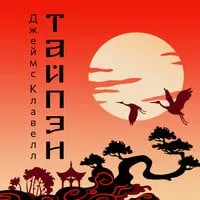 One hundred and eighty -one years ago, on January 20, 1841, Britain and China signed an agreement by which the island of Hong Kong passed into the ownership of Europeans - an excellent occasion to recall the novel about those events and times, only recently published in audio format.
“Taypen” is the second part of the huge Asian epic of British James Clavella. From childhood, who lived in the eastern colonies and there passed the Second World War, Clawlle put his life that, after the collapse of the Asia empire, with its variegated and scale, remained forever in the memory of the British. To do this, he needed to completely update the historical novel by introducing a huge dose of cinema into it and, in accordance with the era, by shifting accents from love for monetary relations. As a result, a series of books came out from under his pen, which instead of “bestseller” I would like to call “blockbusters”: the epic “shogun” about the Englishman who has fallen into Japan of the era of civil wars; “Hajzin”, a thriller about European merchants, who themselves are not averse to drawing the Japanese into a new war; The chronicle of the Iranian Revolution of the 1979 “Shamal” and the maximum personal story of the prisoner of the prisoner of war “King of rats”. All novels can be read (and now listening) separately and in any order, they have only a strugg dynasty, whose representatives are always lucky to be in the very center of the confrontation of the East and West, but it is certainly better to start with Taipan.
The most chamber and short of all the opus of Clavellla “Taypen” is dedicated to the golden eyelid of the British Empire and best demonstrates the strengths and weaknesses of the writer. Opium wars and merciless tea merchants, kitsch oriental scenery and Jesuit intrigues, and finally, Russian caricature, planning to capture America with the help of Bashkir cavalry, what else can a person need to be in the middle of an endless winter? You can’t wish more.
Robin Hobb. A student of the killer. Reads Alexander Gorodisky
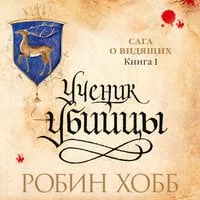 Another example of a curious transformation of the genre. The “student of the killer” is the first volume of the fantasy “Saga of the Seeing” who, in the nineties, who brought fame to the American Robin Hobb. At the first glance at the plot and the world, it seems that it is not just a potassium from the motives that have lost their sores, but their frontal reproduction. Conditional Middle Ages; a poor child who is a prince’s bastard and therefore doomed to become an assassin in the service of the legal heirs of the throne; The mysterious teacher, with whom the protagonist does not have the simplest relations - in short, a typical set for the next novel of education with elves and trolls.
True, it soon turns out that the hobb has neither elves nor trolls, and the rest of the magical inventory does not have enough: of all the magic in the world of those who see there were only the ability to speak with animals and telepathy, and neither the battles with the dark sovereign, nor saved beauties, did not fall to the boy’s share. The consciously impoverished the outer part of the book, the hobb of one of the first among science fiction writers tried to reveal the psychology of heroes at the level of “serious” literature. The “student of the killer” pretends to be imitating Tolkien, but people such as Henry James or Emily Bronte were obviously real samples for the hobb.
A rare case when the same book can be recommended to both connoisseurs of the genre and people who do not know anything about it. The first asceticism of the “student” will probably be pleasantly refreshing, and the second will allow you to try a new genre without any effort.