
Translated material
Own in the matrix
Kazakhstan President Tokayev is called the alternative "Medvedev, who defeated Putin." Why think so erroneous
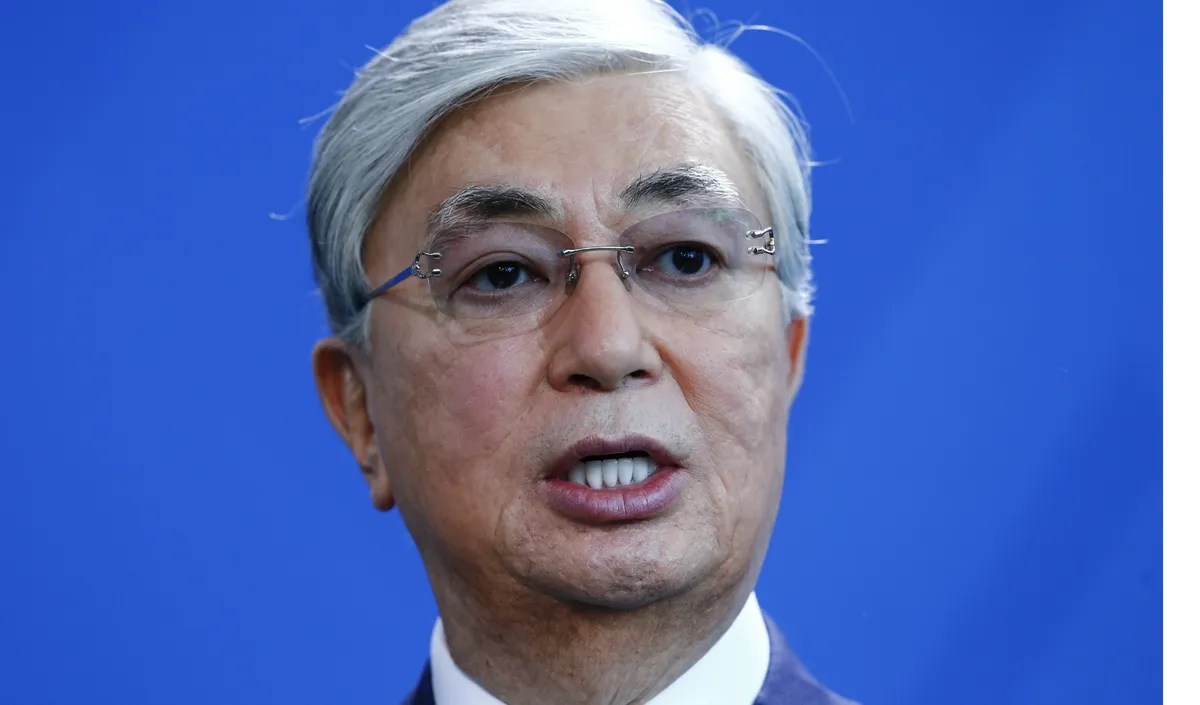
Having subjugated the entire information agenda in Kazakhstan after the most massive protests in the history of the country, the president of the country Kasim-Jomart Tokaev switched to a new level of influence on the minds-phraseological. Speaking at a meeting with representatives of large business on January 21, Tokaev enriched Kazakhstani folklore with the expression “confuse Hegel and Babel” (about the intellectual level of local oligarchs), “who was not hidden - I am not to blame” (about the search for companies avoiding taxes), “it will not cope with the task” (about the head of the Nazarbayevsky fund "Samruk-Kazin"). This rhetoric, coupled with new measures to reconfigure financial flows in the country, should, in theory of the presidential apparatus, shake the national economy. Here you have tax benefits for those who send money to a new one - the fund invented by Tokayev, but at the same time threats for the 162 richest people in the country. Here is the promise not to drain the affairs of businessmen in the courts, and the idea that arose from vacuum is to force oligarchy to take patronage over colleges.
But Tokaev’s main maxim-now everything will be different, not as it was before-was expressed in the phrase “Plato to me a friend, but the truth is more expensive”, which the president said , describing his life principles. “The interest of the state is above good relations with someone. If necessary for the state, I am ready. I have already made very difficult decisions. And I will make such decisions in the future, ”Tokaev said. Many saw in her the final blow to Nursultan Nazarbayev and his personality cult: with the past, now everything will be in fairness and truth. Freedom - it is better than not free. Let's build a new world - that's all.
According to the degree of pathos in statements about economic transformations and how the hierarchy of power in Kazakhstan and Russia took shape, Kasim-Zhomart Tokayev is often compared with the former President of Russia Dmitry Medvedev. And indeed: the second presidents, who for a long time were faithful squires of the first, but then came to the forefront and offered society a different picture of the world, a different vector of development (and both twitters lead).
Only Medvedev could not or did not want to morally defeat Putin and the Putin system of power at the moment when the people ripened for this.
Even despite September 24, 2011, when Medvedev and Putin “sat down and decided”, who would be the president, Bolotnaya Square gave a great chance for the “Revolution from the bottom”. Dmitry Anatolyevich did not use the fermentation of the masses, and Kasym-Zhomart Kemelevich wanted, he was able to and took advantage of.
The analogy, as saying, is beautiful. But there is one key inaccuracy in it.
The main difference between Tokayev and Medvedev is that Tokaev did not even externally liberal, he is all the same autocratic-state, only, maybe more enlightened. His other rhetorical techniques like “power will not fall” or the order to shoot during the protests growing into the riots of defeat without warning very clearly evidence of this. As evidenced by the fact that in Kazakhstan there is still no clear information about which of the civilians and by whose fault he died, how the “militants” actually looked (“burials of bodies”, stolen from the morgues, seemed to be found, but they are not presented to the public-“operational interest”), and the tortures in the police are not only really recognized. Moreover, the Western statements that there are very big questions to the methods of suppressing protest in Kazakhstan are sincerely angry. We will shoot people if you need to save the system, so leave the Western standards with you - this is the main message of Kazakhstani power now.
Although Tokaev offers many reforms for changing this system on the go, upon closer examination, they turn out to be either straight tracing paper or a certain parody of the actions of the previous president. The creation of a fund from which funds will be allocated for the development of the country; an attempt to "build" businessmen so that they think about the people; The promises of the liberalization of the judicial system - all this was already under Nazarbayev. The names are different, but the essence is the same: large resource players invest money in the "development of the well -being of the country." Even the reform of the security forces in the form of the creation of their Investigative Committee (as Kazakhstan insiders promise) almost completely duplicates the law enforcement system of the 90s in Kazakhstan. Then there was also GSK, where the best investigators from the rest of the structures were taken away, and it ended badly: everyone interfered with each other, and the bloodless security forces from the prosecutor's office and the Ministry of Internal Affairs lost any motivation to work.
The Kazakh president does not offer anything new, he only wants to force existing mechanisms to work. The system, built earlier, is generally viable, Tokaev thinks, you only need to twist the screws. It is clear that he does not have enough resources for the “revolution from above”. This is just not Russia, where it was possible to create at least the Medvedev hundred, at least the Medvedev thousand. Career elevators of civil service in Kazakhstan work with a creak, and people who made their name and status under Nazarbayev still sit on the upper floors. But even in these conditions, an attempt to restart the system against which was protested on the streets of the country, with the same people against whom the street also protested, looks with an indicative challenge to all those who counted on dramatic changes in the life of the republic.
Yes, in this system there will be no relatives of Nazarbayev in the foreground - but leaving the shadow does not mean leaving the stage.
And-yes, in this system it was decided in words to abandon favoritism in relation to large business players. But it was precisely what in words: even at a meeting of business with Tokayev were businessmen directly related to the Nazarbayev clan (one of them is a son-in-law), and even by their persons it was clear that these new rules of the game were not very new. We were favorites with one ruler, we will become with the other - everything and business.
This feeling could be left by large political reforms, but Tokayev does not have them at all. The packet of transformations in domestic politics is promised by September, but it’s hard to imagine what the current administration could propose to society. The option with the transition to the parliamentary Republic, actively discussed several years ago, is unlikely to be seriously considered as poorly realized, and the rest of the changes will only be complemented by the same system that does not encroach on its monolithic. So far, all changes have been aimed at rejecting power from the previous ruler, but without the distribution of them evenly in all branches of power, this will be only by the transfer of the main control lever from one hand to others.
That is why it is impossible to consider the situation in Kazakhstan as the script “a free person defeated a non -free system”, because Tokaev himself is part of this system, he will protect and cover it from blows, if necessary, modernizing only cosmetically. He feels good in her, he grew up in her - not to change her. And the events in Kazakhstan sent this train not on a new path, but only to the ring line.