
Translated material
Tango with crypta
Why do states around the world do not know what to do with a new financial reality, and what does the scandalous report of the Central Bank have to do with it

On January 20, 2022, the Central Bank of Russia pleased compatriots with a beautifully designed presentation called "Cryptocurrencies: Trends, Risks, Measures." The presentation was timed to the presentation of the press conference of the same name, talentedly executed by the director of the Department of Financial Stability Elizaveta Danilova.
In cognitive terms, both events, unfortunately, looked dimly, so the media were forced to make a revival, resorting to a bike historically well -proven a bike in a saucer in a saucepan: “Bloomberg, referring to its own sources, reported that the FSB“ convinced ”the head of the Central Bank of the Russian Federation Elvir Nabiullin in the ban on the ban cryptocurrencies in the country. "
Do you know why the FSB so heartlessly bowed Elvira Sahipzadovna to the blockade (Blanket Ban) cryptocurrencies? You will never guess: “Cryptocurrency payments are very difficult to track,” therefore they are “more and more often used by Russian citizens for donations to unwanted organizations, including media sources recognized by foreign agents.”
Well, that is, the FSB and the Central Bank were very frightened by the uncontrolled financing of the opposition and therefore decided to ban what they promised to ban ... A month ago, a year ago, two years ago, three years ago ... And - believe - even eight years ago!
That's why I doubted the information value of the presentation on January 20, that it is impossible to come up with more Bayan about how the Central Bank is going to ban cryptocurrencies in Russia. This button accordion is not even funny, but offensive to intelligence.
We read the headlines of the newspapers dated December 16, 2021: “The Bank of Russia intends to prohibit cryptocurrency investments due to the risks of financial stability due to an increase in the number of transactions with digital assets.” The news is submitted with reference to Reuters, which, in turn, refers to two sources close to the regulator. Of course, anonymous. By the way, Bloomberg in his next horror story about the FSB also refers to “informed people who wished to remain anonymous” (PEOPLE, who asked not to be iDentified).
OK then. After the December "intention to ban" a month passed and what: the Central Bank of the Russian Federation finally decided? Of course, no!
The document, which was presented at the press conference, Elizaveta Danilov, carries the subtitle “Report for public consultations”.
The Law “On the Central Bank of the Russian Federation” says that this department “issues regulatory acts that are mandatory for all legal entities and individuals”, “in the form of instructions, provisions and instructions”. There is no normative act called "report".
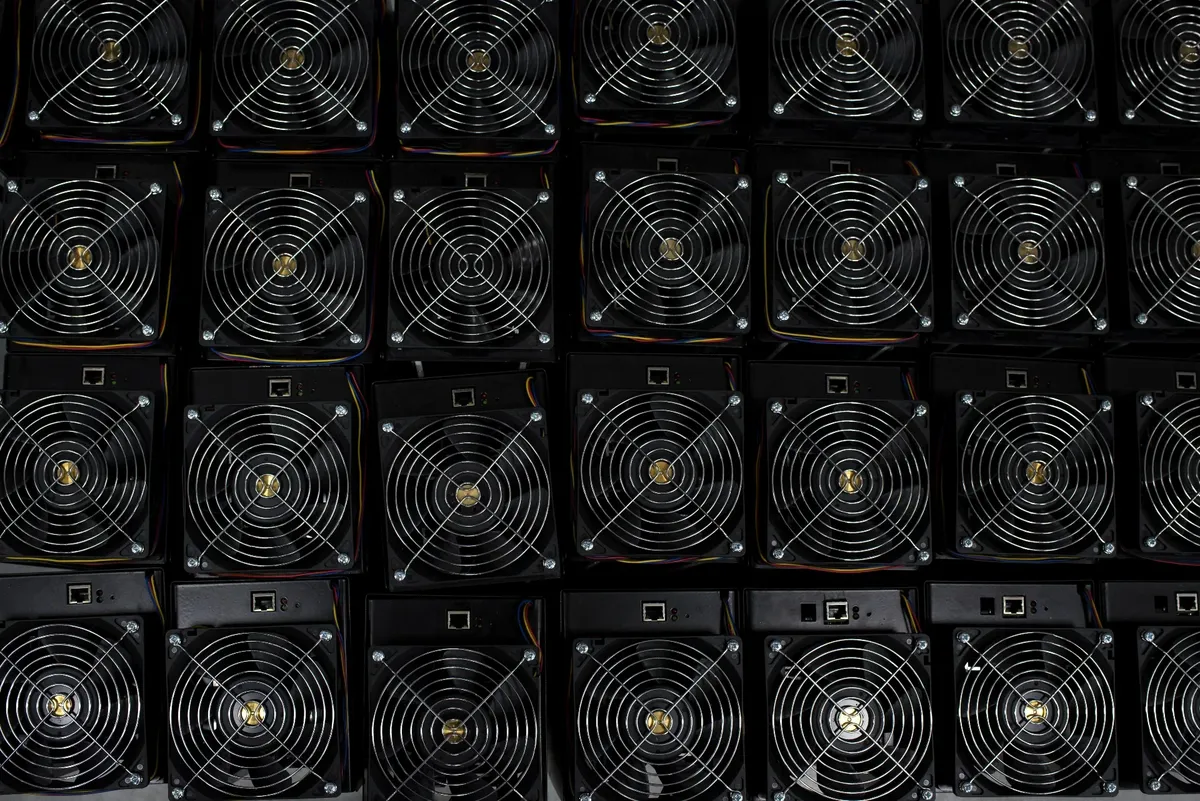
The retrospective view of the “prohibitions” of the Central Bank of Crypto Activates only strengthens our doubts.
The first “ban” of virtual currencies (and it was then called) happened in 2014 and was issued in the form of a letter on behalf of the press service with the status of an information message.
He was again followed by letters from the Federal Tax Service, the Ministry of Finance, Rosfinmonitoring and Roskomnadzor. In each such letter it was said that virtual currencies are “monetary surrogates”, which are not allowed to appeal in the territory of the Russian Federation.
Now we will not discuss that in article No. 27 of the Federal Law “On the Central Bank of the Russian Federation” (“The introduction of other monetary units in the Russian Federation and the release of monetary surrogates are prohibited”) is only about “cash circulation”, and cryptocurrencies are not in cash. It is impossible to remove the condition of “cash”, if only because then the monetary surrogates will have to be attributed and banned not only cryptocurrencies, but also debt obligations like corporate bonds and bills.
Another “ban” of the Central Bank happened in 2017. And again, in the form of a letter in which the financial regulator explained to the population that not only cryptocurrencies are bad, but all ICOs (primary proposals of crypto -monotons).
The only real legislative act that at least somehow correlates with the realities of cryptoeconomics in the legal space of the Russian Federation is the Federal Law of July 31, 2020 “On digital financial assets, digital currency and amendments to individual legislative acts” (No. 259-ФЗ).
Two instructions of the Bank of Russia are adjacent to this law (here they are real regulatory acts!): “On amendments to the Regulation of the Bank of Russia dated March 2, 2012 No. 375-P“ On the requirements for internal control of the credit institution in order to counter the legalization (laundering) of the proceeds received by criminal means and the financing of terrorism ”(20.10.2020) and“ On the signs of digital) financial assets, the acquisition of which can be carried out only by a person who is a qualified investor ”(11.11.2020).
Both of these instructions of the Bank of Russia have to cryptocurrencies (in the domestic sense of the word, that is, to the notorious “bitcoin”) is a very distant attitude, since for the most part either traditional securities or financial derivatives regulate.
The disavowing of the non -existent “ban” by the Bank of Russia of Cryptocurrencies and Mingine would be logical to complete the censure of the mainstream media for the meaninglessness of the panic swollen around the passing event. The problem, however, is that the appeal to the format of utterances (thereby not binding letters, information and reports) does not give an answer to the main question that justifiably worries the readers: “What the hell is actually happening? Where do these endless plums, fakes, rumors, horror stories, threats, warnings come from, which from year to year, from month to month are thrown into the public sphere alternately, the media (Russian and foreign), then state departments, then personal officials? ”
The main thing is that you need to clearly understand and learn:
Everything that we have been observed continuously over the past eight years in the Russian information space in the context of the cryptocurrency market, cryptoeconomics and its regulation, is not a domestic phenomenon.
Everything that is spitting to discuss the Bank of Russia with the company (how else to interpret the meaning of the “report for public consultations”?), The fears that the agency expresses about the so -called “The volatility of cryptocurrencies”, the lack of security for them ”,“ threats to the well-being of Russian citizens and the stability of the financial system ”,“ restrictions on the sovereignty of monetary policy ”,“ the conclusion of citizens for the perimeter of the Russian financial sector ”,“ use in illegal activities (laundering of income, drug trafficking, financing of terrorism, etc. ”, this is all not all this The headache of the Central Bank of the Russian Federation and the Russian authorities, and the universal ammon of the world financial system and the state structure as these social phenomena have developed and exist over the past 200 years.
The next moment is important for understanding: neither the Bank of Russia, nor the Russian state, nor the European Central Bank, nor the European Union, nor the US federal reserve, nor the White House, nor the Central Bank of China, nor the Communist Party of the PRC, not the state jurisdiction existing in the world and the structure of financial control does not know what to do.
None of the named structures know what to do, how to control, how not to eliminate, but at least slow down the onset of an inevitable nightmare, namely: the formation of a global system of alternative financial relations that does not know state borders and is not amenable to effective control.
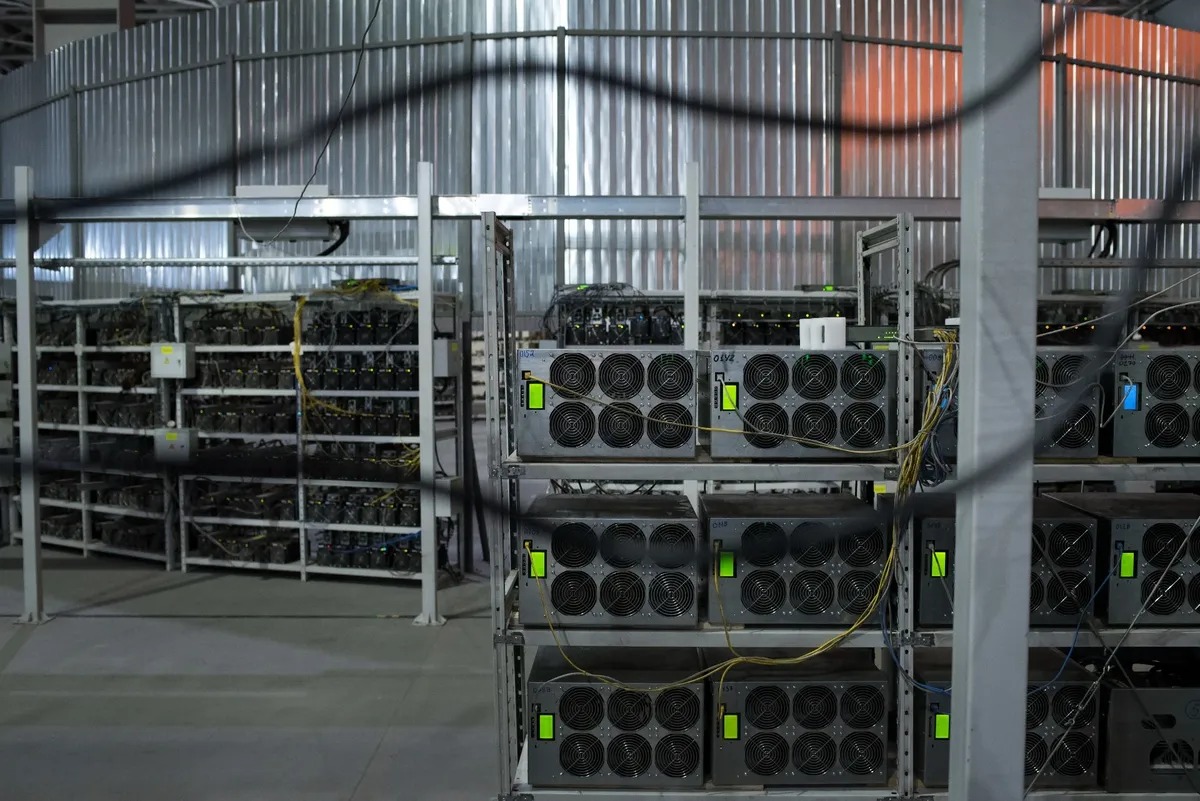
Hence these endless throwing - from complete acceptance (salvador) to a complete ban (China). Hence these horror stories about bitcoin as a tool for laundering money, financing terrorism, secret subsidizing the “enemies of the people” and the payment of pedophiles and bin Ladenes of the planet.
It is reasonable to assume that until the states and institutions of financial control take a constructive position in relation to alternative financial reality that has already come (it is reality!), The public is doomed to consumption of amusing simulars, into which even those state -owneds that are forced to popularize are not believed.
The “Report for Public Consultations” of the Central Bank was published a little more than a day ago (at the time of writing my replica), however, dozens of devastating and derogatory analytical analysis have already appeared in the information field. I see no reason to delve into the intricacies of criticism, which is interesting only to specialists, so I will dwell on only two moments, which, in my opinion, most expressively demonstrate the sparkle and poverty of analysts of the Central Bank, which we discussed the document we discussed.
I'll start with poverty. The key pathos, which is inspired by the Central Bank to combat cryptocurrencies, is concern for the material well -being of compatriots massively inexpressible in financial relations: “High volatility of the course, a significant prevalence of fraud in cryptocurrency trade create the risks of the loss of a significant part of invested funds for citizens.”
Is the Bitcoin course volatile? How! In mid -autumn, the course was 1933 of the point (10/26/2021), and today - 1409 (01.21.2022). For incomplete three months, a depreciation occurred by 27%. Almost a third of the investors lost.
Sorry, I confused. This is not Bitcoin so depreciated, but the Russian stock market (RTS index).
It was the securities of Russian companies in three months that depreciated by a third. She is like that.
Do not just think that I am nagging the facts. Bitcoin also showed volatility and fell from $ 68,564 per token (11.11.2021) to 38 323 (01.21.2022). Reducing as much by 44% - worse than the Russian stock market, isn't it?
Why, with such obvious advantages of the traditional stock market of Russia, inexperienced compatriots all climb and climb into this stupid cryptocurrency? The Central Bank complains with direct text: “The volume of transactions of Russian citizens with cryptocurrencies reaches 5 billion US dollars per year. Russian citizens are active users of Internet platforms that trade cryptocurrencies. In addition, Russia is among the leaders in terms of world mining capacities. ”
Truly, forgive them, Lord, for they do not know what they are doing. Or ... still know?
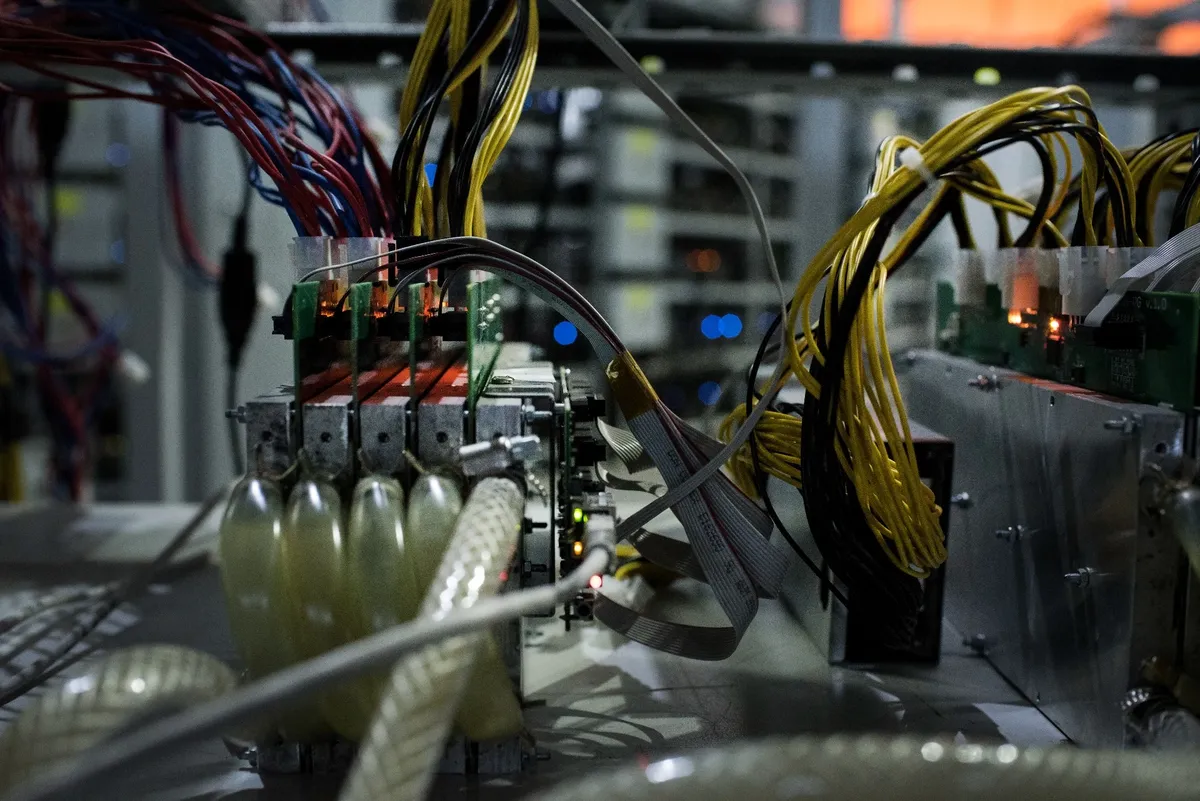
Fortunately, it’s not difficult for us to check. I quote the Central Bank: “The long -term potential for the application of cryptocurrencies for calculations seems limited. The rapid growth of their market value is determined, first of all, by speculative demand for the further growth of the course, which leads to the formation of the bubble. Cryptocurrencies also have the characteristics of the financial pyramid, since their increase in their prices is largely supported by demand from the participants that are newly included in the market. ”
I do not want to upset readers, but I will have to (I spent it, or something, for 28 years on exchanges): everything described above the Central Bank refers to literally, completely and completely not only cryptocurrencies, but also to all the stock markets that ever existed in the world. To the American, and to the Russian, and to the Chinese, and to the ancient Egyptian and Sumerian.
I’m not even stuttering about the market of derivative securities: there the financial pyramid is being built on the abstractions of the second, third and fourth levels (that is, derivatives written out for derivatives written, in turn, are traded for other derivatives).
And yet: why are unintentional Russians voluntarily climb into this volatile pyramidal cryptoad? When juggling terminology (volatile pyramid) does not help, dry numbers come to the rescue.
For the first time, the Bank of Russia warned compatriots about the risks of the loss of invested funds, about the volatility and pyramid of bitcoin in a letter dated January 27, 2014. On that day, 3 American centers were given for 1 ruble (1 USD = 33.54 RUB). The index of the Russian stock market on January 28, 2014 amounted to 1354 points.
Today (January 22, 2022), 1.3 cents are given per 1 ruble (1usd = 77.59 RUB). That is, over 8 years, the ruble has more than doubled.
Above, I remembered that today the index of the Russian stock market showed 1409 points. In other words, if 8 years ago you invested in the securities of domestic companies, you would have earned in all these years ... a little less than 4%. A whole half percent of annual income.
Now we look at the volatile pyramid of bitcoin. At the end of January 2014, 1 bitcoin could be bought for $ 940. Today it costs 38,323 dollars (last fall cost 68 thousand). Over 8 years, growth amounted to about 4 thousand percent.
For greater clarity: 35 thousand rubles invested 8 years ago in Bitcoin would have turned into 3 million rubles today (taking into account the fact that the ruble itself has depreciated by half relative to the dollar). This is how to turn a squelch with the volatility of the crypto -piramide.
By the way, about the pyramids. The first most famous financial pyramid - tulipanomania - happened in the Netherlands and developed from November 1636 to February 1637, when the market of futures contracts for bulbs of tulips collapsed. Three months.
Charles Pondsi, whose name became a household name for all subsequent pyramids, scroll through the shares of his pseudo -company Securities Exchange Company from February to July 1920. Five months is a textbook for the work of a financial pyramid. MMM Mavrodi lasted about the same amount.
Three months. Five months. The “pyramid” of bitcoin blooms with its rotten color for 13 years and does not give, the infection, not the slightest sign of wilting and degradation. Although not: there is still one sign: in 2021, not only unintentional individuals began to invest in cryptocurrency people, but also giants of the traditional financial market (from JP Morgan to Goldman Sachs).

That's interesting: in the light of what has been said, does the Bank of Russia seem that the problem is what the hell is not joking! - Maybe not so much in Bitcoin as in his own terminology?
The question, however, is rhetorical, because Russian citizens, without waiting for a financial regulator of adjusting the analytical apparatus, quietly sapa have already brought their blood $ 5 billion into numerous cryptopyramids. According to the Central Bank, in vain. It would be much more correct to invest in the securities of the domestic stock market. Would then receive 4% of the income for 8 years. True, coupled with high volatility. The compatriots, however, turned out to be incomprehensible and acted incorrectly.
I do not want to complete the replica on poverty, so I will do it on the splendor. Here is how the Bank of Russia formulates the main conclusion of its report: “The optimal regulation strategy is the ban on the use of Russian infrastructure and intermediaries for transactions with cryptocurrencies, as well as infrastructure that ensures the release, circulation and exchange of cryptocurrency.”
This is a brilliant formulation, which for some reason did not understand and did not appreciate the mainstream media, preferring to inflate fears around non-existent threats.
But smart people wrote a report. Smart, cautious and sober. Read carefully: what does the Central Bank offers? Bitcoin? Other cryptocurrencies? Buying and selling crypto assets? No!
Once again: “Prohibition of the use of Russian infrastructure”.
The Bank of Russia offers not to ban the actions related to crypto actures, but to participate in these actions of Russian organizations.
How could you not notice this elegant subtlety, I do not understand. But they obviously did not notice, because closer to the evening of January 20, the Central Bank of the Russian Federation had to make additional comments that they definitely made it clear: it is not planned to prohibit either the ownership of cryptocurrencies, or the use of infrastructures outside the Russian Federation.
It is significant that the total outcome from Russia of business related to blockchain technologies (unthinkable without cryptocurrencies in principle) and Web 3.0 began immediately after the Russian financial regulator took in 2013-2014. The course is not on regulation, but to prohibition.
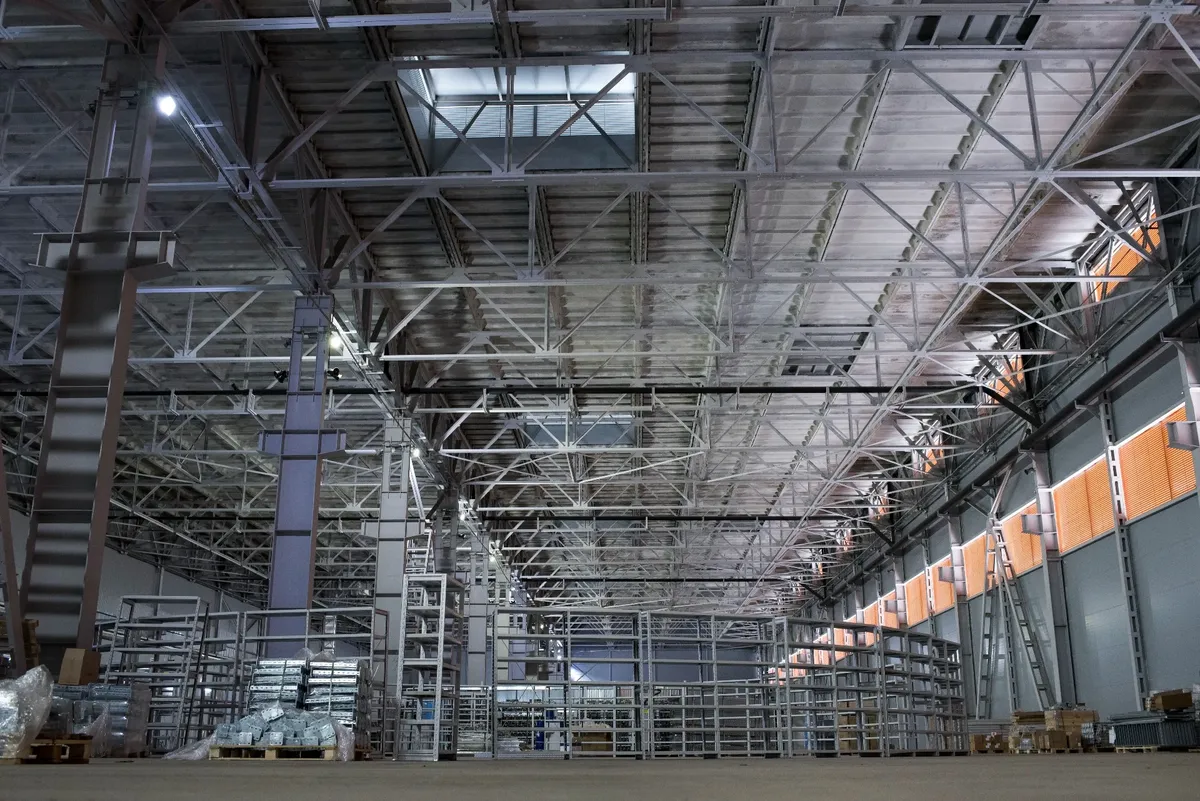
Today in the territory of the Russian Federation there is no crypto business in principle. Everyone left except one single remarkable (writing without irony) of the company-Wave. Today, tens of thousands of talented Russian -language software engineers, programmers and developers successfully work for the benefit of their new jurisdictions - Switzerland, Singapore, United States, Spain, etc. Taxes are paid there.
I still want to believe that it is more early than too late, the Central Bank is aware of the impossibility of prohibition that it cannot control, and therefore begins to fulfill the function that is more appropriate for its status, namely: it will develop the rules for regulating new financial relations.
Such evolution will be not only logical, but also profitable: only in the case of regulation, and not a ban, the state will have a chance to receive at least some taxes from the activity of its loyalty in the cryptocurrency market.