
Translated material
Different but equal
In Sweden, 80% of children with disabilities go to ordinary schools. How is it arranged and why is it useful for everyone?
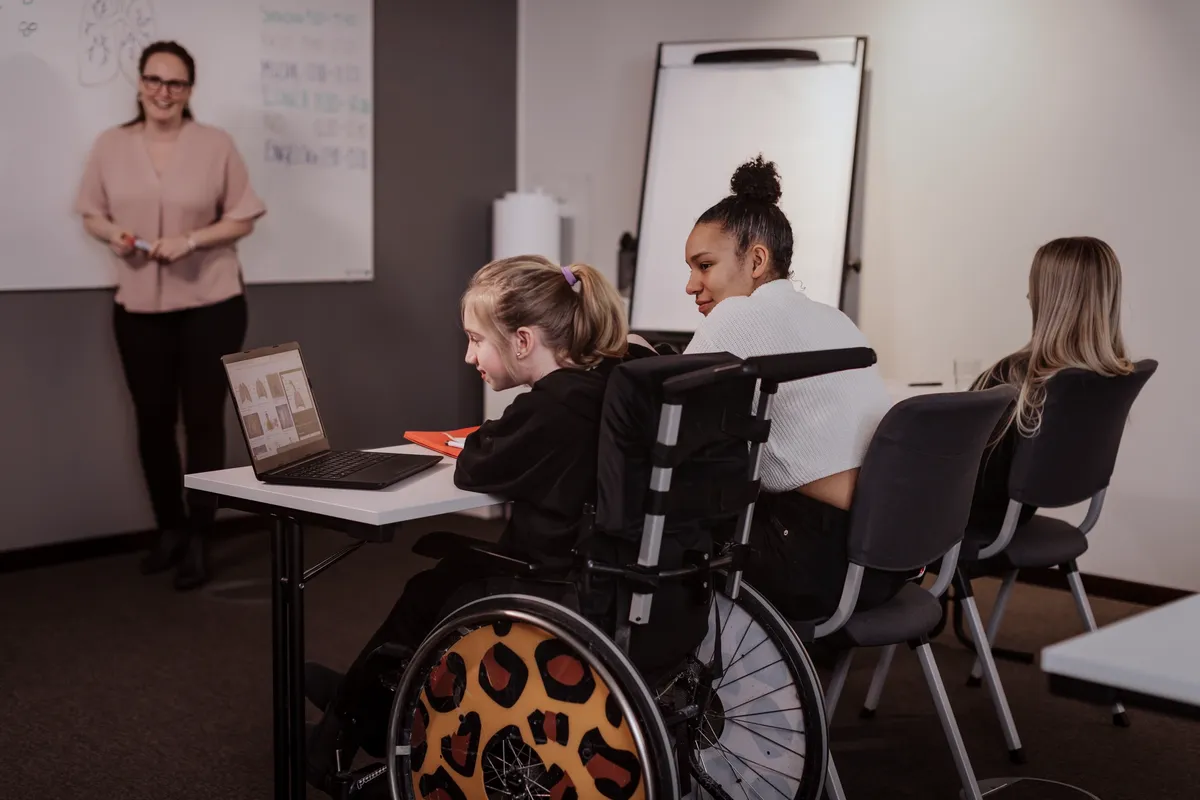
Too many children
About a million people go to Swedish schools. Children from 1 to 5 years old visit something between a kindergarten and a preparatory class (Förskolan). Annie Bloomberg, a teacher of preschool education from Mölndal, explains:
- My task is to give enough skills to go to school. We teach children to draw and write (there are special rooms for this), consider and correctly express their thoughts, emotions. Some at such an early age begin to demand an individual approach, and this is normal. For example, for a long time I worked with a child who had problems with the control of emotions. This took a lot of effort, but the other day I received a call from his parents - now he is doing at school.
According to the standards of the school ministry, there should be no more than 15 children in one group. Annie claims that in practice this is almost impossible. In each group of her garden - from 21 to 23 people. This means that paying attention to everyone and in time to identify special needs is more difficult.
At the age of six, the child has the right to study in the zero class (Förskoleklass). For 525 academic hours, he gets acquainted with a new routine, hones the skills gained to school and learns to build relationships with peers. Usually zero classes are placed directly in school buildings (Grundskola). Closer to the first to which students come in a year. In one of these, in Stockholm, Julia Mankelius works.
“Study begins at about eight in the morning and goes strictly on schedule,” she says. - Of course, with changes and lunch break. After lessons, the children who are engaged in leisure are responsible for the children. In the rest of my working time, I plan the following lessons, fill out the documents and meet with my parents. Together we decide what to do when the material is too complicated or the motivation for study is lost.
The assessment system appears only from the sixth to the ninth grade. More marks are placed during an optional three -year learning in gymnasium programs (Gymnasieutbildning).
Estimates in Sweden are introduced so late that the child does not feel bad due to imposed competition.
Anneli Hyberg, a third -grade teacher in Lidingo, says:
- The task in the lesson is not evaluated, but it is always divided into difficulty levels. Each student can find a suitable for himself and feel satisfaction from the result. Children are all different. If someone is hard to give, we repeat the topic. And a lagging student can always consult with a classmate, collective work is only encouraged, but it is not suitable for everyone. In my class there is a child with autism. Usually he goes to school with his parents. But even so oral communication remains for him a problem. Therefore, we are experimenting. Recently, he was able to independently submit a presentation about his success in his studies. And not in the native Swedish, but in English!
From integration to inclusion
The first Swedish state special school (Specialskola) opened in 1810, deaf -mute children studied in it. And already in 1841, educational reform gave students with disabilities the opportunity to study in a regular class. Children were offered lightweight tasks so that they could remain in mass schools, and not go into special educational institutions. These norms existed for almost 130 years. True, mainly on paper.
In 1969, a new curriculum appeared in Sweden, according to which the educational system should adapt to the needs of the student. Then similar to modern principles were formed - not yet inclusion, but already integration.
In an integrated school, children with disabilities were supposed to participate in joint events and go to some classes with classmates without health.
In 1991, integration responsibilities were transferred to municipalities. The system failed. Over five years, the number of students who were redirected from ordinary schools to specialized ones grew by about 40%, so the Swedish National Education Agency was instructed to evaluate the effectiveness of special schools. Previously, they were simply not interested in them. It turned out that the quality of education in specialized educational institutions is low. Teachers did not have the necessary methodological training, and the objective assessment system for students simply did not exist.
The laws began to be changed. Since July 1, 1997, communes are required to provide for all children 6–7 years old to the mass school, excluding health status. Nina Clang, teacher of the course "Education of people with special needs" at the University of Uppsala, explains :
-After the 60s, in Sweden they began to think about why children with functional restrictions to be in ordinary schools. If you are sitting in a regular class and almost do not participate during the lesson, because there is not enough support for the teacher, the meaning of everything is lost. Therefore, they carried out reforms that allow teachers to conduct individual work. This is the difference in integration, where the child is simply present in the class, from inclusion, where he is actively involved in the lesson.
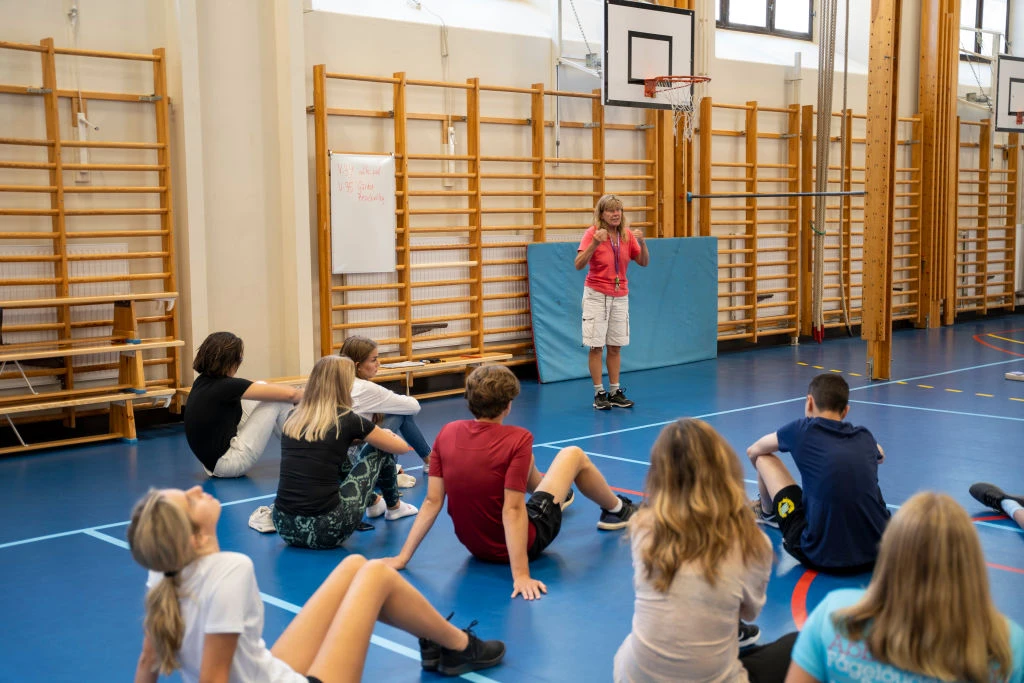
One school for all
- If you look at our assistance system, you can imagine it as a staircase. First, the teacher supports all students who are in the classroom, says Clang. - Then, to the second “steps”, parents and teachers become obvious: it is difficult for the child, he needs an individual approach. Then the program adapts to its needs. Separate classes are conducted by a special teacher (SpecialPedagog) so that a student with special needs can work at a convenient pace for him.
If this is not enough, the teacher needs to form a plan of special adaptations. This means that the child has his own educational trajectory, compiled by joint efforts of parents, schools and regulatory bodies.
Only in exceptional situations does the child go to a special school. There are two types of them: ordinary and those that are designed for children with IQ no more than 70 points.
The transfer of a child to such an educational institution is a rather complicated process that should be initiated by the school administration and preferably supported by parents. It includes medical, psychological, pedagogical and social examination.
Now about 1% of students are sent from ordinary educational institutions there. Without the confidence that the child will definitely not cope in a mass school, there will be no translation. Therefore, the number of students in special schools gradually decreases.
In addition, studies confirm : training in the inclusive class helps students with special needs to receive higher average points than their peers from special schools.
For children without health, communication with peers with disabilities is also beneficial. They can support each other while studying and train empathy. Analysis of academic performance shows that the quality of training of graduates of inclusive classes is not lower than the average in the country. Often - even higher.
Absolutely opposite data come from special schools. Education in segregated classes does not help children with health characteristics achieve significant success in study. Therefore, in Sweden it is believed that the future is in inclusion.
“The more students are in inclusive classes of ordinary schools,” Nina Clang summarizes, “the more people will once receive a diploma of education and work.
Now at least two million people with disabilities live in Sweden. 60% - employed. This makes the country one of the inclusion in Europe. It was possible to achieve such results only with the help of complex changes. In the approach to education - including.