
Translated material
Soldier, citizen, conscience
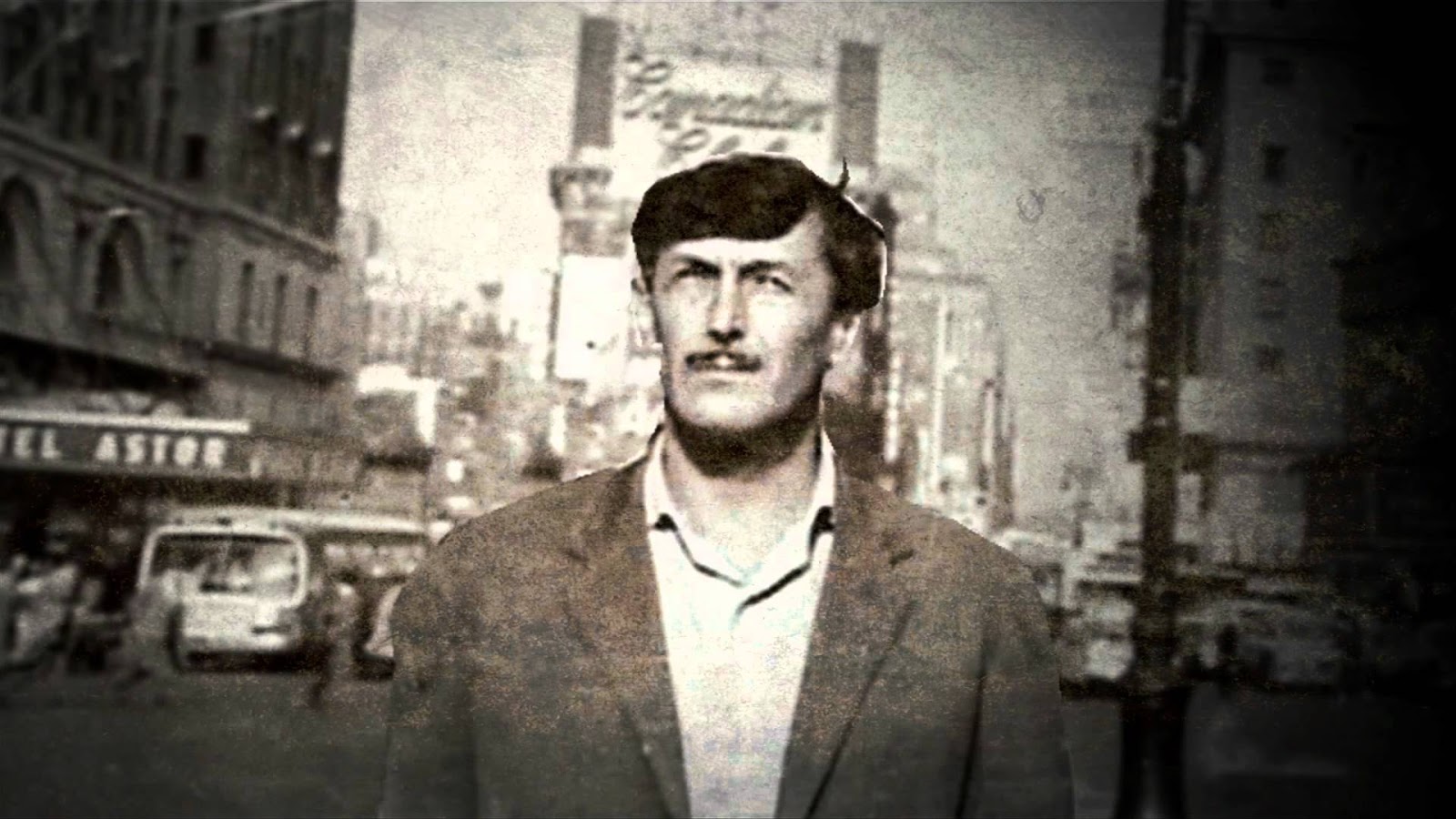
In the new issue of the "alphabet of dissent" with Andrei Gavrilov, a conversation about the author of the story "in the trenches of Stalingrad", about his fate and firm beliefs
Ivan Tolstoy: How would you, Andrei, described our hero today, in short? What is the most important thing in it?
Andrei Gavrilov: It was not for nothing that he was called the inhabitants of Kiev "the conscience of Kiev." I can join the definition that Vladimir Kornilov gave him in a poem, dedicated to him: "Vika, Vika, honor and conscience of the post -Galae.

How to get around the lock?
Read>And for me it was important at first that, apparently, he was really the first Soviet writer to write a true prose about the war, he was the Soviet military version of the Gogol "overcoat", from which wonderful writers came out, some of whom were the heroes of our programs. Later I learned about Babi Yar and about everything that was connected with his dissident activity.
Ivan Tolstoy: What did you read the first? When did you hear the last name?
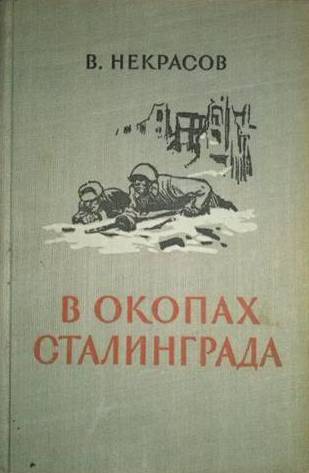
Andrey Gavrilov: I saw a big gray volume "Victor Nekrasov. Selected works" from parents on a shelf. At that time, in adolescence, when I began to read, everyone was still in hearing, everyone talked about it a lot, there were topics that were discussed in a whisper, some aloud, and the topic of the war was one of these topics. And one of my parents slipped this volume to me, saying that there is a story "In the trenches of Stalingrad." I read it and did not make it the slightest impression on me, because, by virtue of her teenage naivety, I believed that everyone knows everything, if I read it at the age of 14, then everyone read it and everyone understands that it was so. Why are adults surprised?
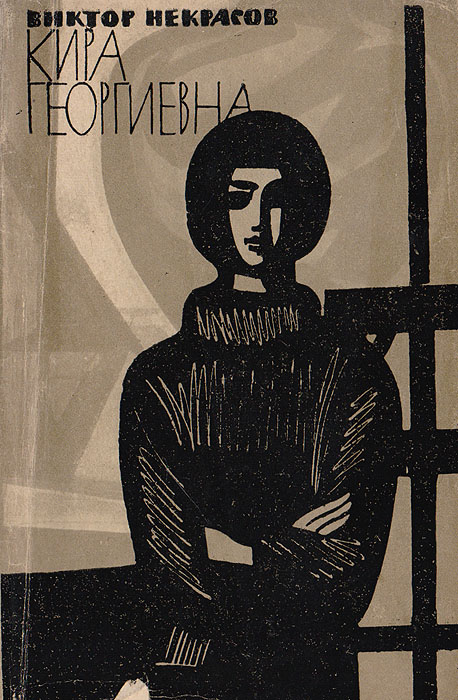
I postponed this book, and after a couple of years I saw that next to this big volume there was a pamphlet "Kira Georgievna" with a drawing on the cover, a little unusual for Soviet publishing practice - just a female half -sulue. I read it too, and she turned me over. Probably something coincided with teenage experiences. This book was a shock for me, I have not read such Soviet prose yet, and after that I returned to "in the trenches of Stalingrad" with another look, already with an internal expectation, which, fortunately, was not deceived. Then went stories, publications in the "New World", samizdat.
Ivan Tolstoy: my impression of Nekrasov was such that they say about such people: "Well done!" In essence, his life is a very good plot novel, and not every writer can boast of such a gift of fate. I would like to say that the life of Viktor Platonovich is similar to the adventures of three musketeers, only he incorporated the fate of all three and added d'Artagnan. He loved to drink and eat like Portos, he was in love, like Armis, he holy cherished his friendship, like Athos, and was charming and attracted his hearts as soon as D'Artagnan knew how. And for the first time I heard about him on Radio Liberty, it was 1974 - they said that Viktor Nekrasov had left.
Let us, taking the opportunity, listen to a small fragment from the story "in the trenches of Stalingrad" in the author’s reading. Paris Studio Radio Liberty.
Victor Nekrasov: With a certain trepidation, I begin to read my book "In the trenches of Stalingrad", now banned in the Soviet Union.
I tremble, because it was written forty years ago by a young, 35-year-old demobilized captain, but today it reads it more than an elderly renegade-literature, expelled outside its Fatherland and devoid of its citizenship. A book was written in the hometown of Kyiv by a man, fortunately, who did not know what socialist realism is, it is read today and is transferred on a radio from Paris by a former member of the Writers' Union, who has become a French citizen living in France and traveling throughout the globe for eleven years.
What is socialist realism, this person now already knows well. Perhaps that is why he left his native Kyiv forever.
Andrei Gavrilov: Already in the new era, when the Wikipedia appeared, I in amazement read one paragraph of his biography, which sounds right as a preface to your new musketeer novel. This is his genealogy:
"Viktor Nekrasov along the mother’s line - a descendant of the ancient aristocratic family of Motovilov, great -grandson of the Swedish baron, Russian subject, General Anton Wilhelm von Ern, Venetian nobles Floriani and distant relative of Anna Akhmatova by his mother, Zinaida Nikolaevna Nekrasova (nee Motovilova)."
Here is the first volume of the origin of the new d'Artagnan.
Ivan Tolstoy: with the French drawings of Fred Monet.
Nekrasov’s biography is available to everyone, the only thing that can be added to some details. Before the war, Viktor Platonovich, having graduated from the Architectural Department of the Kyiv Construction Institute, went to the theater, he liked the scene from a young age, he played, played, tried to stake small performances and went to Moscow, at the teaching of his more successful friend, to Stanislavsky for audition. And they and a friend played a little old man. Konstantin Sergeyevich sat in a chair, leaning back, and asked: "Who is the author of the play?" And they called some Scandinavian name. Stanislavsky squinted: "Yes, I remember." And the name was invented. But Nekrasov, he did not take, apparently, the game was weak, and then the war began and the main biography of Nekrasov went.
In fact, she fits in this military period, from 1941 to 1944, when he was already commissioned, wounded and his participation in the hostilities ended. And all from this war, as a result, grew so that even his stepson Viktor Kondarev, who wrote his biography in the modern times, published in Moscow, “everything in the world, except for Shila and a nail” (this is a brief part of one indecent motto that Viktor Platonovich confessed, and even painted his coat of arms with this motto), and he dismissed the constant intrusive stories about the war about the war Victor Platonovich.
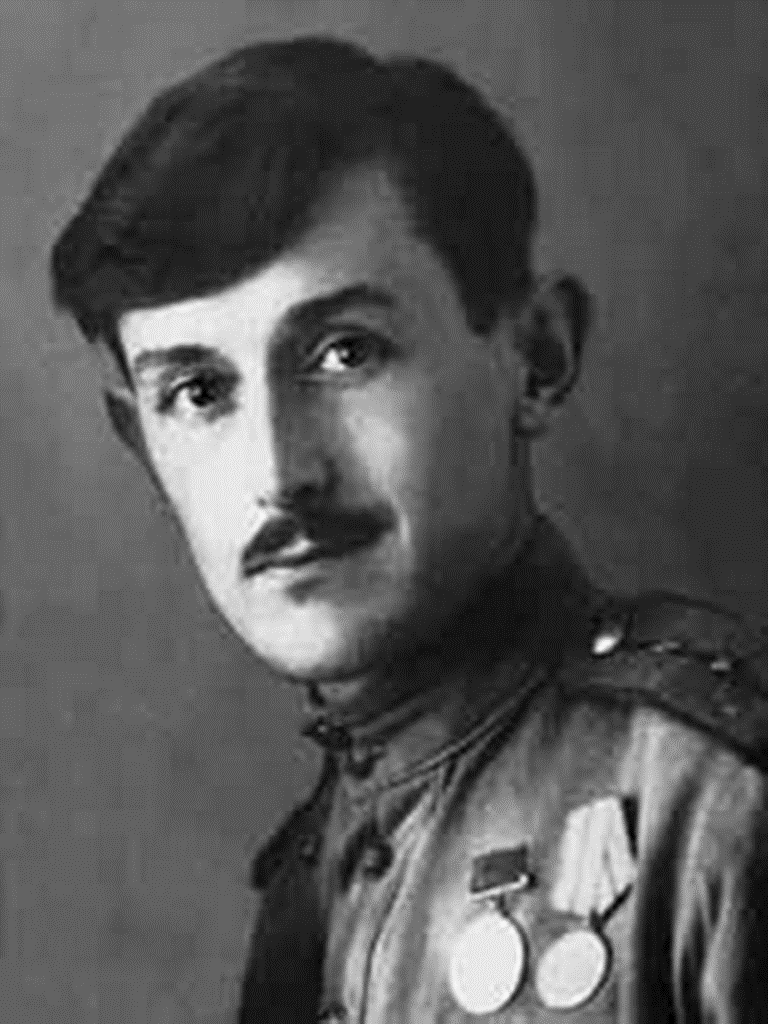
In essence, it was such a red giant, as the giant stars are called, which attract everything, this military epic held it in tenacious claws, and all the moral, all the life attitudes, all the ethics of Nekrasov’s friendship was erected to this red or red-brown giant called the Great Patriotic War. Of course, fate noted him as a faithful knight, a minister of this memory of a terrible tragedy. In 1946, his story “In the trenches of Stalingrad” was released (this is the editorial name, the copyright was much more pale), in 1947 it was awarded the Stalin Prize, and since then Nekrasov became a classic, all Soviet publishers were published without fail, he was translated into dozens of world languages, he was filmed (the film “Soldiers”, for which he wrote the script), he became one of the famous famous ones And the youngest Soviet writers.
Andrei Gavrilov: And even the legendary Kukryniks dedicated a benevolent caricature to him, where it was written that Nekrasov had only appeared, and already as he was skating - a teenager’s figure was depicted on skates, which had a book “in Stalingrad’s trenches” under his arm. It was something higher recognition.
But I do not agree with you. Why do you think that the name "Stalingrad" is more pale? In my opinion, no. I am even ready to cite as an example the volume of my works collected by the author, published in the "Sowing", which, by his will, is called "Stalingrad". It seems to me that this name is much deeper and more precise. "In the trenches of Stalingrad" it means that there are trenches, but there is something else. If we knew from the very beginning this story called "Stalingrad"-a capacious, short name-then, perhaps, the attitude towards it would have a little other. We would look at this not just as a page in the history of the city, but as the fate and history of this city itself on the banks of the Volga.
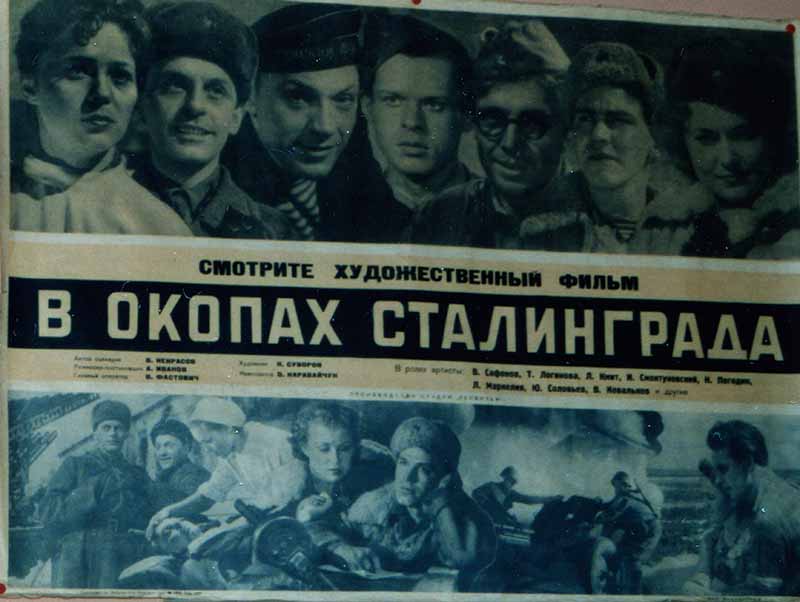
Ivan Tolstoy: From my angle, the name "Stalingrad" is more epic. It is by the nature of his artistic talent that Viktor Nekrasov is a person of a story or a long story, a man of a short phrase, a household episode, a small sketch, a leisurely thought so -so, in antennae, smoking. But "Stalingrad" still claims to be something broad-shouldered. But these are the stylistic features of my performance. Viktor Nekrasov expressed his attitude to this problem, naming later the collection "Stalingrad", which included not only the story, but also other materials.
Andrei Gavrilov: And the working name of the manuscript before it was represented by the editors was “on the edge of the earth”, which also makes us look at the text of this story differently.
Ivan Tolstoy: Andrey, what did Victor Nekrasov break on, from the point of view of Soviet propaganda?
Andrei Gavrilov: Exclusively on the fact that he was a person of absolute self -esteem. And when he faced the fact that what seemed to him an absolute truth, but at the same time he suddenly began to be silent for official propaganda, he could not remain silent. When it turned out that the authorities did not admit that Babi Yar could be a symbol of the Holocaust, as we are now saying, a symbol of the destruction of the Jews, its first movement was perplexity. How so? This is true! So, you need to speak for this truth. And then it turned out that this truth should be fought.
From the article "Why isn't this done?" (1959) The persecution went
Ivan Tolstoy: It seems to you that this is not from this article published in the Literary Newspaper on October 10, 1959 - “Why didn’t it be done?” - that Babi Yar, this ravine 30 meters deep, are going to fall asleep, arrange a stadium and in the place of the greatest tragedy “frolic and play football”, went on further persecution of him? It was before Yevtushenko’s poem, Viktor Platonovich was the first.
Andrei Gavrilov: Then even the concept of dissent only arose in the deep consciousness of many people, how could the authorities be opposed to the policy of the authorities?
Ivan Tolstoy: And a few years later, when Nekrasov returned from America and wrote his essay on both sides of the ocean, where he was just innocent, with soft journalism, compared American life with her concerns and Soviet life with her condo, tin concerns, not pointing his finger in his eyes, going around sharp corners, Nikita Sergeyevich Khrushchev fell upon him, and here it went. He was still printed, his books were published ten years after that, but even then questions were raised, doubtful of the powers of his condition in the party and in the Union of Writers.
I want to remind a few milestones of human rights, civic activity and persecution of Viktor Platonovich.
In 1966, he signed a letter from 25 cultural and science figures Brezhnev against attempts to rehabilitate Stalin
In 1966, he signed a letter from 25 cultural and science figures Brezhnev against attempts to rehabilitate Stalin, and then a number of collective letters: against article 190 of the Criminal Code, against judicial reference to activists of Ukraine and Moscow, against the conclusion of heroes who published in 1968 to Red Square. He participated in the days of sorrow in the dead in Babi Yar in 1966, was subjected to searches with the confiscation of samizdat, exclusion from the party and study in the press.
He went to exile on September 12, 1974, left the Soviet Union with his wife, later his stepson Viktor Kondyrev with his wife joined him. And already in our times, Viktor Kondyrev wrote an interesting book full of photographs and unique facts, a book and biographical and memoir - "Everything in the world, except for an awl and a nail."
But it seems to me to pass by one document completely impossible. Shortly before his emigration, after the searches, after Nekrasov, his fate became clear and he made the most difficult decision to emigrate, he wrote an open letter, it was signed on March 5, 1974, and a few days after that it was transmitted on the waves of Radio Liberty. I will allow myself a small quote from this letter, which explains everything in his position:
"A few days ago I spent a good writer and a man of a hard fate to France. And before that I spent a greater friend of Korzhavin. And before him Andrei Sinyavsky. Composer Andrei Volkonsky, film director Mikhail Kalik, mathematician Alexander Yesenin-Volpin left for him. And many others-artists, poets, just friends.
And Solzhenitsyn was expelled-what the word they found! - Dahl, for example, did not have it - as if the employee was driven from the yard.
We left, leave, leave ... You are involuntarily thinking. Why? Why are smart, talented, serious people who were not just making such a decision, people who love their homeland and oh how they will yearn for it? Why is this happening?
You think ... And involuntarily, summing up some results, you think about your fate ... And although this fate is yours, and not someone else, this is still the fate of a person who was born in Russia, who has been living in it, who studied, who worked for it-and not in the lightest area-had three holes in the body from German fragments and bullets. There are many of them. Thousands, tens of thousands. And I am one of them ...
Why, letting these very results in the sixty -third year of my life, are I experiencing a feeling of impenating bitterness? "
And then this letter, long enough, ends with these words:
"And about the barricades ... I never fought on the barricades, but in the trenches, and very small, incomplete profile, sat. And for quite some time. I fought for my country, for the people, for the boy’s unknown to me. He searched the coming and taught me patriotism in his own way.
Moscow, March 5, 1974 ".
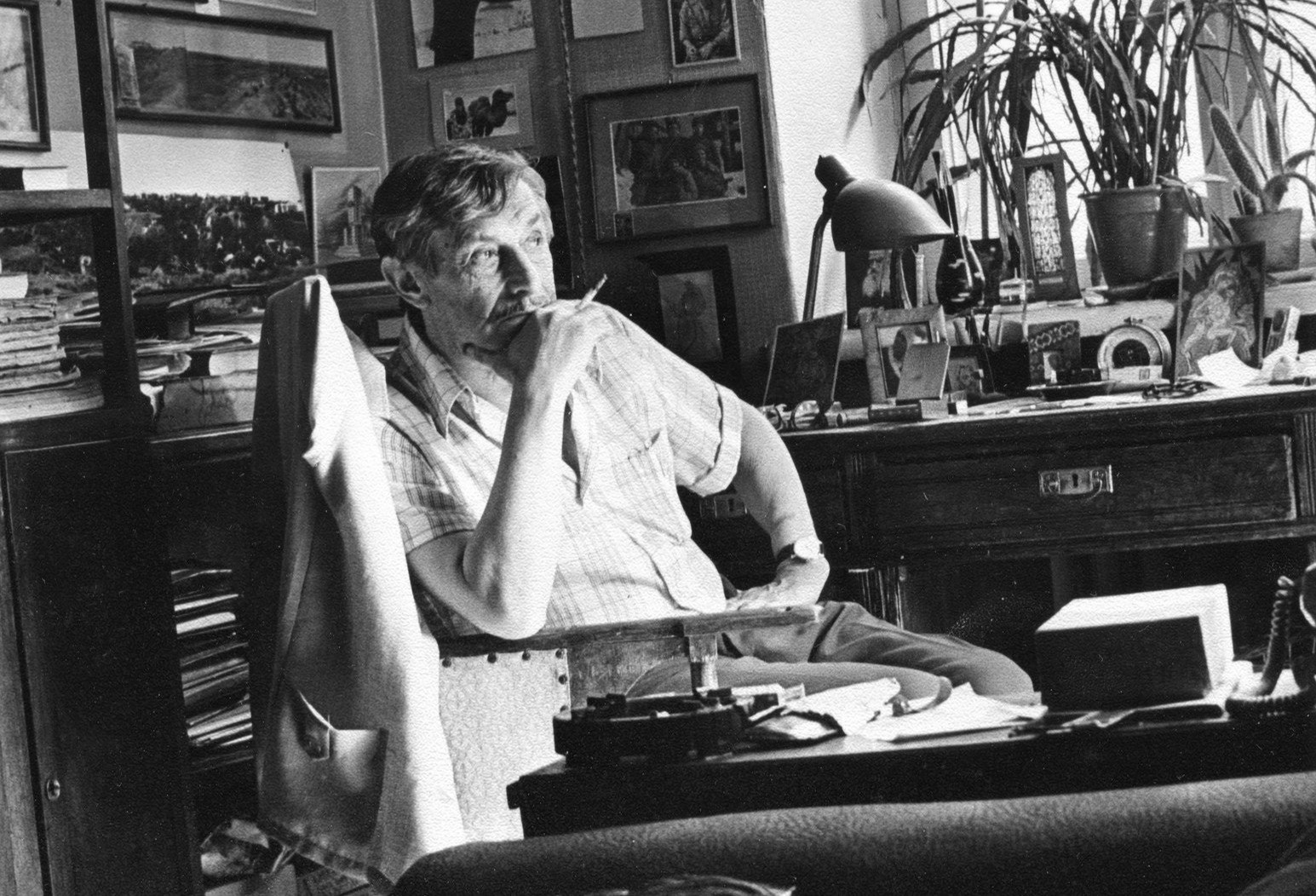
Andrei Gavrilov: Yes, I remember, this letter was in Samizdat, it was a serious slap in the face, and from some other open letters it was distinguished by the weightyness of the front -line soldier. There are no screams in this letter, there is no tearing off the vest on the chest. This does not mean that it was in others, in any case, but the whole tone of this letter was the tone of the person who passed the trenches of Stalingrad, it made a very difficult impression, you suddenly understood that not just brilliant representatives of the intelligentsia were leaving, but people who were ready to die for their country, and this country is pushing them out.
Ivan Tolstoy: Our genre does not include a description of the emigrant life of our heroes. Viktor Platonovich lived in the West, in Paris, 13 years old, lived happy years, although he was very yearning, sad and ironically treated his fate and the fate of his friends, realizing what nostalgia is, where his main friends are, where his main reader. And, of course, he realized that there could be no other way, he made his moral and ethical choice. He was surrounded by the same as him, friends, you watch the page of his Parisian Exile biography and amazing how many people dared to meet him in Paris, with him, an exile, who spoke on this American nightmare Radio Liberty! And they were not afraid. Both Yuri Trifonov, and the spouses of the Lungin, with whom he was dispersed after it became known that he was serving in exile.
The archive confiscated his archive, at one time they recoiled from him, asked not to appear in their apartment.
( Viktor Kondyrev writes: “It was almost immediately after a search in Kiev, and in the evening, when he went out for a hala to dinner, Lily Lungin called and told her mother that they would not stop when they were in Moscow. It was excluded, firmly repeated Lily, this is dangerous! Vika was extremely amazed, wounded to the core ...” - see: V. Kondyrev. Everything is in the world, except for the world, except for the world. Gvozda.
This was, of course, a temporary discrepancy between them, then I saw photos - the Lungins with Nekrasov in Paris, at a table in a cafe, smiling - friendship was stronger than any hardships. Many domestic businessmen saw him and were not afraid of Nekrasov. Perhaps this purity of nature, attractiveness, this weight of the front -line soldier, the weight of this person’s reality was won by the fear, the political timidity of these people.
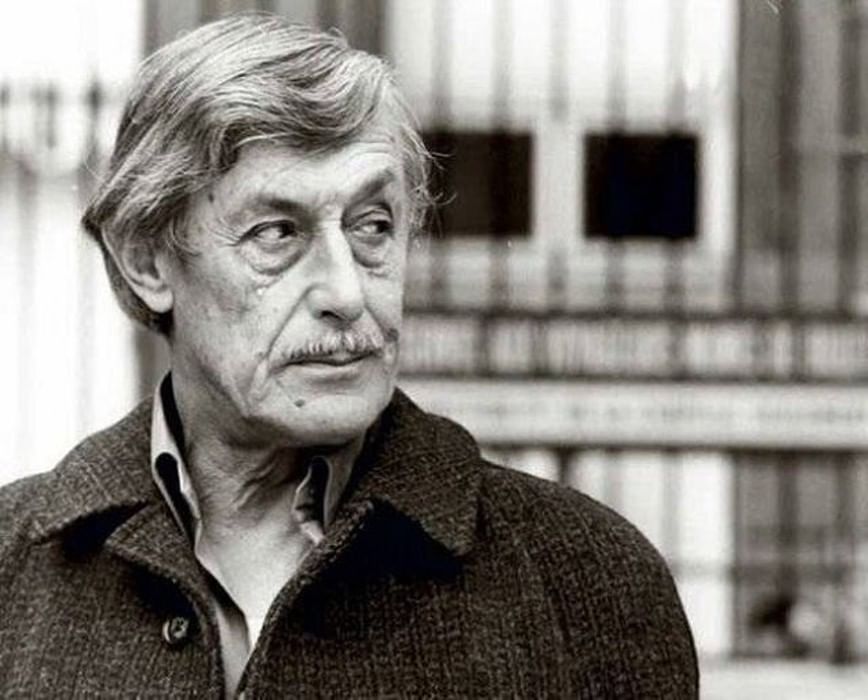
Andrei Gavrilov: Ivan, among the people who met Viktor Nekrasov in Paris, was Bulat Shalvovich Okudzhava. And I would like us to give our listeners the opportunity to hear a poem in the author’s reading, which he dedicated to Victor Nekrasov.
Bulat Okudzhava:
Paris in order to walk along it,
stare at him, amazed,
threatening the abyss end
Do not believe, and do not live to live.
And so that, suppressing a naked cry,
And starting, and drying the tears,
take refuge from the truth at least for a moment,
And from Peredelkino prose.
He is so insightful with fragrance,
So he gets him all,
As if I have already understood and forgiven
And only it remains to celebrate.
Paris in order to forget at least an hour
Blining of blood and classes,
to enter the Cafe "Montparnas",
Where Vika Nekrasov is waiting for me.
Ivan Tolstoy: Andrey, we have not listened to the musical anything yet. After all, Viktor Nekrasov cannot pass by some kind of musical accompaniment, he is a very musical person in his spirit, purring.
Андрей Гаврилов: Я не очень много знаю о музыкальных пристрастиях Виктора Платоновича, но знаю, что он очень дружил и высоко ценил творчество нашего постоянного героя, и в чем-то соавтора некоторых программ, Александра Галича. Они были знакомы еще до эмиграции.
Мы знаем, что Виктор Некрасов, как фронтовик, очень ценил его песню, которая называется "Ошибка", которая в народе ходит под названием "Мы похоронены где-то под Нарвой".
(Song)
Так получилось, что мы записываем эту программу в третью годовщину кончины Александра Немеца, человека, который создал замечательный сайт в интернете www. nekrassov - viktor .com , посвященный творчеству нашего сегодняшнего героя.