
Translated material
"Champion from Auschwitz"
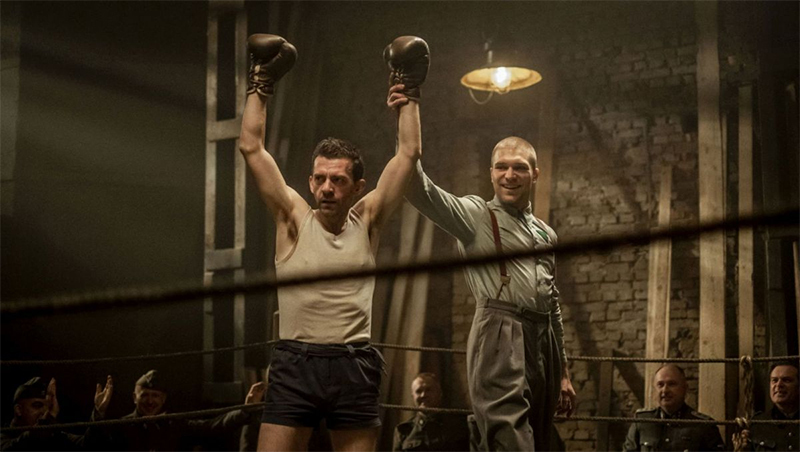
Polish films infrequently fall into Russia on a large screen, although recently the situation began to change. Last year, the “Snow will no longer” be purchased ”by the Malgozharats of Shumyskaya and the“ Healthy Healthy Hebors ”by Magnus von Horn, and the 2022nd begins with the picture of Matsuya Barkhevsky“ Champion from Auschwitz ”(“ Mistrz ”, 2020): It was released by Pioneer for the International In memory of the victims of the Holocaust.
Concentration camps are presented in Polish cinema in dozens of gaming and documentary paintings. One of the first films of post -war cinema - “The Last Stage” (1947) of Vanda Yakubovskaya - in many ways set the tone for subsequent work. He is recalled today, while watching the “champion from Auschwitz”, since the new picture also “internationalizes” the Holocaust (the Polish researcher Katazhina Monka-Malyatynskaya wrote in a historic perspective in a historical perspective). There is no emphasis on the nationality of prisoners: for the Nazis they are all just “dirty Poles”. However, in the story told, this moment is really not so fundamental.
In his full-length debut, Matsu Barkhevsky addresses the striking biography of Tadeusz Teddy Pyshikovsky-the legendary pre-war boxer, the Polish vice-champion, who fell into the concentration camp of Auschwitz with the first transport and received number 77. The director, together with the famous operator Vitold Pluchenik (who took off, for example, a recognizer lovers Polish cinema biographical drama "Icarus. This is not such a common plot: usually concentration camps appear on the screen already as debugged conveyors of death.
 © "Pioneer"
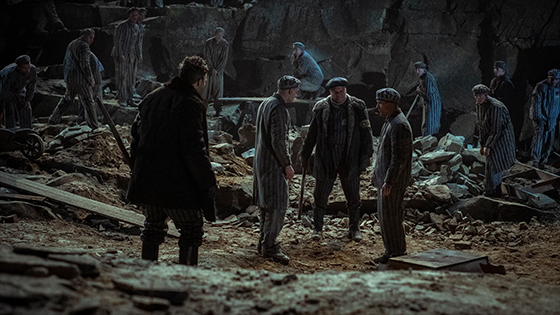
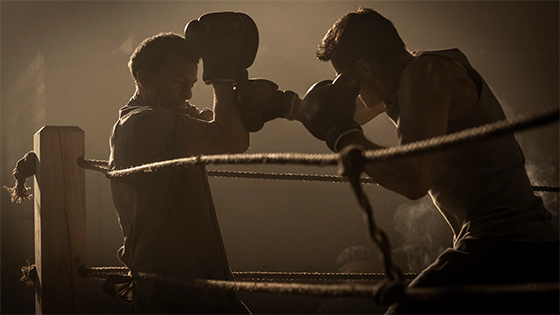
The scene of the first, sudden and improvised, fight in Barkhevsky’s picture occurs on a quarry - this setting is perhaps more spectacular than camp cuisine (where everything happened in reality). The enemy of Teddy is the German Capo (overseer from prisoners): the general sports past seems to take off the barrier between them, Capo begins to clearly sympathize with the famous "master of bows from Warsaw." Despite the fact that by the time of the first battle, Podshikovsky was far from the best physical form, it is the brilliant technique that helps him overcome the enemy.
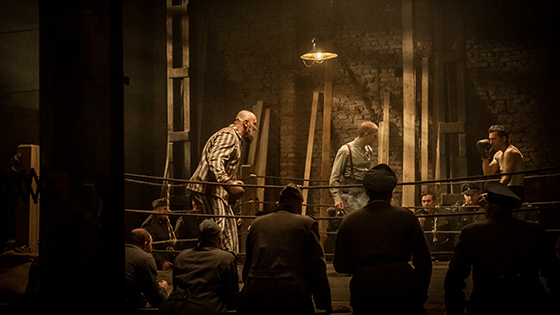
The camp commandant understands that Teddy can be used in order to entertain subordinates, and special conditions of detention are provided to the Polish boxer. Barkchevsky shows that in the concentration camp there were, as it were, parallel worlds: on the one hand, regular transports of Jews, immediately sent to gas chambers, desperate attempts to escape, ending in death at a fencing of barbed wire, on the other - concerts of classical music and fights for the amusement of the Nazi executioners.
 © "Pioneer"
The main character is well aware of the ambiguity of his position and does everything possible to help the brothers in misfortune: he shares bread with them, who receives for every fight won, secretly wears medicines from the sterile infirmary of the SS to the so -called lasaret, in fact representing a dirty common chamber. Once Pensikovsky sees how the body of the next opponent who had defeated by him, shot after losing, is taking away the body, and understands that what is happening has nothing to do with sports - but at the same time his victories give the prisoners great moral support and hope. Of course, this cannot but bother the Nazis, who at a certain moment set the task of breaking Teddy at all costs.
 © "Pioneer"
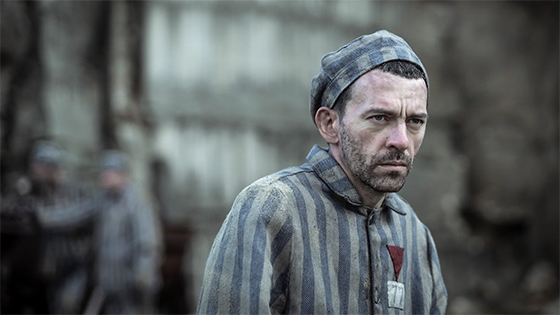
“Champion from Auschwitz” attracts attention primarily by the acting work of Peter Glovatsky. The role of Petshikovsky was written specifically for this bright and talented artist, who has long been removed, but mainly in the background. Glovatsky was preparing to play Petshikovsky for more than a year, sat on a special diet for a long time and learned to box. Outwardly, he does not resemble a boxer at all, but creates in the picture a convincing, emotionally multifaceted image of a great inner power. It seems that this is the most important thing for Barkchevsky. It is no coincidence that he was one of the producers of Lukash Plkovsky’s tape “Best of all” (2017), telling about the athlete, which has crossed the passion for drugs and the champion.
 © "Pioneer"
Recently, in Poland, a lot of Bayopics have been being removed about important personalities of Polish history. A familiar trend, isn't it? Different directors fulfill this peculiar order very differently . We can say that in the "Champion from Auschwitz" historical, camp realities are only a certain background. The director does not claim the laurels of Hungarian Laszlo Nemesh, who proposed a radically new artistic approach to the topic of death camps in the “Son Saul” (2015). Barchevsky, obviously, is closer to the Hollywood model with its inherent well -known schematism, he is not alien to pathos, sometimes aesthetically not accurate. But first of all, his film is the story of a person in inhuman conditions, a story about an unquenchable will to life, even when only death around. “I always knew who I would like to be,” says the main character in a final conversation with the head of the camp. That is how you can guess, and helps him survive.