
Translated material
Hitler Bastrykin caught
Citizens who “rehabilitating Nazism” were the new goal of the security forces - dozens of sentences under this article pass in the country
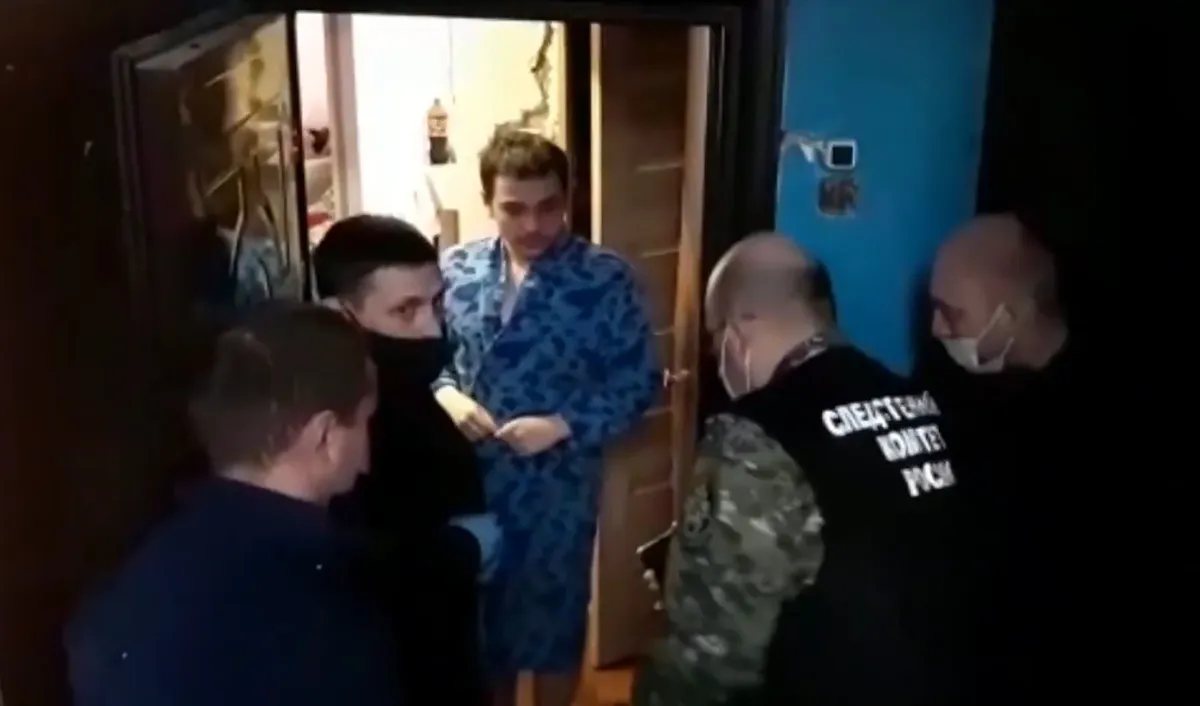
On January 19, the jury found the 41-year-old saxophonist Andrei Shabanov from Samara in the commission of a crime in parts 1 and 3 of Article 354.1 of the Criminal Code of Russia (“Rehabilitation of Nazism”)-Shabanov should be announced on Friday, January 28, but the meeting was postponed. The criminal case against the saxophonist was instituted after the man tried to upload a photograph of the young Adolf Hitler to the site of the Immortal Regiment. He was also charged with the publication of several posts on VKontakte with criticism of the USSR and the traditions of celebrating Victory Day. According to Shabanov himself, he was not going to “rehabilitate Nazism” in any case - the man is intolerant of any forms of totalitarianism. Similar words are also said by other accused and convicted under Article 354.1 of the Criminal Code: someone was arrested for a stupid joke, someone for a drunken trick, and some did not even suspect that they could “rehabilitate Nazism” with their actions. At the same time, the article was tightened last year and now the maximum punishment for it is a five -million fine or five years in prison.
The correspondent of the "New" figured out who in Russia was judged for the "rehabilitation of Nazism" and why there are more and more such criminal cases.
"Somewhere between the genocide and the unleashing of an aggressive war"
On January sixth, the driver of the engineer-saperular platoon David Agaragimov, together with his colleagues, returned from the dining room along the territory of the military unit No. 51532 on the Farm of Molkino, located near the hot key in the Krasnodar Territory. The road of conscripts passed by the monument to the "military personnel in local conflicts." As follows from the certificate of the room prepared in the unit (is at the disposal of the editorial office), the sculpture was installed back in 2003 in memory of the soldiers who died in the Chechen war. According to another version, the monument in Molkino is dedicated to the feat of the special forces Raushan Abdullin, committed during the armed conflict between Georgia and Southern Ossetia in 2008.
The sculpture is the figures of the two military: one of them fell on his knee and rests on the machine, the other stands nearby, putting his hand on his shoulder. "Jokes for the sake of" Agaragimov decided to approach the sculpture and show several combat techniques on it. In addition, the SLI gave the slap in the face of one of the figures and kicked the other.
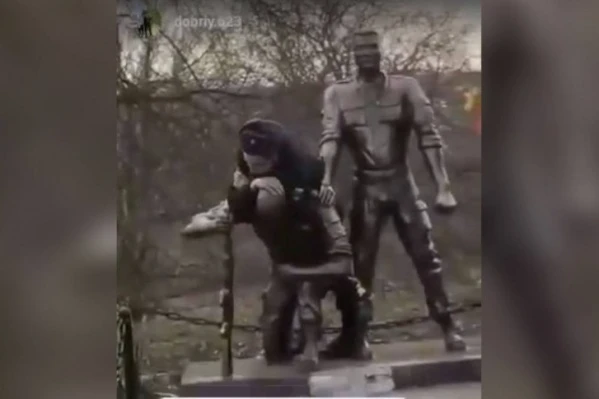
All this was filmed on camera by his colleague (as Mediazona wrote *, it was allegedly Amirkhan Ibragimov) and posted it on his Instagram account, noting on a friend of a friend. The video shows how a young man in the form approaches sculpture and begins to interact with it. Behind the scenes, laughter and shouts are heard: “Put it, David! We argue, do not put it? ”; “If they saw him, he would have been imprisoned!”
As the lawyer of Agaragimova Alexei Avanesyan says, the publication gained “penny views” (483 people were signed to the conscript account that posted the video, now the page is not available). The video was “encouraged” at the end of the New Year holidays, on January 9, when the screenshots with the record were published by the telegram channel Readovka, as well as the page “Bad News” on VKontakte.
The video was watched not only by subscribers of the media and Instagram of the conscript, but also by the FSB officers on the Krasnodar garrison. Not only looked, but also compiled a report on the discovery of crime in the actions of military personnel under Part 4 of Art. 354.1 of the Criminal Code of Russia (“Rehabilitation of Nazism”).
On January tenth, the Investigative Committee opened a criminal case against two troops under this article. They face up to five years in prison.
As the investigator of the UK considered, the military entered “the criminal conspiracy to desecrate symbols of the military glory of Russia, insulting the defenders of the Fatherland” using the Internet. The Investigative Committee also considered that Agaragimov acted, “wanting to demonstrate his neglect of the memory of the dead paratroopers, thereby showing his imaginary superiority over society and military personnel of the named special unit, expressing the clear disrespect, denial and rejection of the norms and rules of behavior adopted in society” ( a quote for a decree on the decrement of about The initiation of a criminal case is at the disposal of the editorial office .
The defense side with the initiation of a criminal case does not agree, especially under such an article. As Avanesyan concludes, from the Federal Law “On Objects of Cultural and Heritage”, the monument “military personnel who fell in local conflicts” does not carry cultural and historical value, and the dates of deposition of flowers to him cannot be attributed to the Day of Military Glory or a memorable date. The legal definition of what is a “symbol of military glory” simply does not exist. In this regard, the lawyer demands to terminate the case under an article on the “rehabilitation of Nazism”. As Avanesyan concludes, the conscript’s action could rather affect public morality and safety. But such articles are in other chapters of the Criminal Code.
- The article by which they accuse my client refers to crimes against humanity. In the Criminal Code, it stands somewhere between the "genocide" and "unleashing an aggressive war." What can you say, ”Avvanesyan concludes.
At the same time, his client signed the confession even at the first interrogation with the inaction of the lawyer for their intended purpose (Avanesyan did not immediately enter the matter). According to Avanesyan, these testimonies were written in such a way that they and the Doctor of Sciences would not have been. "
- Just the whole disposition of the article was painted on two pages, and he signed “I plead guilty”. According to him, the state lawyer said that it would be better, ”the defender lamented. - When I entered into business, I say: let's discuss everything with him. And the guy, besides jokes, does not know what Nazism is, nor what is symbols of military glory.
He has nine classes of the education of a rural school, he really speaks Russian in Russian. It serves two months. How could he deliberately prove something like that?
In repeated testimony, Agaragimov writes that he does not adhere to extremist views, and performed these actions in relation to the monument "by stupidity to make fun of those who were nearby." The SLI is ready to compensate for moral damage. On January 26, the court extended his arrest for two months.
"Crimson" for trying to upload a photo
Despite the fact that the article “On the rehabilitation of Nazism” is quite loud, the practice of use for a long time was very small, and the law was even called “dead”. As the “new” experts interviewed, usually the cases under Article 354.1 of the Criminal Code are excited no more than ten a year. The senior partner of the Pen & Paper Bar Association, former Senator Konstantin Dobrynin concludes that this is partly due to the extremely vague and inaccurate formulations of the law, which is difficult to apply in specific cases. As a result, law enforcement agencies in many situations prefer to apply more familiar corpus delicti. For example, related to the spread of extremist materials, the justification and approval of crimes committed on the basis of racial and national enmity.
Nevertheless, in recent years, the number of crimes under article 354.1 is growing rapidly. In the spring of 2021, Russian Prosecutor General Igor Krasnov reported more than two times the growth of cases under the article on the “rehabilitation of Nazism” over the past three years.
So, if in 2018 16 such crimes were registered, in 2019 - 22, and in 2020 - already 40.
Paradoxically, the conditions for this created a pandemic, due to which in 2020 and 2021 the annual campaign "Immortal Regiment" decided to hold online. To participate in the action, it was necessary to leave a request with a photograph of a veteran on the resource of Sberbank Bank of Memory or on the website of the Immortal Regiment. The collected photos were shown as a result as part of a “virtual procession”.
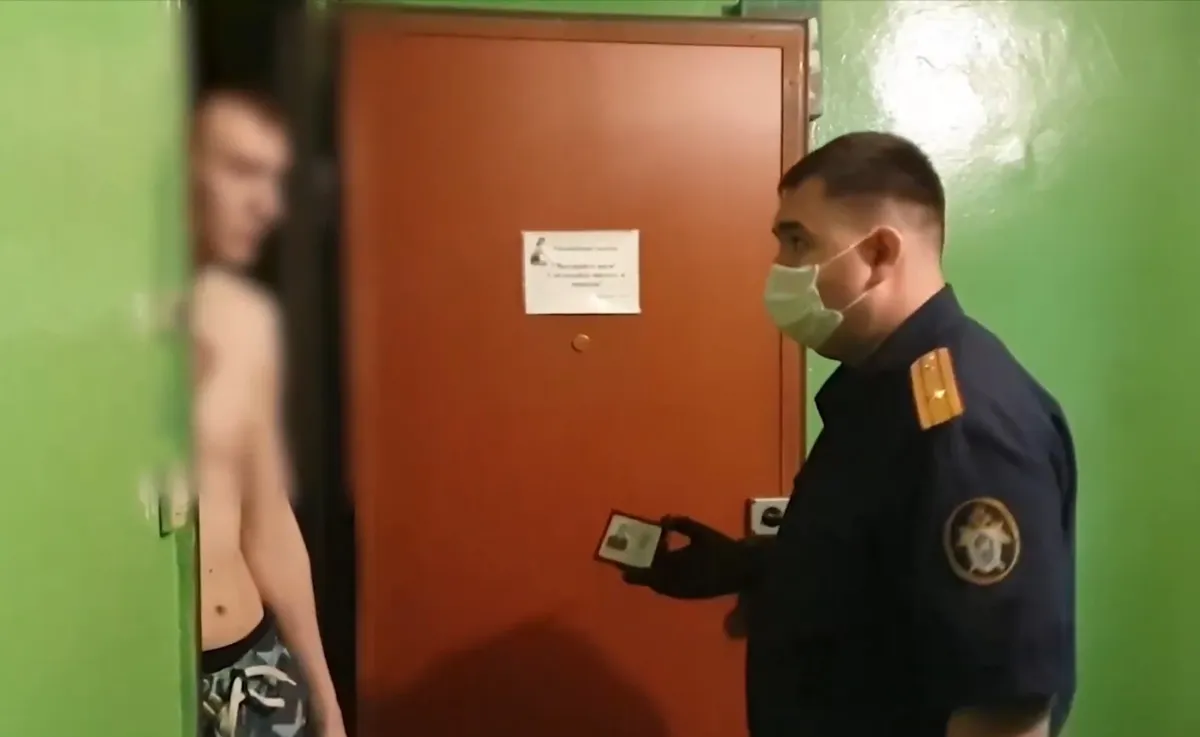
The movement of the action online was an alternative and, according to the editorial office, the disgusting “flash mob” (it is worth taking into account that its participants did not talk about each other and did not know about each other): not only photographs of veterans, but also famous Nazis, Adolf Hitlers, Henry Gimmler, Andrei began to upload the Bank of Memory, Andrei. Vlasov and others. Often photos were signed by the names of real veterans.
Attempts to include the Nazis in an online context entailed the massive criminal proceedings on the “rehabilitation of Nazism”. Only in May 2020, more than ten people throughout Russia became suspected of committing a crime.
The investigation considered that in this way the suspects expressed the "approval of crimes of the Nazi regime."
- For two years, there are already a dozen convicts under the article “On the Rehabilitation of Nazism” for trying to upload photos to the website of the Immortal Regiment campaign. A certain amount is still on the way, ”says Alexander Verkhovsky, director of the owl information and analytical center **. - Honestly, in most cases we have no idea what kind of people are and why they did it at all. Did they really want to promote Nazism or was it a stupid joke? They did not write anything. So the motive is not clear. They even did not load the pictures in the end.
Fines and compulsory work are the most common punishment under the article. Last year, due to the load on the site of the Immortal Regiment, the Nazis photographs by 10 months of correctional labor with a deduction of 15% of the wages sentenced a resident of Vladivostok. By the 90,000th fine, the court sentenced a resident of Voronezh Alexander Khoroshiltsev. Similar punishment measures were also appointed to residents of Perm, Orenburg, Chelyabinsk, Udmurtia. At the same time, part of the accused does not plead guilty, claiming that they did not want to rehabilitate Nazism with their actions, but expressed disagreement with the “Immortal Regiment” action (the same Khoroshiltsev called it the propaganda of patriotism).

Among those who did not plead guilty, was a 41-year-old saxophonist from Samara Andrei Shabanov. In 2020, he tried to upload a photograph of young Adolf Hitler to the Bank of Memory website, signing it with another name. As in many other cases, the moderation did not pass the picture, but a criminal case was opened against Shabanov, adding several more episodes to him for publication in VKontakte. As the lawyer Shabanova Alexei Lapuzin says, the attention of the security forces also attracted the picture in which toy soldiers are thrown into a meat grinder (the St. George ribbon is obtained at the output), and several texts about Victory Day and the Second World War.
The defendant did not deny posts, but it justified it with a desire to “justify Nazism”, but a critical attitude to the Russian government and the use of historical policy for propaganda purposes. In the hope of a more fair trial, Shabanov requested the consideration of the case by the jury.
On January 19, the jury found Shabanov guilty.
“We will appeal the sentence because the fundamental foundations of criminal proceedings in Russia were violated,” says Lapuzin. -For example, we invited an expert of an expert linguist, who came to the conclusion that Shabanov did not disseminate in VKontakte any false information about the activities of the USSR and did not desecrate the St. George ribbon. However, we were not allowed to interrogate this specialist in the presence of a jury. Also, the court did not allow us to interrogate a number of witnesses and refused to conduct a repeated examination. There was a clear skew towards the prosecution.
Among the specialists from the defense, who nevertheless managed to speak to the jury, was the editor -in -chief of the Mediazones Sergey Smirnov ***. On January 17, he spoke at a meeting of the Samara Regional Court of Fine Superior. According to Smirnov, during the interrogation, the prosecution tried to find out how much the phrase about the “conquest of Europe” corresponds to “historical truth”.
- I explained that in history many questions are discussion in nature and the phrase “historical truth” itself is not entirely correct. But the prosecutor continued to insist, ”says Smirnov. - Protection was also interested in how much this could be correct from a historical point of view. Accordingly, I said that this is obviously not a historical assessment, but a journalistic one.
In the debate (a copy of the text is at the disposal of the editorial office), Lapuzin insisted that the state prosecution could not prove the interest of his client in Nazi ideology. Moreover, according to the numerous correspondence of Shabanov, we can conclude that he more often criticizes totalitarian regimes, in particular, Nazi Germany. In one message, Shabanov directly calls Hitler "a ghoul, the debate about whose atrocities are meaningless."
Spring against Nazism
The criminal liability for the “rehabilitation of Nazism” is not a unique norm, similar laws are in force in most European countries, says Alexander Verkhovsky, director of the SOVA information and analytical center. The sanctions for the denial of the Holocaust and the crimes of the Nazis at the legal level are enshrined in Austria, France, Belgium, Poland, Canada, Israel and other countries. In Hungary, for the denial of the crimes of totalitarian regimes, you can get a punishment up to three years in prison, and in Germany you can sit for five years for the denial of the Holocaust.
In Russia, the introduction of legal responsibility for the “rehabilitation of Nazism” began to be actively discussed at the end of the zero-a group of deputies from United Russia, headed by ex-speaker of parliament, Boris Gryzlov, made appropriate amendments to the Criminal Code in May 2009. It was not possible to implement the idea quickly: the government opposed the bill, doubting the correctness of a number of formulations.
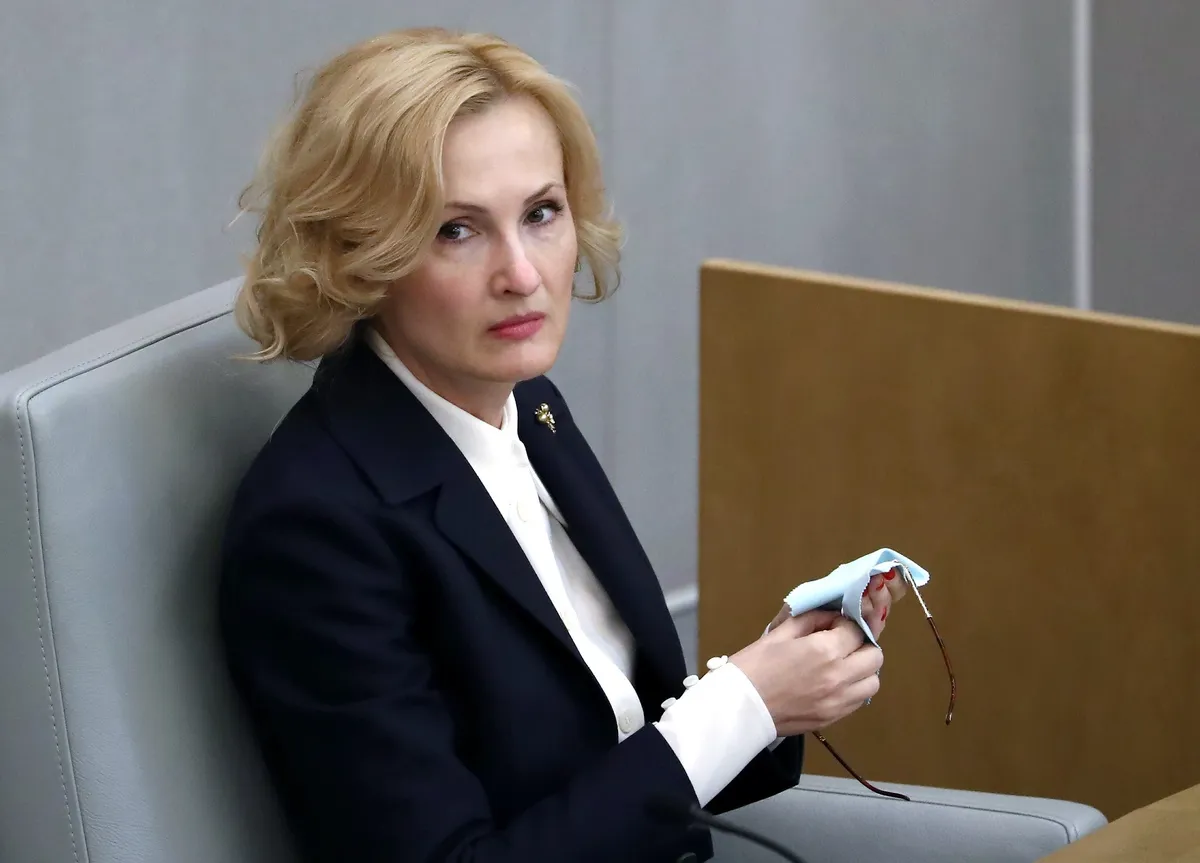
Interest in the initiative returned only after four years. In 2013, the head of the State Duma Committee on Security and Combating Corruption Irina Yarovaya introduced the new version to the State Duma at that time. At the beginning of 2014, a formal reason appeared to promote the bill: on the eve of the 70th anniversary of the lifting of the blockade of Leningrad, the journalists of the Rain television channel* asked their spectators, whether it was worth taking the city to save its inhabitants.
In the State Duma, the survey was regarded as “rehabilitation of Nazism”, and Irina Yarovaya called him “a direct insult to the sacred memory of the war”.
As a result, 40 deputies of all fractions began to work on the new criminal article. Amendments introduced criminal liability for the denial and approval of Nazi crimes established by the International Military Tribunal in Nuremberg, as well as for "the spread of obviously false information about the activities of the USSR during the Second World War." In the first reading, the deputies adopted the bill unanimously, and already in May 2014, President Vladimir Putin signed a decree.
According to the lawyer of the Network Freedom project Stanislav Seleznev, the conflict in eastern Ukraine also greatly influenced the wave of discussion.
“The press actively began to appear that volunteer units are operating on the territory of Ukraine, the purpose of which is to recreate the method of actions and thoughts of military formations of the forties of the twentieth century,” says Seleznev.
- As I suppose, the law was also introduced to exclude the emergence of such organizations in Russia.
Seven more years later, in April 2021, the norm was significantly expanded and tightened. Now the “justification of Nazism”, committed by a group of persons, by prior conspiracy and using the Internet, is punishable by a separate part of the law and may threaten a five millionth fine or imprisonment for five years. The conversation about the change in this part of the Criminal Code was conducted against the backdrop of the criminal case “On the slander of the veteran” against the politician Alexei Navalny.
The senior partner of the Pen & Paper Bar Association, former Senator Konstantin Dobrynin, explains that it is possible to persecute with two options for actions:
-Firstly, to publicly deny the facts established by the Nuremberg Tribunal and approve the crime, as well as to disseminate knowingly false information about the activities of the USSR in the Second World War and the veterans.
-Secondly, publicly desecrate symbols of military glory, express disrespect for the memorable dates of Russia, humiliate the honor and dignity of veterans.
Employees of the Investigative Committee defend the historical past. As Stanislav Seleznev notes, the management of the Investigative Committee for the Investigation of Crimes related to the use of prohibited funds and methods of warfare, the main investigative department of the IC of Russia is engaged in cases of rehabilitation of Nazism. The department was opened in 2014 and worked mainly in two key areas: war crimes of the period of the forties of the twentieth century, and also engaged in the investigation of criminal cases that occurred as part of a conflict in eastern Ukraine.
В сентябре 2020 года председатель СК России Александр Бастрыкин также объявил о создании специального подразделения по расследованию преступлений, связанных с реабилитацией нацизма и фальсификацией истории отечества. В пресс-релизе СК глава ведомства мотивировал создание нового отдела рассекречиванием архивов, а также неприемлемой для России позиции «отдельных западных стран» по оценке итогов Второй мировой войны.
От историка до Моргенштерна
Несмотря на то, что на первый взгляд статья не сильно отличается от международного законодательства, еще на этапе принятия законопроекта правозащитники заметили в формулировках статьи некоторые «странности». Информационно-аналитический центр «Сова» еще в 2014 году заявлял , что закон, разработанный депутатами во главе с Яровой, не имеет практического смысла и фактически направлен на запрет исторической дискуссии. По словам Александра Верховского, вопросы вызывал запрет на клевету на политику СССР в годы Второй мировой войны и на осквернение символов воинской славы.
— Честно говоря, непонятно, что все это значит. Если у нас есть официальный список дней воинской славы ( туда входят даже дни победы в Куликовской битве и на Ледовом побоище . — Ред. ), с символами все не так и прозрачно. Каждый может отнести к ним все что угодно. В некоторых делах в качестве символа фигурирует георгиевская лента. Но это только наша ассоциация, а не норма закона, — объясняет Верховский.
Дело срочника Агарагимова об осквернении памятника «павшим в локальных конфликтах» довольно нетипично: большинство обвинений по статье 354.1 так или иначе связано с распространением информации о Второй мировой войне. Разве что в августе прошлого года историка Сергея Чернышова из Новосибирска вызывали в Следственный комитет за пост в фейсбуке об Александре Невском. До уголовного дела так и не дошло.
При этом Верховский указывает на то, что некоторое время после принятия закона о «реабилитации нацизма» дела действительно заводили за высказывания, которые восхваляли гитлеровскую политику. Исключения происходили не так часто.
— Потом приговоры за «нацистские высказывания» как-то закончились. Начались дела другого типа, — заключает Верховский.
Кейсы все еще случаются громкие. К примеру, в прошлом году фигурантом уголовного дела стал 19-летний студент Российского государственного гуманитарного университета (РГГУ) Матвей Юферов. Студента обвинили в «реабилитации нацизма», после того как он помочился на стенд с биографией ветерана Анатолия Фролова и выложил сторис в инстаграм.
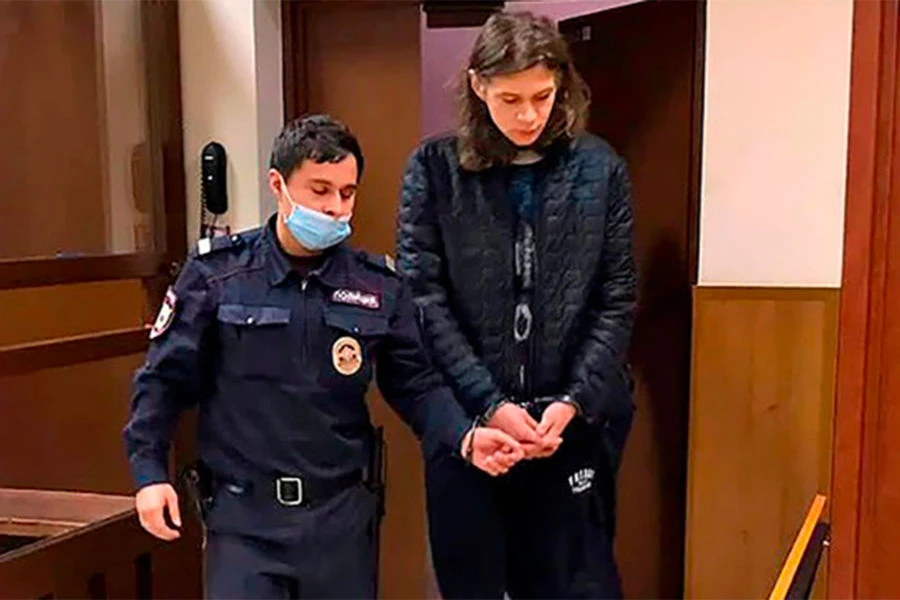
Позже молодой человек раскаялся в своем поступке. Как заявил Юферов, он никогда не разделял нацистскую идеологию, а на момент совершения преступления был пьян и сам не знает, почему совершил свой поступок. После возбуждения уголовного дела Юферов пожертвовал одному из фондов помощи ветеранам 30 тысяч рублей. Деньги он накопил, подрабатывая курьером.
Тем не менее делом Юферова занималась следственная группа из пяти человек, по его месту жительства прошли три обыска. После задержания Юферов был помещен в СИЗО, а в конце декабря прошлого года Московский городской суд приговорил его к четырем годам колонии — на данный момент это самый суровый приговор по статье.
— Если посмотреть открытую судебную статистику, то приведенный пример — это все-таки дурное исключение из общего правила. Обычно применяются более адекватные, мягкие виды наказаний, например, денежный штраф или обязательные работы. В то же время в реальной текущей практике речь обычно идет о распространении в социальных сетях различных текстов, фотоизображений, в которых пользователи одобряют деятельность нацистов, оскверняют советские воинские символы, — оценивает приговор Добрынин.
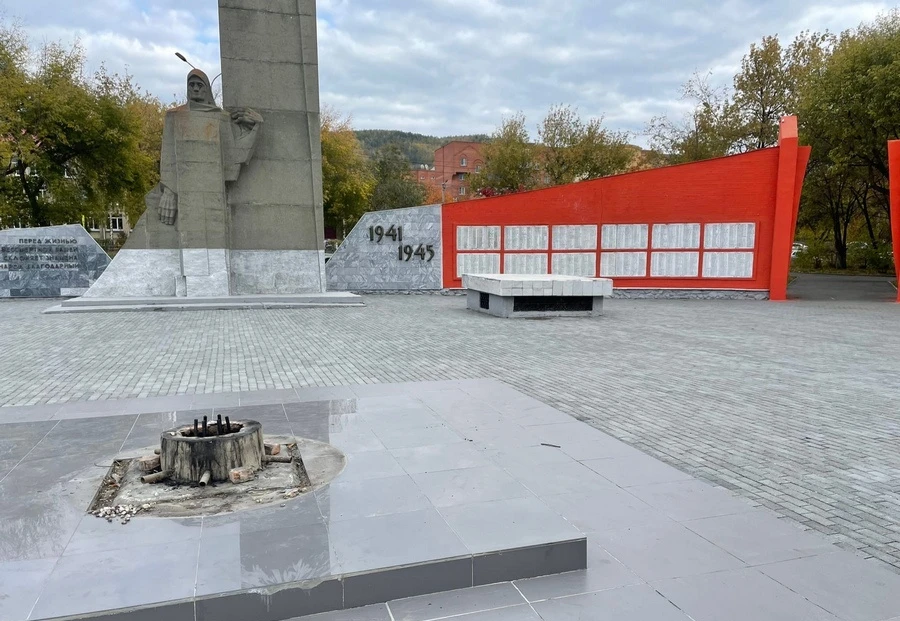
Другое громкое уголовное дело возбудили в Челябинской области, в Миассе. Его фигурантом стал бездомный, который, по данным региональных СМИ, решил сжечь венок на мемориале Вечного огня, чтобы на образовавшемся огне сушить носки. Изначально полиция возбудила дело о вандализме (214-я статья УК), но после того, как инцидент заинтересовал главу СК Александра Бастрыкина, статью переквалифицировали на «реабилитацию нацизма». Бездомного отправили в СИЗО.
Публичность статье о «о реабилитации нацизма» также обеспечивает общественная организация «Ветераны России», которая регулярно пишет обращения в прокуратуру и Следственный комитет с просьбой проверить ту или иную деятельность на предмет «реабилитации нацизма». «Под прицел» «ветеранов» за последние пару месяцев уже попали:
— Журналист Виктор Шендерович***. Организации не понравились его слова в эфире «Эха Москвы» о маршале Георгии Жукове и праздновании Дня победы.
— Правозащитная организация «Мемориал»****. «Ветераны России» заявили , что правозащитники, спекулируя на теме политических репрессий, «обеляют нацистских преступников».
— Рэперы Noize MC и Оксимирон. Сначала деятельность артистов якобы «просил» проверить блогер Дмитрий Якушев в посте в «Живом Журнале». Мужчина намеренно писал текст в «идиотской форме» и не думал, что его воспримут всерьез. Когда выяснилось, что его действие было шуткой, «Ветераны России» написали уже настоящее обращение.
— Рэпер Моргенштерн. Организации не понравились высказывания рэпера о Дне Победы в интервью Ксении Собчак.
Ivan Kurill
профессор Европейского университета в Санкт-Петербурге, специалист по исторической политике:
— Память о Великой Отечественной войне важна прежде всего вне всякой связи с политикой — это значимая часть семейных историй и той самой идентичности россиян. Из-за того что отношение к Великой Отечественной у россиян в наибольшей степени похоже, память о войне служит своего рода «социальным клеем» российской нации. У граждан есть память, а у политиков есть запрос на ресурсы, способные мобилизовать граждан. Память — один из таких ресурсов.
У задачи сохранения единой версии «исторической правды» могут быть разные объяснения. В частности, история может быть одним из языков для разговора о политике. Политики говорят о прошлом, когда хотят сказать что-то о современности, однако политического языка для разговора о проблемах сегодняшнего дня у них нет — и политики начинают говорить о тысячелетней истории Руси, о сакральном Херсонесе, но чаще всего о Великой Отечественной войне. Но если отсылка к событиям и людям прошлого — лишь язык, то он должен быть однозначным, все должны понимать, что ты хочешь сказать, упоминая Сталина или, скажем, Власова. В итоге это бьет по исторической дискуссии и историкам, потому что их профессиональный язык начинают слышать как политические заявления.
Очень плохо, что за «охрану исторической правды» теперь взялись правоохранители. Наиболее заметен, конечно, Александр Бастрыкин. Тем не менее, когда прошлым летом создавали комиссию по историческому просвещению, туда должны были войти представители администрации президента, аппарата Совета безопасности, Генеральной прокуратуры, Следственного комитета, Службы внешней разведки, Минобороны, МВД, ФСБ ( президент Владимир Путин учредил комиссию 30 июля прошлого года . — Ред .). На этом фоне уже не совсем понятно, зачем там еще представители Минкультуры, Минпросвещения и Российской академии наук. Хотелось бы напомнить, что поиск исторической истины — не дело правоохранителей, но теперь государству вменена защита «исторической правды» и в Конституции.