
Translated material
The old guard
The average age among Russia’s political elite is almost on par with the Brezhnev era. But Putin’s top officials are still younger than their American counterparts.
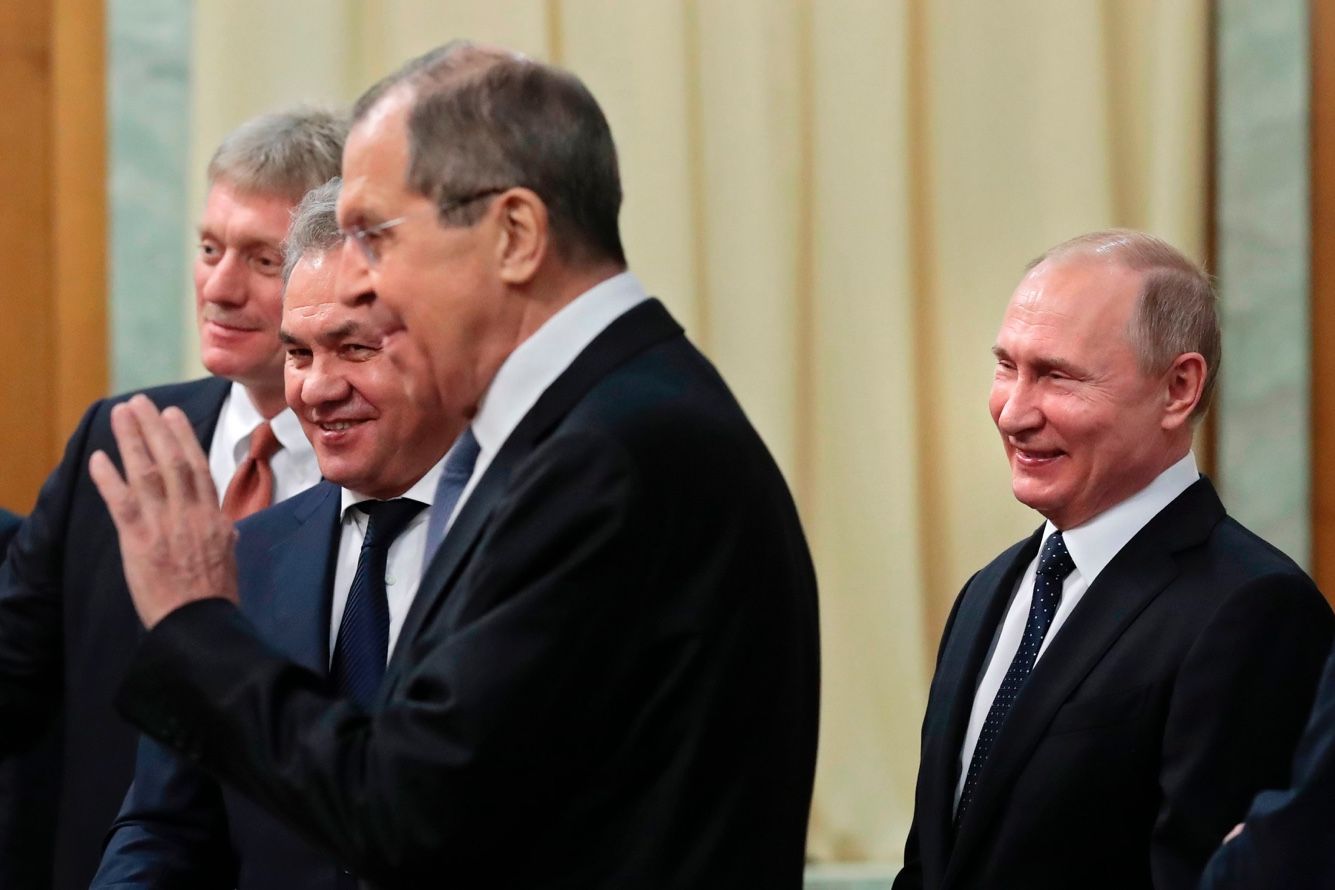
When Vladimir Putin came to power in Russia, the mandatory retirement age for government officials was 65 years old. During Dmitry Medvedev’s presidency in 2010, this age limit was lowered to 60. But just three years later, after Putin had returned to the presidency, it was raised to 70 years old. Since then, the Russian president has been gradually extending or abolishing the mandatory retirement age for senior civil servants, as Putin’s entourage continues to age along with him. In a new investigation, iStories journalists calculated the average age of Russia’s ruling elite. Here’s what they found.
How did they do the math?
In January 2022, iStories’s journalists gathered up-to-date data on the ages of the leaders of key Russian government bodies, including the Cabinet of Ministers, the National Security Council, the Presidential Administration (Putin’s Executive Office), the State Duma, the Federation Council, as well as federal services and agencies. Separately, they calculated the ages of all the heads of Russia’s regions.
Then, the journalists calculated the average and median ages of all of Russia’s highest officials, as well as the share of people among them who are of retirement age (61.5 years old for men, 56.5 years old for women). In addition, iStories compared the ages of members of the Russian Cabinet and Parliament with those of their counterparts in other countries; namely, in Belarus, Ukraine, Kazakhstan, the United States, the United Kingdom, Germany, and France.
The average age among the leadership of Russia’s highest bodies of legislative and executive power is currently 55 years old. This is slightly lower than the average under Soviet leader Leonid Brezhnev (55.9 years old), but higher than under the Soviet Union’s last leader Mikhail Gorbachev (51.6 years old) and under Russia’s first President Boris Yeltsin (50.2 years old). It’s also higher than the average age during the early years of Vladimir Putin’s presidency (50.9 years old).
Russia’s National Security Council has the “oldest” membership of any of the country’s highest decision-making bodies. The average age of its members is 62 years old (the median age is 65 years old). In addition, the Security Council has the highest proportion of members who are of retirement age — 57 percent. Many of the council members began their careers during the Soviet period, and both the Security Council’s head, President Vladimir Putin, and secretary, Nikolai Patrushev, served in the KGB and led its successor, the FSB. (As Meduza reported previously, the National Security Council appears to be orchestrating the decisions on “foreign agent” and “undesirable organization” designations.)
Putin’s Executive Office (the Presidential Administration or AP) comes in second place — the average age of its leadership is 58 years old (the median age is 57 years old), and a third of its officials are of retirement age. It’s followed closely by Russia’s Senate — the Federation Council, — where the average age among senators is 57 years old (the median age is 58 years old). In addition, 39 percent of the Federation Council’s members have crossed the threshold for retirement (this indicator is only higher on the National Security Council). Russia’s oldest government official in a top-level post is also presiding there — 92-year-old Nikolai Ryzhkov, who served as the last prime minister of the USSR.
- The average age of Cabinet members is 54 years old (the median age is 55 years) and a quarter of them are of retirement age. Russia’s oldest minister is longtime Foreign Minister Sergey Lavrov, who turns 72 this year.
- The average age of State Duma deputies is 53 years old and a quarter of lawmakers are of retirement age. Russia’s oldest lawmaker is 85-year-old Vladimir Resin, who was first elected to the State Duma in 2011 and, as iStories reported previously, has never said a word during a parliamentary session.
- The youngest Russian officials in high-level positions are governors. The average age among the heads of regions is 51 years old (the median age is 50 years old), and only 12 percent are currently eligible to retire.
All of Russia’s highest state bodies have “aged” in the last 10 years. Since 2012, the average age of National Security Council and Cabinet members has increased the most — by seven years. The average age of top officials in Putin’s administration has gone up by six years, while the average age of lawmakers and senators has gone up by two years. Governors are the only exception to this trend — their average age has decreased by one year.
The average age of the ruling elite depends on personnel rotation. However, the closer a state body is to the Russian president, the more infrequent the turnover. Turnover is the lowest on the National Security Council (where 49 percent of members have held their seats since 2012) and in the Presidential Administration (where 39 percent of the leadership hasn’t changed in the last 10 years). President Vladimir Putin personally appoints National Security Council members and the AP’s leadership.
- The Cabinet of Ministers has seen 76 percent turnover in the last 10 years. The biggest shuffle took place in 2020, after Mikhail Mishustin was appointed to replace Dmitry Medvedev as prime minister.
- The governor corps has seen 82 percent changeover. Political scientist Andrey Kolesnikov from the Carnegie Moscow Center attributes this to the Russian president has been seeking “rejuvenation at the middle level.” “Putin will be in place as long as he needs to, but he will need the support of young cohorts of managers,” he explains.
- The composition of elected bodies have also changed significantly, Kolesnikov notes. Indeed, the Federation Council has seen 85 percent turnover; the State Duma — 67 percent. But this doesn’t indicate a real change of power, since the parliament is “loaded with pre-pensioners” or people waiting for appointments to the executive branch.
Russia’s top officials are younger than their American counterparts, whose average age is 60 years old. They are also younger than their counterparts in Kazakhstan (57 years old) and the UK (56 years old). However, they are older than their counterparts in France (54 years old), Belarus (53 years old), and Germany (51 years old). Among all the countries iStories analyzed, Ukraine has the youngest political elite. After Volodymyr Zelensky was elected president in 2019 at the age of 41, the average age of high-level Ukrainian officials became 44 years old.
Summary by Olga Korelina
Translation by Eilish Hart