
Translated material
Get the cracks!
Under the smoke curtain of military rumors, the State Duma radically changes the rules of the election: the urns throughout the country will become electronic
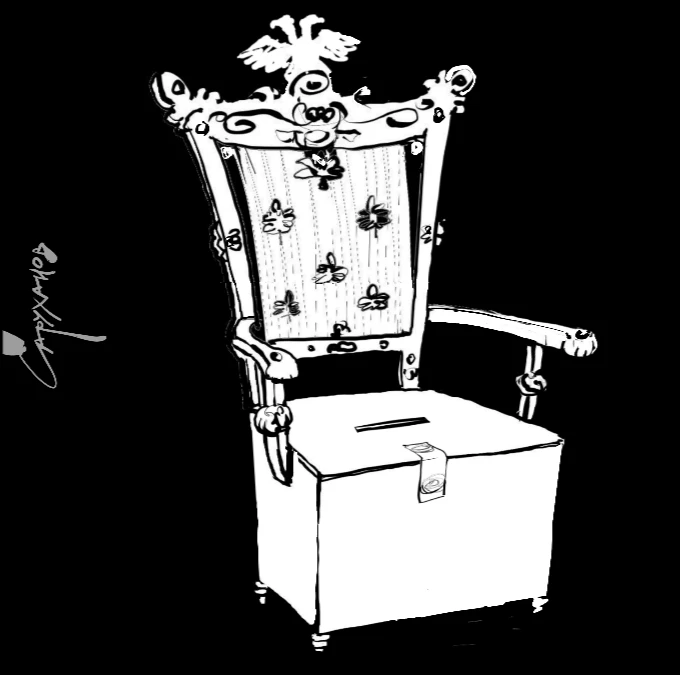
This is not the first time for the authorities the laws are adopted to the noise when public attention is distracted by others.
And now, when the topic No. 1 was the danger of a new war with Ukraine, a law was almost imperceptibly adopted, which can radically increase the possibilities for unpunished falsification of election results.
Dmitry Dmitry Vyatkin and Dmitry Lamikin proposed changing the federal law “On Basic Guarantees of Electoral Rights and the Right to Participate in the Referendum of Citizens of the Russian Federation”, establishing uniform rules for conducting all levels of “distance electronic voting” (DEG).
Their project was accepted in the first reading with 296 votes “For” at 74 “Against”. The United Russia, Zhirinovites and “new people” voted “for” (more and more often solidarized with the party in power: they previously supported the Law of Klishas - Krasheninnikov on the actual destruction of local self -government), “against” the Communists and “Socialist -Revolutionaries”. Until February 24, they will collect amendments to the second reading.
Now the DEG is mentioned in the law, but extremely lapidar: it is only indicated that it can be used “in cases and the manner established by the Central Election Commission”, without any specifics. In 2019–2021, the CEC held such elections “as an experiment” in different regions, including Moscow, in the State Duma elections and the Moscow City Duma in 2021.
Now it is proposed to introduce a separate article describing DEG into the law. True, which is very characteristic, in this article
There is not a word about the possibility of public control over the progress and determination of the results of DEG.
What is proposed?
The decision to hold DEG in the elections is made by the relevant election commission:
in the federal elections - CEC,
On regional and local - the election commission of the region in agreement with the CEC.
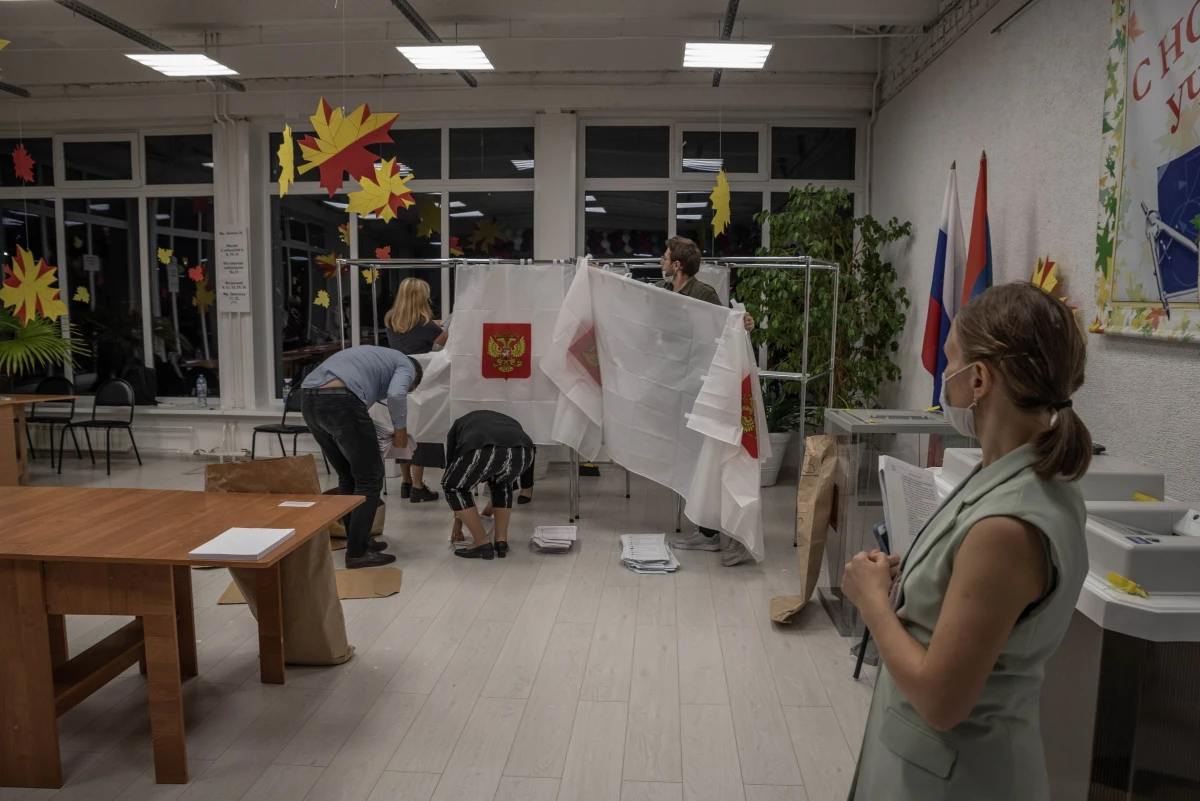
The order of DEG in federal, regional and local elections (if federal state information systems are used for DEG) is also approved by the CEC. If regional state information systems are used in regional and local elections, the voting procedure approves the regional election.
If the decision on the use of DEG is made, a voter who wants to vote electronically “appeals to a special portal on the Internet, determined in the order of remote voting, and undergoes identification and authentication procedures, as well as personality confirmation, after which he gains access to remote electronic voting.” In this case, this voter is excluded from the paper lists of voters voting in polling stations.
All applications submitted are tested and compared with the data of GAS “Elections”, after which lists of DEG participants are formed.
During the DEG, “an anonymization procedure is carried out, at the end of which the transition to an electronic ballot is carried out and the opportunity is given after familiarization with the necessary information and the procedure for filling it out to make a will by putting an electronic square in the square related to the position in whose favor the choice has been made”.
Further, during the DEG “Anonymous results of the will, as they form, they are immediately encrypted and stored in encrypted form in the chain of information blocks in the corresponding database. The encryption of the results of the will is carried out using the encryption key. Deciphering the results of the will using the encryption key is impossible. After the vote is completed, decoding the results of the will is carried out using the decoding key. ”
Finally, "the impossibility of establishing a connection between the personal data of the voter, a referendum participant and the result of his will."
On paper, all this looks smooth, and citizens should not cause concerns ... But it is smooth, as in the proverb: only on paper. "Ravings" - there is plenty of one.
Recall that in the 2021 elections, DEG caused a flurry of criticism as opaque and uncontrolled for independent observers and opposition candidates and leading to, to put it mildly, strange results.
So, in Moscow, in eight Duma districts of fifteen, as results in voting in ordinary polling stations, oppositionists won: as, for example, the apple -usion, deputy of the Moscow City Duma Sergey Mitrokhin.
And when electronic results were added to paper results, everything turned over and won the clouded candidates (while Mitrokhin, who confidently won the “paper areas”, lost to Oleg Leonov, which was incomparably less than the famous Muscovites, which was supported by power).
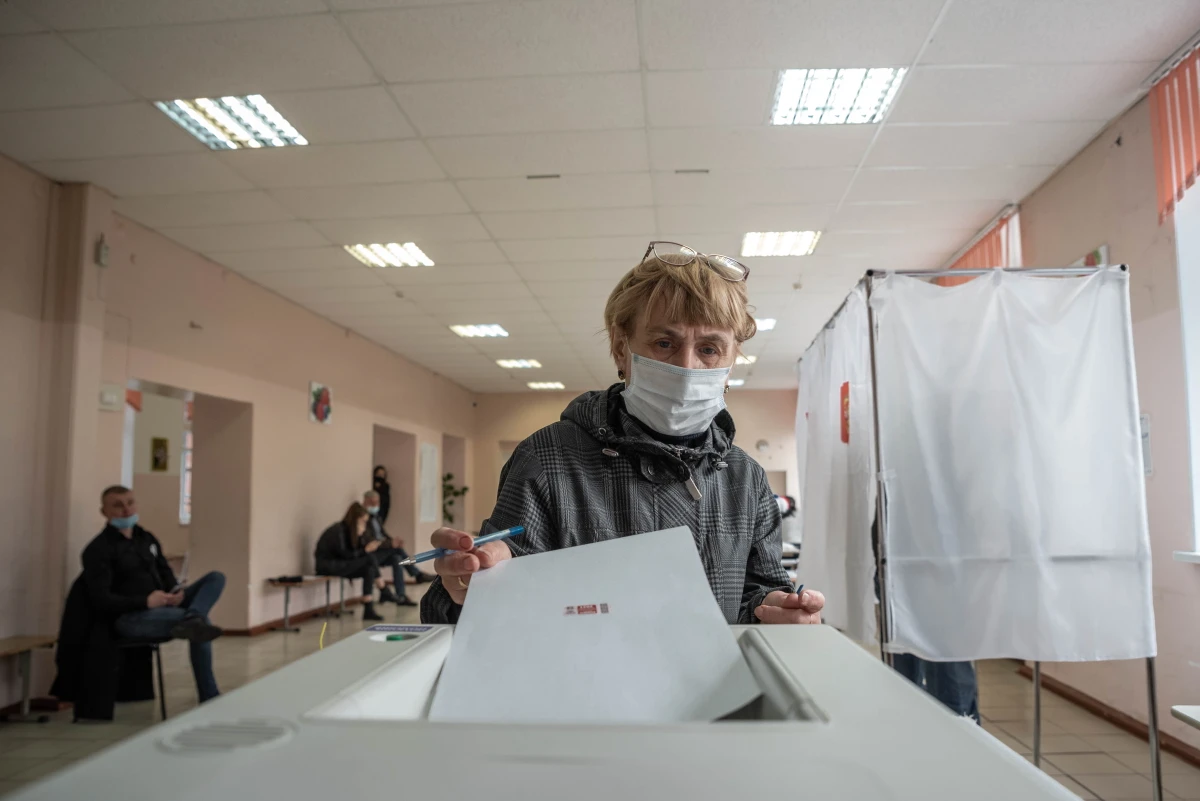
The Voice movement, declared by a foreign agent, gave Vyatkin -Lamikina a devastating review to the bill, stating: he "lays the basis for an opaque and inaccessible for inspections of the implementation and use of DEG systems."
It is difficult to disagree with this: how much do not play the words “authentication”, “anonymization”, “encryption” and “decryption”, the DEG does not provide voting secrets, does not give any guarantees that all its participants exist in reality (and are not bots generated by those who have access to the system), and does not allow any public control over the course and summarizing the voting.
Moreover, there is no certainty that the system is not subject to external influences in order to change the results of voting to the authorities needed.
Simply put, who will entrust that the authorities that control the GAS “Elections” and other “state information systems” cannot “correct” DEG results? After all, grabbing their hand during theft of votes or their “throwing” is almost impossible.
This means that the main guarantee of electoral rights is violated - the confidence that the election results will correspond to the will of voters.
Yes, this guarantee is now not provided with paper voting - relatively controlled and transparent. Regarding - because in real polling stations there are frequent cases when observers are expelled, ballots are thrown and protocols are forged.
But still, this can not be compared with DEG, where it is not to check and count anything - in the complete absence of external control. Yes, and physically there is nothing, if that, “recount” - all the more so much it is specifically prescribed that it is impossible to establish a connection between the personal data of the voter and the result of the will. Moreover, even the voter himself will not be able to then check how his voice is electronically estimated - he has no evidence ...
By the way, when discussing in the Duma
Dmitry Vyatkin said that DEG is necessary because this is the only opportunity to vote for Russian citizens living in the “DPR” and “LPR”.
In fact, for Russian citizens who are abroad, special polling stations are provided. As a rule, they are in the relevant embassies and consulates. It is clear that in the “gray zone”, which are “DPR” and “LPR”, this is impossible, and they try to solve the problem with the help of DEG. But the results of such “voting” - in the territory of unrelated formations - are guaranteed to be not recognized in the world.
Last. Yes, DEG analogues are successfully used in democratic countries. But there, unlike Russia, there is confidence in the electoral system, which is practically destroyed in our country.
And what confidence in DEG in Russia can be discussed when we constantly hear that you can buy at a similar price almost any information about citizens who have authorities have?
When the data of citizens from the Public Service portal flow out (the new newspaper just wrote that scammers are selling the database of QR codes of Russians who have been redeemed with coronavirus or vaccinated, stolen from the Coronavirus Coronavirus application), and many others?
By the way, the data of more than a million participants in electronic voting on amendments to the Constitution, held from June 25 to July 1, 2020, were subsequently put up for sale ...
Under these conditions, speaking of whether DEG can lead to the fact that the election results will falsify even easier, it is worth recalling the immortal expression of Stanislav Hedgehogs: "It is a shame to suspect when I am quite sure."