
Translated material
"Nearby": circular movement
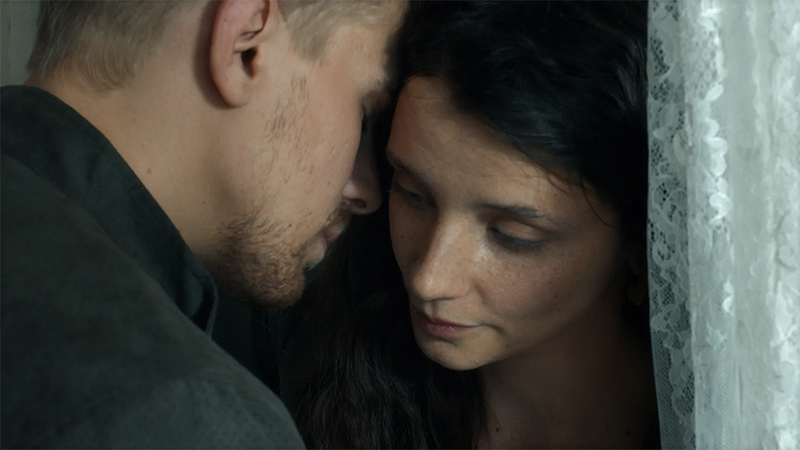
The world premiere of the Dondury film recently took place in the Bright Future program of the Rotterdam festival. Maxim Ershov notes how the film grabs the unfortunate and easily recognizable heroes of our time.
33-year-old Kira (Ekaterina Ermishina) calmly and coldly decides to do a second abortion. She is not going to say anything to her boyfriend Van (Ilya Malanin). Once they studied together in the architectural, but Ivan changed his profession and now works at the blind help center-he trains guide dogs, responds to calls of blind wards and solves their domestic problems (for example, remotely looking for lost objects-the blind include the cell cell and show him the floor of the room). He is always there: not only with Kira, but with everyone who needs his help.
Kira is completely absorbed in an important working project - prepares a layout of a housing array with a courtyard. The architectural bureau gives the order, and colleagues are ready to satisfy any requirements of customers, but Kira strives for perfectionism and is not exchanged for compromise decisions. She is ready alone to turn the metropolitan block hell into an urban paradise. In addition, the girl's name is to teach in Germany. Ahead is a bright future, all roads are open.
Vani's sudden death (which remains behind the scenes, as if an insignificant event) makes Kira start talking to his mother (spectacular small role of Ingeborg Dapkunaite), go to parties and meet friends. Looking around, she understands that there is actually nobody next to her.
Tamara Dondury is a graduate of the Documentary Cinema School of Marina Razbuzhkina and Mikhail Ugarova, and before “Nearby” she made two docks - “21 days” about the Moscow Hospice and its patients and “New Moscow” (its topic was a landscape that is rapidly changing from year to year).
“Nearby” is the film is too small and modest to become a manifesto of generation, but it very accurately captures the restlessness and confusion of those Russians whose childhood was in perestroika or the first Yeltsin years. They are a little over 30 , they have long been adults, but often look back at their more confident parents and are afraid of changes.
Kira and Vanya have nothing of their own: neither an apartment nor a car (they prefer car sharing), they do not dare to have a dog, not to mention the child. They live together, but still remain strangers to each other, cannot be completely frank and all the anxieties save in themselves. Both move away from existential problems to work - they seem to go endlessly along the ring and cannot decide which station to go and when.
“Nearby”-undoubtedly, social cinema, although it is deprived of the usual signs of Russian social activists like shocking scenes of unheard of life, mat and indispensable trash diving (rusty garages, gate, etc.). The Operator-Department Vsevolod Ledovsky shoots the picture in light colors and on close-ups, most of the events occur in well-furnished Moscow apartments. But existential horror is hiding not only among the devastation, it blooms in the buried by the Sobyaninsky capital, just as depriving the heroes of will and subjectivity, as lumpen-heroes are poverted and hopeless: here everything has already been decided, they imposed fate-not rudely, but carefully.
Here, in general, everything happens neatly: both proximity and alienation in the film are shown through gestures, views, touches. In general laconicity, the handwriting of the co -authored of the script of Anton Yarusha (“tightness”, “unclenching fists” and “at close range”) is felt. Personal tragedies are reduced to daily worries, death is equalized in a scale with a broken crane of a house or with a change in the project’s layout at work, and relations are replaced by social training. Actually, the entire conflict of the film is concentrated in its name. “Nearby” is a team, one of the first to learn guide dogs.