
Translated material
Their date with the edge
Why from the calendar of educational events in schools disappeared the day of memory of the victims of the Holocaust
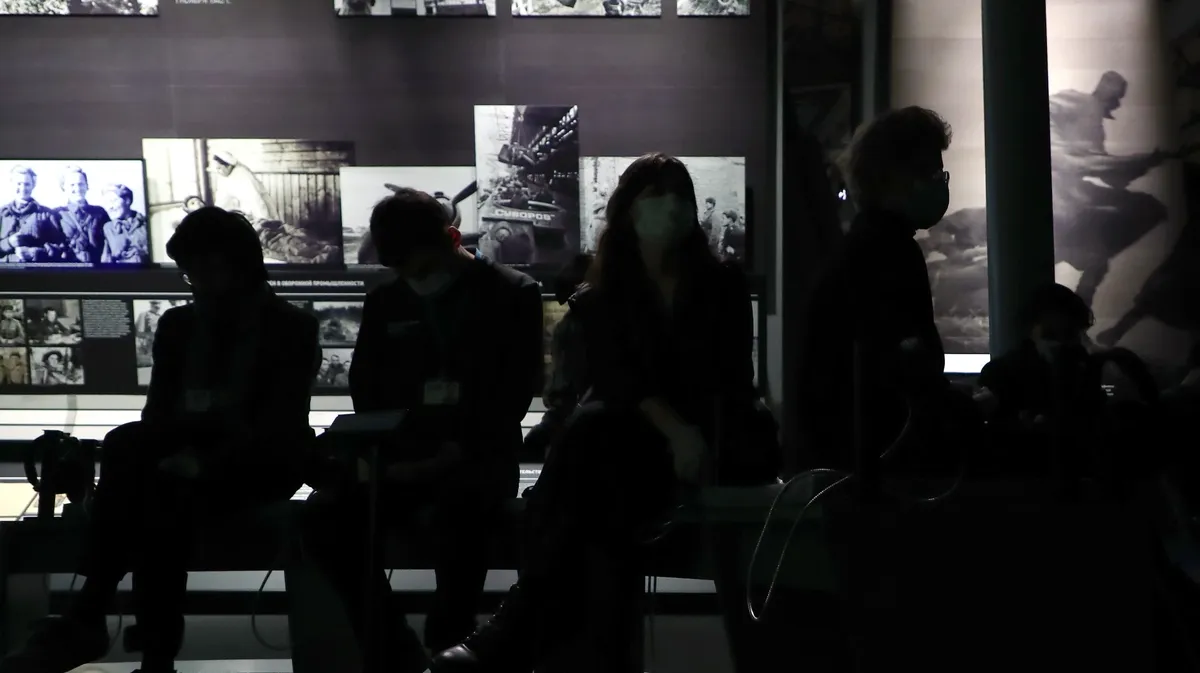
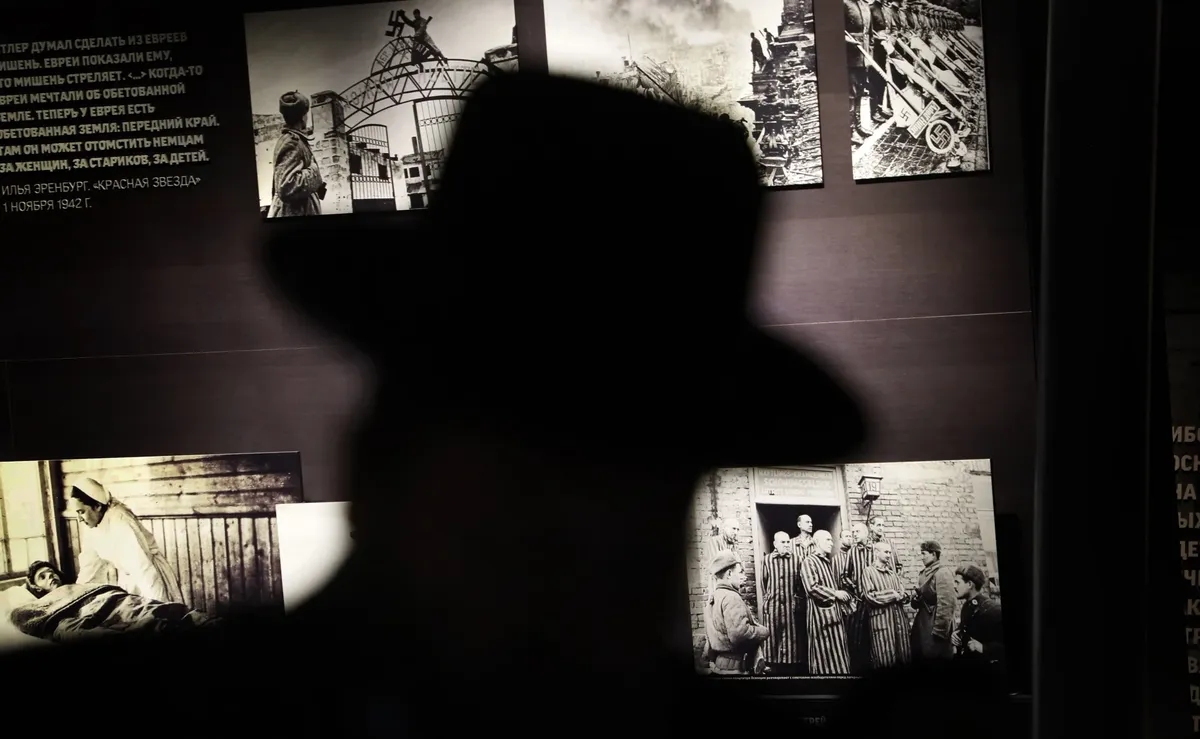
On January 27, the world celebrated the day of memory of the victims of the Holocaust. He used to enter the calendar of school events, but then unnoticed from there disappeared - just like the day of memory of the victims of political repression, which is celebrated on September 30.
The journalist and TV presenter, member of the Human Rights Council Nikolai Svanidze, on December 9, spoke about this at a meeting of members of the HRC with President Vladimir Putin. In his speech, he connected the disappearance of these dates from the school calendar with the events taking place around the Memorial Society (included by the Ministry of Justice in the list of “foreign agents”, the court decided to liquidate the organization).
And a little earlier, on November 29, 2021, a statement of the HRC Commission on political rights dedicated to the exclusion of the Holocaust Day from the school calendar appeared on the HRC website. It, in particular, says:
“We hope that the strange falling out of the school programs of such a tragic symbol of dividing and genocide as the International Day of Memory of the Holocaust Victims is an accident. We consider it strongly necessary to eliminate this clear misunderstanding as soon as possible and immediately restore the International Day of memory of the victims of the Holocaust in school programs and education. ”
Is it a misunderstanding or maliciousness? Will this decision of the Ministry of Association affect the awareness of Russian schoolchildren about the Holocaust?
Everything is not as simple as it seems. First of all, the days of memory did not fall out of the “school curriculum”, but from the “calendar of educational events”. Moreover, the day of memory of the victims of the Holocaust fell out of it in the last academic year. But the day of memory of victims of political repression is this.
The Ministry of Education is developing a calendar every year-or rather, slightly modifies the basic version. And it recommends to the schools to include the events indicated in it in their plan of educational and educational events. Most events simply wander from one version of the calendar to the next without any changes: these are public holidays and commemorative dates - such as, for example, the day of the Russian language, dedicated to Pushkin's birthday.
Others change every year. Say, in the one before , the 2019–2020 academic year has celebrated the centenary since the gunsmith of the gunsmith Mikhail Kalashnikov. In the past, the 125th anniversary of Sergei Yesenin and the 100th anniversary of Andrei Sakharov were brought into the calendar separately, and recall the anniversaries of another 20 writers and poets, from Baratynsky and Fet to Twardowski and Brodsky, was proposed in the week of the children's book held in the last week of March. This year, the week of the children's book from the calendar disappeared without a trace, and the week of music remained. It is impossible to comprehend logic: let's say, the day of the fight against drug addiction and the drug business also disappeared, but there will be two All -Russian open class lessons: in March, dedicated to World Civil Defense Day, and in April, on the day of the fire department. At the same time, in the last years, the Civil Defense Day (simple, not universal, celebrated on October 4 without any All -Russian lessons).
This year, writers are honored only by two - Nekrasov and Dostoevsky, and even Ortopeda Ilizarov. But four more people were among the anniversaries this year: V.L. Goncharov, I.M. Vinogradov, Erdniev Purvy Muchkaevich and I.I. Alexandrov. All these are mathematicians.
Why mathematicians, and not biologists, philologists or chemists? The compilers of the calendar do not explain this in any way.
By the way, the merits of P.M. Erdnieva “Wikipedia” describes this: “In the 50-70s. The XX century, on the material of school mathematics, developed a system of enlargement of didactic units. ” The Ministry of Traffic recommends to schools to include in their educational work plans the dates proposed in the calendar “In order to introduce students to the cultural values of their people, the basic national values of Russian society, universal values in the context of the formation of Russian civil identity”; Let the reader imagine that he forms a class hour dedicated to "enlargement of didactic units using the example of school mathematics." And if anyone does not seem enough mathematics, then there is still World Mathematics Day on November 15 and the week of mathematics from March 14 to 20.
Instead of one day of disabled people, last year this year was proposed to celebrate the Day of Cutual Languages, the Day of the Deaf, Cerebrail Paralysis Day, the Glorie Day, Braille's ABC and the Brand of the Boss of the Rights of Persons with Disabilities. It seems that the Ministry of Traffic simply sent a request to send his memorable dates to different instances - and without looking included lists of those who responded to the calendar.
In a word, the calendar of educational events for this year leaves the impression of a hastily slapped and not particularly thought -out document.
How specific memorable events appear and disappear in it, almost no logic is amenable. The nature of this document is advisory. To what extent does he affect school educational work in reality?
Depends on the diligence of the pedagogical composition and his fear of the authorities. One class teacher, traditionally asking not to name either his name or the number of his Moscow school, replies: “Once a month, the head teacher sends us a table, which each class teacher must fill. We are written there recommended topics of class hours: in January we had to interpret with children about Braille’s alphabet, about the blockade of Leningrad and about something else (we forgot). And in February - the Day of Russian Science, the Day of Military Glory and about the Battle of Stalingrad. Fill the table - and no one touches you. Sometimes they ask for photos, but not in confirmation that you raised pioneers, but for the site of the educational organization. By ordering, I do not spend cool hours, of course. Although recently told the children at the end of the lesson that today is a very significant day of lifting the blockade of Leningrad, and said that he spent his first day in Leningrad at the age of seven at the Piskarevsky cemetery. ” Others say: “I don’t even know what kind of calendar it is”, “I haven’t seen once”, “The head teacher writes reports for us in our school, and we can do business.”
Several authoritative Moscow teachers said that they did not focus on this calendar at all - and still, if they want, they bring their children to the Jewish Museum or the Gulag Museum on this day. Many teachers, especially outside the capitals, most likely did not celebrate these dates before: someone does not know about them, someone does not consider it necessary to celebrate. Yes, and this document itself is advisory in nature, and not mandatory. And what is happening to him is rather just a sign of time than a serious step back in educational work with children. However, it is still necessary to return the day of memory of the victims of the Holocaust and the day of memory of the victims of political repression. And the week of the children's book too.