
Translated material
We all live in Africa
About the novel by Nobeliat Abdulrazak Gurna "Paradise"
Almost nothing is known about the Tanzani writer Abdulrazak Gurn in Russia. There are no translated books, and our general public found out his name only after awarding the Nobel Prize. And if literary commentators conveyed the writer’s biography in his articles, he was born on Zanzibar in a Muslim family, at the age of 20 he ended up in England in refugee status, taught at the University of Kent, then they almost did not approach prose yet. Arthur Grand decided to make up for this gap.ABDULRAZAK GURNAH. Paradise. Bloomsbury Books, 2004
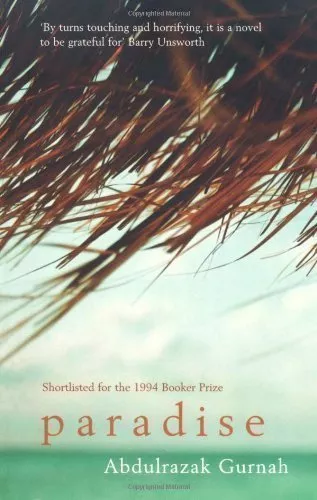 One of the most famous novels of Tanzani is “Paradise”, which fell into the short list of the Buker Prize in 1994. It is often compared with the famous book of Conrad “The Heart of Darkness”, but the similarity here is more external, and the author’s optics (African and European) determine serious differences. Gourney does not determine the exact temporary coordinates of “paradise”, but we understand that we are in front of us East Africa at the beginning of the 20th century. The boy Yusuf lives with his parents in a small town. The father, who owes a lot of money to the merchant, whom everyone calls Uncle Aziz, gives his son to his service as a duty.
Yusuf remains in the house where she makes friendship with the Arab young man Halil, another “nephew” that works out the parental loan. The boy falls in love with the luxurious garden of the merchant, replete with flowers, fruit trees and streams, seeming the only possible paradise from the family. Yusuf is growing up, and Uncle Aziz takes a young man (whose beauty is admired by everyone around) on a trip to Central Africa, where nature is striking in beauty and cruelty, and local pagan tribes are capable of sheltering travelers and capturing them. This wild territory, not yet subordinate to the general law, is as rude as it is virgin; Like any element, it is able to change meekness to ferocity in an instant.
The book is written in a third person, but the narrator is actually Yusuf - we look at everything that happens with his eyes widely closed. The local landscape is an incredibly complex and original mosaic: Africans, Muslims, Indians, tribes from the internal areas, the Arabic language is intertwined with Suahili and its numerous dialects, sutras, spirits, sacrifice, a marvelous old world woven from contradictions. And over all this, an ax is brought in an inexorable executioner in the person of a European. At the same time, in the book, Western people meet only episodically, remain nameless, they are present here in conversations, rumors, gossip, they are likened to rock, an inevitable ending.
“The merchants spoke of Europeans with admiration, reverent before their cruelty and mercilessness. They take the best lands and do not pay anything for it, forced people to work on them with various tricks, eat anything and arbitrarily heavy or faded. Their gluttony is immense and not selective, as if with locusts. The tax on this is the tax on, otherwise, a prison, a whip or even a gallows. ”
Gourney does not fall into colonialism with direct and harsh criticism - the author is at a distance in relation to it. Western civilization exists almost like a decoration, it is still somewhere behind the scenes, but it is obvious that soon the whole scene will look different. And therefore, the rapid violent invasion of the European looks very ominous, because it hangs in the air with a threat. At the same time, the heroes of the book evaluate it differently.
Halil is still too young and modest to lead even internal monologues about unfamiliar Western people. Uncle Aziz judges them exclusively from the standpoint of a business person - it will be necessary to learn how to negotiate and conduct business with white people. His two trading partners adhere to opposite opinions: Hussain draws an apocalyptic picture of the coming days, and Hamid is almost optimistic.
“What is so wonderful about how we live today? Are we not suffering enough without these terrible forecasts? Let's give everything to the will of the Lord. Maybe everything will change, but the sun will still get up in the east and sit down in the West. ”
The main thing for Gurnna is to see on this changing background of a person, frightened and fascinated by both the old world and the new one. The life of Yusuf was very early to be subordinated to someone else's power will (in fact, Europeans, if in his country he feels like a captive). He has a poetic soul, and his fate is a fight of imagination with experience. Yusuf, devoid of parents and forced to serve Seid, takes care of the garden daily, as if this is the same paradise, accessible and inaccessible at the same time.
“Paradise” can be read as a novel of education: Yusuf grows, passes through severe trials during a trip, almost forgets his parents (rarely and without much regret recalls them), and falls in love. Many pay attention to him: women, uncle Aziz, Hindu-mechanic Kalasing, who taught the young man to his craft. But everywhere Yusuf feels painful loneliness, the inability to independently build his life; He is doomed to restlessness in the old world, but what will he find in his new galvanized country?
“And everywhere he will be asked about his father and his mother, about his sister and his brother, about what he took with him and what he hopes to receive. And he can give all these questions only evasive answers. Seyid in a cloud of perfume traveled to distant strange areas, armed only with bags of trinkets and the consciousness of their own superiority. The white man in the forest was not afraid of anything, sitting under the flag surrounded by armed soldiers. But Yusuf had neither a flag nor knowledge with which he could claim respect, and he thought that the small world that he knew was only available to him. ”
You do not expect to meet in this book that describes, seemingly very far from us, the world, the Russian context. Once Yusuf listened to another conversation of merchants. The uncle of one of them for a long time was in the service of a German, who for 15 years brought to a mysterious country where Rusi lived (none of those present about such people heard). They lived in St. Petersburg, but traveled a lot around the region and even reached Tashkent and Bukhara.
This story is not a retrospective invention of Gurna, it is based on the memoirs of a native of Zanzibar Salim Bin Abakari “My Journey through Russia and Siberia”, written in 1901. These pages are a funny and touching mix of facts, personal impressions and myths. Rusi, of course, is not as civilized as the Germans, in St. Petersburg there are rains of ice and stones, and the most amazing thing - Muslims live among RUSI. Here, perhaps, is the most charming observation (it is true or not, decide for yourself):
“Once, traveling around the region, they arrived in a small city, where absolutely all its inhabitants - men, women and children - in the insole drunk.”
Of course, Gurna describes the clash of the old and new world. The technology subordinates the tradition, displaces it harshly and inexorably. This can be interpreted differently, not only in the context of the European colonization policy. Youth is inevitably replaced by maturity, the young pagan soul dissolves in a civilized adult consciousness.
In a sense, the whole modern world is now similar to Africa from the novel of Gurn. The old understandable analog reality is a thing of the past, and the virtual world becomes our new home. The technology colonizes the present and future. Can Yusuf call his little old world a paradise? Can we call a Dovirtual life a paradise? Probably everyone will answer this question in their own way. Gourney shows that paradise is not what we can find, but what we lose. The old, like the new one, can be bad or good, but one really scares us-inevitability.