Date
Author
Дмитрий Ермаков, Максим Мартемьянов, Анна Козкина
Source

Preserved copy
Translated material
"Forest is my house, I want to save it"
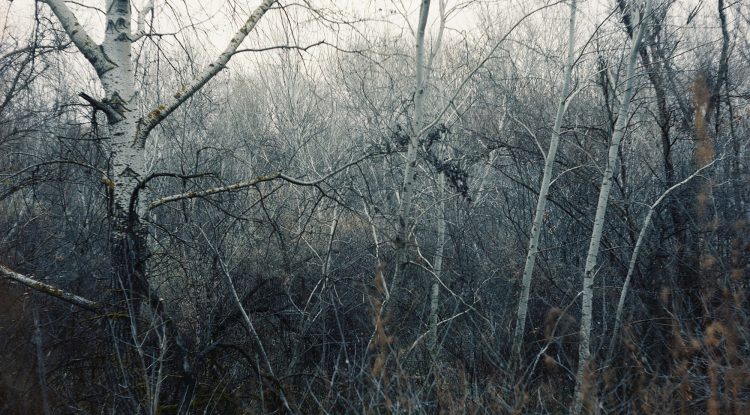
Defenders of the Volga-Akhtuba floodplain in the photo station Dmitry Ermakov
In the Volga-Akhtuba floodplain on the opposite of Volgograd, the Volga coast is a cutting of relic oaks for the construction of the highway. Eco -defenders are the alarm: the largest forest in the region lies under the saw and the bulldozer. Local residents are afraid that their favorite resting place will die and the drought will increase, from which their harvest is already suffering. Officials explain: the old road is overloaded, a new one is necessary. People agree with this, but call for a compromise. He has not yet been found.

The forest in the floodplain grew an oasis among the sands seven thousand years ago. In 2000, he was given the status of a natural park - a specially protected territory. Later, the Volgo-Akhtubinskaya Palace Park was recognized as the UNESCO biosphere reserve, but last year its position was changed, allowing the possibility of cutting down trees for the construction of linear facilities.


View of the Volga and I understand from Volgograd
One of the defenders of the floodplain Anton Getmanenko says that, having learned about this, he immediately called UNESCO representatives on the phone in Moscow. “They replied that they did not expect such a development of events, did not expect deforestation. Now they reflect on the advisability of preserving the biosphere reserve in general. ” UNESCO’s official position has not yet been announced.

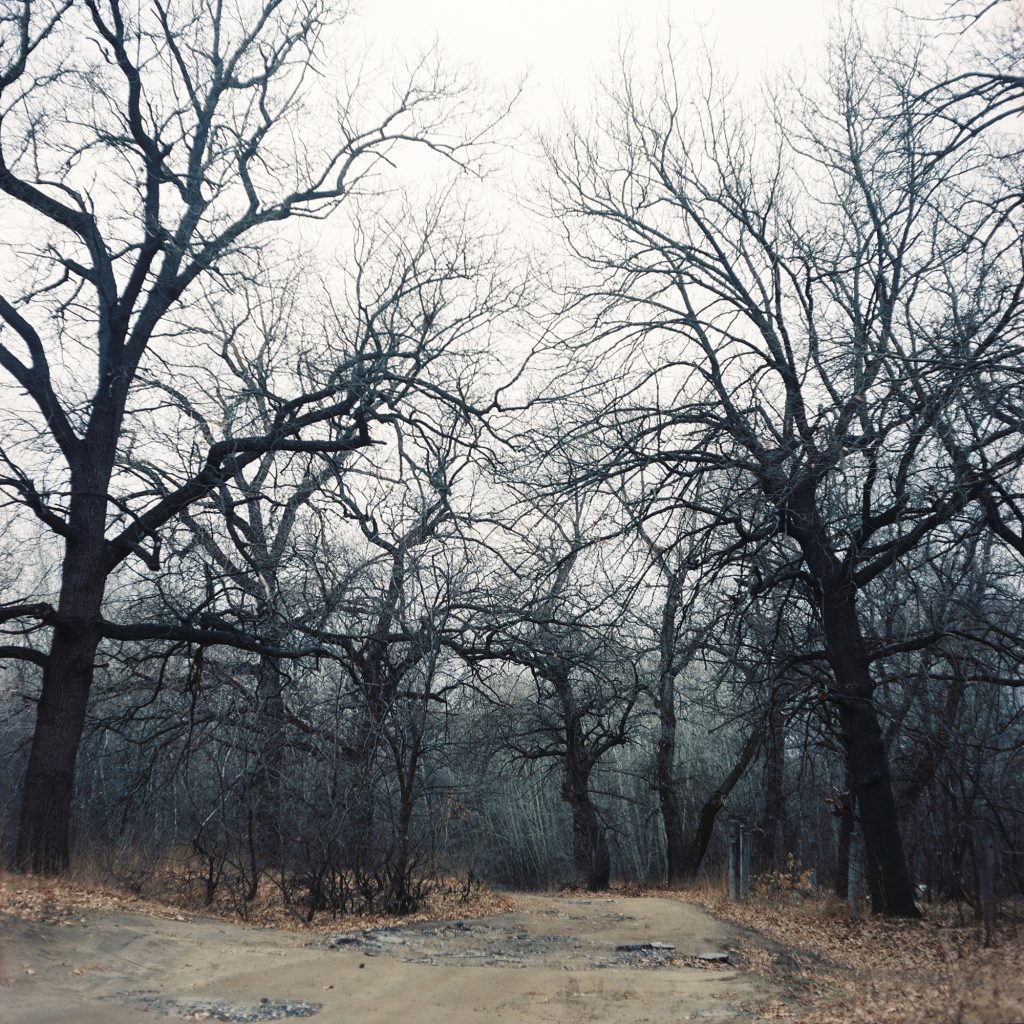
If you leave the old 18K-2 road and go literally fifty meters into the forest, you will see dozens or even hundreds of fallen trees. True, the bulldozers have not yet reached the dense part of the oak tree at Eric a camel, where the forest comes close to the Volga. In this place there are campsites, an equestrian base, a paintball club and a children's camp - a recreation area of citizens.
A year ago, Anton Getmanenko bought an unfinished private house here in the neighborhood of a campsite. “Instead of forest silence, there will be noise and roar,” says Anton. - People will not be able to relax in their favorite place "
Poiner oak trees are not only the territory of the park, the bulk of which lies north of the 18K-2 road. Wide forest belts also scatter south of it, where there are more than ten villages and villages. Locals say that deforestation will destroy not only the park area. Households will also suffer.

Construction of a new track 
“Eriki spills about twenty percent of what I remember from childhood,” says local resident Elena Zhupikova. “In the gardens, nothing grows without drip irrigation, the vegetables are burned out in the root.”
The forest protects the ecosystem. “If the roots of the trees stop holding moisture, there will be a half -desert,” Elena shrugs. - Any reasonable person understands that the forest is associated with the health of people, the future generation. Anyway, as a deforestation may not worry when an oak is a sacred tree, a symbol of natural power. We walked here all our lives. Forest is my house, I want to save it. ”
At the same time, local residents support the desire of the authorities to solve the transport problem: the old road is often overloaded, and there is simply no other passage through the Volga-Akhtuba floodplain.

The construction of the highway is discussed for several years. The initial plan included only the expansion of the 18K-2 road to four or six lanes from the current two. With this route, trees would also be chopped, but much smaller.
However, in 2020, the regional administration said that the old road cannot be expanded: it passes through settlements and has a number of steep turns that are not allowed for a speed limit of 130 km/h. Therefore, the track will have to be laid through the groves.
Eco -defenders objected: the overload of the old road is decided by lifting its sections to the flyover - and offered the Committee on Transport options for bypassing settlements through wastelands and Gary - this would minimize the deforestation. But, according to the Volgograd urbanist Mikhail Solomonov, the project was refused: there is no money.
Then the defenders of the forest turned to the Prosecutor General of the Russian Federation, and Rosprirodnadzor issued a verdict : it is impossible to touch the park. But then the authorities changed the already mentioned position on the natural park, and the Ministry of Natural Resources of Russia allowed to build a track along a new route.
Ayrat, Pes-Alabay, feels good weather and breaks from the leash. Its owner is Alexander Osipov, a former member of United Russia, excluded from the party for his position on the construction of the highway through the floodplain.
“There are people who do not care about nature. In the initial draft of the new highway, environmental legislation has never been mentioned, ”says Osipov. - And I always referred to the message of the President of the Russian Federation ( to the Federal Assembly on February 20, 2019. - Approx. “Cold” ) - it says about consolidating the borders of the reserves. It seems that someone is misleading the head of state. ”


Referring to conversations with Mikhail Crandlin, the head of the program for specially protected natural territories of the Russian branch of Greenpeace, Osipov says that construction will cut the groundwater current.
“The next few hundred hectares will be deserted. This means landscape fires, salting land. There will be no water, water pipelines will have to be carried out into the villages, ”Osipov argues.
Local authorities partly recognize the problem and promise to land new oaks. Instead of 30 thousand trees - such a maximum number of robbery calls the Committee of Transport and Road Facilities of the Volgograd Region, according to other sources, 15 thousand - up to 120 thousand new ones may appear.
Critics of construction, however, say: crops can die due to the heat. Alexander Osipov gives an example: when in the summer there are 30 degrees of heat in Volgograd, here, in a quarter of an hour due to higher humidity and other hydrology, 22 degrees. But after a violation of the water flow, everything can change.

It was in the interfluve of the Volga and Akhtuba, 40 km from the new road, that Sarai-Berke was located-perhaps the largest city in the Golden Horde. Up to 100 thousand people lived in the city. It is believed that in the floodplain there was a large Tatar city of Gulistan - "Earth of flowers."
Then, under the tsarist authorities, Russian merchants lived here: Akhtuba was navigable, which allowed the owners to get rich and become influential people in the Lower Volga region.

As Elena Kovaleva says from the village of Peschanka, people here are proud of both Horde and merchant roots. She herself is from the Cossacks. Confirming what was said, Kovaleva sets the table with a huge Russian pie, Tatar shulum, cooles from the floodplain, several varieties of local jam and cheese.
The village of Peschanka is located several kilometers from the old and the new road. Elena’s house does not threaten anything, but she is also against a new project.
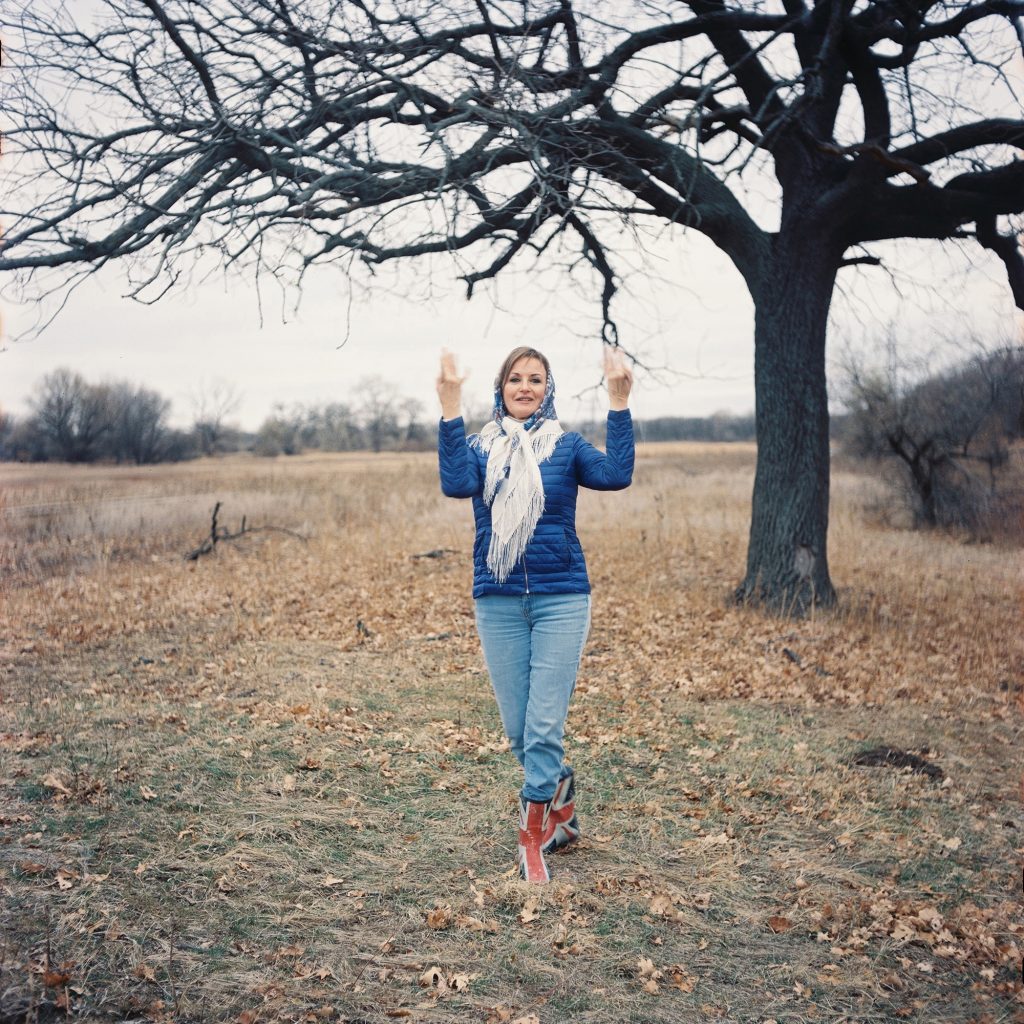
“I want oaks to stay. Maybe, by the standards of Siberia, the forest and small, but for this steppe it is huge. There will be no other, ”says the hostess. “But we are talking about the whole region where, thanks to this forest, large cities lived - and, by the way, live.”
