Date
Author
Лиза Миллер, Юлия Любимова, Анна Козкина
Source

Preserved copy
Translated material
"It was my mother's dream"
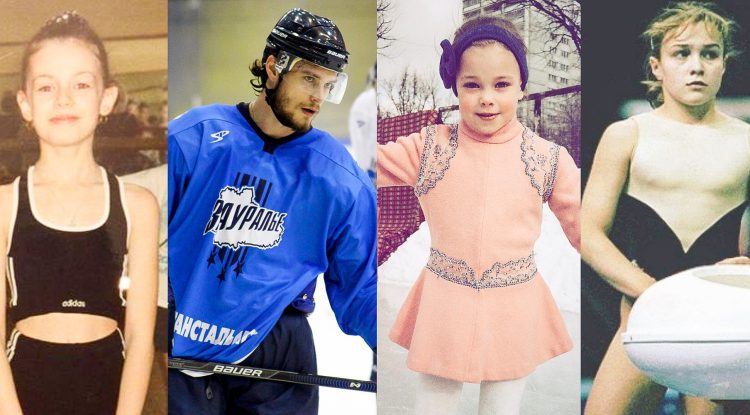
Former athletes - about their childhood, injuries and achievements
During the Beijing Olympiad, they actively discussed how humane the methods of the trainer in the figure skating of Eteri Tutberidze were humane. “Cold” talked with the skater, hockey player, rhythmic and sports gymnasts about what they had to go through in professional sports.
In order not to miss the main materials of the "cold", subscribe to our Instagram and telegram .
“Mom asked:“ Are you staying in sports or sister? ”
Natasha Tegina, 25 years old, figure skating
My parents put me on skates when I was two years old. It was my mother’s dream - she herself wanted to ride, but she did not have the opportunity, so her sister gave me to figure skating. Professionally, I rode up to 12 years.
I am grateful that you were in big sport, because there you become an adult much faster: you understand that if you train eight hours a day, then most likely it will have a result. You have a sense of responsibility, because a lot of people work on you. Go to the program, as if you were six years old, say that you are worried and leave, you can no longer.
I had not felt serious responsibility up to 10 years, I never thought that if I did not win now, then I was an end - thanks to my parents, who adequately related to this. But then I realized how much strength the coach put in me, how much time and money - my parents.
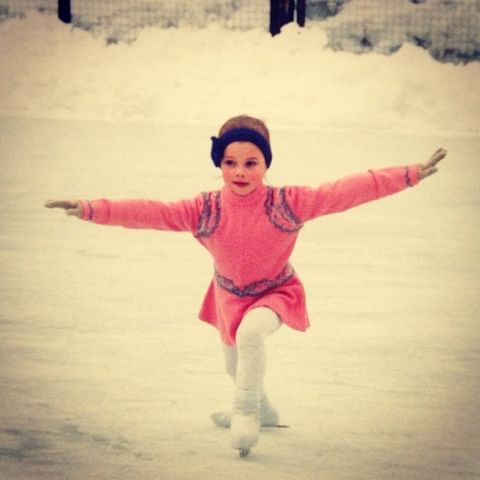

Of course, at school I missed all the holidays and birthdays, but it did not bother me very much, because I understood that this would lead me to sports results. My sports character is now manifested even at work: most often in a stressful situation, I behave adequately because this has already passed, and more than once.
Physical education treats, sport cripples. Any athlete once trained or made an injury. After all, if you miss serious workouts or competitions due to injury, this calls into question the whole career. Will you go out with a fracture to the Olympics after four years of training? I would go out because I have been striving for this all my life.
I was injured - my shoulder jumped out - at the control rental day before the reporting performance. The next day, I needed to roll the general run and three shows. I was immediately told that if I go out onto the ice, then the consequences may be deplorable, but I decided to skate all four performances in a row. After that, they replaced the part of the shoulder joint with the titanium and overwhelmed the ligament. And I knew what would be so. If I had not to speak and went to the hospital, then I would have filed a ligament and everything would have ended better. But I didn’t even have such a thought - we ride and ride. Then I was 14 years old.
When I was 12 years old and my sister and I rode in the sport of high achievements - and it was very expensive and took a lot of time and energy, my mother came up to me and calmly explained that the family in the family was not enough for two. Mom asked: "Are you staying in sports or sister?" I said that my sister, and my sister called me. As a result, we both moved to the semi -professional option - a professional sports ballet on ice. In the 11th grade, I had to participate in the World Cup. I decided that I was pumping the championship, and then I would go to study, because I adequately understood what I could achieve. The team and I won, and after the competition I ended my career.
No matter how much you love figure skating, driving eight hours a day from six in the morning for at least 300 days a year - this will not be a buzz. I liked it, I loved to train, but there were breakdowns when I took off the skates and said that I would not return. It happens to everyone.
Now the girls in figure skating are much more complicated, because there is an informational noise around them. When I had the first competitions, even when we won Moscow, there was no Internet, and all of us lived much easier. But they now have sports psychologists, and we could not dream of this: we had a coach, parents - and that’s all.
But children are still difficult. Now I sometimes work as a coach. A six -year -old girl came to me, to whom a huge load of responsibility was taken. We just rode with her hand on the open ice in a circle. I asked her: "Do you like it?" She: "I like to ride, but they are very crushed on me." And because of this, she does not jump, fills up the programs.
After leaving sports, I really missed figure skating. You miss your lifestyle, friends, training. Now I ride in an ice show when I have time for this. My main work is in the Redin design agency, I am leading the branding department, and the sport is now a hobby. If I can take a vacation at work, then I fly away to ride a show.
"Players are consumables"
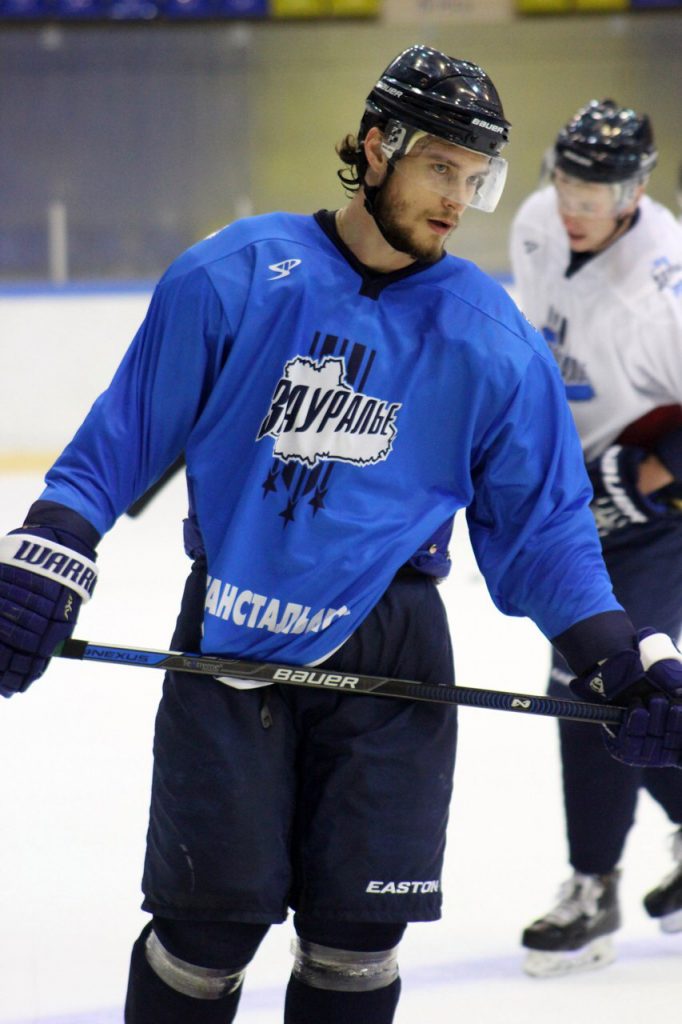
Alexander Brit, 28 years old, hockey
At five, my parents gave me to the hockey section in Khabarovsk. And when I was 13, after the fees I was invited to Moscow, to the Wings of the Soviets, and I moved.
In Moscow, I graduated from the children and youthful sports school, after which I went to professionals: I played the season in the second youth league for the “Titan” from the wedge near Moscow, then I got to the Hoking League (VHL-the second most professional league after the continental hockey league (KHL). And in 2013, he ended up in the system of Nizhnekamsk "Neftekhimik", speaking in the KHL. He played the season in the youth, but he played one game in the KHL ( in the 2013/2014 season, Alexander Brit mostly played for HC “reactor”-the so-called farm club or the reserve team “Neftekhimika”.-Approx. “Cold”).
The next season I also started in the farm club. It so happened that I was invited to the KHL, but at that moment I just got an injury - broke the ligaments of the ankle. After that, my career a little to the decline. I broke the ligaments in the game for the farm club-there was a clash. The rewound came out after the game, and the general manager of Neftekhimik calls me: “Come to the main team, we put you on the game.” I say: "Well, why have you not called before? ..". I went for treatment to Moscow, then returned to the team, but after the injury I recovered for a long time-for two to three months I fell out of the sport.
Then I went to Kazan-to the Ak Bars farm club, and the season also did not work out very well. Then he moved to Kurgan, to the Trans -Urals. Not from the very beginning, but still played. We went into the playoffs and took the second place in the VHL championship- we took the silver !
But in the mound, I have not developed a very good relationship with the coach and general manager. As a result, I decided to finish my career at 23 and left - after the conflict. I don’t know about the conflict how to tell correctly. I was accused of the fact that I was paid or thieves, that my relatives are pushing me, although there was nothing like that, it was false accusations. Against the backdrop of this, they tried to humiliate me, spread, insulted me in the presence of the whole team.
This is a fairly common practice in hockey. Everyone perceives this differently-someone is calm, and someone is painful. I am one of those people who do not like humiliating jokes. Like any professional sport, I think, hockey is very similar to the army. There is a rigid subordination. And there are people, clothed with power, who at the same time have a number of complexes and injuries. And they are trying to recoup on their wards. It can be both children's coaches and coaches in adult teams.
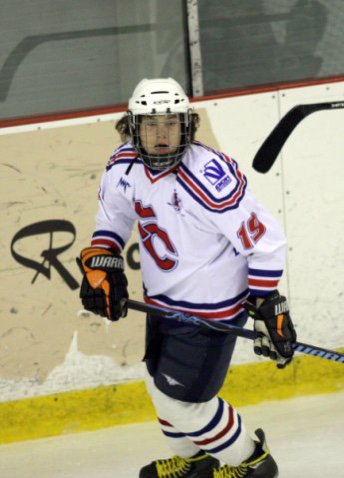
In sports, at least in the Russian, the task of the managerial staff - coaching and doctoral - is to show the result here and now. No matter what cost. If you know that the player is injured or he has a risk of injury, after which he may have a decline, you will still neglect this, because the result should be in this game or performance. And the player can be replaced in the next season - there are many other players on the market. Players are consumables.
I began to think a little with my head after 20 years, when experience appeared-I visited both youth and the KHL a little. I realized that everywhere you spend the same amount of health, but you get up to 10 times less money in a farm club. It is economically clear why this is so, but as a player you feel injustice-you spend your health, receiving not a million rubles a month for this, but 50-100 thousand rubles. This was one of the reasons why I decided to leave. I realized that, given my injuries, I will not have time to earn enough money for the remaining career to live calmly. Another no less important reason is that when you end your career later, you have no options where to go, except for coaches, since there is no experience and other knowledge.
Humiliation is not the worst in sports, because you can encounter this everywhere. The worst thing is the very fact of loads and the fact that you leave your health, you go out at the end of your career and you cannot live calmly without painkillers. My shoulder bundle was torn, there was a tear of the side knee ligament, ankle, a displacement of the vertebra in the thoracic region, protrusion in the entire spine, fractures of the fingers of almost all. Now I always need to visit the hall and keep the body in good shape, because if you do nothing for a month, then you will not get up from the bed, the body begins to whine.
Hockey was not quite my dream. They gave me to the section because my father really liked hockey - he wanted me to become a professional. He himself was a race carrier, performed from the region at federal tournaments in his youth. I think that he did not fully understand what professional sport is. We have a difference of 20 years with him, and the professional sport of the late 1980s is very different from what was when I was in professionals.
Dad, of course, was worried about me, like any parent, but he did not say to end. No one said that. So only mothers argue, because mothers are baking about health, and fathers rarely think about it. Yes, and athletes do not think about it. Imagine that you live in another universe, in another world in which there are no alternative scenarios. Your space is closed: the team is often at the training camp, and everyone lives like you, everyone gets injuries and more serious, many have experienced some kind of aggression from the leadership.
When you are inside, this is normal for you. Man is an adaptive creature, and if you do not know another life, then you just can’t imagine how it can be different. Since childhood, with poor vision, and two months ago I have performed an operation to my eyes and for me the world began to play with new colors - but I did not even imagine that it could be like that. If I had not done this operation, I would continue to live calmly, and would not know otherwise.
I would give my child to professional sport. For me, this experience was not traumatic. He formed the best qualities that I have in me: determination, ambitiousness, hard work, zeal, knowledge of the word “need”, I do not want to do the ability to do through. I do not regret that I went through it. The last conflict, after which I ended my career, was unpleasant, but I came out after it the best version of myself, it hardened me.
After the end of the sports career, it was hard for me to be a half to two years, but in the end I became the top manager of the IT startup CM.Expert (an online platform with which dealers automate the control of the warehouse of used vehicles based on intellectual data analysis.-approx. Cold ) , which was successfully sold to Yandex. Now I work for the good of Yandex and get much more than I received in hockey.
When I lived a different life, of course, I realized that the system of sports in Russia was not ripened. In particular, the system of sports education, coaching. We have practically no professionals in sports, at least in hockey. It’s one thing to manage, and another is to teach and educate, motivate, the third is to give technical, tactical skills. These are three different skills that are not always combined in one person.
And who is becoming a coach now? Athletes who finished and have nowhere to go. Moreover, not even everyone has a specialized education. They still do not have to wait for first-class skills from them, but perhaps something will change over time.
"This is a sport, not to achieve results in a different way"
Anastasia Potapova, 26 years old, rhythmic gymnastics
I remember how I was sitting with my mother in the room, we watched either the World Cup or the Olympics. Then, in our country, thanks to Irina Winer, the peak of rhythmic gymnastics was, and Alina Kabaeva occupied all the first places. I remember how Kabaeva enters the carpet, and my mother asks if I want the same. I wanted, of course. I was 5 years old.
Mom took me to the sports school of the Olympic reserve near our house. Training for four to five hours five to six times a week, hard, but I have never regretted it once. Although, when you are very small, then the training is less often and less: three times a week for two hours.
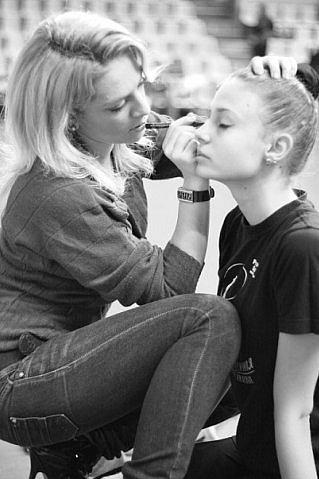
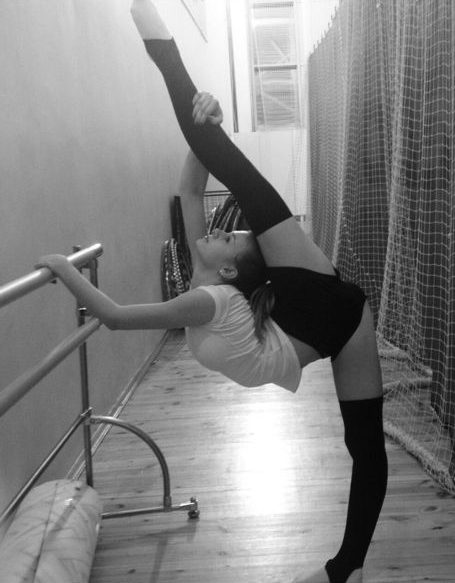
Not every person is able to do the same day after day to achieve the goal after three to four years. But when a person overcomes difficulties since childhood, then a force appears in him that helps in adulthood. Therefore, the athlete can be seen right away: at a difficult moment he can get together, calm down.
I had a lot of injuries: numerous ligaments are the most popular gymnastic trauma: groin, the rear ligaments on the leg, the surface of the thigh, ankle, back. The back hurts in all gymnasts from large loads, jumps. Now everyone says that athletes are cripples. Probably, there is a share of truth in this and every professional athlete is not healthy, especially those who perform at the Olympics.
I did not often make injuries, but I remember one moment. We performed at least for candidates for master of sports in a group exercise at the Moscow Championship - in Moscow these are the most serious competitions. It was impossible to skip, because I was in the main composition. And I pulled the ligaments of the ankle in front of the championship - this is a terrible pain during jumps. An ambulance has always been on duty at the competition, and they froze the ankle in such cases a minute and a half before the performance, although this does not particularly help from pain. After the competition, I was absent for about a month, because I was immediately told that if I load my leg, I will finish sports forever. But after a month of the break, I returned to training.
I left gymnastics at the age of 17 after we received masters of sports and participated in all -Russian competitions. In rhythmic gymnastics, there is a very great competition: if you have not got into the Russian team under 13 years old, then that's all. And at the age of 17, your career goes to the final. And I, moreover, had to go to the institute.
I watched a documentary about [Olympic champion Margarita] Mamun. It reflects how everything happens in rhythmic gymnastics. They also shouted at me, chairs rushed - I remember very well how we scattered. It seems to me that a person who has never played sports will be difficult to understand. But if you want to achieve something in sports, then everything will most likely be so. I have a girlfriend who has a brother in the KHL, and everything is the same there. This is a sport, not to achieve results in a different way.
“There is no such coach who blow off your dust, kisses and protects”
Lale Gruzdeva, 34 years old, sports gymnastics
For four and a half years, I was engaged in sports gymnastics in Ivanovo. When I was brought to the section, my parents were told that they say, the girl is capable of, but do not count on big results, because she is too chubby for gymnastics. But then I got to a good coach, he began to deal with me and at the age of 12 brought me to the Russian national team. I am a master of sports of international class, three -time Russian champion in the team championship, a repeated winner of Russian and international competitions.
I had no serious injuries. But once I had to perform with high temperature at the international tournament in St. Petersburg in 2004. Either because of the weather, or because of something else, my temperature rose, and because of the high load in the competitions, complications went. At first the knee became inflamed, then the shoulder, and I had to go to the hospital - at first I could not go, and then my hand did not work. It seems not a serious injury, but I recovered for a long time. Because of this, I did not get to the Russian Championship before the Olympic Games in 2004 and did not go to the training camp.
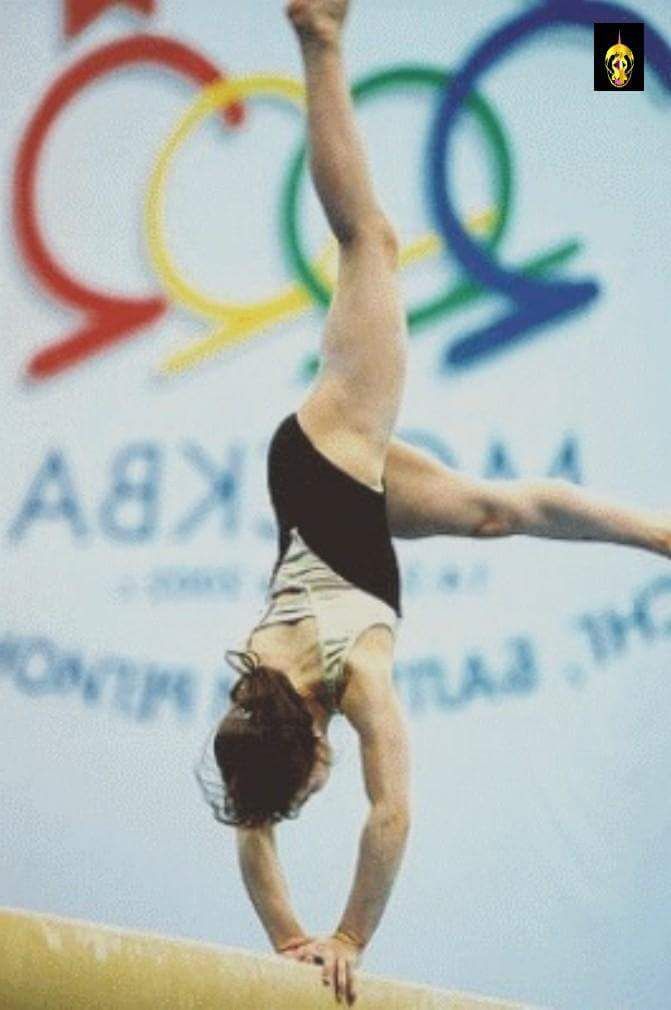
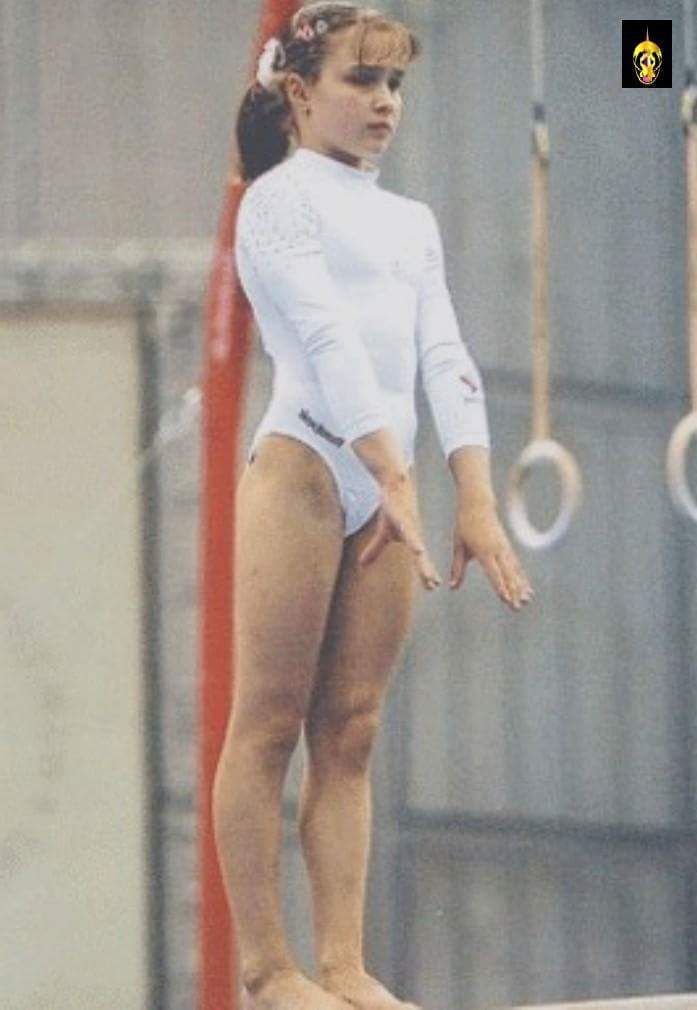
The Olympiad in the life of an athlete is all for which he lives. When I could not go to the final fee, it was impossible to perform with this injury, because my hand did not work and did not rise, I could not move my fingers - I had a hysteria. I was 16 years old, and it seemed to me that life was over. When you live in the hall from morning to night, you are completely laid out in full, and suddenly you have a trauma ... In our sport you have been living in the hall from the age of five, you have practically no friends, you don’t go anywhere, you don’t walk, you are forbidden to eat many products. The tantrum [the skater who took the second place at the Olympics] Sasha Trusova - these are the emotions of a person who put his whole life on sports, worked only on the result.
There are fractures, no one is safe from this. We had a situation at the base when the girl came to training in a plaster - she had a problem with the elbow. And no one sent her home, she trained in gypsum.
Когда мы готовились к соревнованиям в Канаде в 2002 году, моя мама привезла разрешение на выезд за границу и решила посидеть на тренировке. В тот момент у меня болел седалищный нерв: ты бегать не можешь, а нужно ехать. Мама мне сказала выйти из зала, поехать домой и завязывать с этим. Но я сказала: «Нет, я хочу поехать». Меня не заставляли идти в зал. I liked it. Если тебе это не нравится и тебя заставляют, то ни к чему хорошему это не приведет. Каждый спортсмен, который выступает на Олимпиаде, сам это выбрал.
В 2007 году, в 19 лет, я закончила свою карьеру, потому что из-за физических нагрузок у меня начались проблемы со спиной, а когда у спортсмена появляются проблемы со спиной, ноги перестают толкать, как надо. Но спорт остался в моей жизни. Сначала я восемь лет работала в цирке. В 2015 году меня пригласили в проект на Первого канала «Без страховки». После этого я начала работать тренером и работаю по сей день.
Нет такого тренера, который сдувает с тебя пылинки, целует и оберегает. Каждый тренер все равно ругается. Кому-то мат помогает, а кого-то это угнетает. В нашем спорте это тоже есть, но в 2005 году пришел [главный тренер сборной России по спортивной гимнастике Андрей] Родионенко, и на олимпийской базе запретили ругаться, кричать. То есть, если тренер хочет на тебя накричать, он должен сделать это так, чтобы никто не увидел.
Все через это проходят, и я не считаю, что это плохо. Однако если тебя с утра до вечера покрывают трехэтажным матом и при этом не хвалят, то результата не будет. Тренер должен уметь и подтолкнуть, и похвалить. Не должно быть только «ты плохой и ничего не можешь». Кому-то это помогает, но не всем. К каждому спортсмену нужен индивидуальный подход.
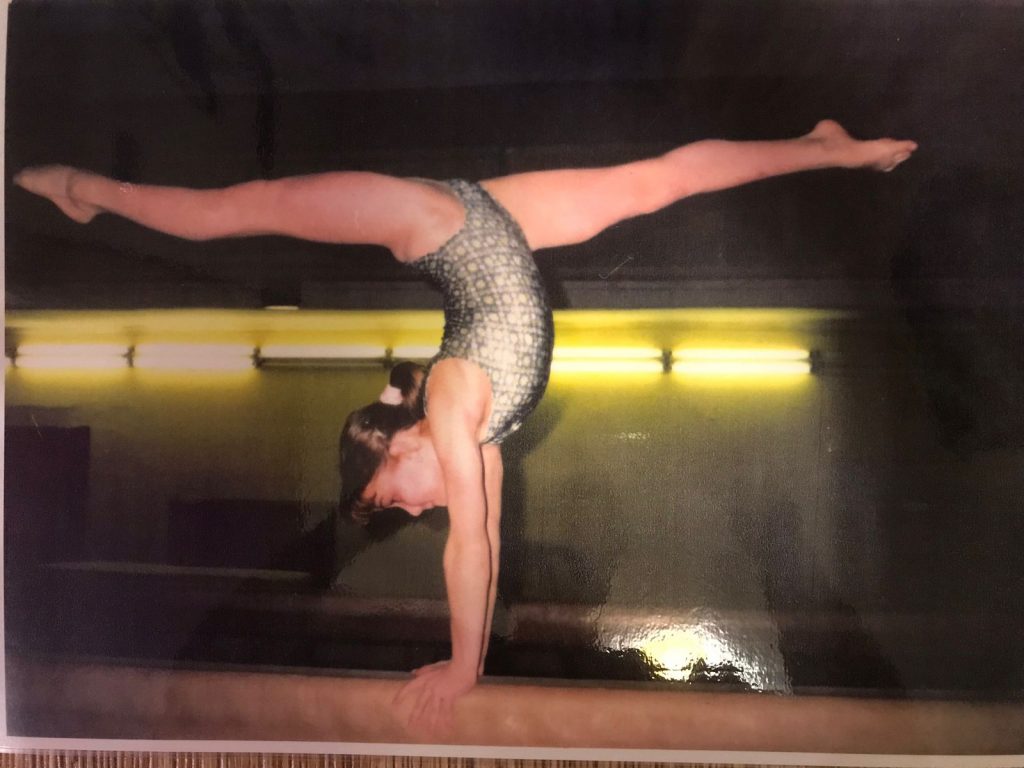
Моему сыну 11 месяцев, и я бы отдала его в профессиональный спорт. Но сначала пусть занимается для общего развития. Если он мне в какой-то момент скажет, что хочет заниматься профессионально, тогда он и будет заниматься профессионально, а заставлять я не буду.
Мне кажется, что для мальчиков гимнастика — это хорошо. Если отдать вовремя, не затягивать, то потом можно и в другой вид спорта перейти с готовой подготовкой, координацией, развитым мышечным корсетом. Я смотрю на детей, которым уже восемь лет, а них никакой координации, не могут сообразить во время бега, где право, а где лево… Спорт должен присутствовать в жизни детей, хотя бы массовый. А дальше ребенок вправе выбирать сам.
В свое время моей маме говорили, мол, ты сама пыталась заниматься гимнастикой, но у тебя не получалось, ты же дочь поэтому не кормишь и гоняешь. Мама соглашалась, что мечтала, но она меня не заставляла. Never. Я лично благодарна, что пришла в спорт — я горела этим желанием.