
Translated material
There is nothing to cover your temple
The Russian Orthodox Church is silent in the face of a military clash of Russia and Ukraine, although on both sides of its flock
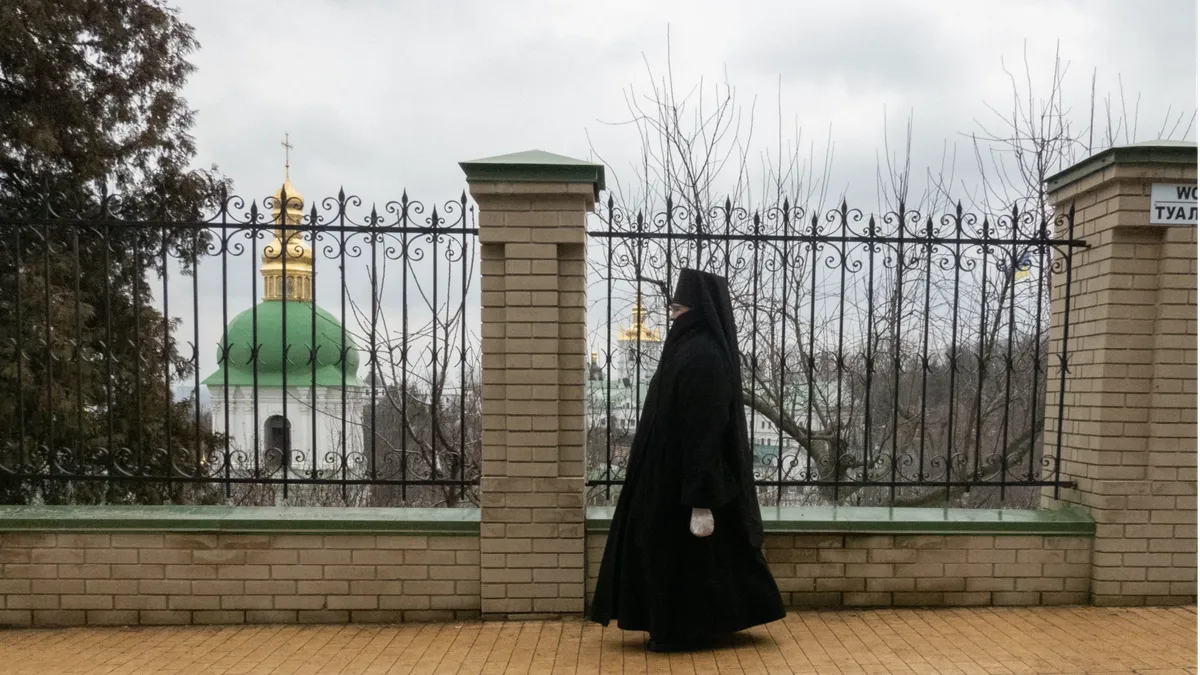
The “struggle for peace” was a key slogan of several decades of the history of the Russian Orthodox Church of the twentieth century.
When Stalin in the autumn night of 1943 invited three hierarchs surviving during the repression of the repression in the Kremlin, the outcome of the Second World War was not yet predetermined. And the Moscow Patriarchate, who was reborn under the new conditions, set the task: to “sanctify” the post -war redistribution of the world with peacekeeping rhetoric, as a result of which the Stalinist USSR went to a good half of Europe with a significant Orthodox population. The Kremlin’s plans then extended much further - Bosphorus, Greece and the Middle East were to go into the zone of Soviet influence, that is, the entire traditionally Orthodox world. But the cold war that began already in 1946 helped the United States and their allies to keep the Orthodox East under their control. Since then, its own cold war has not stopped in the Orthodox world - between Constantinople and Moscow.
In the conditions of complex relations of the Soviet government and the Orthodox Church, the “struggle for peace” was a condition for the survival of the Russian Orthodox Church, at least in a legal field. And the post -war atmosphere in the world contributed to the fact that many Christians of the West perceived the peacekeeping rhetoric of Moscow sincerely, not noticing the hidden propaganda catch. Since 1949, the hierarchs and priests consisting of in the agent of the Soviet special services began to regularly travel abroad to meet the world defenders, and the first head of the department of external church relations (VPS), Metropolitan Nikolai (Yarushevich), developed his “theology of the world”, which was reduced to the only commandment - “the peacekeepers are blessed ...”.
Since 1952 and until the very end of the USSR, regular “meetings of the chapters and representatives of churches and religious associations in defense of the world” were held under the auspices of the Russian Orthodox Church, which gradually turned into international ones. The lion's share of the only church magazine allowed in the country - “ZhMP” - occupied the section “In Defense of the World”.
With the successor of Nikolai (Yarushevich), Metropolitan Nicodemus (Rotov) - the spiritual father of the current Patriarch Kirill, the church “struggle for peace” began to acquire frankly grotesque forms. In the place of the "theology of the world" nicodemus set the "theology of communism", and
The participation of the Russian Orthodox Church in peacekeeping conferences was condemned by the "aggressive policy of the United States and the NATO Bloc"
With the simultaneous adoption of resolutions in support of Soviet geopolitical actions in any corners of the world-in Vietnam, in Cuba, in Afghanistan ... Millions of church money gathered in those days from the contributions of poor church old women, surrendered to the ROC to the World Foundation, which financed the “communist and labor movement” (and sometimes frank combatants-terrorists) in developing countries. That era belongs to a sarcastic phrase, popular among the clergy: "We will fight for the world so that we will not leave the stone on the stone."
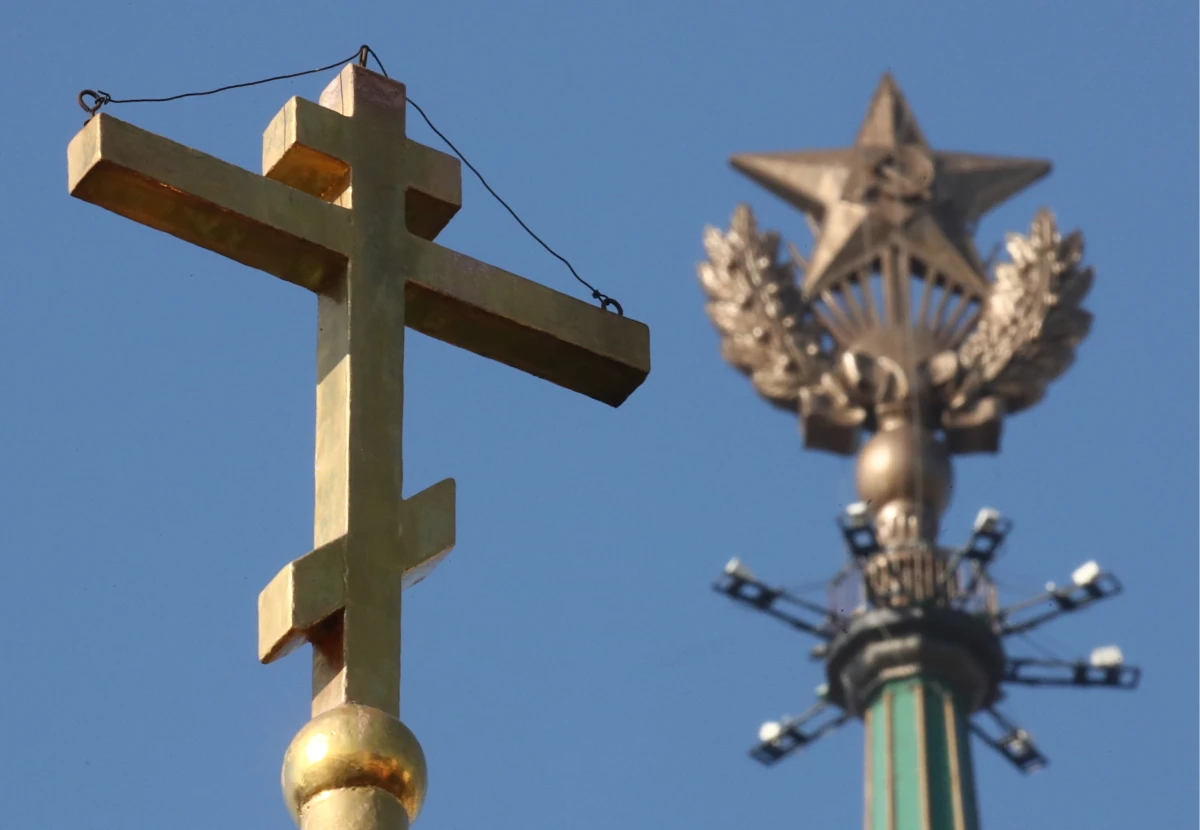
Be that as it may, with all its costs and contradictions, the “peacekeeping service” of the Russian Orthodox Church in Soviet times was based on positive values
disarmament,
Priority of diplomacy,
The inviolability of the "sacred gift of life."
According to the inertia, the Russian Orthodox Church continued to engage in peacekeeping in the 90s and at the beginning of the zero, when it did not really force it to this. She offered her mediation services (though without much success) in Karabakh and Yugoslavia, Patriarch Alexy II condemned the assault on the Grozny in 1995, and during the confrontation of parliament and president in 1993, representatives of the parties were negotiating in the Danilov monastery.
With the beginning of the Putin era, peacekeeping was “not in trend”, and, probably, soon slogans like “no war” or “world” will be recognized in the Russian Federation extremist.
In the modern secular world, religious organizations are in demand to the extent that they take on philanthropic and mediator functions - they take care of socially vulnerable and help in resolving conflicts.
In this field, Catholics and Protestants are active, who arrange the “Mirchs of the World” in hot spots and compete with each other for the right to provide humanitarian assistance or shelter refugees. But today in Russia, when we are on the threshold of the most difficult and dangerous in the last 75 years of the war, the position of the Russian Orthodox Church is not heard.
There are times in history when silence is louder than many beautiful words. In a situation of balancing on the verge of war, one single large public initiative within the country could turn the balance of forces between supporters and opponents of the war. The Russian Orthodox Church could easily reanimate its rhetoric 30–40 years ago, the narrative was worked out to the smallest detail.
But the patriarch humbly waits for the development of events in his shutter (voluntary or not - a separate issue) at the Obit object near Moscow, and this silence is perceived as a blessing of war.
The blessing that separates from Christ, who said: "The peacekeepers are blessed, for they will be called by the sons of God." And the apostle Pavel added: “Be in the world with all people. Do not take revenge for yourself, lovers ”(Rom., 12:18). By definition, a Christian cannot advocate for the war, especially - offensive, no matter what exotic examples from the lives of the saints lead us. It cannot act not only in a word, but also in silence.
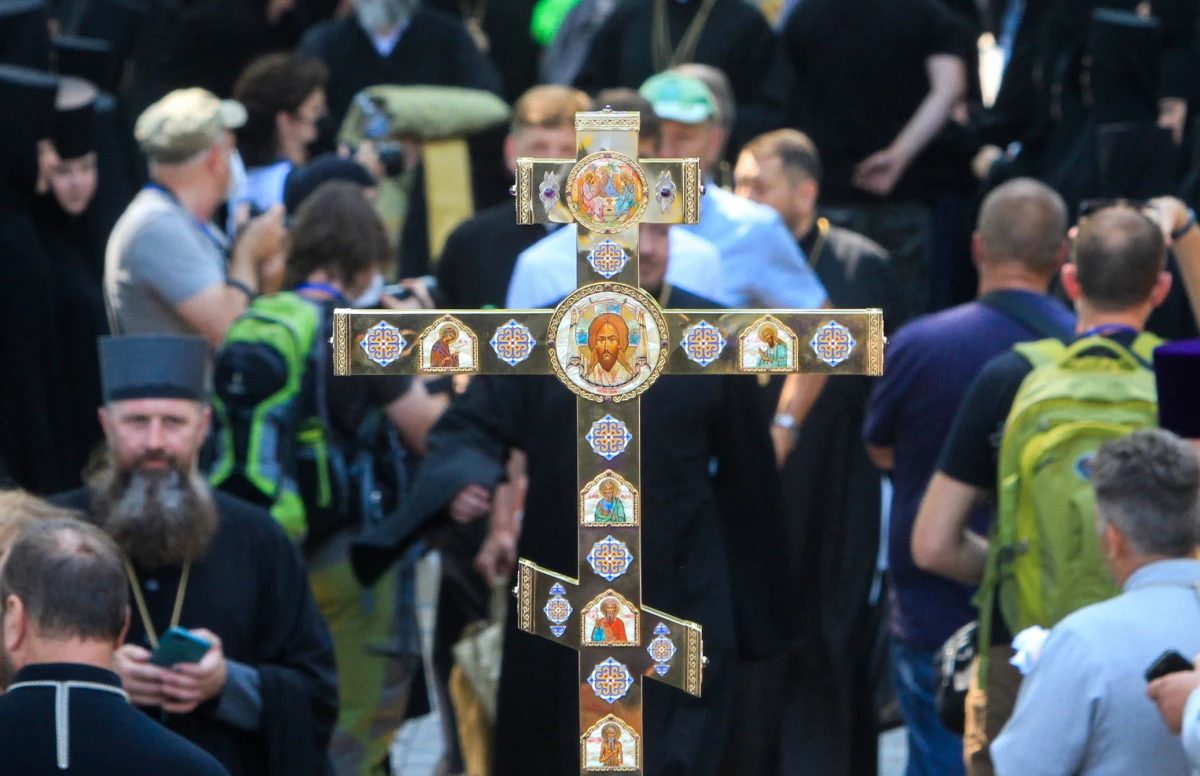
According to Archimandrite Kirill (Govoruna), who is now teaching the Moscow Diocese of the Russian Orthodox Church in the United States, the “non -alternative ideological background” of this war is the doctrine of the “Russian world”, actively advancing Patriarch Cyril, now. Today, this doctrine threatens the world with nuclear apocalypse. And the commitment to her makes the Orthodox hierarchs helpless, preventing them from standing between the exciting armies and cover up the defenseless women, children, the elderly - the first potential victims of the war. Even the Donetsk Metropolitan of the Moscow Patriarchate Ilarion (Shukalo) born in the west of Ukraine, looking at the massive “evacuation” of his own flock by the “DPR” authorities, was able to squeeze out only on duty: “I urge everyone to bended repentance.”
If a full -scale war begins, it will become a disaster not only for the states and peoples of Russia and Ukraine. It will become a historical catastrophe of the Russian Orthodox Church.
There is hardly even a drop of authority in a religious organization, which was confused at the moment when its soldering began to massively destroy each other. Indeed, unlike, say, the Karabakh conflict or war in Yugoslavia, on both sides of the Russian-Ukrainian front there are mainly Orthodox soldiers, moreover, the flock of Moscow Patriarchate, which has more than 12 thousand parishes in Ukraine ( and in Russia-more than 16 thousand ). Thus, the front shares this “one” flock almost exactly in half, the brothers and sisters in Christ, communing “from a single bowl”, will receive an order to mercilessly kill each other. And “every kingdom, divided in itself, will be empty” (Matt., 12:25).