
Translated material
How to explain the power and authority of Putin?
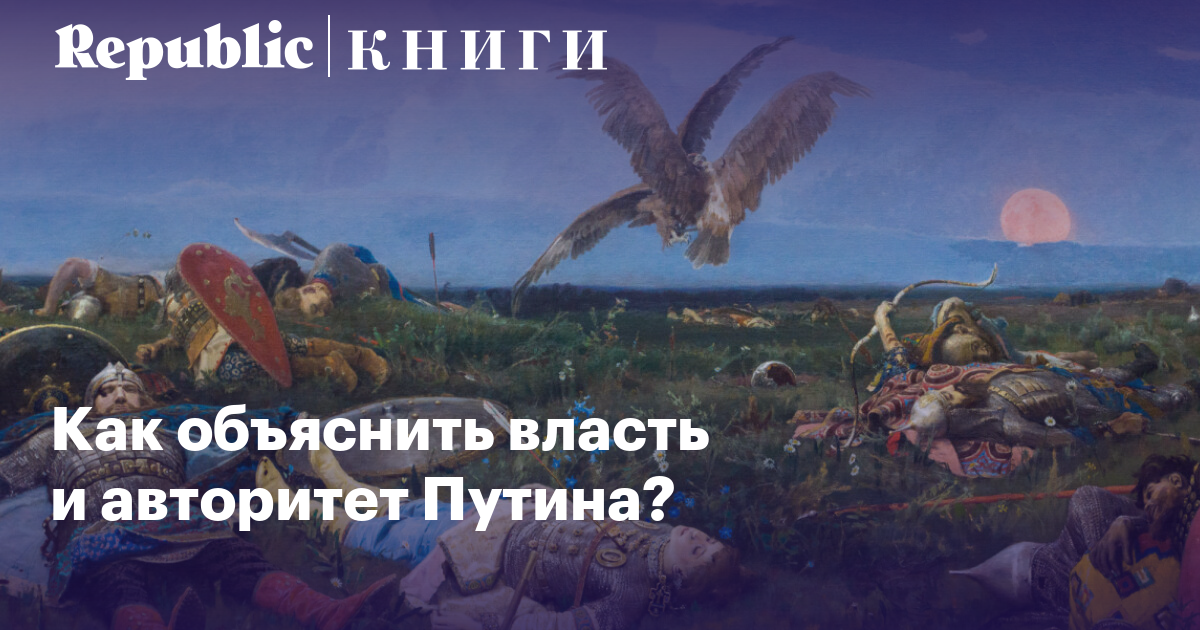
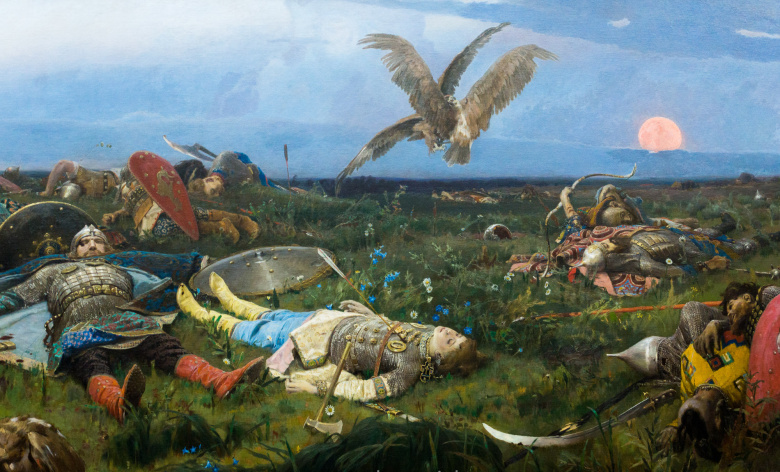
After the battle of Kyiv Prince Igor Svyatoslavich with the Polovtsy
Viktor Vasnetsov Picture, 1880
The most relevant text of this book is modestly submitted to the application. It is called "Slavicism, Rus' and Muscovy - how Ukrainian propaganda shares" Old Russian Heritage. " The author - Vadim Dolgov - answers questions that many are now interested in. Is it true that the Russians are not the Slavs, but the Slavic Finns, and that Moscow is the Finnish name? Is it true that historically “real” Rus' is only the territory of the Middle Dnieper, and the rest of the “Rus'” are fakes? Is it true that neither the Old Russian language nor the awareness of the unity of ancient Rus' existed? Is it true that only Ukraine was always called Russia, and Russia is Muscovy?
Since the problem of Russian-Ukrainian relations is now very politicized, the reader may have a suspicion that the author himself is engaged in propaganda, working on the other side of the conflict. But this is not at all like that. Vadim Dolgov is a doctor of historical sciences, a specialist in the history of Kievan Rus, the author of a number of books on this topic. And he disgraces challenges from Ukrainian propaganda very professionally. In addition, in another place of the book, he just as professionally exposes the propaganda of Vladimir Medinsky, and pays much more attention to this issue than a polemic with a little -known Ukrainian author.
In general, the dispute with Medinsky is probably the most attractive episode for the book, since this is a dispute about “our everything” - not about Pushkin, of course, but about drunkenness (p. 220–245). Debons clearly and thoroughly, using various historical sources, shows that the problem of alcohol consumption in Rus' was completely real (although we generally drank no more than in Western Europe), and that Medinsky himself forms a new myth in the struggle against the terrifying Russian drunkenness.
But the main thing in Vadim Dolgov’s book “Clio and Auguste: Essays on Historical Sociology” (Publishing House of Nestor-History , 2020) are not these moments attractive to the reader. The author is one of the few scientists who can explain to the reader the essence of an interesting and unusual science - historical sociology. In fact, this attracted me to a somewhat strange couple - Clio and Auguste.
Subscribe to read the whole
Make a subscription Redefine.media to read Republic
Subscribe [you can pay for a Russian or foreign card. The subscription is extended automatically. You can unsubscribe at any time.]
Where are the money subscribers going