
Translated material
Insurance
The Russian authorities completely suit both sanctions and a fall in the standard of living: citizens will still be loyal, fearing the horrors of war. Analysis of the economy of fear
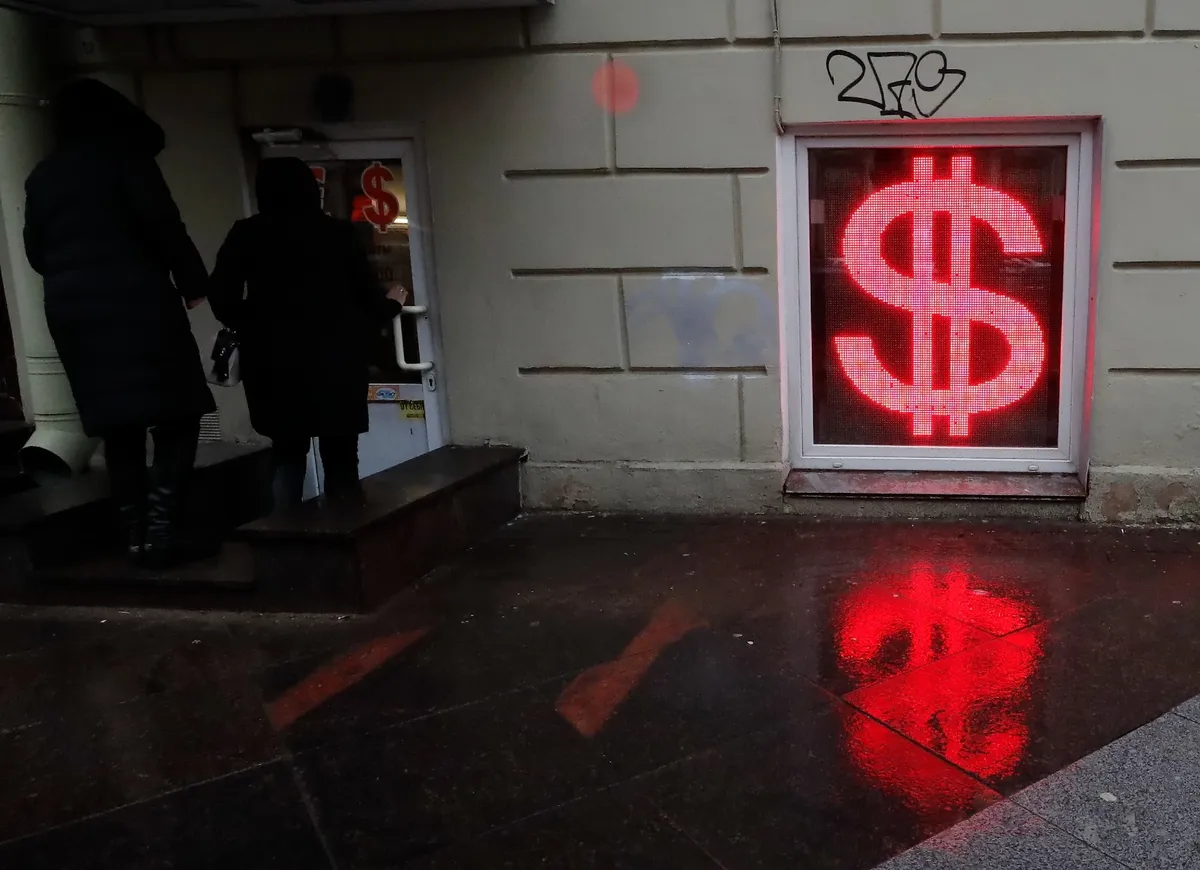
Events on February 21–22 sent Russian stock indices. The fear of a military scenario for the development of events on the border of Russia and Ukraine forced investors to discard the shares of Russian companies and buy currency. The dollar rate rose above 80 rubles, the euro - above 90 rubles. Why do the Russian authorities react to this stoically?
The confidence of the Russian authorities that the country's economy will in the near future withstand the “geopolitical” shock, is based both on their ideas about the “ideal business” and on objective data.
Why is the authorities not afraid for its income?
The foundation and at the same time the first leverage of the economy of the Russian Federation is currency revenue (the main revenues of the federal budget also depend on it).
With foreign exchange earnings, everything is in order. According to the Federal Customs Service, in 2021 the export revenue of the Russian Federation amounted to $ 493.3 billion, compared with January -December 2020, this amount increased by 45.7%. The owners of the country had no such cash flow in their hands for ten years.
So far, no of the announced sanctions affect the Russian export of hydrocarbons, metals and food. At the same time, the authorities are convinced that during the period of restoration of the economy, the world can not do without the resources of the Russian Federation, which are “in their pocket”.
How right are they? Assessments of Russian oil in the world market are different. According to TASS, citing the opinion of Fitch expert Dmitry Marinchenko, Russian oil occupies “ more than 10% of the world market ”, which means that it cannot be quickly replaced. The macroeconomic adviser, the Discovery CEO, Sergei Khestanov, believes that “the share of Russian market exports in the global oil market is about 2%,” that is, you can find this oil replacement. Truth is somewhere nearby, but the OPEC countries that do not want to increase prey, or Iran, which itself is under sanctions, can replace Russian oil.
It is not yet about some serious isolation of the banking system of the Russian Federation. Banks that are on the sanctions list of Britain do not play a significant role in the export circuit of the Russian Federation. Most likely, there will be no such sanctions in the near future either, because it may complicate the calculations for raw materials, plus - a considerable part of the export money of the owners of the Russian economy is immediately “shipped back”. No “foreign policy exacerbations” of recent years prevented the top of the Russian Federation to export their capital - by $ 50-100 billion annually.
Oil prices are high, almost $ 100 per barrel. And they are not going to decline. Despite all the "green rhetoric", you can’t deceive the market - there is no fall for oil demand.
In addition, at the current price of a barrel, at least 10% (or even more) is a “risk prize”. The greater the fear of war, the higher the price of hydrocarbons. And the more expensive oil costs, the more confident the Russian authorities feel.
In January 2022, according to the Ministry of Finance of the Russian Federation, the National Welfare Fund, where excess oil revenues, increased by 44.87 billion rubles. The total size of the Federal Tax Service on February 1, according to the Ministry of Finance, amounted to 13.6 trillion rubles. Its liquid part, placed in the currency accounts of the Central Bank of the Russian Federation, was equal to 8.8 trillion rubles, or $ 112.7 billion. This is equivalent to 6.6% of the forecast GDP of Russia for the current year.
Why is the authorities not afraid for the ruble?
The economy of the Russian Federation critically depends on imports, and therefore on the foreign exchange rate.
But the ruble exchange rate to the dollar on Russian exchanges, in turn, depends on three factors:
demand for currency (from the population and corporations);
export revenue "for sale";
reserves of the Central Bank of the Russian Federation.
Let's start with the last factor.
The reserves of the Central Bank of the Russian Federation are great than ever, $ 640 billion. Theoretically, this is enough to pay for a two -year import.
The volume of foreign exchange earnings will not decrease in the near future.
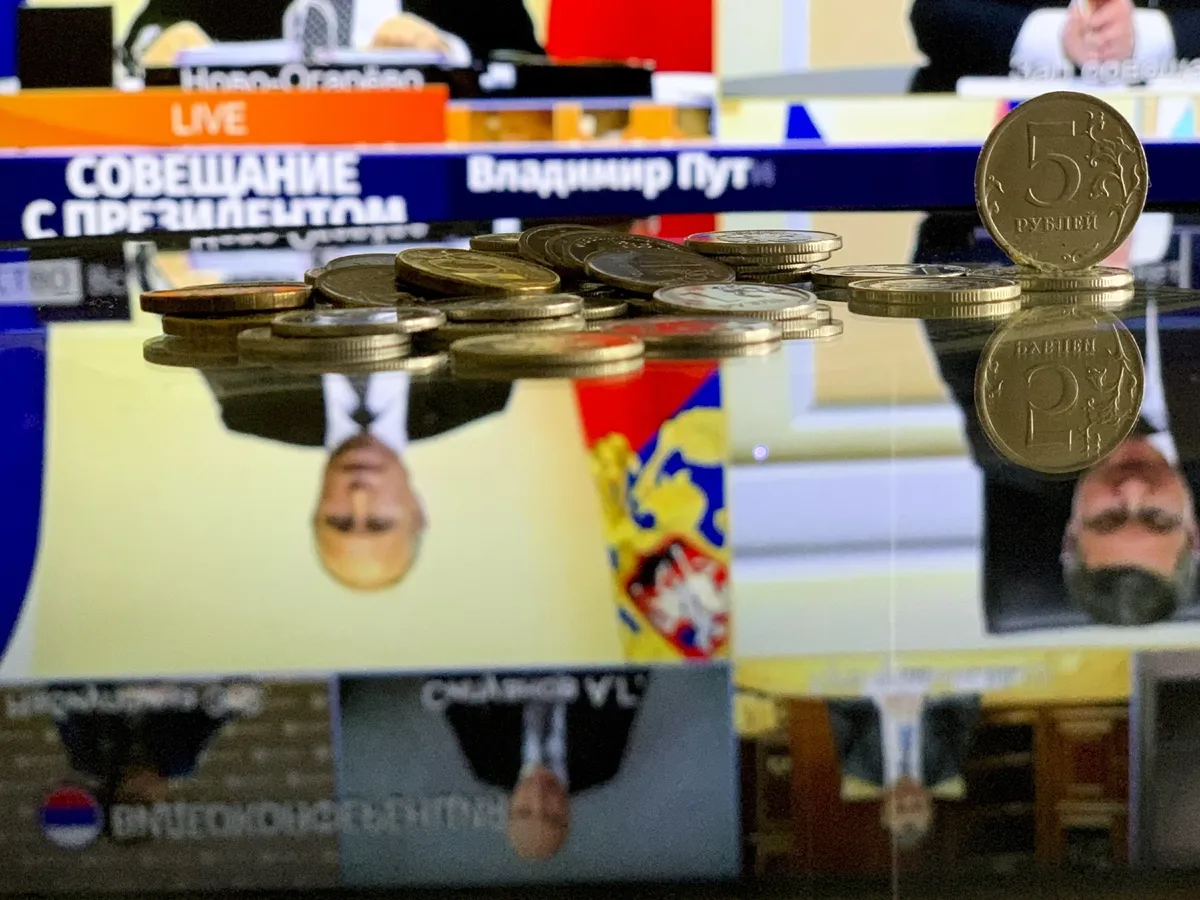
And the demand for currency by the population can be reduced without any problems for the authorities. This experience is already there. Remember the quarantines of 2020, when the ruble almost did not take a little more than a sharp decrease in foreign exchange earnings. Only the “closed borders” left $ 20 billion “tourist expenses” within the country, and the fragment of consumption reduced the demand for goods for people for comparable amounts. And now, according to the Russian Union of Travel Industry (RST), despite the removal of quarantine restrictions, over the past few days the volume of reservations of foreign tours has decreased by 20–25% - people do not know what will happen to the currency and payment of bank cards, there is no longer up to travel.
So, if it is necessary to “squeeze consumption” - this is not difficult. Moreover, in "emergency", the reduction of the assortment and the decrease in the quality of goods is understandable and understandable, the authorities reason. If payment systems stop serving the cards of Russian banks abroad, from the point of view of the authorities, this is even better - let everyone sit at home and are calculated by cheap rubles. And you can also limit the issuance of deposits, or enter additional taxes - people have a lot of money withdrawal options.
In addition, the cheapness of the ruble is even good, the authorities can reason.
Yes, the record in six years inflation has been eating the income of people, but this is of little interest to managers.
And not such inflation was seen, and in low income of people the bosses strongly doubt. But further weakening of the ruble means that more rubles will enter the budget - that is, the budget surplus, the excess of “revenue over costs” will grow. And the budget is a surplus - in January, at income of 2.089 trillion, expenses amounted to 1.964 trillion rubles. Budget expenditures are the second most important, after currency revenue, the country's management lever, two -thirds of the economy are somehow tied to the budget.
But what about inflation, which really depends on the ruble course?
No way, the authorities will answer, and they will be right. The recession in which the economy of the Russian Federation may be, from the point of view of economic theory, can lead to a slowdown in inflation - there is no money, no sales, no prices. And the authorities are not afraid of the economic recession - they know that over the past eight years, the economy has grown less than a percentage per year. Moreover, the authorities understand that the current shock 4.5% of GDP growth according to the results of 2021 is a “restorative growth” after the failure of 2020, in the coming years no one expects anything like this. Therefore, the conflict and the subsequent crisis are a reliable explanation of all problems.
With the losses of the “big business”, the authorities are also obviously ready to come to terms. As Forbes reported , according to 16.00 (Moscow time) on February 21, against the backdrop of the collapse of the quotes of Russian companies, the state of Russian oligarchs decreased by $ 8.339 billion. But the thicknesses remember that they can maintain their capital in Russia only in a complete symphony with the authorities, so we do not hear anything about their discontent. In addition, in the Russian stock market now there is now not only a collapse, but also a redistribution of property. Someone boughts cheaper shares, and only after years we will learn the names of the lucky ones who knew exactly the content of meetings in the highest echelons and took the necessary steps in a timely manner.
At the same time, the authorities do not doubt the loyalty of ordinary people - and has purely economic grounds for this.
Should the authorities fear people's discontent?
At first glance, judging by the surveys, people are dissatisfied with both the increase in prices and the stagnation of income. They evaluate inflation significantly higher than Rosstat, and their financial situation is much lower. According to a survey of the Institute of Social and Political Studies of the Russian Academy of Sciences (was conducted at the end of 2020), 65% of the population has money to purchase food and clothing, but it is already difficult for them to purchase a TV with a refrigerator. 15% declare themselves poor, 3% are poor. 4% of respondents call themselves rich. “Weapons, that is, capable of buying a refrigerator without problems, remain 14%.
No, everything is wrong, the authorities can object. According to Rosstat in the report “Socio-economic situation of Russia” (Issue 12.2021), in 2021 the income of citizens increased-in the maximum of eight years. True, in "living money" it turned out not so spectacular. On average, the monthly increase amounted to 3787 rubles. The average income reached 39,854 rubles per month, which is 10.5% more than in 2020.
However, the amount that remains in the hands of people, taking into account inflation and all mandatory payments, the so -called “real disposable income” increased by 3.1%. A little, but there has been no such growth since 2013.
Where does the money come from? The average salary in the Russian Federation for 11 months of 2021 increased by 9.5%, to 54,588 rubles per month.
True, in real terms, with an adjustment to inflation, growth was only 2.8%, but it is an increase, not a decline.
Pensions in real terms were completely reduced - minus 2.9% in December 2021, but 700 billion pre -election payments were corrected - taking into account this money, pensioners' incomes increased by 4.1%.
However, people are still unhappy. According to the study “ Consumer moods of the population in the IV quarter of 2021 ”, conducted by the Center for Conjunctural Studies of the Institute of Statistical Research and Knowledge of the NIU Higher School of Economics, only 8%noted “improving its financial situation”.
“The situation has worsened” in 39%, “further problems with money” await 29% of respondents. 43% expect a deterioration in the economic situation in the country, and such moods were only in 2009, against the backdrop of a financial crisis.
Experts are surprised by this result.
“The negative dynamics of the resulting consumer mood index and all private indices characterizing the material situation of the population and economic restructuring in the country are observed against the background of GDP growth, acceleration of economic growth in almost all basic industries, as well as in the conditions of accented (3.2–3.4%) growth - for the first time in the past eight years - real disposables - real disposables cash incomes of the population. Such multidirection in the dynamics of these most important economic indicators causes a certain concern. These discrepancies, especially on such a scale, were identified extremely rarely for the entire observation (since 1999) and only during periods of increased economic and social uncertainty ... ”, the experts of the Higher School of Sciences write.
Statistics fixes the growth of the economy, people talk about anxiety for their financial situation. Someone says a lie, but who exactly?
Loyalty from fear
There is nothing to worry about, the authorities will object, there are other people and other answers. According to the Public Opinion Foundation in the release “Material position of Russians: January 2022”, 8% of respondents spoke about the growth of income - this is the maximum from the beginning of the pandemic.
Another 56% of the survey participants said that they did not notice any special changes in income. In January 2022, 35% of Russians reported the reduction in income in January 2022 as in December 2021.
But among pensioners - a key group of power support - the strata of the speakers about a decrease in income (by 4 percentage points, to 24%) and on increased savings (by 7 percentage points, up to 32%) were reduced. The reason for these changes, sociologists explain, was the indexation of pensions by 8.6%, made from January 1, 2022.
But all “employees” more often began to talk about strengthening savings. At the same time, “ employed at private enterprises also noticeably more often began to complain about losses in income, while among employees of state enterprises this indicator has not changed significantly ,” experts of the FOM emphasize.
That is, another key support group “Budgetables” and “working for the state” did not live worse.
The situation in the capital - the share of Muscovites complaining of income falling, decreased by 5 pp in a month, to 34%, and the share of “saving” residents of Moscow also sharply decreased - from 45% in December 2021 to 34% in January 2022.
In addition, as FOM states in the release “Russians - on labor prospects: January 2022” in January, the share of fearing work loss decreased to 40%, and the reduction in wages to 27%. These are the minimum values since March 2020. The risk of closing the employee is evaluated as zero 63% of employees-this is the most optimistic indicator since April 2020.
How do such data look from the point of view of power?
Do people go to work? Yes. Do people somehow object to the authorities? No.
People say they lack money? I do not believe, the official will say. These words are not confirmed by deed, that is, the turnover is growing in numbers, the mortgages are paid, taxes are paid, and the profit of bossal businesses - at the peak, over the past hundred years, power in Russia has not lived as well and comfortable as it is now.
Moreover, the authorities know that the loyalty of people is also guaranteed by the structure of the economy.
Sociologist Svetlana Mareeva in the article “Monetary inequality in Russia in a sociological dimension” drew attention to the curious feature of the structure of Russian society, clearly noticeable, if we analyze the distribution of income in the long term.
The Rosstat data show that against the backdrop of the growth of the economy and the welfare of people, the socio-economic structure of Russian society was preserved in the middle of the zero.

Since 2005, the share of the total amount of cash income, which was at the disposal of 20% of the poorest Russians, fluctuated at 5%, and the “richest” 20% also stably received 47% of total income. The shares of three intermediate “profitable quintiles” remained unchanged - they were recorded at 10%, 15% and 23% of the total income. Thus, the rich remained rich, and the poor - poor, and no reduction in the share of the poor happened - contrary to all official rhetoric - all fifteen years.
That is, stagnation in the economy has long occurred, and this finds confirmation in the statistics of economic development - the average annual GDP growth rates over the past ten years have been 1.34%, the average annual growth rate over the past seven years - 0.99%. This is stagnation.
In this situation, the effective strategy of the social behavior of people becomes defiantly expressed loyalty. If there is no development, and society is “sorted” by socio-economic cells, then all members of such a society understand-you can improve your situation only by worsening the position of someone else. And then the optimism of the crowd begins to take shape from the fears of loners. It makes no sense to express dissatisfaction with the existing order of things - the risks of losing your place in the hierarchy are great, and you can achieve success only by moving "to a good place."
But “good places” are under the control of the authorities. In a situation where two -thirds of the economy depend on budget expenditures, people prefer to watch “from the bottom up” - in the hope of being noticed by the authorities, and not look around “on the sides” - in the calculation of the creation of new business connections and contacts. And people cannot be blamed for this. Fear of losing the favor of power for people is much more than the fear of some “sanctions”. Over the past eight years, the welfare of people has returned to the same level at which it was at the end of the zero - which means that the authorities are not afraid of its further decline, believing that they have another ten years in stock.