
Translated material
Europe will issue sanctions in portions
The European Union agreed on a restriction package in response to the recognition of the Donbass “republics” by Russia. Cooked and more rigid depending on the behavior of the Kremlin in Ukraine
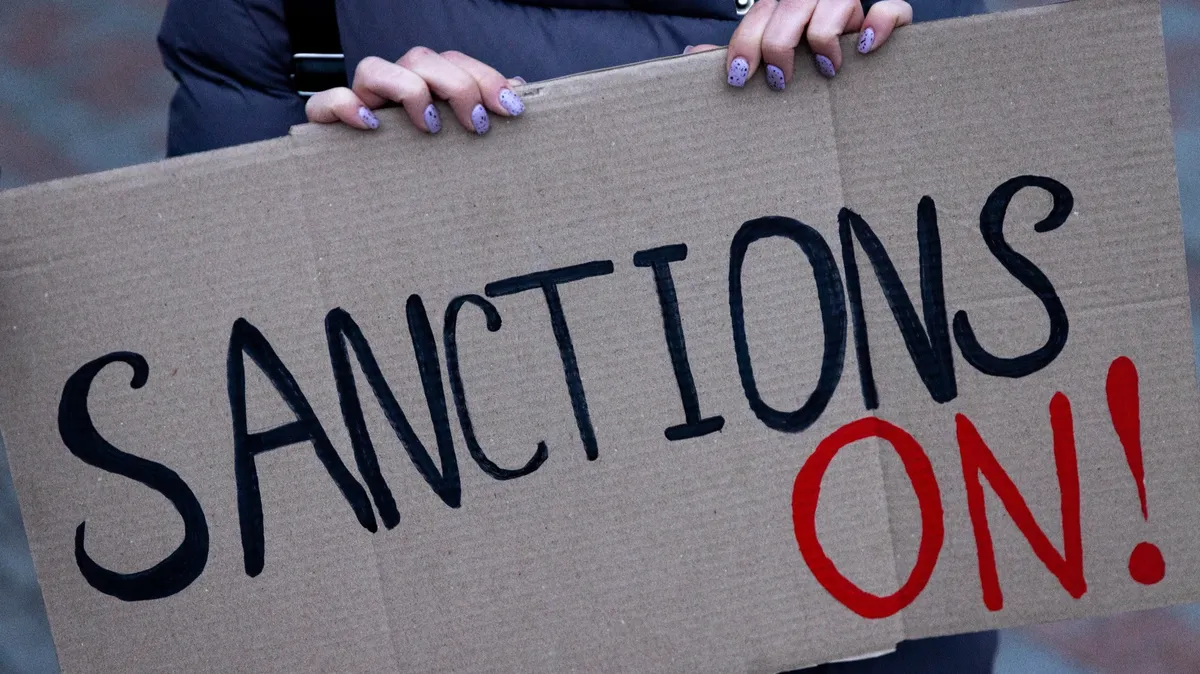
In past centuries, European countries in such situations began the war. In the XXI century, united Europe in coordination with America and others, as it is now customary, “only-minded countries,” responded to the military-political steps of Russia with economic sanctions. Or, if you adhere to legal terminology, restricted measures. Like war, economic sanctions cause damage to all parties, but with an increase in the price of human life, Europe prefers economic weapons.
No matter how pseudo -unique words they call the actions of Russia in the Kremlin, no matter how the concepts of democratic procedures and pathos performances are replaced, the European Union and NATO (an organization that, by the way, plays a secondary role in the crisis), proceeds from reality: Russia hasuled into Ukraine, but so far to that part of it, which has actually already occupied. A package of EU sanctions, prepared in case of invasion of areas controlled by the government, is divided into portions that will be applied depending on the situation.
Immediately after the signing by President Vladimir Putin the decrees and the recognition of the self -proclaimed “republics” of the Donbass of the EU and NATO were responded with short statements in which this gesture of Russia is strongly condemned and called unacceptable.
On Monday, late in a short joint statement, the Chairman of the European Council Charles Michel and the head of the European Commission Ursula von der Layen “most decisively” condemned the President of Russia to proceed with the recognition of “DPR” and “LPR”. “This step is a gross violation of international law, as well as the Minsk agreements,” the statement said.
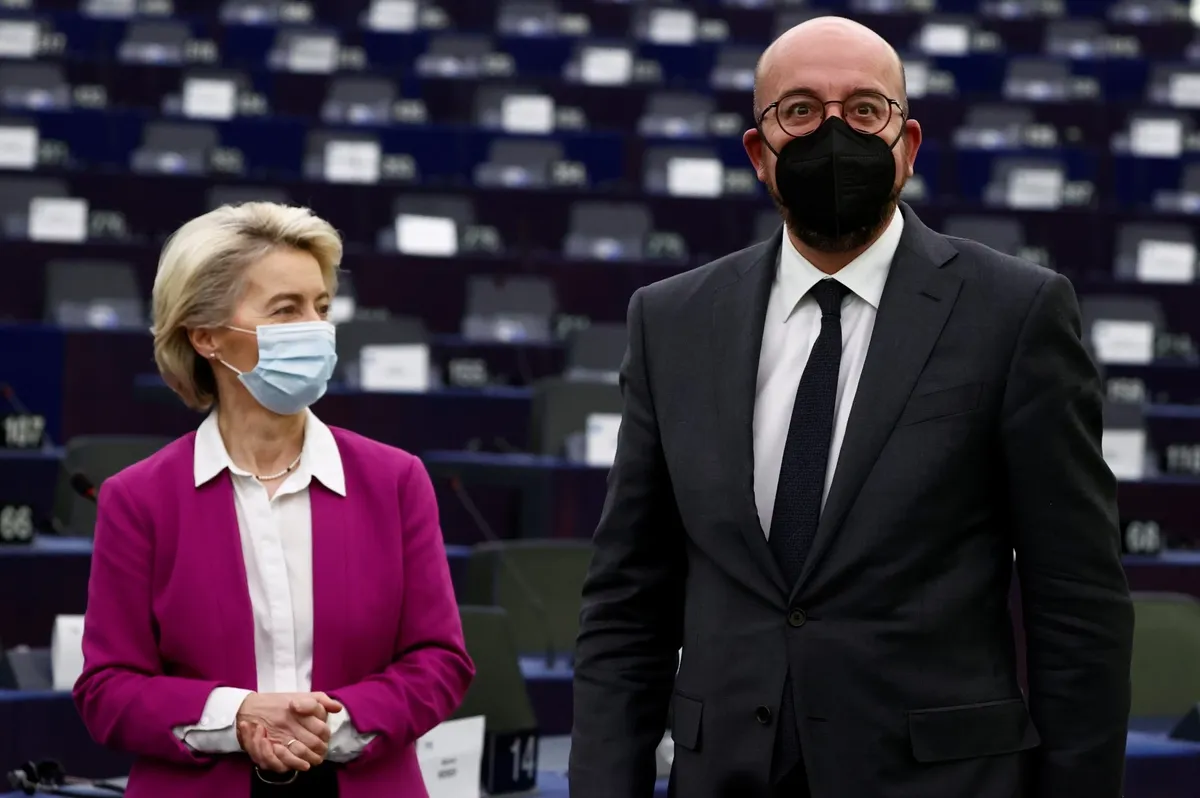
“The Union will respond with sanctions against those involved in this illegal act,” they said, confirming “support for independence, sovereignty and territorial integrity of Ukraine within the limits of its internationally recognized boundaries.”
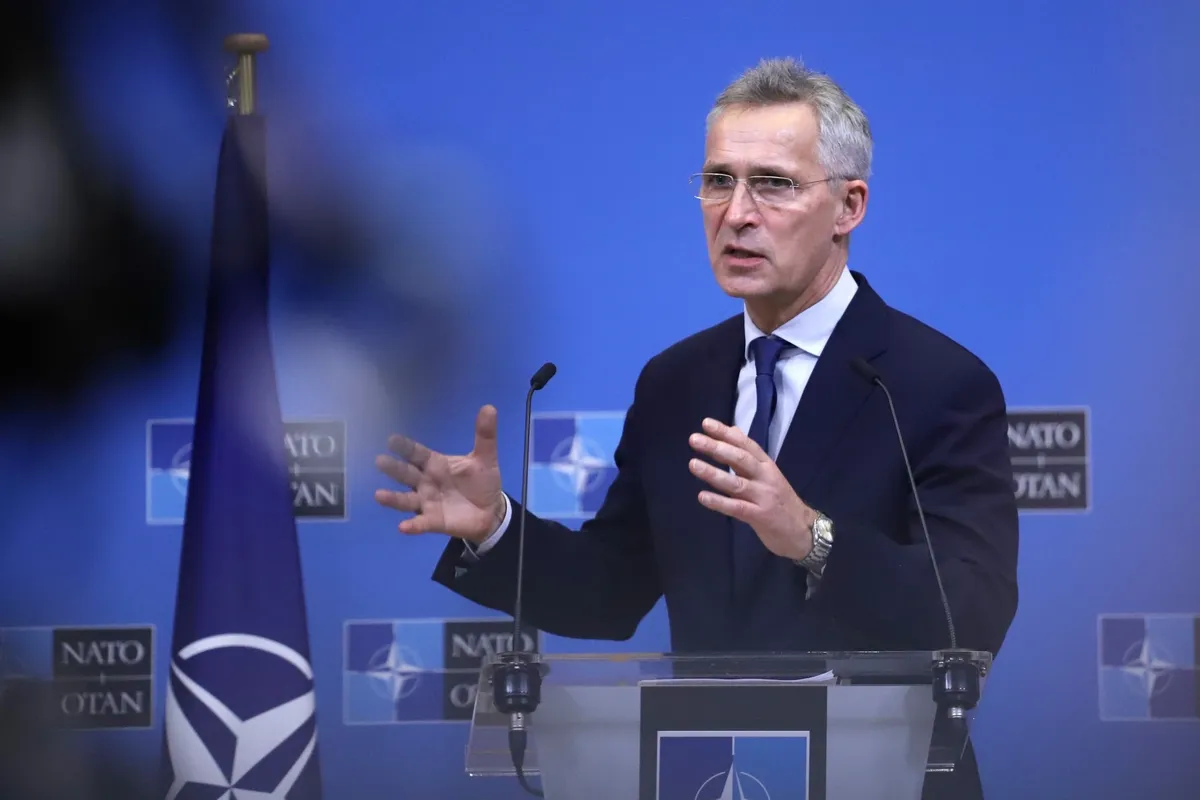
The general secretary of NATO Jens Stoltenberg made a similar condemnation of this step of the Kremlin. “This even more undermines the sovereignty and territorial integrity of Ukraine, undermines the efforts to resolve the conflict and violates the Minsk agreements, which is Russia,” he emphasized in his statement.
The crisis around Ukraine or the “Russian crisis”, as it is now called here, was the focus on the EU Council of Ministers of Foreign Affairs in Brussels on Monday on Monday. The Council meeting ended that evening earlier, when it only became known about the results of the meeting of the Russian Security Council in the Kremlin, but the legislative acts themselves have not yet been signed. The head of the EU diplomacy, Josep Borrel, told reporters that if Russia is limited to recognizing the self -proclaimed “republics”, he will gather ministers again, and they will decide to use the sanctions packet of sanctions, which was prepared in case of invasion. The European Commissioner for Justice, Belgian, Didier Reynders suggested that if the conflict spreads to other regions of Ukraine, then more stringent sanctions will follow. The deprivation of Russia access to financial services “would be a very difficult decision leading to the breakdown of the economic ties of Russia with the world,” he said.
In the morning, on Tuesday, Charles Michelle and Ursula von der Lyaine expressed more extensively. In their new statement, in general terms, the content of the package was set out, the first portion of which in the afternoon was consistent with the heads of the Mids:
targeted sanctions against those who were involved in an illegal decision;
sanctions against banks financing the Russian military and other operations in these territories;
sanctions against the capabilities of the Russian state and government to access capital, financial markets and EU services, against the financing of “escalation and aggressive policy”;
sanctions against the possibilities of the trade exchange of two broken regions of Ukraine with the EU, "so that the guilty feel the economic consequences of their illegal and aggressive actions."
Michelle and von der Lyain reported that the EU is ready to "take additional measures at a later stage, if necessary in the light of further events."
At this time, the EU executive car under the leadership of the Committee of Permanent Representatives of the Union in Brussels (Coreper) on constant connection with their capitals worked at full pairs. The decision on sanctions is made by the Union, not individual European countries. Moreover, measures should be about one channel with those that the United States, Great Britain, Canada, Norway, Switzerland, Japan and other “single-minded countries”, committed to the world order “based on the rules” take.
Foreign ministers did not have to be collected on purpose. Almost all of them were on Tuesday in Paris at the forum of cooperation with the countries of the Indo-Pacific region along with colleagues of Asia and Africa.
At 16:00 Paris time, an informal meeting of EU foreign ministers began under the chairmanship of the Boral to discuss sanctions against Russia. The first portion of restrictive measures that entered into force on Wednesday was approved unanimously.
Thus, they said that, despite the nuances in the relations of the EU countries with Russia and even the disagreements inherent in a multinational unification, the EU acted as a whole. Even Hungary, to which, judging by Russian official propaganda, Moscow had hopes in the sense of shaking the European ranks. Even Germany, about the national interests of which the Russian TV cared so much. Annalena Berobok, head of the Federal Republic of Germany, took one of the most stringent positions in the EU Council, and the Federal Chancellor Olaf Sholts finally announced the decision to freeze the certification of the Northern Stream 2. The reaction of Germany was the subject of speculation, since Scholz evaded specifically to name the Nord Stream 2 as the potential goal of the sanctions in the event of Russia's invasion of Ukraine.
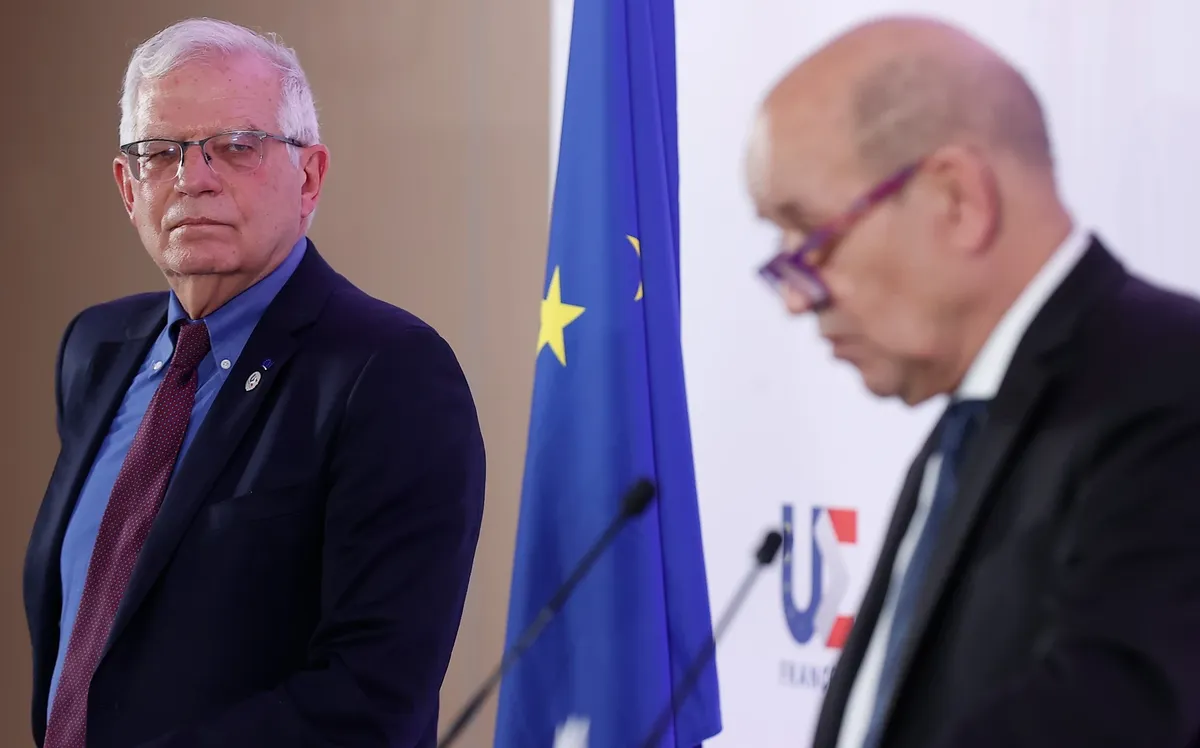
Upon the end of the Council in Paris, Borrel entered a press conference with Foreign Minister of Foreign Affairs Jean-Ivo Le Drian. The latter said that in the light of new circumstances, he canceled the meeting with Sergey Lavrov, which was planning on Friday.
Borrel made an overview of what 27 EU foreign ministers agreed:
351 State Duma deputies who voted for “violation of international law, territorial integrity and sovereignty of Ukraine”;
There are also 27 individuals and organizations that played a role in the undermining or threat of undermining territorial integrity, sovereignty and independence of Ukraine. Firstly, these are persons who make appropriate decisions, organizations providing financial and material support or extracting from them, representatives of the defense sector-for participating in the invasion and actions of destabilization, those who are conducting a misinformation war against Ukraine, also banks that finance Russian persons who take decisions and perform other operations in these territories;
take measures aimed at economic relations between the two regions and the EU, just like in the case of Crimea;
Take measures aimed at the ability of the Russian state and government to gain access to Western capital and financial markets or services, to limit financing their policy by restricting the access of their sovereign debt to European financial markets.
He expressed the appreciation of Germany for the suspension of certification of the Northern Stream - 2 gas pipeline. “This further strengthened our single signal,” said Borrel.
He thanked Ukraine for the restraint and emphasized that it would be needed more than ever in the coming days, because the EU "is afraid that this story is not over." He also "carefully monitors the next step of Belarus, which helped Russia and supported its actions."
“But sanctions,” Borrel emphasized, “is only part of the EU response.” Diplomatic efforts will continue to prevent a new outbreak of war, conflict in the heart of Europe.
On the evening of Tuesday, the head of the European Commission of the German Ursula von der Layen, commenting on the first portion of measures taken in Paris, said that the EU was ready to go further in its economic sanctions if Russia goes further in its military-political ones.
“Russia fabricated this crisis and is responsible for the current escalation,” she wrote on the EU website. - We will now quickly finalize the package of sanctions. And we will closely coordinate our actions with our partners, as we have done so far. ”
“We are as difficult as possible to the Kremlin by the implementation of his aggressive policy,” said von der Layen. “If Russia continues the escalation of the crisis it created, we are ready to take further response,” she promised. “The EU is rally and acts quickly.”
The head of the European Commission welcomed the decision of the German government to stop the certification of the North Stream 2 gas pipeline. This gas pipeline “should be evaluated from the point of view of energy supply to the whole of Europe”, and this crisis shows that Europe is too dependent on Russian gas. She made it clear that the Kremlin’s act only destroyed Berlin's fluctuations and prompted the diversification of energy suppliers and investing in renewable sources.
Just on Monday, a meeting of the EU cooperation council with the Persian Gulf countries was held in Brussels. Approaching journalists along with the co -chair of the meeting, Minister of Foreign Affairs of Saudi Arabia, Borrel frankly admitted that along with a general increase in interaction with these countries, Brussels has a special interest in increasing supplies from there to Europe of gas and oil.
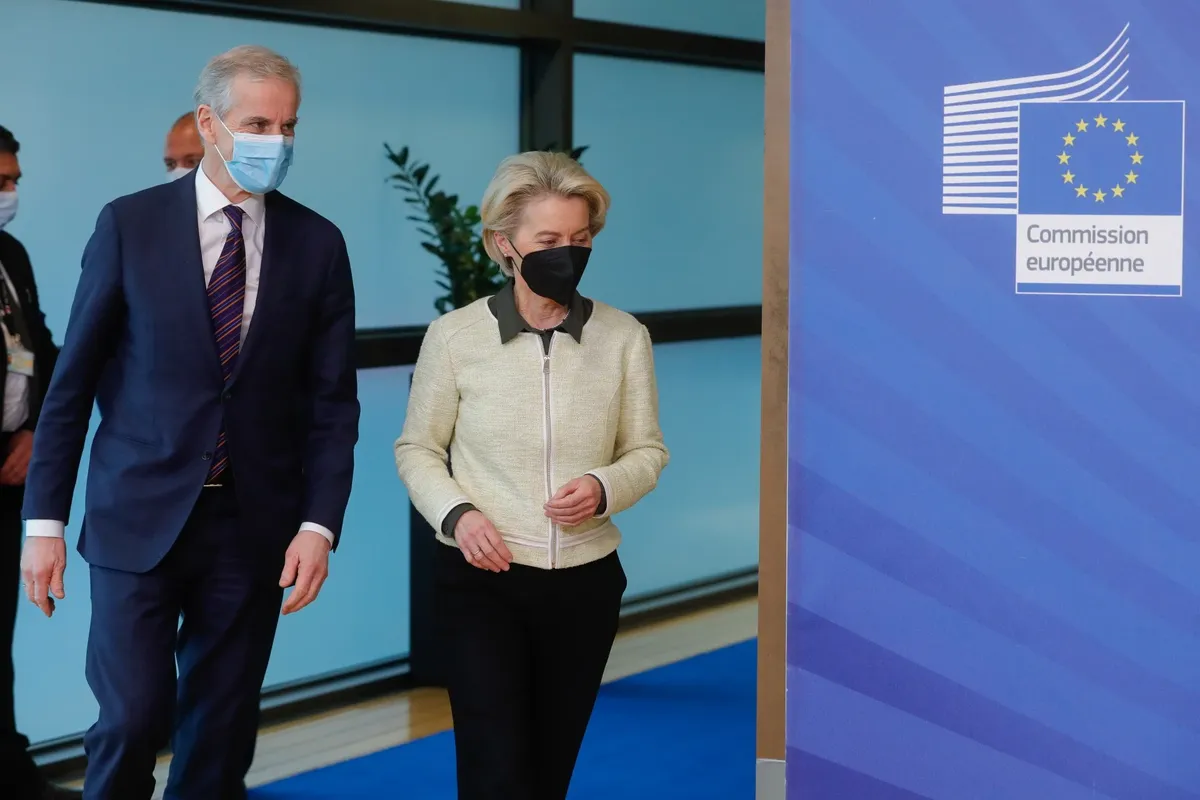
On Wednesday, von der Lyain met with Jonas Gar Steer, Prime Minister of Norway, who is one of the largest suppliers of natural gas to the EU and, probably, can change the configuration of its supplies. On the issue of Ukraine, she is on the side of the EU and the USA.
Large Russian banks are deeply integrated into the world financial system, which means that sanctions can be felt far beyond its borders. The data of the Bank of International Settlements (BMR) show that European creditors own the lion's share of almost $ 30 billion investments of foreign banks in Russia.
In terms of sovereign debt and the capital market, the EU measures will prohibit investors from the EU from trade in Russian state bonds. (The United States also strengthened restrictions on transactions with sovereign debt of Russia).
Moscow stated that any step on imposing sanctions against Putin himself would not be harmful to the Russian president personally, but would be “politically destructive”.
One of the most stringent sanctions continues to be called the disconnection of the Russian financial system from the SWIFT system, which processes international financial transfers and is used in more than 11 thousand financial institutions of more than 200 countries. The EU, like the USA, considers it as the most extreme measure, but does not remove from the agenda.