
Translated material
How to read news about the military conflict of Russia and Ukraine?
For example, there is a search for the picture in the search engine “ Yandex ”.
For example, Medusa (recognized as a foreign agent) exposed RIA Novosti due to the news about connecting the Prime Minister of Great Britain Boris Johnson to the Ivl apparatus, and RBC wrote about the fake of the RT video about the New York Putinburger.
Vladimir Putin in the morning of February 24 announced a military operation in the Donbass. Roskomnadzor demands that the media refer only to Russian sources of information and threatens sanctions.
How to read news during a military conflict and do not fall for misinformation? And is it worth it to believe in one resource? "Paper" spoke with the researcher of Fake Victoria.
Victoria took
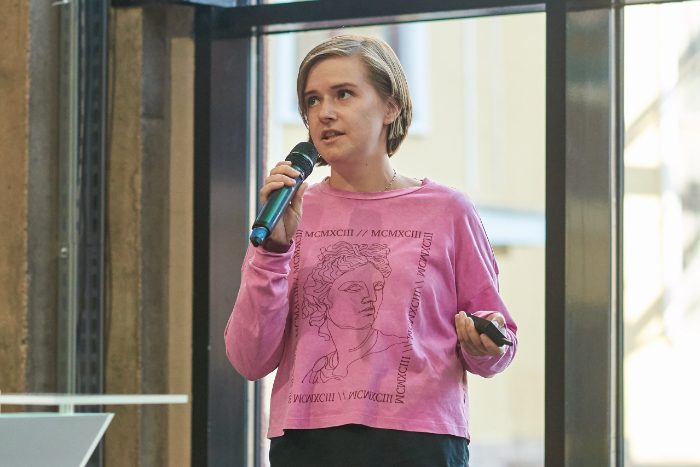
Researcher Feikov, interpretation of the Laboratory of Social and Cognitive Informatics of the Higher School of Economics in St. Petersburg, chief editor of Podkastov Papers
What are the criteria Fake Nachus
- There are more or less standard signs that can be attributed not only to fakes about the war, but to disinformation of various kinds.
Ideological bias -when the news clearly traces some kind of political orientation, whether it is extremely right, left and so on. Fake news is often not neutral and obviously written in line with some kind of political ideology.
Emotionality. In fakes, as a rule, there are more emotional and evaluative judgments, which is natural. Such news is aimed at convincing you of something, to scare.
Difficult verification. On the one hand, it seems obvious, but not all fakes can be easily verified. For example, they can be written allegedly from the words of an anonymous source, but at the same time contain a large number of details about it and look quite convincing: indicate age, status. At the same time, it is impossible to trace the source, find out who he is, despite the apparent normality of the news. Often fakes can rely on anonymous sources - for example, “sources close to the Kremlin”, which cannot be checked at all. And here is an example of a fake about how American pilots allegedly quit due to vaccination, with anonymous sources.
Clickbeat headlines and other linguistic features. Studies show that fakes are less diverse in terms of vocabulary than truthful news. Perhaps they are written in a simple language available to different groups of the population. Or they use personal pronouns “I”, “we” - in ordinary news you will rarely meet this, if this is not an expert quote. An informal language can be used, the mat, again, not in quotes, but in the text itself.
What is the difference between fakes about the war
- It is difficult to answer this question for sure, since I did not study this topic separately. But there is specificity. The war, like any large -scale incident and a social crisis, is a situation when events develop very quickly, and new information comes continuously, but fragmented. Often official evidence is not enough - they are not in time to do or do not allow them to purposefully. In this situation, the audience is as difficult as possible to cope with the flow of information.
If the information comes from government organs or pro -government media, it often contains narratives that justify their country in what is happening. It's not necessary about fakes, it may be true information. Often this happens on both sides, that is, narratives protect the positions of a country, and this is natural.
If you have received content that embarrasses you, think about how ideologically it bores and justifies one or another side. Perhaps this is twisted to the maximum, there is some kind of benefit in information, not necessarily material, but, for example, the benefit in the context of manipulation of public opinion.
It is clear that war is a situation where our critical thinking can weaken a little due to an emotional state. We experience fear, anxiety, panic and a number of other emotions that make us more vulnerable to fakes.
We can say: “Do not be nervous” - but it does not work. I would advise analyzing my emotions when you are faced with content that seems doubtful to you. Maybe you believe in this because you are scared, or maybe the news is really convincing and is written supported by a large number of sources.
I assume that during the war, fakes may appear in which images and videos will be used in the wrong context. For example, this was a lot in the context of Covid-19: “Look, the country is protested against Lockdown and vaccination.” Such messages accompanied photographs and videos that depicted completely different events - a procession of football fans , a collision in Odessa . It is clear that photographs and videos enhance our perception, we consider it a proof: we ourselves can observe the event.
It seems to me that in the context of war this can also be actively used: for example, photos and videos of many years ago will be issued for the events that are allegedly taking place now. In this case, a test of searching for images helps. If there is no result, you can use the geolocation service, look at Google cards, what the place indicated in the news looks like, whether it corresponds to the picture. It is clear that we cannot check every news like this, but for the news that cause the greatest skepticism, this can be applicable.
And besides this, my advice is to read the sources that you trust, which did not come across obvious lies, whose news did not expose the fact of cupping sites, sources that are responsible for what they write, apologize for errors. Sometimes you should wait for the development of the situation - maybe an additional context will appear.
How to quickly check the news about war
- I would use the same tools that should be used for any fakes, including not related to military conflict.
See what resources they write about the event and how. If it is obvious that the news is replicated in one form, it means that rather different media reprint the same text - and the source of the information is the same. See what these resources are, as far as they are known, what position they occupy (say, it is independent or pro -government media). If you have a news media that publishes original content, with a transparent history and staff, then this already gives a minimum confidence that they adhere to certain journalistic standards. It’s quite another thing if you have someone’s personal blog or a sagator site. Although, of course, there are no unambiguous guarantees: news media can report incorrect and unverified information, and wonderful investigations can be published on the blog.
In the context of a military conflict, it makes sense to watch the resources of another country, in this case, Ukrainian information agencies, and publications. Do they write about the same situation differently, whether they mention it at all. It is useful to go to the sites of international media: Reuters, AP and others. So you can get a more balanced picture.
See who they refer to the news to. If there is no source, then this is already very doubtful. If this is a person, google whether he is, who he is. Not everyone can be found, but nevertheless ...
Pay attention to the language and those linguistic characteristics (informal language, mat, personal pronouns can be used in fakes).
If there is a picture or video, you can check that they were not published ten years ago, for example.
One of the biggest problems is that often we do not check the news at all. This is normal when the media work well and honestly, but in the event of a war, there can be a lot of misinformation. At the same time, fakes are not always “truth-not true”, there are many variations in the middle, when the news seems to be true, but something is incorrect in it. This, in fact, is more than pure fakes.
If you think about it, make a minimum fact, for example, putting the news header in Google, it seems to me that this is a serious step. Not all sources are available to us as an audience [to verify information], but we can conduct the basic stages of verification, at least for the information that comes from some kind of chat or other dubious resource.
What else to read:
- In the early morning of February 24, Russian President Vladimir Putin announced the beginning of a military operation due to the situation in the DPR and the LPR. Follow the events in the Donbass in our broadcast .
- Enter the Club of Friends of Paper to support our work.